December 5, 2016
Shock value is the potential of an action (as a public execution), image, text, or other form of communication to provoke a reaction of sharp disgust, shock, anger, fear, or similar negative emotions. ‘Off-color humor’ is an Americanism used to describe jokes, prose, poems, and blue comedy that deals with topics considered to be in poor taste or overly vulgar by the prevailing morality of a culture. Most commonly labeled as ‘off-color’ are acts concerned with a particular ethnic group or gender.
Other off-color topics include domestic abuse, profanity, ‘toilet humor,’ national inferiority, ‘dead baby jokes.’ Generally, the intent of off-color humor is to induce laughter by evoking a feeling of shock and surprise. In this way, off-color humor is related to other forms of postmodern humor, such as the anti-joke (a joke that is intentionally not funny, or lacking in intrinsic meaning).
read more »
Posted in Art, Politics |
Leave a Comment »
December 1, 2016

The Sunset Strip is the name given to the mile-and-a-half stretch of Sunset Boulevard that passes through West Hollywood, California. It extends from West Hollywood’s eastern border with Hollywood at Havenhurst Drive, to its western border with Beverly Hills at Sierra Drive. The Strip is probably the best-known portion of Sunset, embracing boutiques, restaurants, rock clubs, and nightclubs that are on the cutting edge of the entertainment industry. It is also known for its trademark array of huge, colorful billboards.
As the Strip lies outside of the Los Angeles city limits and was an unincorporated area under the jurisdiction of the County of Los Angeles, the area fell under the less-vigilant jurisdiction of the Sheriff’s Department rather than the LAPD. It was illegal to gamble in the city, but legal in the county. This fostered the building of a rather wilder concentration of nightlife than Los Angeles would tolerate.
read more »
Posted in Art |
Leave a Comment »
November 15, 2016
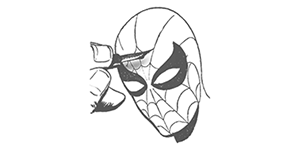
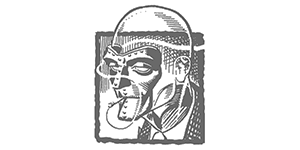
Steve Ditko (b. 1927) is an American comic book artist and writer best known as the artist and co-creator, with Stan Lee, of ‘Spider-Man’ and ‘Doctor Strange.’ As of mid-2012, Ditko continues to work at a studio in Manhattan’s Midtown West neighborhood. He has refused to give interviews or make public appearances since the 1960s, explaining in 1969 that, ‘When I do a job, it’s not my personality that I’m offering the readers but my artwork. It’s not what I’m like that counts; it’s what I did and how well it was done…. I produce a product, a comic art story. Steve Ditko is the brand name.’ He has, however, contributed numerous essays to Robin Snyder’s fanzine ‘The Comics.’
Ditko studied under ‘Batman’ artist Jerry Robinson in Manhattan at the Cartoonist and Illustrators School (later the School of Visual Arts). He began his professional career in 1953, working in the studio of Joe Simon and Jack Kirby, beginning as an inker and coming under the influence of artist Mort Meskin. During this time, he then began his long association with Charlton Comics, where he did work in the genres of science fiction, horror, and mystery. He also co-created the superhero ‘Captain Atom’ in 1960.
read more »
Posted in Art, Language |
Leave a Comment »
September 27, 2016
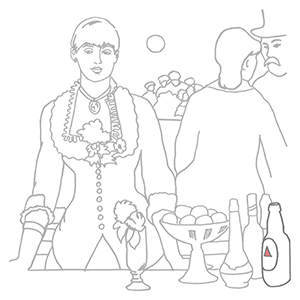
A logo is a graphic mark, emblem, or symbol commonly used by commercial enterprises, organizations and even individuals to aid and promote instant public recognition. Logos are either purely graphic (symbols/icons) or are composed of the name of the organization (a ‘logotype’ or ‘wordmark’).
In the days of hot metal typesetting, a logotype was one word cast as a single piece of type, e.g. ‘The’ (as opposed to a ‘ligature,’ which is two or more letters joined, but not forming a word). By extension, the term was also used for a uniquely set and arranged typeface or colophon (a brief description of the manuscript or book to which it is attached). At the level of mass communication and in common usage, a company’s logo is today often synonymous with its trademark or brand.
read more »
Posted in Art, Language, Money |
Leave a Comment »
August 17, 2016
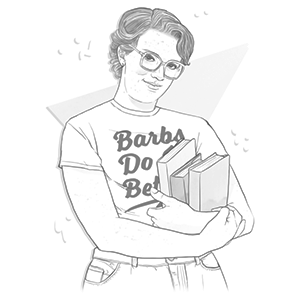
Mom jeans is a humorously pejorative term for a type of women’s jeans worn in the 80’s considered to be unfashionable and unflattering to the wearer’s figure. This style usually consists of a high waist (rising above the belly button), making the buttocks appear disproportionately longer, larger, and flatter than they otherwise might. It also tends to have excess space in the zipper/crotch and leg areas. The jeans are usually in a solid, light-blue color, with no form of stone washing or fading.
Other attributes of the style often seen are pleats, tapered legs, and elastic waistbands. The style is often accompanied by a blouse or shirt that is tucked into the jeans. This style of jeans was popular with women in the United States until the mid-1990s, when lower rise jeans started to become fashionable. High-waisted jeans became popular with young fashionable women once again in the early 2010s.
read more »
Posted in Art, Humor |
1 Comment »
August 11, 2016


A hood ornament (‘bonnet ornament’ in the UK), ‘radiator cap,’ ‘motor mascot,’ or ‘car mascot’ is a specially crafted model which symbolizes a car company like a badge, located on the front center portion of the hood. It has been used as an adornment nearly since the inception of automobiles. According to ‘A History of Cars,’ the first ‘hood ornament’ was a sun-crested falcon (to bring good luck) mounted on Egyptian pharaoh Tutankhamun’s chariot.
In the early years, automobiles had their radiator caps outside of the hood and on top of the grille which also served as an indicator of the temperature of the engine’s coolant fluid. The Boyce MotoMeter Company was issued a patent in 1912 for a radiator cap that incorporated a thermometer that was visible to the driver with a sensor that measured the heat of the water vapor, rather than the water itself. This became a useful gauge for the driver because many early engines did not have water pumps, but a circulation system based on the ‘thermo-syphon’ principle as in the Ford Model T. The ‘exposed radiator cap became a focal point for automobile personalization.’
read more »
Posted in Art, Money, Technology |
Leave a Comment »
August 10, 2016

Toyetic is a term referring to the suitability of a media property, such as a cartoon or movie, for merchandising tie-in lines of licensed toys, games and novelties. The term is attributed to Bernard Loomis, a toy development executive for Kenner Toys, in discussing the opportunities for marketing the film ‘Close Encounters of the Third Kind,’ telling its producer Steven Spielberg that the movie wasn’t ‘toyetic’ enough, leading Loomis towards acquiring the lucrative license for the upcoming ‘Star Wars’ properties.
Although George Lucas wrote the ‘Star Wars’ saga without considering the toyetic potentials of the film, he insisted that he would keep the merchandising rights before the first film was released. 20th Century-Fox underestimated the potential of the film and allowed Lucas to do so, and the film turned out to be a toyetic phenomenon. The seven films have spawned a massive merchandising empire, with everything from toys, action figures, and video games to non-toy merchandise, such as beer steins, spoons, and replicas of the lightsaber hilts.
read more »
Posted in Art, Money, Politics |
1 Comment »
August 2, 2016

Charging Bull, which is sometimes referred to as the ‘Wall Street Bull’ or the ‘Bowling Green Bull’ is a bronze sculpture, that stands in Bowling Green Park in the Financial District in Manhattan. Originally guerilla art, by Arturo Di Modica, its popularity led to it being a permanent feature.
The 7,100 lb sculpture stands 11 feet tall and measures 16 feet long. The bull’s testicles are 10 inches in diameter, weighing 107 pounds each. The oversize sculpture depicts a bull, the symbol of aggressive financial optimism and prosperity, leaning back on its haunches and with its head lowered as if ready to charge. The sculpture is both a popular tourist destination which draws thousands of people a day, as well as ‘one of the most iconic images of New York’ and a ‘Wall Street icon’ symbolizing Wall Street and the Financial District.
read more »
Posted in Art, Money |
1 Comment »
August 1, 2016
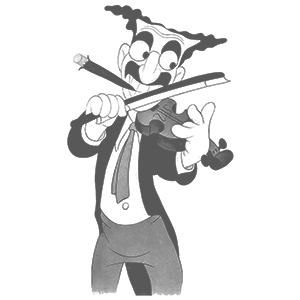
‘Will it play in Peoria?‘ is a figure of speech that is traditionally used to ask whether a given product, person, promotional theme, or event will appeal to mainstream (also called ‘Main Street’) America, or across a broad range of demographic and psychographic groups. The phrase was popularized during the vaudeville era and in movies by Groucho Marx. The belief was that if a new show was successful in Peoria, a main Midwestern stop for vaudeville acts, it would be successful anywhere.
Jack Mabley, writing in the ‘Chicago Tribune,’ concluded that ‘if it plays in Peoria it has good taste,’ but a more apt meaning is, according to James C. Ballowe, former dean of Peoria’s Bradley University graduate school, that ‘Peoria is a tough audience.’ The phrase subsequently was adopted by politicians, pollsters, and promoters to question the potential mainstream acceptance of anything new.
read more »
Posted in Art, Money, World |
Leave a Comment »
July 31, 2016
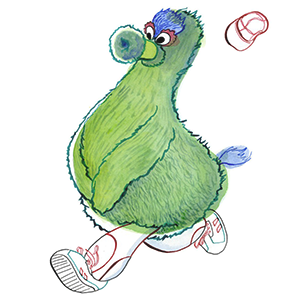
A mascot is any person, animal, or object thought to bring luck, or anything used to represent a group with a common public identity, such as a school, professional sports team, society, military unit, or brand name. Mascots are also used as fictional, representative spokespeople for consumer products, such as the rabbit used in advertising and marketing for the General Mills brand of breakfast cereal, Trix. Costumed mascots are commonplace, and are regularly used as goodwill ambassadors in the community for their team, company, or organization such as the U.S. Forest Service’s ‘Smokey Bear.’
In the world of sports, mascots are also used for merchandising. Team mascots are often confused with team nicknames. While the two can be interchangeable, they are not always the same. For example, the athletic teams of the University of Alabama are nicknamed the ‘Crimson Tide,’ while their mascot is an elephant named ‘Big Al.’ Team mascots may take the form of a logo, person, live animal, inanimate object, or a costumed character, and often appear at team matches and other related events, sports mascots are often used as marketing tools for their teams to children.
read more »
Posted in Art, Games, Money |
1 Comment »
July 24, 2016
Hideo Kojima (b. 1963) is a Japanese video game designer, screenwriter, director, and producer. He is the director of Kojima Productions, which he originally founded in 2005, and a former vice president of Konami Digital Entertainment. He is often regarded as an ‘auteur’ video game director.
He is the creator, director and writer of a number of widely praised video games, including the ‘Metal Gear’ series of stealth games, and the adventure games ‘Snatcher’ and ‘Policenauts,’ and he also directed or produced games in other series, including ‘Zone of the Enders,’ ‘Boktai,’ and ‘Castlevania: Lords of Shadow.’
read more »
Posted in Art, Games |
Leave a Comment »
July 20, 2016
Troy Andrews (born January 2, 1986), also known by the stage name Trombone Shorty, is an American musician, producer, actor and philanthropist from New Orleans. A multi-instrumentalist, he is best known as a trombone and trumpet player but also performs and records on the drums, organ and tuba.
A highly sought after musician for his unique style and approach, he has worked with some of the biggest names in rock, pop, jazz, funk, hip hop and EDM. Andrews is the younger brother of trumpeter and bandleader James Andrews as well as the grandson of singer and songwriter Jessie Hill. He began playing trombone at age four, and since 2009 has toured with his own band, Trombone Shorty & Orleans Avenue.
read more »
Posted in Art |
Leave a Comment »



