February 14, 2011

In popular music, a break is an instrumental or percussion section or interlude during a song derived from or related to stop-time – being a ‘break’ from the main parts of the song or piece. A solo break in jazz occurs when the rhythm section stops playing behind a soloist for a brief period, usually two or four bars leading into the soloist’s first chorus. In DJ parlance, a break is where all elements of a song (e.g., pads, basslines, vocals), except for percussion, disappear for a time. This is distinguished from a breakdown, a section where the composition is deliberately deconstructed to minimal elements (usually the percussion or rhythm section with the vocal re-introduced over the minimal backing), all other parts having been gradually or suddenly cut out.
In hip hop and electronica, a short break is also known as a ‘cut,’ and the reintroduction of the full bass line and drums is known as a ‘drop,’ which is sometimes accented by cutting off everything, even the percussion. A break beat is the sampling of breaks as drum loops (beats), originally from soul tracks, and using them as the rhythmic basis for hip hop and rap songs. It was invented by DJ Kool Herc. A particularly innovative style of street dance was created to accompany break beat-based music, and was hence referred to as ‘The Break,’ or break dancing.
Posted in Art, Language |
Leave a Comment »
February 14, 2011

Weathering steel, also known as COR-TEN steel, is a group of steel alloys which were developed to obviate the need for painting, and form a stable rust-like appearance if exposed to the weather for several years. Weathering steel is popularly used in outdoor sculptures and as exterior facades, for its rustic antique appearance. It is very widely used in marine transportation, in the construction of Intermodal containers.
Using weathering steel in construction presents several challenges. Ensuring that weld-points weather at the same rate as the other materials may require special welding techniques or material. Weathering steel is not rustproof in itself. If water is allowed to accumulate in pockets, those areas will experience higher corrosion rates, so provision for drainage must be made. Weathering steel is sensitive to salt-laden air environments. In such environments, it is possible that the protective patina may not stabilize but instead continue to corrode.
Posted in Art, Money, Technology |
Leave a Comment »
February 14, 2011
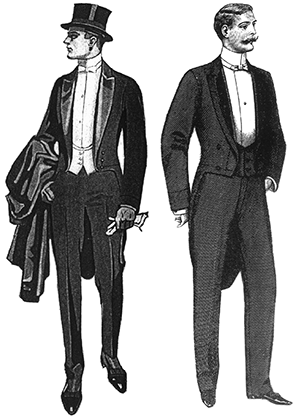
Tuxedo Park is a village in New York, about 50 miles north of New York City in Orange County from which the formal attire of the same name originates. The population was 731 at the 2000 census.The name is derived from a Native American word of the Lenape language, tucsedo, which means either ‘place of the bear’ or ‘clear flowing water.’ Tuxedo Park is a village within the southern part of the Town of Tuxedo (pop. 3,334).
read more »
Posted in Art, Language, Money |
Leave a Comment »
February 13, 2011

SkyReel is a Canadian company that builds and operates unmanned aerial vehicles (UAV) outfitted with camera systems for the motion picture industry.
Posted in Art, Money, Technology |
Leave a Comment »
February 13, 2011

The Red Digital Cinema Camera Company manufactures digital cinematography cameras and accessories for professional and cinematic use. The company was created and financed by Oakley founder Jim Jannard with the publicly expressed intent to reinvent the camera industry. The company’s main product is the Red One, which can record at resolutions up to 4,096 horizontal by 2,304 vertical pixels, directly to flash or hard disk storage. It features a single Super 35-sized CMOS sensor and a cinematography industry standard PL mount.
Posted in Art, Money, Technology |
Leave a Comment »
February 12, 2011

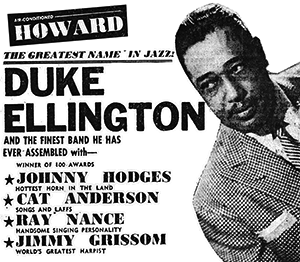
The Chitlin’ Circuit was the collective name given to the string of performance venues throughout the eastern and southern United States that were safe and acceptable for African American musicians, comedians, and other entertainers to perform during the age of racial segregation in the United States (from at least the late 19th century through the 1960s). The name derives from the soul food item chitterlings (stewed pig intestines).
Posted in Art, Money, Politics |
Leave a Comment »
February 12, 2011
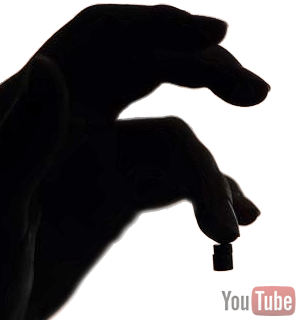
Magnetic implants are an experimental process in which small magnets are placed under the skin, allowing objects to be magnetically attached to the body, and also enables the wearer to sense electromagnetic fields. They have been used for several years in dentistry and re-constructive surgery, but their use by the body modification community is recent. Having magnets implanted under the skin allows the wearer to attach magnetic items to the outside of the skin, and also enables the wearer to sense electromagnetic fields.
Samppa, a a body modification artist, implanted magnets in himself and close friends in the late 1990’s, but they weren’t very strong and were only capable of picking up small items. Jesse Jarrell and Steve Haworth developed small and powerful neodymium magnets encapsulated in silicone. The procedure is still experimental, and complications are common, including rupturing of the silicone shell.
Posted in Art, Health, Technology |
Leave a Comment »
February 11, 2011
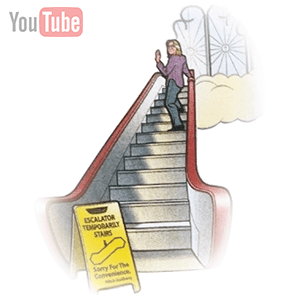
Mitch Hedberg (1968 – 2005) was an American stand-up comedian known for his surreal humor and unconventional comedic delivery. His comedy typically featured short, sometimes one-line jokes, mixed with absurd elements and non sequiturs.
Hedberg’s comedy and on-stage persona gained him a cult following, with audience members sometimes shouting out the punchlines to his jokes before he could finish them.
read more »
Posted in Art, Humor |
Leave a Comment »
February 11, 2011

Karl Pilkington (b. 1972) is an English author and former radio producer. He is best known for producing and co-presenting The Ricky Gervais Show on Xfm London between 2001 and 2005; and for the subsequent podcast series and HBO animated television series. He was also the subject of the Sky1 travel series, An Idiot Abroad, which was also presented in the United States on the Science Channel. The New York Times ran an article about The Ricky Gervais Show describing Pilkington’s behaviour as a well-executed deadpan routine.
Posted in Art, Humor |
Leave a Comment »
February 11, 2011
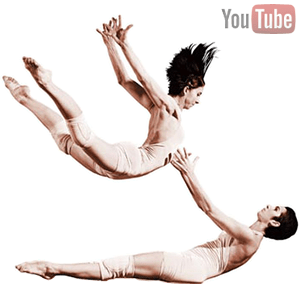
In ballet, a pas de deux [pahduh due] (French, steps of two) is a duet in which ballet dancers perform the dance together. It usually consists of an entrée (introduction), adagio (a slow portion), two variations (one for each dancer), and a coda (literally ‘tail’). The coda is a passage which brings a movement or a separate piece to a conclusion. In ballet, the coda is usually the ‘Finale,’ a set of dances known as the Grand Pas or Grand Pas d’action and brings almost all the dancers onto the stage. A particularly large or complex coda may be called a coda Grande.
Posted in Art, Language |
Leave a Comment »
February 11, 2011
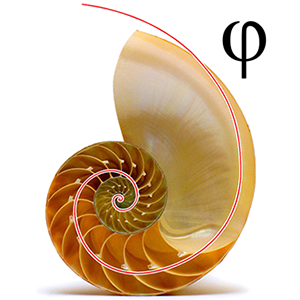
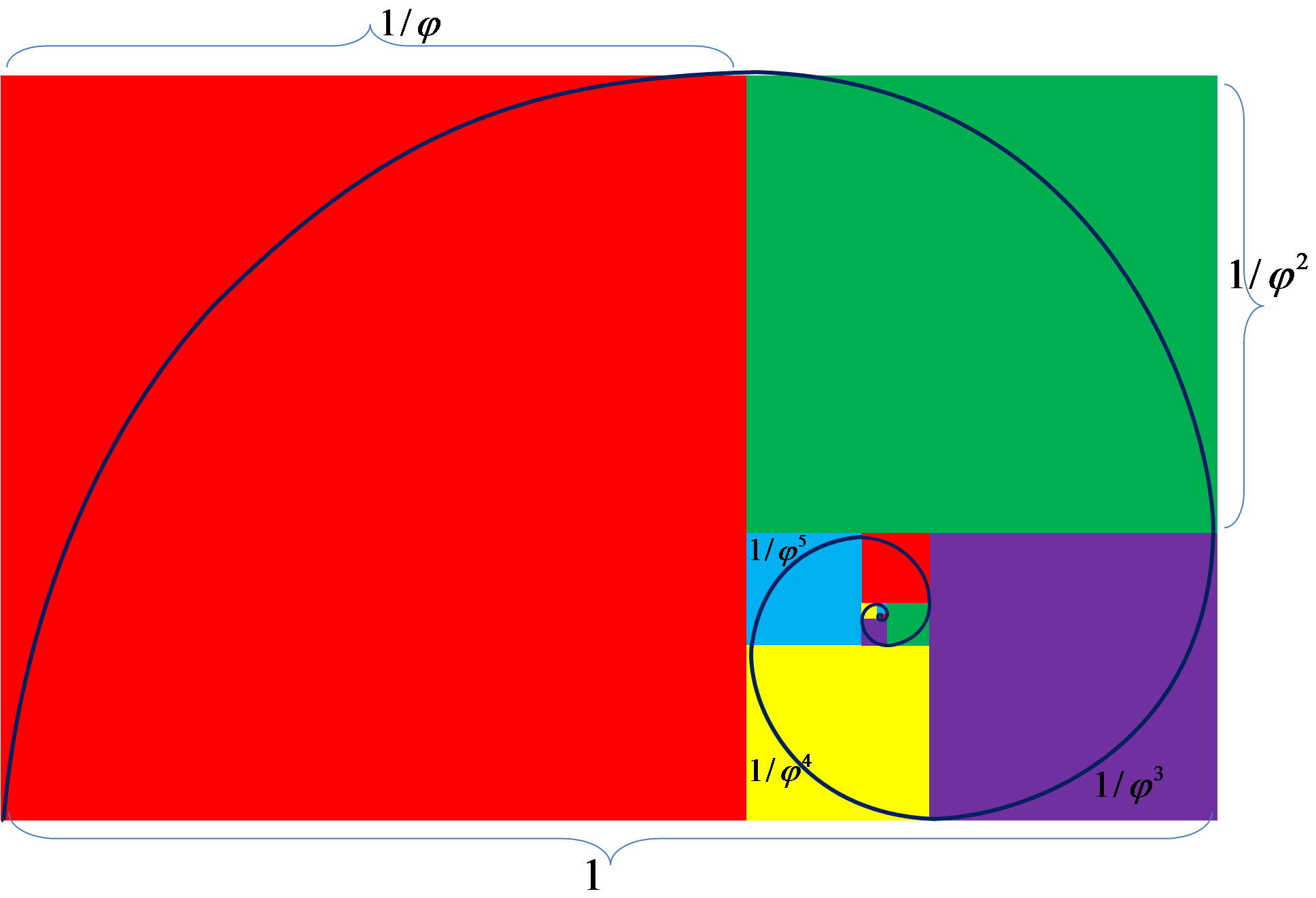
If a person has one number a and another smaller number b, he can make the ratio of the two numbers by dividing them. Their ratio is a/b. He can make another ratio by adding the two numbers together a+b and dividing this by the larger number a. The new ratio is (a+b)/a. If these two ratios are equal to the same number, then that number is called the golden ratio. The Greek letter  (phi) is usually used to represent the golden ratio. Like Pi, the golden ratio is an irrational number. If a person tries to write it, it will never stop and never be the same again and again, but it will start this way: 1.6180339887…
Italian mathematician, Fibonacci (1170 – 1250), discovered a sequence of numbers that relates to the golden ratio called the Fibonacci numbers. A person can find the next number in the list by adding the last two numbers together. If a person divides a number in the list by the number that came before it, this ratio comes closer and closer to the golden ratio. At least since the Renaissance, many artists and architects have proportioned their works to approximate the golden ratio—especially in the form of the golden rectangle, in which the ratio of the longer side to the shorter is the golden ratio—believing this proportion to be aesthetically pleasing. Mathematicians have studied the golden ratio because of its unique and interesting properties.
Posted in Art, Science |
Leave a Comment »
February 10, 2011
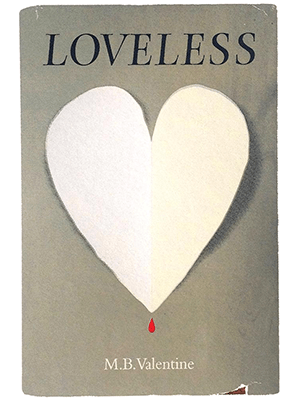
Shoegazing (also known as shoegaze) is a subgenre of alternative rock that emerged from the United Kingdom in the late 1980s. It lasted there until the mid 1990s, with a critical zenith reached in 1990 and 1991. The British music press named this style shoegazing because the musicians in these bands stood relatively still during live performances in a detached, introspective, non-confrontational state, hence the idea that they were gazing at their shoes. The heavy use of effects pedals also contributed to the image of performers looking down at their feet (shoegazing) during concerts.
Posted in Art, Language |
Leave a Comment »




 The Daily Omnivore