February 12, 2011
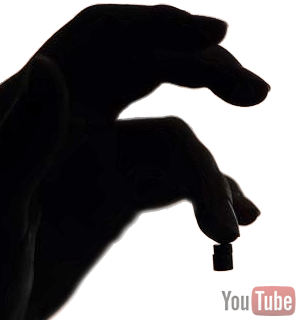
Magnetic implants are an experimental process in which small magnets are placed under the skin, allowing objects to be magnetically attached to the body, and also enables the wearer to sense electromagnetic fields. They have been used for several years in dentistry and re-constructive surgery, but their use by the body modification community is recent. Having magnets implanted under the skin allows the wearer to attach magnetic items to the outside of the skin, and also enables the wearer to sense electromagnetic fields.
Samppa, a a body modification artist, implanted magnets in himself and close friends in the late 1990’s, but they weren’t very strong and were only capable of picking up small items. Jesse Jarrell and Steve Haworth developed small and powerful neodymium magnets encapsulated in silicone. The procedure is still experimental, and complications are common, including rupturing of the silicone shell.
Posted in Art, Health, Technology |
Leave a Comment »
February 11, 2011
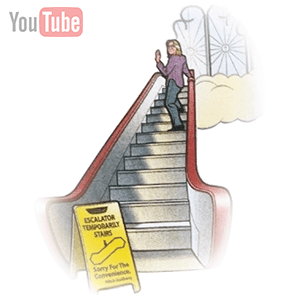
Mitch Hedberg (1968 – 2005) was an American stand-up comedian known for his surreal humor and unconventional comedic delivery. His comedy typically featured short, sometimes one-line jokes, mixed with absurd elements and non sequiturs.
Hedberg’s comedy and on-stage persona gained him a cult following, with audience members sometimes shouting out the punchlines to his jokes before he could finish them.
read more »
Posted in Art, Humor |
Leave a Comment »
February 11, 2011

Karl Pilkington (b. 1972) is an English author and former radio producer. He is best known for producing and co-presenting The Ricky Gervais Show on Xfm London between 2001 and 2005; and for the subsequent podcast series and HBO animated television series. He was also the subject of the Sky1 travel series, An Idiot Abroad, which was also presented in the United States on the Science Channel. The New York Times ran an article about The Ricky Gervais Show describing Pilkington’s behaviour as a well-executed deadpan routine.
Posted in Art, Humor |
Leave a Comment »
February 11, 2011
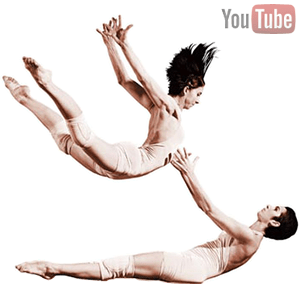
In ballet, a pas de deux [pahduh due] (French, steps of two) is a duet in which ballet dancers perform the dance together. It usually consists of an entrée (introduction), adagio (a slow portion), two variations (one for each dancer), and a coda (literally ‘tail’). The coda is a passage which brings a movement or a separate piece to a conclusion. In ballet, the coda is usually the ‘Finale,’ a set of dances known as the Grand Pas or Grand Pas d’action and brings almost all the dancers onto the stage. A particularly large or complex coda may be called a coda Grande.
Posted in Art, Language |
Leave a Comment »
February 11, 2011
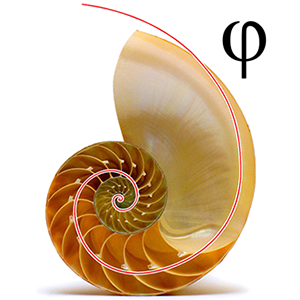
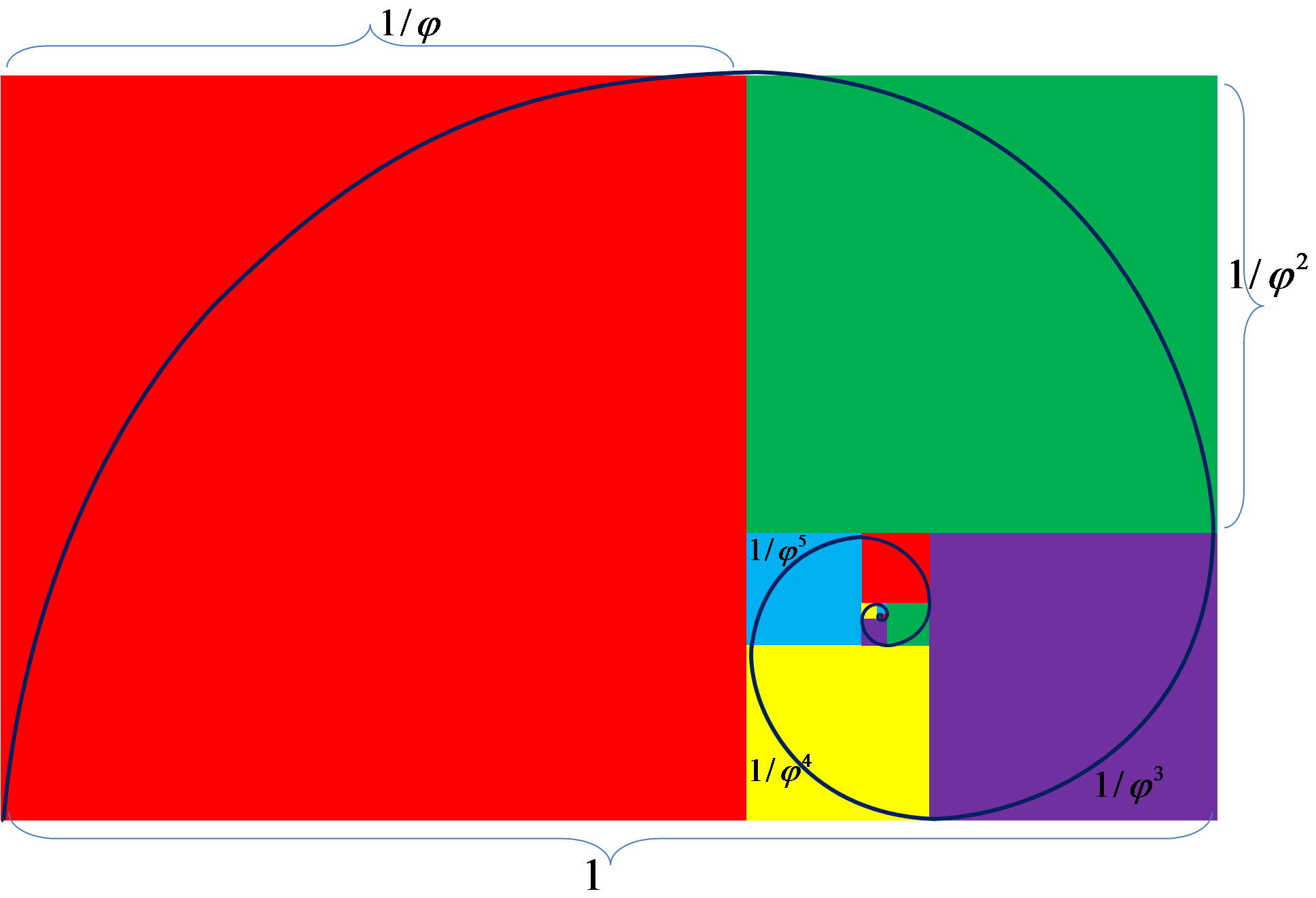
If a person has one number a and another smaller number b, he can make the ratio of the two numbers by dividing them. Their ratio is a/b. He can make another ratio by adding the two numbers together a+b and dividing this by the larger number a. The new ratio is (a+b)/a. If these two ratios are equal to the same number, then that number is called the golden ratio. The Greek letter  (phi) is usually used to represent the golden ratio. Like Pi, the golden ratio is an irrational number. If a person tries to write it, it will never stop and never be the same again and again, but it will start this way: 1.6180339887…
Italian mathematician, Fibonacci (1170 – 1250), discovered a sequence of numbers that relates to the golden ratio called the Fibonacci numbers. A person can find the next number in the list by adding the last two numbers together. If a person divides a number in the list by the number that came before it, this ratio comes closer and closer to the golden ratio. At least since the Renaissance, many artists and architects have proportioned their works to approximate the golden ratio—especially in the form of the golden rectangle, in which the ratio of the longer side to the shorter is the golden ratio—believing this proportion to be aesthetically pleasing. Mathematicians have studied the golden ratio because of its unique and interesting properties.
Posted in Art, Science |
Leave a Comment »
February 10, 2011
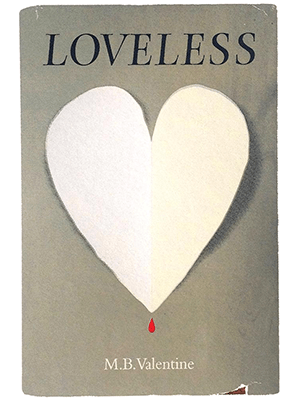
Shoegazing (also known as shoegaze) is a subgenre of alternative rock that emerged from the United Kingdom in the late 1980s. It lasted there until the mid 1990s, with a critical zenith reached in 1990 and 1991. The British music press named this style shoegazing because the musicians in these bands stood relatively still during live performances in a detached, introspective, non-confrontational state, hence the idea that they were gazing at their shoes. The heavy use of effects pedals also contributed to the image of performers looking down at their feet (shoegazing) during concerts.
Posted in Art, Language |
Leave a Comment »
February 10, 2011


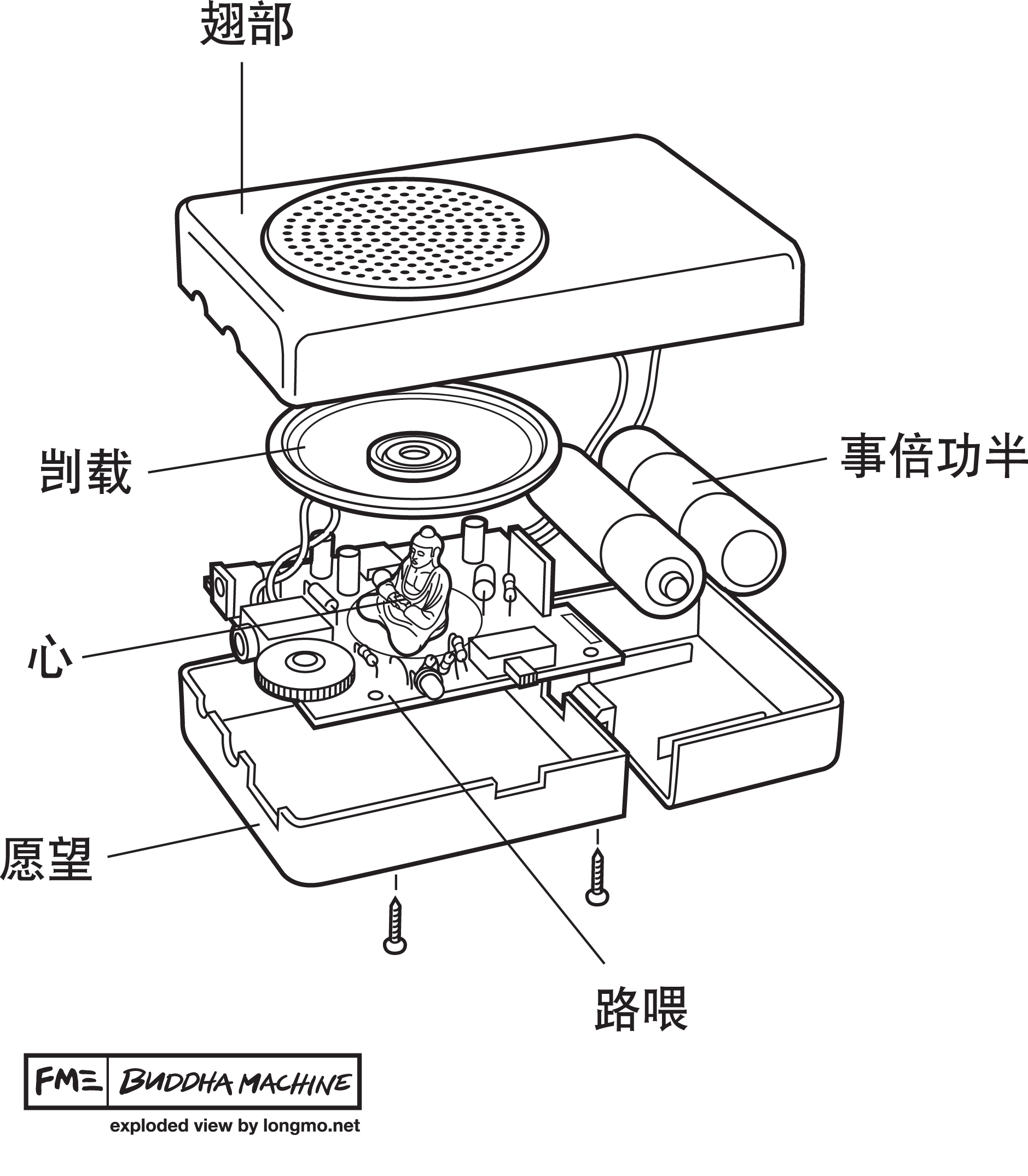
The Buddha Machine is a small musical loop player released by FM3, a China-based music duo. The name and idea derived from a popular Chinese music player that intones repeating loops of Buddhist chanting. The Buddha Machine continuously plays one of 9 ambient sound loops (drones) that range in length from 5 to 40 seconds. Resembling a small transistor radio, the device has a volume control that doubles as an on/off switch; a headphone jack; a 4.5V AC adapter jack; and a switch that, when moved, selects the next of 9 ambient loops. In 2008, the second edition (version 2.0) was released commercially; it replaces the original nine loops with nine new ones (totaling approximately 300 seconds of sound), and includes a new control that allows the user to alter the pitch of the sound.
In 2009, FM3 Productions Ltd released an iPhone app that has similar functionality to the real device. It has the option to select from version 1.0 or version 2.0 of the device and a single button that selects the loop to play. Also that year, Throbbing Gristle & Industrial Records released their version of the Buddha Machine, ‘Gristleism,’ with more loops and almost twice the frequency range of the Buddha Machine. In 2010, FM3 released the third generation Buddha Machine, titled Chan Fang. The music is divided into four loops which were composed and performed on the Gu Qin, an ancient Chinese classical instrument.
Posted in Art, Philosophy, Technology |
Leave a Comment »
February 10, 2011

Disco Demolition Night was a promotional event that took place on Thursday, July 12, 1979, at Comiskey Park in Chicago, Illinois, during which a crate filled with records was blown up on the field. It was held during the doubleheader baseball game between the Chicago White Sox and the Detroit Tigers. During the climax of the event, rowdy fans surged onto the field, and a near riot ensued. It would ultimately prove to be one of the most notable promotional ideas and one of the most infamous since ‘Ten Cent Beer Night’ in Cleveland in 1974. The event was the culmination of a popular backlash against disco music.
Posted in Art, Humor |
Leave a Comment »
February 10, 2011

FM-2030 (1930 – 2000) was a transhumanist author, born Fereidoun M. Esfandiary in Brussels to an Iranian diplomat. He became notable in 1989 with the book ‘Are You a Transhuman?: Monitoring and Stimulating Your Personal Rate of Growth in a Rapidly Changing World.’ He also wrote a number of works of fiction under his original name. He changed his name to FM-2030 to reflect the hope and belief that he would live to celebrate his 100th birthday in 2030, and more importantly, to break free of the widespread practice of naming conventions that he saw as rooted in a collectivist mentality, and existing only as a relic of humankind’s tribalistic past. He viewed traditional names as almost always stamping a label of collective identity – varying from gender, to nationality – on the individual.
Many of FM-2030’s predictions about social trends from the 1970s through the early 21st century proved remarkably prescient. He argued that the inherent dynamic of the modern globalizing civilization would bring such changes about despite the best efforts of conservative elites to enforce traditional beliefs. He predicted in vitro fertilization and correcting genetic flaws in 1977; in 1980, he predicted teleconferencing, telemedicine, and teleshopping. He taught at The New School, UCLA, and Florida International University. He worked as a corporate consultant for Lockheed and J.C. Penney. He was a lifelong vegetarian and said he would not eat anything that had a mother. He died from pancreatic cancer and was placed in cryonic suspension at the Alcor Life Extension Foundation in Arizona, where his body remains today.
Posted in Art, Philosophy, Technology |
Leave a Comment »
February 10, 2011


In American cinema, the magical negro is a supporting stock character who, by use of special insight or powers, helps the white protagonist. The word negro, now considered by many as archaic and sometimes offensive, is used intentionally to suggest that the archetype is a racial throwback, an update of the ‘Sambo’ and ‘Noble savage’ stereotypes.
African-American filmmaker Spike Lee popularized the term in 2001 while discussing films with students at Washington State University and at Yale University. The magical negro is a subset of the more generic ‘numinous negro,’ a term coined by Richard Brookhiser in National Review for saintly, respected or heroic black protagonists or mentors.
Posted in Art, Politics |
Leave a Comment »
February 10, 2011
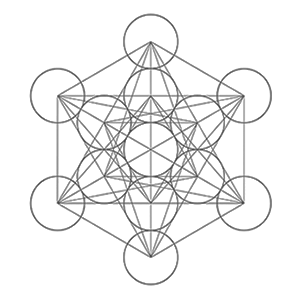
Sacred geometry ascribes symbolic and sacred meanings to certain geometric shapes and certain geometric proportions. It is associated with the belief that a god is the geometer (geometry mathematician) of the world. The geometry used in the design and construction of religious structures such as churches, temples, mosques, religious monuments, altars, and tabernacles has sometimes been considered sacred. The concept applies also to sacred spaces such as temenoi, sacred groves, village greens, and holy wells, and the creation of religious art.
The belief that a god created the universe according to a geometric plan has ancient origins. Plutarch attributed the belief to Plato, writing that ‘Plato said God geometrizes continually’ In modern times, the mathematician Carl Friedrich Gauss adapted this quote, saying ‘God arithmetizes.’ As late as Johannes Kepler (1571–1630), a belief in the geometric underpinnings of the cosmos persisted among some scientists.
read more »
Posted in Art, Philosophy, Technology |
Leave a Comment »
February 9, 2011

Patricia Piccinini (born in 1965 in Freetown, Sierra Leone) is an Australian artist and hyperrealist sculptor. Her art work came to prominence in Australia in the late 1990s.
Her major artworks often reflect her interests in issues such as bioethics, biotechnologies and the environment. Other Australian artists who work in a similar idiom are Martine Corompt, Sam Jinks and Ron Mueck.
Posted in Art, Money, Politics |
Leave a Comment »