February 16, 2011

A détournement [deh-tern-eh-mahn] is a variation on a previous media work, in which the newly created one has a meaning that is antagonistic or antithetical to the original. The original media work that is détourned must be somewhat familiar to the target audience, so that it can appreciate the opposition of the new message.
The artist or commentator making the variation can reuse only some of the characteristic elements of the originating work. The term is borrowed from French, and the practice was popularized by Situationist International (an anti-establishment political movement that formed in Italy in the 1950s). A similar term more familiar to English speakers would be ‘turnabout’ or ‘derailment.’
read more »
Posted in Art, Politics |
1 Comment »
February 16, 2011


Agitprop [aj-it-prop] (agitation propaganda) refers to highly politicized art. The term originated in Soviet Russia. The term ‘propaganda’ in the Russian language did not bear any negative connotation at the time. It simply meant ‘dissemination of ideas.’ In the case of agitprop, the ideas to be disseminated were those of communism, including explanations of the policy of the Communist Party and the Soviet state. Agitation meant urging people to do what Soviet leaders expected them to do; again, at various levels. In other words, propaganda was supposed to act on the mind, while agitation acted on emotions, although both usually went together, thus giving rise to the cliché ‘propaganda and agitation.’
The term agitprop gave rise to agitprop theatre, a highly-politicized leftist theatre originated in 1920s Europe and spread to America; the plays of Bertolt Brecht being a notable example. Russian agitprop theater was noted for its cardboard characters of perfect virtue and complete evil, and its coarse ridicule. Gradually the term agitprop came to describe any kind of highly politicized art. In the Western world, agitprop has a negative connotation. In the United Kingdom during the 1980s, for example, socialist elements of the political scene were often accused of using agitprop to convey an extreme left-wing message via television programmes or theater.
Posted in Art, Politics |
Leave a Comment »
February 14, 2011

Alphaville: Une étrange aventure de Lemmy Caution (Alphaville: A Strange Adventure of Lemmy Caution) is a 1965 black-and-white French science fiction film directed by Jean-Luc Godard. It combines the genres of dystopian science fiction and film noir (stylish Hollywood crime dramas, particularly those that emphasize cynical attitudes and sexual motivations). Although set far in the future on another planet, there are no special effects or elaborate sets; instead, the film was shot in real locations in Paris, the night-time streets of the capital becoming the streets of Alphaville, while modernist glass and concrete buildings represent the city’s interiors.
Expatriate American actor Eddie Constantine plays Lemmy Caution, a trenchcoat-wearing secret agent. Constantine had already played this or similar roles in dozens of previous films; the character was originally created by British pulp novelist Peter Cheyney. However, in Alphaville, director Jean-Luc Godard moves Caution away from his usual twentieth century setting, and places him in a futuristic sci-fi dystopia, the technocratic dictatorship of Alphaville.
Posted in Art, Politics |
Leave a Comment »
February 14, 2011

Jean-Luc Godard (b. 1930) is a French-Swiss filmmaker. He is often identified with the group of filmmakers known as the Nouvelle Vague, or ‘French New Wave.’ Many of his films challenge the conventions of traditional Hollywood cinema as well as the French equivalent. He is often considered the most extreme or radical of the New Wave filmmakers. His films express his political ideologies as well as his knowledge of film history. In addition, Godard’s films often cite existentialism as he was an avid reader of existential and Marxist philosophy.
His radical approach in movie conventions, politics and philosophies made him the most influential filmmaker of the French New Wave, inspiring directors as diverse as Quentin Tarantino, Martin Scorsese, Bernardo Bertolucci, Paul Thomas Anderson, Arthur Penn, Hal Hartley, Richard Linklater, Gregg Araki, John Woo, Mike Figgis, Robert Altman, Steven Soderbergh, Richard Lester, Jim Jarmusch, Rainer Werner Fassbinder, Brian De Palma, Wim Wenders, Oliver Stone and Ken Loach.
Posted in Art |
Leave a Comment »
February 14, 2011

The New Wave (French: La Nouvelle Vague) was a term coined by critics for a group of French filmmakers of the late 1950s and 1960s, influenced by Italian Neorealism (a style of film characterized by stories set amongst the poor and working class) and classical Hollywood cinema. French New Wave was a product of the social and political upheavals of the era; radical experiments with editing, visual style and narrative broke with the conservative paradigm.
read more »
Posted in Art, Language, World |
Leave a Comment »
February 14, 2011
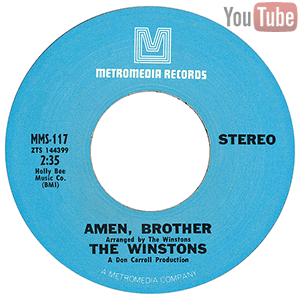
The ‘Amen break‘ was a brief drum solo performed in 1969 by G. C. Coleman in the song ‘Amen, Brother’ performed by the 1960s funk and soul outfit The Winstons. It gained fame from the 1980s onwards when four bars (5.2 seconds) sampled from the drum-solo (or imitations thereof) became very widely used as sampled drum loops in hip hop and other music. The full song is an up-tempo instrumental rendition of Jester Hairston’s ‘Amen,’ which he wrote for the Sidney Poitier film Lilies of the Field (1963) and which was subsequently popularized by The Impressions in 1964.
The Winstons’ version was released as a B-side of the 45 RPM 7-inch vinyl single ‘Color Him Father’ in 1969 on Metromedia. The Amen Break was used extensively in early hiphop and sample-based music, and became the basis for drum-and-bass and jungle music—’a six-second clip that spawned several entire subcultures.’
Posted in Art, Money, Technology |
Leave a Comment »
February 14, 2011

In popular music, a break is an instrumental or percussion section or interlude during a song derived from or related to stop-time – being a ‘break’ from the main parts of the song or piece. A solo break in jazz occurs when the rhythm section stops playing behind a soloist for a brief period, usually two or four bars leading into the soloist’s first chorus. In DJ parlance, a break is where all elements of a song (e.g., pads, basslines, vocals), except for percussion, disappear for a time. This is distinguished from a breakdown, a section where the composition is deliberately deconstructed to minimal elements (usually the percussion or rhythm section with the vocal re-introduced over the minimal backing), all other parts having been gradually or suddenly cut out.
In hip hop and electronica, a short break is also known as a ‘cut,’ and the reintroduction of the full bass line and drums is known as a ‘drop,’ which is sometimes accented by cutting off everything, even the percussion. A break beat is the sampling of breaks as drum loops (beats), originally from soul tracks, and using them as the rhythmic basis for hip hop and rap songs. It was invented by DJ Kool Herc. A particularly innovative style of street dance was created to accompany break beat-based music, and was hence referred to as ‘The Break,’ or break dancing.
Posted in Art, Language |
Leave a Comment »
February 14, 2011

Weathering steel, also known as COR-TEN steel, is a group of steel alloys which were developed to obviate the need for painting, and form a stable rust-like appearance if exposed to the weather for several years. Weathering steel is popularly used in outdoor sculptures and as exterior facades, for its rustic antique appearance. It is very widely used in marine transportation, in the construction of Intermodal containers.
Using weathering steel in construction presents several challenges. Ensuring that weld-points weather at the same rate as the other materials may require special welding techniques or material. Weathering steel is not rustproof in itself. If water is allowed to accumulate in pockets, those areas will experience higher corrosion rates, so provision for drainage must be made. Weathering steel is sensitive to salt-laden air environments. In such environments, it is possible that the protective patina may not stabilize but instead continue to corrode.
Posted in Art, Money, Technology |
Leave a Comment »
February 14, 2011
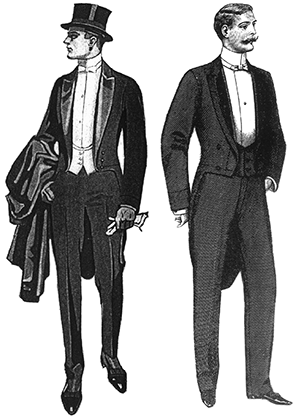
Tuxedo Park is a village in New York, about 50 miles north of New York City in Orange County from which the formal attire of the same name originates. The population was 731 at the 2000 census.The name is derived from a Native American word of the Lenape language, tucsedo, which means either ‘place of the bear’ or ‘clear flowing water.’ Tuxedo Park is a village within the southern part of the Town of Tuxedo (pop. 3,334).
read more »
Posted in Art, Language, Money |
Leave a Comment »
February 13, 2011

SkyReel is a Canadian company that builds and operates unmanned aerial vehicles (UAV) outfitted with camera systems for the motion picture industry.
Posted in Art, Money, Technology |
Leave a Comment »
February 13, 2011

The Red Digital Cinema Camera Company manufactures digital cinematography cameras and accessories for professional and cinematic use. The company was created and financed by Oakley founder Jim Jannard with the publicly expressed intent to reinvent the camera industry. The company’s main product is the Red One, which can record at resolutions up to 4,096 horizontal by 2,304 vertical pixels, directly to flash or hard disk storage. It features a single Super 35-sized CMOS sensor and a cinematography industry standard PL mount.
Posted in Art, Money, Technology |
Leave a Comment »
February 12, 2011

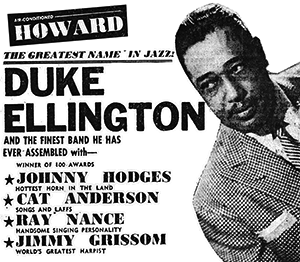
The Chitlin’ Circuit was the collective name given to the string of performance venues throughout the eastern and southern United States that were safe and acceptable for African American musicians, comedians, and other entertainers to perform during the age of racial segregation in the United States (from at least the late 19th century through the 1960s). The name derives from the soul food item chitterlings (stewed pig intestines).
Posted in Art, Money, Politics |
Leave a Comment »