January 4, 2011

Ganguro (‘Black Face’) is an alternative fashion trend of blonde or orange hair and tanned skin among young Japanese women that appeared in the early 1990s and peaked in popularity around the year 2000. The Shibuya and Ikebukuro districts of Tokyo were the centers of the trend. Ganguro falls into the larger subculture of ‘gyaru’ (from English ‘gal’), a slang term used for various groups of young women, usually referring to overly childish or rebellious girls.
In ganguro fashion, a deep tan is combined with hair dyed in shades of orange to blonde, or a silver grey known as ‘high bleached.’ Black ink is used as eyeliner and white concealer is used as lipstick and eyeshadow. False eyelashes, plastic facial gems, and pearl powder are often added. Platform shoes and brightly-colored outfits complete the look. Also typical of ganguro fashion are tie-dyed sarongs, miniskirts, stickers on the face, and many bracelets, rings, and necklaces.
Posted in Art, World |
Leave a Comment »
January 4, 2011

Harajuku is the common name for the area around Harajuku Station in the Shibuya ward of Tokyo, Japan. It is a fashion capital of the world, renowned for its unique street fashion. Every Sunday, young people dressed in a variety of styles including gothic lolita, visual kei, and decora, as well as cosplayers spend the day in Harajuku socializing. The term ‘Harajuku Girls’ has been used by English-language media to describe teenagers dressed in any fashion style who are in the area of Harajuku.
Posted in Art, World |
Leave a Comment »
January 4, 2011

Abu l-Hasan (789–857), nicknamed Ziryab, was a Persian or Kurdish polymath: a poet, musician, courtesan, astronomer, botanist and geographer born in Baghdad and active in Córdoba, Spain. According to some sources, he was a former slave, possibly of East African descent. The name ‘Ziryab’ (Blackbird) was given to him for his dark complexion, eloquence, and melodious voice.
Ziryab introduced musical instruments to Iberia, notably the Persian lute that became the Spanish guitar, as well as passionate songs and dances of Persia and Mesopotamia that later, mixed with Gypsy influence, evolved into the famed Spanish flamenco. He is also credited with inventing and popularizing an early form of toothpaste.
Posted in Art, World |
Leave a Comment »
January 3, 2011


Method acting refers to a family of techniques by which actors try to create in themselves the thoughts and emotions of their characters in an effort to develop lifelike performances. It can be contrasted with more classical forms of acting, in which actors simulate the thoughts and emotions of their characters through external means, such as vocal intonation or facial expression. Though not all Method actors use the same approach, the ‘method’ in Method acting usually refers to the practice, advocated by Lee Strasberg, by which actors draw upon their own emotions and memories in their portrayals, aided by a set of exercises and practices including sense memory and affective memory.
Method actors are often characterized as immersing themselves in their characters to the extent that they continue to portray them even offstage or off-camera for the duration of a project. However, this is a popular misconception. While some actors have employed this approach, it is generally not taught as part of the Method. Method acting has been described as revolutionizing American theater. While classical acting instruction had focused on developing external talents the Method was the first systematized training that also developed internal abilities (sensory, psychological, emotional).
Posted in Art, Education |
Leave a Comment »
January 2, 2011

A panorama is any wide-angle view or representation of a physical space, whether in painting, drawing, photography, film/video, or a three-dimensional model. The word was originally coined by the Irish painter Robert Barker to describe his panoramic paintings of Edinburgh. Shown on a cylindrical surface and viewed from the inside, they were exhibited in London in 1792. The motion-picture term ‘panning’ is derived from panorama. Panoramic photography eventually came to displace painting as the most common method for creating wide views.
Not long after the introduction of the Daguerreotype in 1839, photographers began assembling multiple images of a view into a single wide image. In the late 19th century, panoramic cameras using curved film holders employed clockwork drives to scan a line image in an arc to create an image over almost 180 degrees. Digital photography of the late twentieth century greatly simplified this assembly process, which is now known as image stitching. Such stitched images may even be fashioned into forms of virtual reality movies, using technologies such as QuickTime VR, Flash, or Java.
Posted in Art, Technology |
Leave a Comment »
January 2, 2011
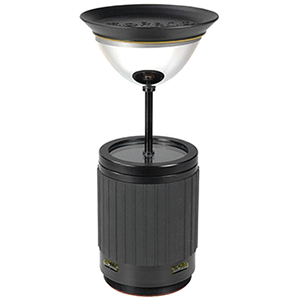
In photography, an omnidirectional camera is a camera with a 360-degree field of view in the horizontal plane, or with a visual field that covers (approximately) the entire sphere. Omnidirectional cameras are important in areas where large visual field coverage is needed, such as in panoramic photography and robotics.
Posted in Art, Technology |
Leave a Comment »
January 2, 2011

Fantastic Planet is a 1973 animated science fiction film directed by René Laloux, production designed by Roland Topor, written by both of them and animated at Jiří Trnka Studio. The film was an international production between France and Czechoslovakia and was distributed in the United States by Roger Corman. The story is based on the novel ‘Oms en série,’ by the French writer Stefan Wul. The film is chiefly noted for Topor’s surreal imagery.
The film depicts a future in which human beings, known as ‘Oms’ (a play on the French word ‘hommes,’ meaning ‘men’), have been brought by the giant Draags to the Draag home world, where they are kept as pets (with collars). Most Oms are domesticated as pets, but others run wild, and are periodically exterminated. The Draags’ treatment of the Oms is ironically contrasted with their high level of technological and spiritual development. The Draag practice of meditation, whereby they commune psychically with each other and with different species, is shown in transformations of their shape and color.
Posted in Art, World |
Leave a Comment »
January 2, 2011
Birdy Nam Nam is a French DJ crew, originally formed to compete in the DMC World DJ Championship. Their self-titled debut album was released in 2006 on Uncivilized World Records and was created entirely on turntables.
In 2009 they released ‘Manual for Successful Rioting,’ an album that found the four programming and playing synths along with their turntables. The group’s name is taken from the 1968 Peter Sellers film ‘The Party,’ directed by Blake Edwards.
Posted in Art |
Leave a Comment »
January 1, 2011


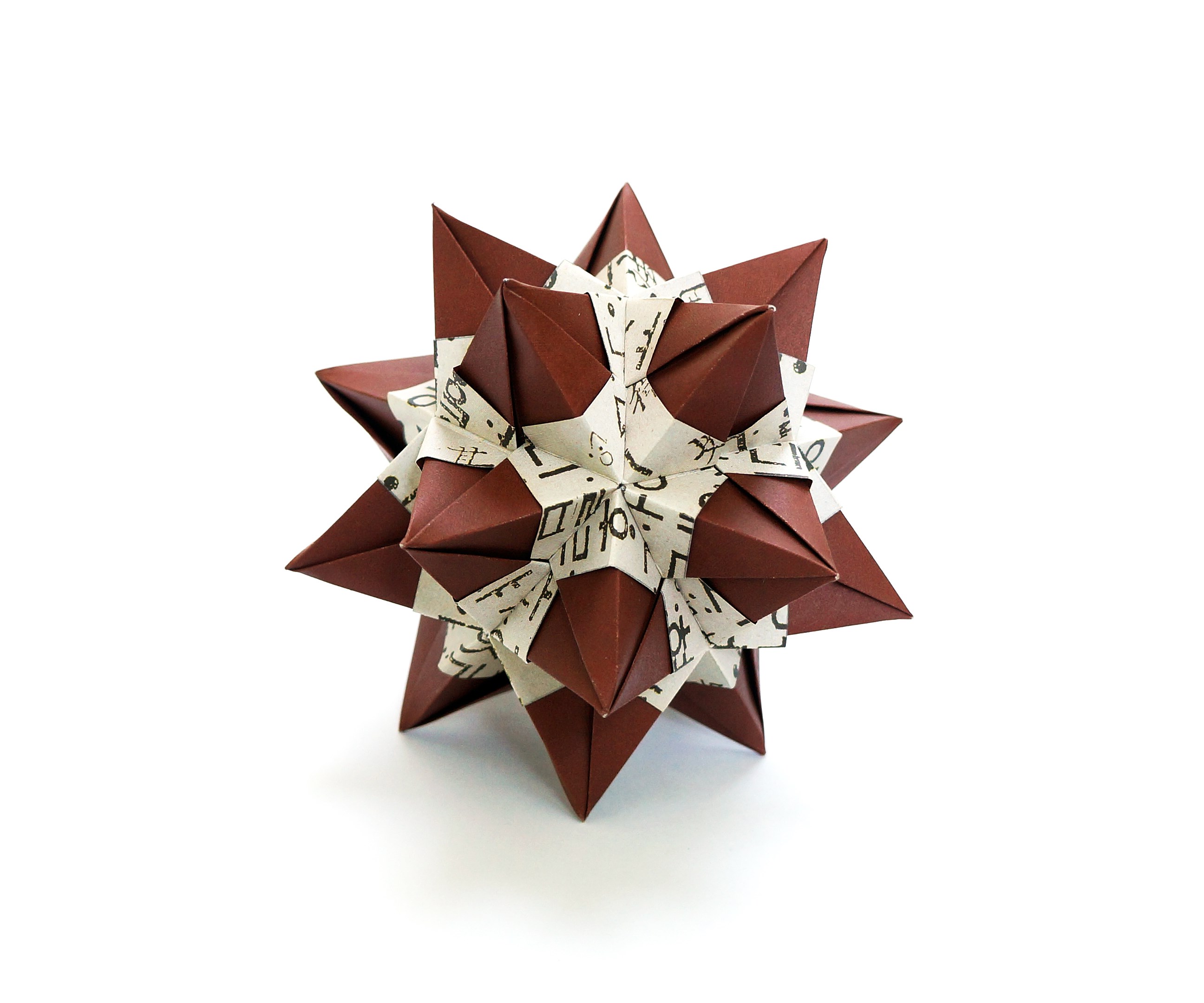
The Japanese kusudama (literally ‘medicine ball’) is a paper model that is usually (although not always) created by sewing or gluing multiple identical pyramidal units (usually stylized flowers folded from square paper) together through their points to form a spherical shape. Occasionally, a tassel is attached to the bottom for decoration.
Kusudama originate from ancient Japanese culture, where they were used for incense and potpourri; possibly originally being actual bunches of flowers or herbs. They are now typically used as decorations, or as gifts. It is a precursor to modular origami, a paper folding technique which uses multiple sheets of paper to create a larger and more complex structure than possible using single-piece origami techniques.
Posted in Art, World |
Leave a Comment »
January 1, 2011

Blockhead (real name Tony Simon) is an American Hip hop producer based in Manhattan, New York. Aside from his solo efforts released on the Ninja Tune label, he is most associated with producing for Aesop Rock, a rapper for the Definitive Jux independent hip hop label. He is also a member of the hip hop/comedy group Party Fun Action Committee. His father, the late Sidney Simon, was a well known sculptor in New York City.
Posted in Art |
Leave a Comment »
December 24, 2010


In Jamaican popular culture, a sound system is a group of disc jockeys, engineers and MCs playing ska, rocksteady or reggae music. The sound system scene is generally regarded as an important part of Jamaican cultural history and as being responsible for the rise of several modern Jamaican musical genres.
The sound system concept first became popular in the 1950s, in the ghettos of Kingston. DJs would load up a truck with a generator, turntables, and huge speakers and set up street parties. In the beginning, the DJs played American rhythm and blues music, but as time progressed the sound migrated to a local flavor.
read more »
Posted in Art, World |
Leave a Comment »
December 24, 2010

Dubstep is a genre of electronic dance music, originating from Croydon, UK. Its overall sound has been described as ‘tightly coiled productions with overwhelming bass lines and reverberant drum patterns, clipped samples, and occasional vocals.’
The earliest dubstep releases, which date back to 1998, were darker, more experimental, instrumental dub remixes of 2-step garage tracks attempting to incorporate the funky elements of breakbeat, or the dark elements of drum and bass into 2-step.
read more »
Posted in Art, Technology |
1 Comment »





 The Daily Omnivore