January 20, 2011

Archie Meets the Punisher or The Punisher Meets Archie was a one-shot comic book intercompany crossover published under two separate covers by Marvel Comics and Archie Comics in 1994. It featured the unlikely meeting of Marvel’s murderous vigilante, the Punisher, and Archie Comics’ all-American teenager, Archie Andrews. The book was written by Batton Lash, with artwork by John Buscema (drawing the Punisher characters) and Stan Goldberg (drawing the Archie characters).
Posted in Art, Humor, Money |
Leave a Comment »
January 19, 2011


Lithography is a method for printing using a stone or metal plate with a completely smooth surface. It was invented in 1796 by Bavarian author Alois Senefelder as a low-cost method of publishing theatrical works. His method used an image drawn in wax or other oily substance applied to a stone plate as the medium to transfer ink to the paper. In modern times, the image is often made of polymer applied to a flexible aluminum plate. The flat surface of the plate or stone is slightly roughened, or etched, and divided into hydrophilic (water-loving) regions that accept a film of water and repel the greasy ink, and hydrophobic regions which repel water and accept ink. This process is different from gravure or intaglio printing where a plate is engraved, etched or stippled to make cavities to contain the printing ink, or woodblock printing and letterpress where ink is applied to the raised surfaces of letters or images.
In the early days of lithography, a smooth piece of limestone was used. After the oil-based image was put on the surface, a solution of gum arabic in water was applied, the gum sticking only to the non-oily surface. During printing, water adhered to the gum arabic surfaces and avoided the oily parts, while the oily ink used for printing did the opposite. Chromolithography (color lithography) was invented in 1837; by using more than one stone, different colors can be added to the same picture. Each color needs a separate stone. The great posters of such artists as Alphonse Mucha and Toulouse-Lautrec are made like this. Complicated graphics may need twenty or more stones.
Posted in Art, Technology |
Leave a Comment »
January 18, 2011

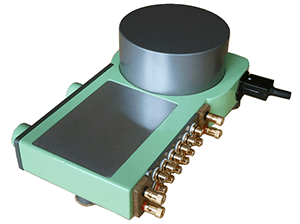
Gainclone or chipamp is a term commonly used to describe a type of audio amplifier made by do-it-yourselfers. The Gainclone is probably the most commonly built and well-known amplifier project amongst hobbyists. It is simple to build and involves only a few readily accessible, inexpensive parts.
In 1999, 47 Labs introduced the Gaincard amplifier, which had fewer parts, less capacitance and simpler construction than anything preceding it. The DIY community started building replicas or ‘clones’ of the Gaincard using integrated circuits from National Semiconductor and other manufacturers. Most designs are very effective and produce high quality sound, even though some audiophiles consider chip-based amplifiers to be inferior to their discrete counterparts.
Posted in Art, Money, Technology |
Leave a Comment »
January 18, 2011

Salvation Mountain is a colorful art installation covering much of a small hill north of Calipatria, California, near Slab City (an RV camp) and just several miles from the Salton Sea. It is made from adobe, straw, and thousands of gallons of paint. It was created by Leonard Knight to convey the message ‘God Is Love.’ Steps cut into the side of the hill lead to the summit, which is topped by a cross. Salvation Mountain also features many large straw bale and adobe walls supported by a matrix of logs enclosing several cave-like spaces. Knight lives full-time at the site in a small cabin mounted on the rear of a 1930s Chevrolet.
Like Salvation Mountain, Knight’s ‘Salvation Truck’ and a collection of other vehicles and machinery are entirely covered with paint and Biblical quotes. He estimates that more than 100,000 gallons of paint have gone into the creation of the mountain and that every California-based paint manufacturer has donated paint to the project. Once labeled an environmental hazard, the hill was threatened with removal by Imperial County. In recent years, the furor has died down. Although the project is unauthorized and on state land, Salvation Mountain was placed under protection in 2002 when Senator Barbara Boxer entered it into the Congressional Record as a national treasure.
Posted in Art, Philosophy |
Leave a Comment »
January 13, 2011

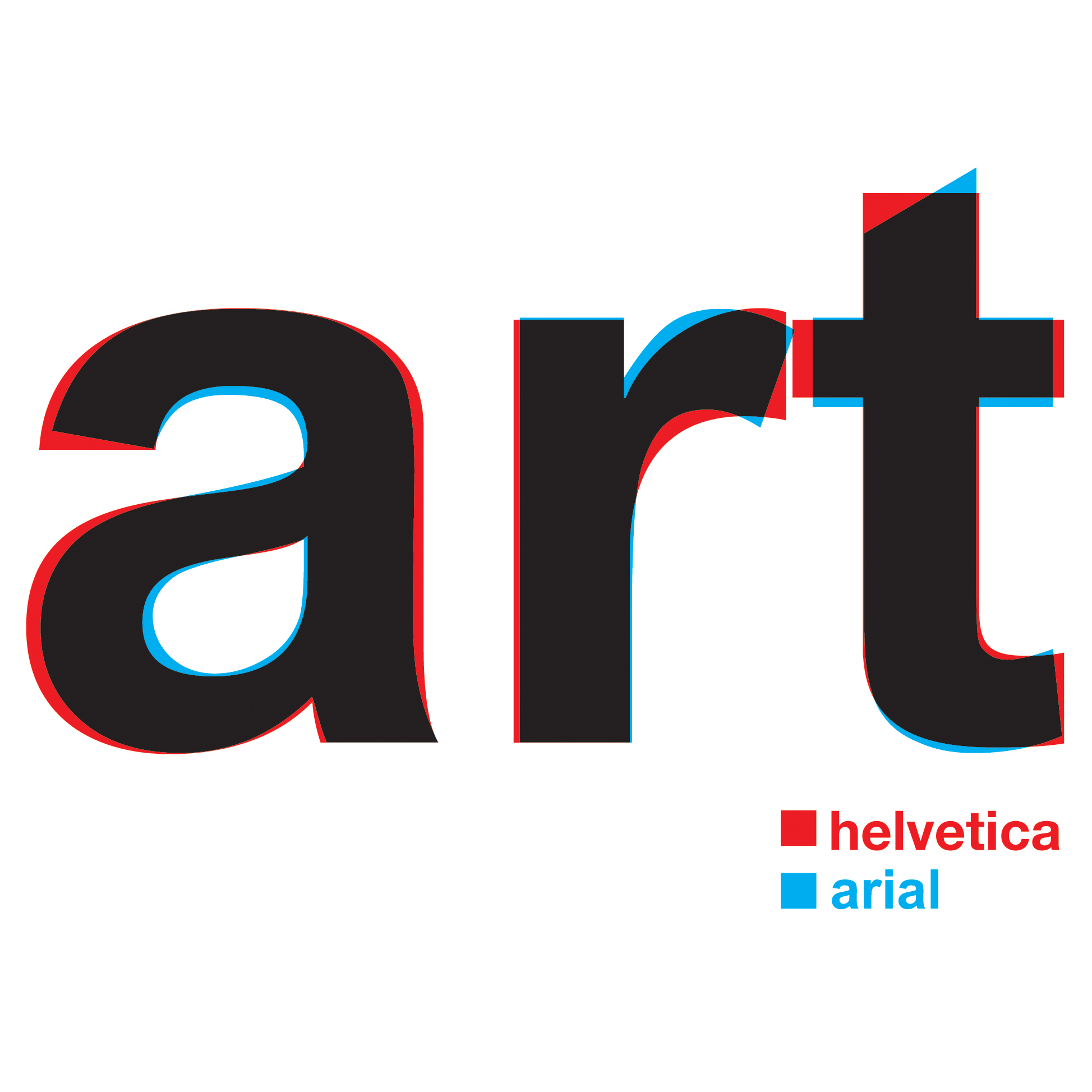
Helvetica is a widely used sans-serif typeface developed in 1957 by Swiss typeface designer Max Miedinger with Eduard Hoffmann to create a neutral typeface that had great clarity, no intrinsic meaning in its form, and could be used on a wide variety of signage. It’s original name was ‘Neue Haas Grotesk’; it was changed to ‘Helvetica’ (the Latin name for Switzerland) in 1960 in order to make it more marketable internationally. Generic versions of Helvetica have been made by various vendors; Monotype’s Arial, designed in 1982 has identical character widths and is indistinguishable by most non-specialists.
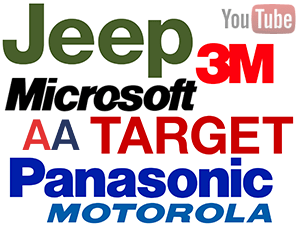
Helvetica is a popular choice for commercial wordmarks, including: 3M, American Airlines, American Apparel, BMW, Jeep, JCPenney, Lufthansa, Microsoft, Target, RE/MAX, Toyota, Panasonic, Motorola, Kawasaki, and Verizon Wireless. Apple Inc. has used Helvetica widely in its software. Helvetica is also widely used by the U.S. government; for example, federal income tax forms are set in Helvetica, and NASA uses the type on the Space Shuttle orbiter. New York City has been using Helvetica since 1989 for many of its subway signs. In 2007, director Gary Hustwit released a documentary, ‘Helvetica,’ to coincide with the fiftieth anniversary of the typeface.
Posted in Art, Language, Money |
Leave a Comment »
January 11, 2011

The Walker Library of Human Imagination is the private library of Priceline.com founder Jay S. Walker opened in 2002. The library occupies 3,600 square feet in his Connecticut home. It showcases a collection of rare books, artworks, maps and manuscripts as well as artifacts both modern and ancient. Rare books in the collection include: a complete Bible handwritten on sheepskin from 1240; the first illustrated history book (1493); the first illustrated medical book (1499); the first medical book to illustrate the human brain (1550); a copy of ‘Micrographia’ (1664), the first book of illustrations of images seen in the first microscopes; and a 1699 atlas containing the first maps to show the sun, not the earth, as the center of the known universe.
Historical artifacts include: an original 1957 Russian Sputnik backup; an instruction manual for a Saturn V rocket, along with a signed American flag carried to the surface of moon and back on the first lunar landing; and the napkin on which President Franklin D. Roosevelt jotted down his plan to win World War II, just four months after Pearl Harbor; one of two known Anastatic Facsimiles of the original 1776 Declaration of Independence (made directly from the original using a wet-copy process); a leaf from a Gutenberg Bible, the first book printed using movable type; and a Nazi Engima Machine decoder. Distributed around the Library are a series of etched-glass art panels by artist, Clyde Lynds, which illustrate major achievements in the history of human invention.
Posted in Art, Money, Technology |
Leave a Comment »
January 11, 2011

Gaslighting is a form of psychological abuse in which false information is presented to the victim with the intent of making them doubt their own memory and perception. It may simply be the denial by an abuser that previous abusive incidents ever occurred, or it could be the staging of bizarre events by the abuser with the intention of disorienting the victim. Sociopaths frequently use gaslighting tactics; they consistently transgress social mores, break laws, and exploit others, but are also typically charming and convincing liars who consistently deny wrongdoing. Thus, some who have been victimized by sociopaths may doubt their perceptions.
Gaslighting had a colloquial origin in a 1938 play ‘Gas Light,’ but the term has also been used in clinical and research literature. The play and its 1940 and 1944 film adaptations, concern a husband who attempts to drive his wife mad by manipulating small elements of their environment, and insisting that she is mistaken or misremembering when she points out these changes. The title stems from the husband’s subtle dimming of the house’s gas lights, which she accurately notices and which the husband insists she’s imagining.
Posted in Art, Language |
Leave a Comment »
January 10, 2011
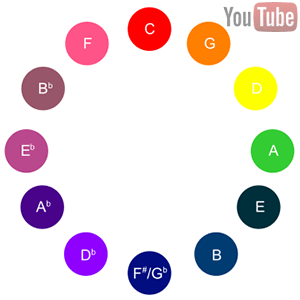
The clavier [kluh-veer] à [ah] lumières [ly-myer] keyboard with lights) was a musical instrument invented by Russian composer, Alexander Scriabin for use in his work Prometheus: Poem of Fire. However, only one version of this instrument was constructed, for the performance in New York in 1915. The instrument’s keyboard lights up as synesthetic system, specified in the score.
Scriabin was a friend of Nikolai Rimsky-Korsakov, who was a synesthete (someone with a neurologically-based condition in which stimulation of one sensory or cognitive pathway leads to automatic, involuntary experiences in a second sensory or cognitive pathway). Scriabin was also heavily influenced by Theosophy, which had its own different system of associating colors and pitches.
Posted in Art, Technology |
Leave a Comment »
January 10, 2011


A spiritual successor, sometimes called a spiritual sequel or a companion piece, is a successor to a work of fiction which does not directly build upon the storyline established by a previous work as do most traditional prequels or sequels, but nevertheless features many of the same elements, themes, and styles as its source material.
read more »
Posted in Art, Language, Money |
Leave a Comment »
January 10, 2011


Music visualization, a feature found in electronic music visualizers and media player software, generates animated imagery based on a piece of music. The imagery is usually generated and rendered in real time and synchronized with the music as it is played, but some visualizations are pre-rendered.
Visualization techniques range from simple ones (e.g., a simulation of an oscilloscope display) to elaborate ones, which often include a plurality of composited effects. The changes in the music’s loudness and frequency spectrum are among the properties used as input to the visualization.
Posted in Art, Technology |
Leave a Comment »
January 10, 2011


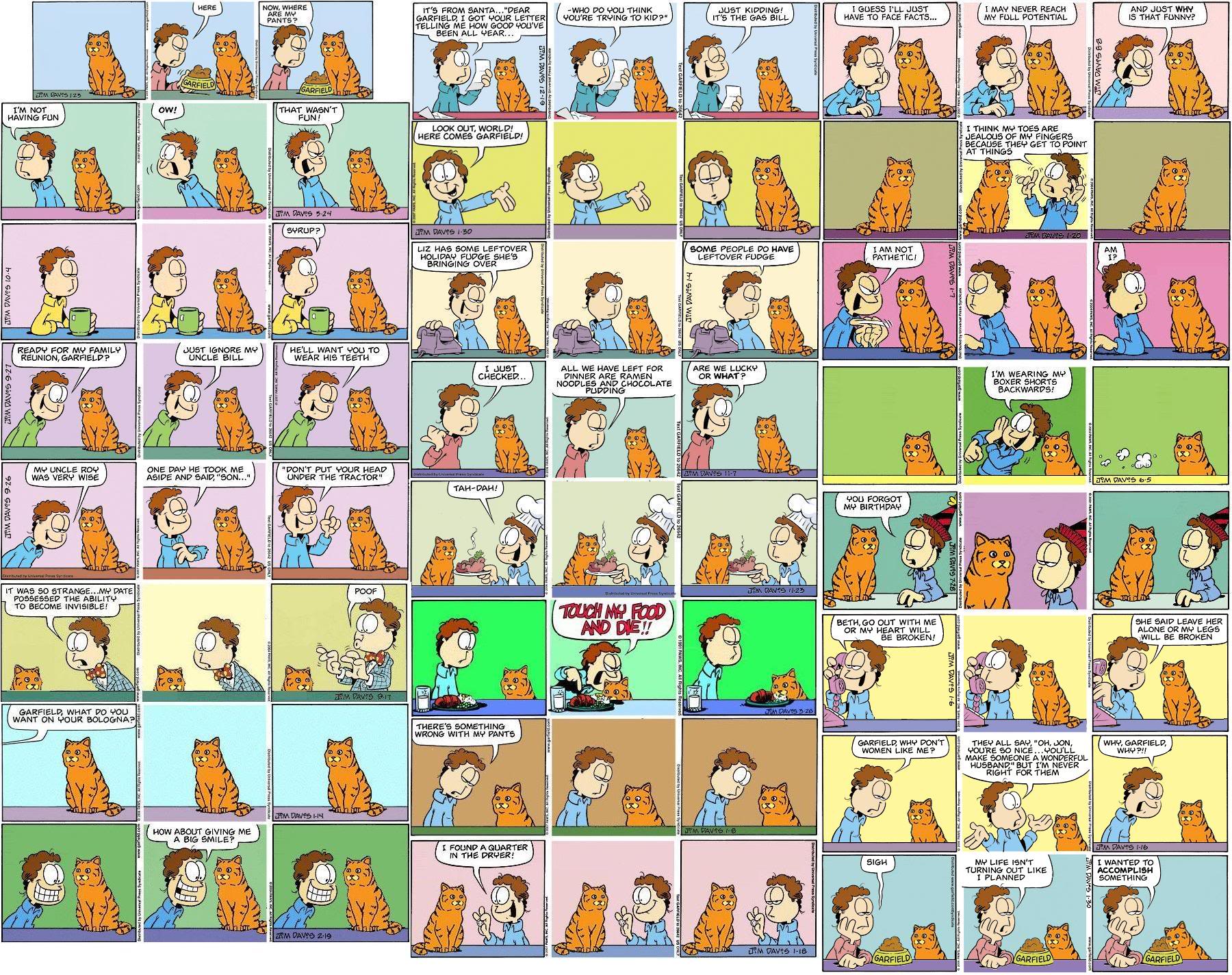
‘Silent Garfield‘ refers to the removal of Garfield’s thought balloons from his comic strips. A webcomic called Arbuckle does the above but also redraws the originals in a different art style. Garfield changes from being a comic about a sassy, corpulent feline, and becomes a compelling picture of a lonely, pathetic, delusional man who talks to his pets.
Another variation along the same lines, called ‘Realfield’ or ‘Realistic Garfield,’ is to redraw Garfield as a real cat as well as removing his thought balloons. Still another approach to editing the strips involves removing Garfield and other main characters from the originals completely, leaving Jon talking to himself, such as in ‘Garfield Minus Garfield’ by Dan Walsh.
Posted in Art, Humor |
Leave a Comment »
January 6, 2011

Googie architecture (also known as populuxe or Doo-Wop) is a form of modern architecture and a subdivision of futurist architecture, influenced by car culture and the Space and Atomic Ages. Originating in Southern California during the late 1940s and continuing approximately into the mid-1960s, the types of buildings that were most frequently designed in a Googie style were motels, coffee houses and bowling alleys.
The school later became widely-known as part of the Mid-Century modern style, and some of those more notable variations represent elements of the populuxe aesthetic, as in Eero Saarinen’s TWA Flight Center. Features of Googie include upswept roofs, curvaceous, geometric shapes, and bold use of glass, steel and neon. Googie was also characterized by Space Age designs that depict motion, such as boomerangs, flying saucers, atoms and parabolas, and free-form designs such as ‘soft’ parallelograms and the ubiquitous artist’s palette motif.
Posted in Art |
Leave a Comment »