December 22, 2010

An ambigram [am-bi-gram] is a typographical design or artform that may be read as one or more words not only in its form as presented, but also from another viewpoint, direction, or orientation.
The words readable in the other viewpoint, direction or orientation may be the same or different from the original words. Different ambigram artists (sometimes called ambigramists) may create completely different ambigrams from the same word or words, differing in both style and form.
Posted in Art, Language |
Leave a Comment »
December 22, 2010
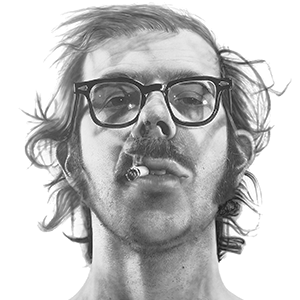
Chuck Close (b. 1940) is an American painter and photographer who achieved fame as a photorealist, through his massive-scale portraits.
Though a catastrophic spinal artery collapse in 1988 left him severely paralyzed, he has continued to paint and produce work that remains sought after by museums and collectors. Ironically, while being one of the most successful portrait artists of his time, Close is also afflicted with prosopagnosia (face blindness), a condition that prevents him from recognizing people’s faces.
read more »
Posted in Art |
2 Comments »
December 20, 2010

Love is a sculpture by American artist Robert Indiana. It consists of the letters LO (with the O canted sideways) over the letters VE. The image was originally designed as a Christmas card for the Museum of Modern Art in 1964, and first exhibited as a sculpture in New York City in 1970. This original sculpture is made of weathering steel and has been on exhibit at the Indianapolis Museum of Art since 1975.
The LOVE design has been reproduced in a variety of formats. Likewise, the sculpture has been recreated in multiple versions and a variety of colors, and is now on display around the world. While it was first made in English, versions of the sculpture exist in Hebrew, Chinese, Italian and Spanish. The LOVE emblem has been adopted by skateboarders and frequently appears in skateboard magazines and videos. After skateboarding was banned in Philadelphia’s LOVE Park, the emblem was used by organizations opposing the ban.
Posted in Art, Love |
Leave a Comment »
December 20, 2010

Victor Vasarely (1906 – 1997) was a Hungarian French artist whose work is generally seen aligned with Op-art. His work entitled Zebra, created by in the 1930s, is considered by some to be one of the earliest examples of Op-art.
He was born in a town outside of Budapest, but settled in Paris in 1930, where he went on to produce art and sculpture mainly focused around the area of optical illusion. Over the next three decades, Vasarely developed his style of geometric abstract art, working in various materials but using a minimal number of forms and colors.
Posted in Art |
Leave a Comment »
December 20, 2010

Metropolis is a 1927 German expressionist film in the science-fiction genre directed by Fritz Lang. Produced in Germany during a stable period of the Weimar Republic, ‘Metropolis’ is set in a futuristic urban dystopia and makes use of this context to explore the social crisis between workers and owners in capitalism. The most expensive silent film ever made, it cost approximately 5 million Reichsmark. The film was written by Lang and his wife Thea von Harbou in 1924, and published a novelization in 1926. Lang was influenced by the Soviet science fiction film ‘Aelita’ by Yakov Protazanov (1924), which was an adaptation of a novel by Alexei Tolstoy. The plot of ‘Aelita’ included a revolution taking place on the planet Mars. However, Metropolis advocates non-violent cooperation rather than the Marxist ideal of ‘class struggle.’
‘Metropolis’ was cut substantially after its German premiere, and much footage was lost over the passage of successive decades. There have been several efforts to restore it, as well as discoveries of previously lost footage. In 2008, a copy of the film 30 minutes longer than any other known surviving was located in Argentina. After a long period of restoration in Germany, the film was shown publicly for the first time simultaneously at Berlin and Frankfurt on February 12, 2010.
Posted in Art, Money, Technology |
Leave a Comment »
December 19, 2010

Paprika is a 2006 Japanese animated science fiction film, based on Yasutaka Tsutsui’s 1993 novel of the same name, about a research psychologist who uses a device that permits therapists to help patients by entering their dreams. The film was directed by the late Satoshi Kon, animated by Madhouse Studios, and produced and distributed by Sony Pictures Entertainment. The film’s music was composed by Susumu Hirasawa, who also composed the soundtrack for Kon’s award-winning film, Millennium Actress, and equally lauded television series, Paranoia Agent. The soundtrack is significant for being the first film to use a Vocaloid (a singing synthesizer) for various tracks.
The protagonist of the film is, Atsuko, a psychiatrist who uses advanced technology to study the human mind. She has developed a machine that will allow her to enter the dreams of her patients and study their psyches from the inside. Atsuko also does double duty as Paprika, a high-tech detective who uses this new innovation to find out the truth about what the people she’s trailing really think. However, Atsuko falls victim to a thief who steals the one-of-a-kind machine, and Paprika sets out to find it as a wave of psychological instability tears through the city.
Posted in Art, Technology |
Leave a Comment »
December 19, 2010

The New Yorker cover (March 29, 1976) ‘View of the World from 9th Avenue,’ has come to represent Manhattan’s telescoped interpretation of the country beyond the Hudson River. The cartoon showed the supposedly limited mental geography of Manhattanites. The image shows Manhattan’s 9th Avenue, 10th Avenue, and the Hudson River (appropriately labeled), while the top half depicts the rest of the world. The rest of the United States is drawn as a square, with a thin brown strip along the Hudson representing New Jersey, the names of five cities (Los Angeles, Washington D.C., Las Vegas, Kansas City, and Chicago) and three states (Texas, Utah, and Nebraska) are scattered among a few rocks for the U.S. beyond New Jersey.
The Pacific Ocean, perhaps twice as wide again as the Hudson, separates the U.S. from three flattened land masses labeled China, Japan, and Russia. The illustration, depicting New Yorkers’ self-image, inspired many similar works, including the poster for the 1984 film Moscow on the Hudson; that movie poster led to a lawsuit, Steinberg v. Columbia Pictures Industries, Inc., 663 F. Supp. 706 (S.D.N.Y. 1987), which held that Columbia Pictures violated the copyright that Steinberg held on his work. Another homage was created for the cover of The Economist newspaper’s March 21–27, 2009 issue entitled ‘How China sees the world.’
Posted in Art, Humor, Politics |
Leave a Comment »
December 19, 2010


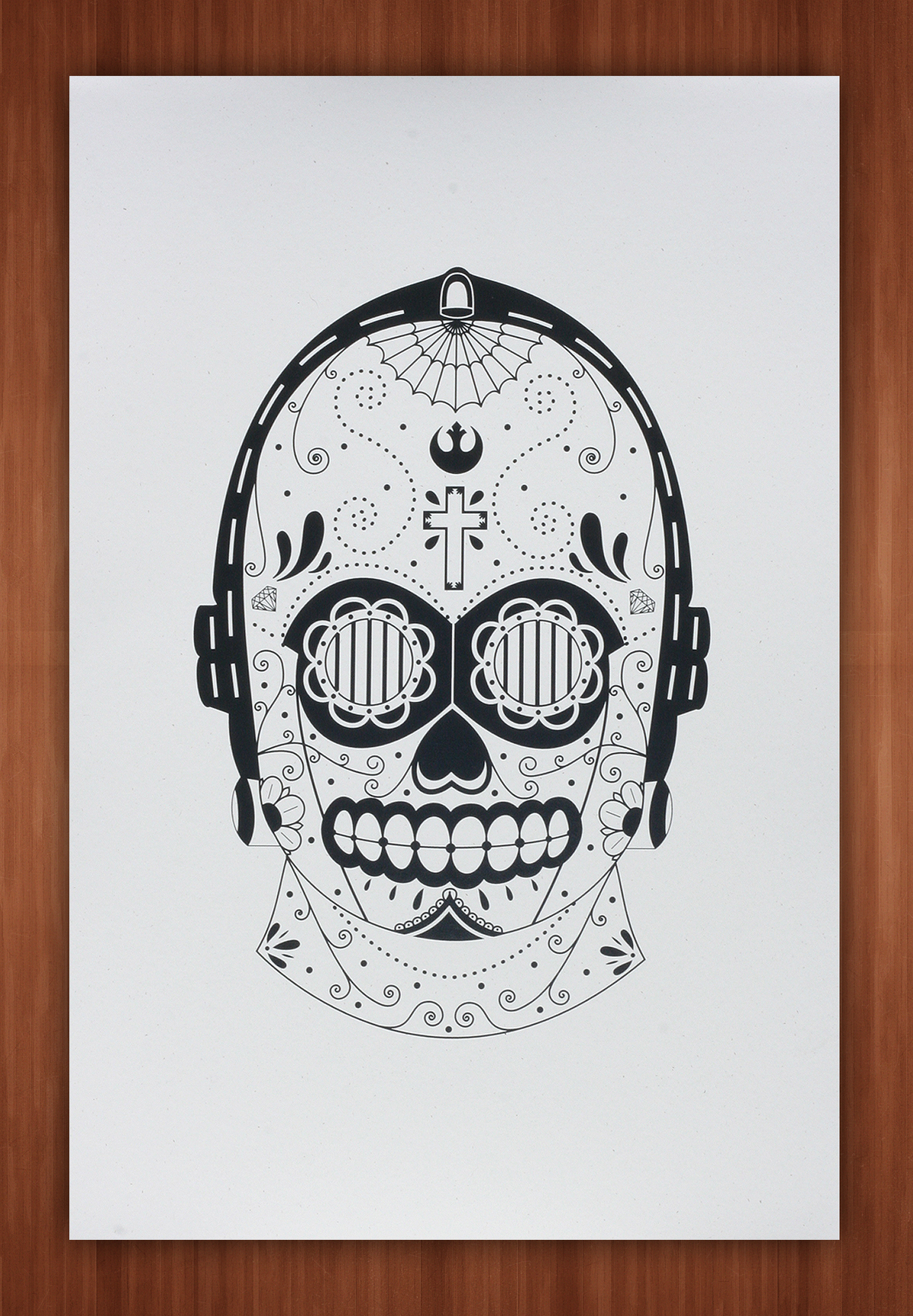
The word calavera, Spanish for ‘skull,’ can refer to a number of cultural phenomena associated with the Mexican celebration of the Day of the Dead and the Roman Catholic holiday All Souls Day. Calaveras de azúcar (‘sugar skulls’) are used to adorn altars and can be eaten. Calaveras are poems, written for the Day of the Dead but intended to humorously criticize the living. Calavera can refer to any artistic representations of skulls, such as the lithographs of José Guadalupe Posada.
Posted in Art, Death, Philosophy |
Leave a Comment »
December 19, 2010

Captain Harlock is a fictional character created by manga artist Leiji Matsumoto. Harlock is the archetypical romantic hero, a space pirate with an individualist philosophy of life. He is as noble as he is taciturn and rebellious; he stoically fights against totalitarian regimes, whether they be earthborn or alien.
The character was introduced in Adventures of a Honeybee (1953), but did not debut as a lead character until 1978’s Space Pirate Captain Harlock. Since then, he has appeared in numerous animated TV series and films, the latest of which re-imagines him as an Iron Cross fighter pilot and a gunslinger in the American Old West.
Posted in Art, World |
Leave a Comment »
December 19, 2010

‘Interstella 5555: The 5tory of the 5ecret 5tar 5ystem’ is a 2003 feature-length Japanese animated musical film set to French duo, Daft Punk’s second studio album, ‘Discovery.’ The film depicts the abduction and rescue of an interstellar pop band. The film was produced by Daft Punk and Toei Animation, under the supervision of famed managa and anime artist, Leiji Matsumoto. The film has no dialogue and minimal sound effects. Daft Punk’s concept for the project involved the merging of science fiction with entertainment industry culture and was further developed with their collaborator Cédric Hervet.
All three brought the album and the completed story to Tokyo in the hope of creating the film with their childhood hero, Leiji Matsumoto. Many elements common to Matsumoto’s stories, such as a romanticism of noble sacrifice and remembrance of fallen friends, appear in ‘Interstella 5555.’ Daft Punk revealed in an interview that ‘Captain Harlock’ was a great influence on them in their childhood. They also stated, ‘The music we have been making must have been influenced at some point by the shows we were watching when we were little kids.’
Posted in Art, World |
Leave a Comment »
December 17, 2010
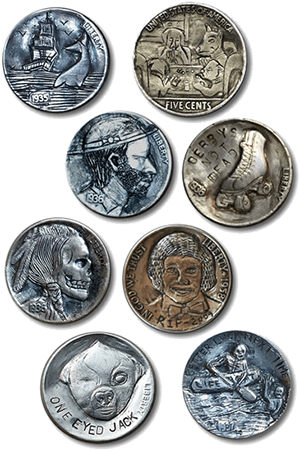
The hobo nickel is a sculptural art form involving the creative modification of small-denomination coins, essentially resulting in miniature bas reliefs. The nickel, because of its size, thickness, and relative softness, was a favored coin for this purpose. Due to its low cost and portability, this medium was particularly popular among hobos, hence the name. Common hobo nickels sell for $5 or $10, and rarer or more desirable coins sell for hundreds of dollars.
read more »
Posted in Art, Humor, Money |
Leave a Comment »
December 17, 2010

Love Tokens are custom engraved coins given as a gift. They were especially popular in the 1750s in the United States. They are made by machine-smoothing a coin (usually silver) on one or both sides, then engraving it with initials, monograms, names, scenes, etc., often with an ornate border. They can be mounted on pins or incorporated into bracelets and necklaces. The love token fad faded out in the early 20th century; love tokens engraved on buffalo nickels are quite rare and prized by collectors of ‘hobo nickels’ (altered coins).
Posted in Art, Love, Money |
Leave a Comment »





 The Daily Omnivore