December 3, 2010

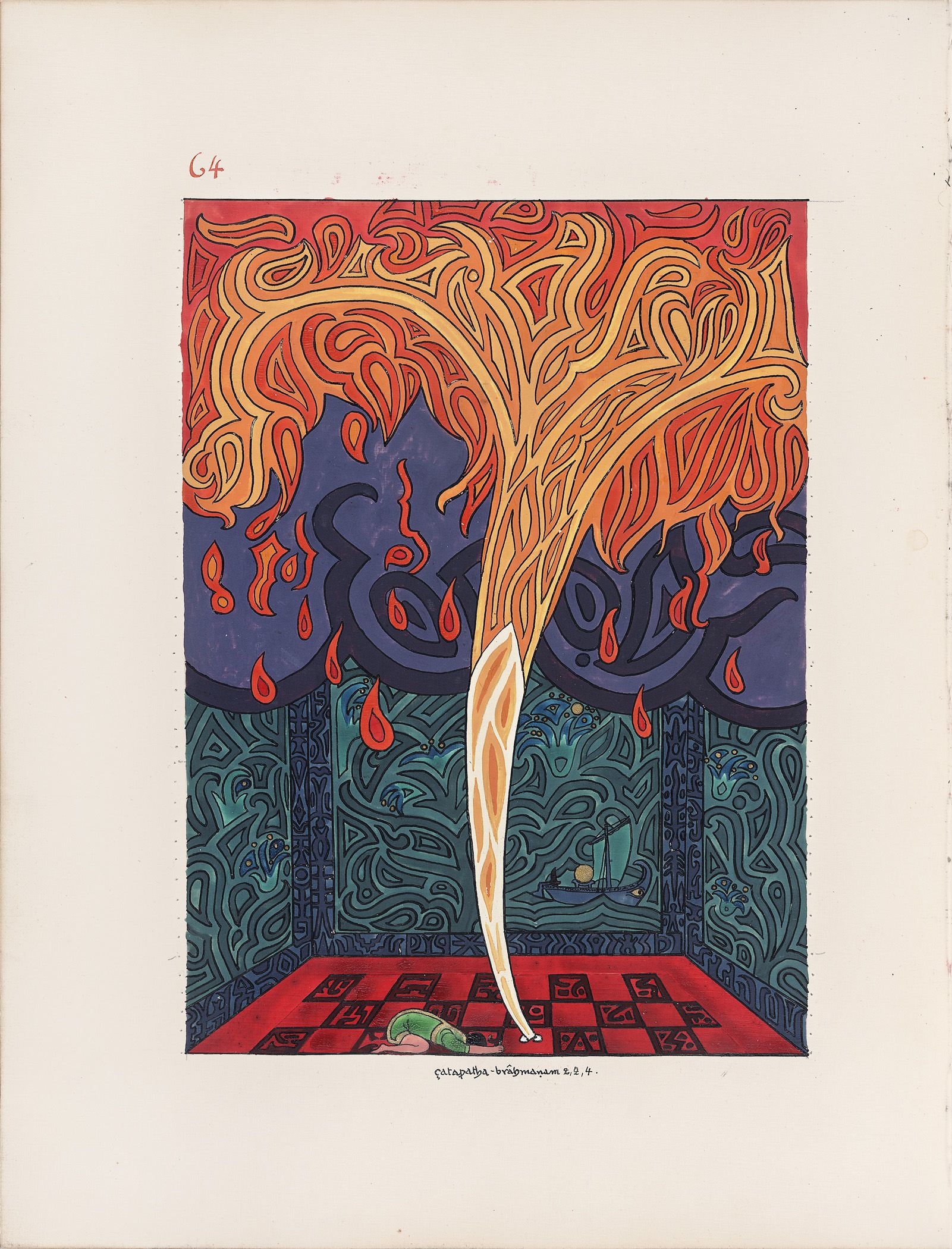
The Red Book, also known as Liber Novus (Latin for New Book), is a 205-page manuscript written and illustrated by Swiss psychiatrist Carl Gustav Jung between approximately 1914 and 1930, which was not published or shown to the public until 2009. It contain some of his most personal material, and during the sixteen years he worked on it, Jung developed his theories of archetypes, collective unconscious, and individuation. Until 2001, his heirs denied scholars access to the book.
read more »
Posted in Art, Philosophy, Science |
Leave a Comment »
December 1, 2010
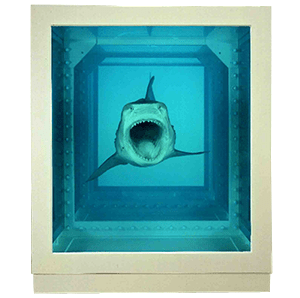

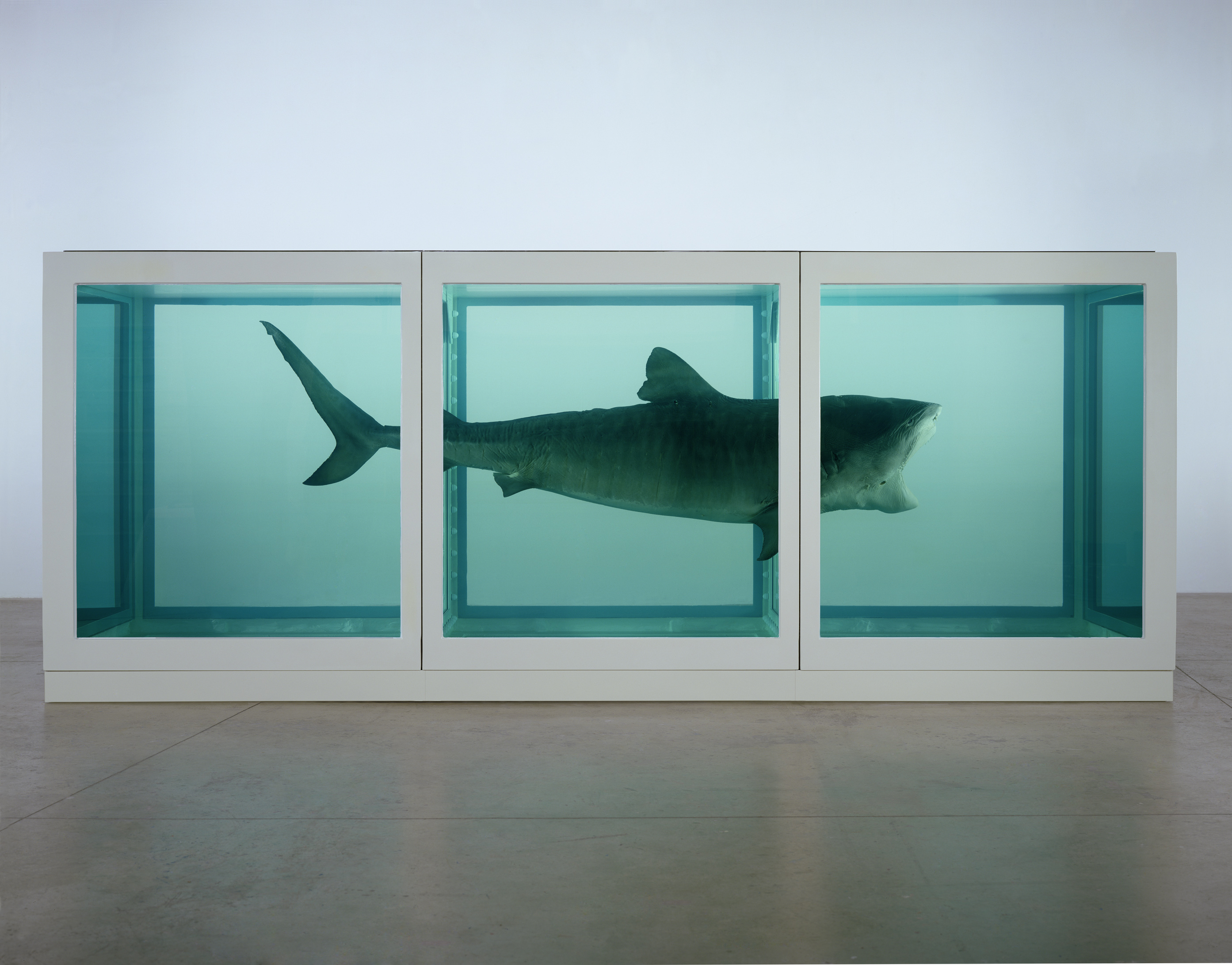
The Physical Impossibility of Death in the Mind of Someone Living is an artwork created in 1992 by Damien Hirst, an English artist and a leading member of the ‘Young British Artists’ (YBA). It consists of a tiger shark preserved in formaldehyde in a vitrine. It was originally commissioned in 1991 by Charles Saatchi, who sold it in 2004, to Steven A. Cohen for an undisclosed amount, widely reported to have been $8 – 12 million dollars.
Due to deterioration of the original 14-foot tiger shark, it was replaced with a new specimen in 2006. It is on display at the Metropolitan Museum of Art in New York City until 2010.
Posted in Art, Money |
Leave a Comment »
December 1, 2010

The Pickelhaube (from the old German pickel, ‘point’ or ‘pickaxe;’ and haube, ‘bonnet’) was a spiked helmet worn in the 19th and 20th centuries by German military, firefighters, and police. Although typically associated with the Prussian army, the helmet enjoyed wide use among uniformed occupations in the Western world. It was originally designed in 1842 by King Frederick William IV of Prussia, maybe as a copy of similar helmets that were adopted at the same time by the Russian military.It is not clear whether this was a case of imitation, or parallel invention.
Posted in Art, War, World |
Leave a Comment »
December 1, 2010

The pith helmet (also known as the safari helmet, sun helmet, topee, sola topee, salacot or topi) is a lightweight cloth-covered helmet made of cork or pith (typically pith from the sola Indian swamp growth). Designed to shade the wearer’s head and face from the sun, pith helmets were once often worn by Westerners in the tropics.
Crude forms of pith helmets had existed as early as the 1840s, but it was around 1870 that the pith helmet became popular with military personnel in Europe’s tropical colonies. The Franco-Prussian War had popularized the German Pickelhaube, which may have influenced the distinctive design of the pith helmet. Such developments may have merged with a traditional design from the Philippines, the salakot. The alternative name salacot (also written salakhoff) appears frequently in Spanish and French sources; it comes from the Tagalog word salacsac (or Salaksak).
Posted in Art, War, World |
1 Comment »
November 30, 2010

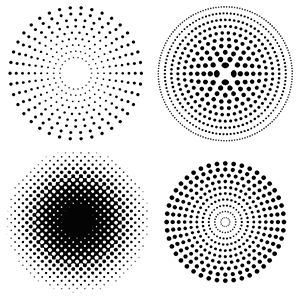
Halftone is the reprographic technique that simulates continuous tone imagery through the use of dots, varying either in size, in shape or in spacing. ‘Halftone’ can also be used to refer specifically to the image that is produced by this process. Whereas continuous tone imagery contains an infinite range of colors or greys, the halftone process reduces visual reproductions to a binary image that is printed with only one color of ink. This binary reproduction relies on a basic optical illusion— tiny halftone dots are perceived as smooth tones by the human brain.
At a microscopic level, developed black and white photographic film also consists of only two colors, and not an infinite range of continuous tones. For details, see film grain. Just as color photography evolved with the addition of filters and film layers, color printing is made possible by repeating the halftone process for each subtractive color—most commonly using what is called the ‘CMYK color model.’ The semi-opaque property of ink allows halftone dots of different colors to create another optical effect—full-color imagery.
Posted in Art, Technology |
Leave a Comment »
November 30, 2010

Hedcut is a term referring to a style of drawing, associated with ‘The Wall Street Journal’ half-column portrait illustrations. They use the stipple method of many small dots and the hatching method of small lines to create an image, and are designed to emulate the look of woodcuts from old-style newspapers, and engravings on certificates and currency. The phonetic spelling of ‘hed’ may be based on newspapers’ use of the term ‘hed’ for ‘headline.’ The ‘Wall Street Journal’ adopted the current form of this portraiture in 1979 when freelance artist Kevin Sprouls approached the paper with some ink dot illustrations he’d created. The front page editor felt that the drawings complemented the paper’s classical feeling and gave it a sense of stability. Additionally, they are generally more legible than photographs of the same size would be.
Sprouls was subsequently hired as a staff illustrator and remained there until 1987. Today, there are six hedcut artists on staff. Each drawing takes between three and five hours to produce. First, a high quality photograph must be secured. This photograph is scanned, converted to grayscale, and the contrast is adjusted. The photograph is then printed and placed on a light table, and overlaid with tracing vellum. The illustrators then trace directly over this image with ink pens, recreating the source photo using specific dot and line patterns. Women are sometimes more difficult to depict than men as they tend to have more complicated haircuts, which are often cropped for simplicity.
Posted in Art, Language |
Leave a Comment »
November 28, 2010

Thomas Wesley Pentz (b. 1978) better known by his stage name Diplo, is a Philadelphia-based American DJ, producer, and songwriter. Together with DJ Low Budget, he runs Hollertronix, a club and music collective. He also founded and manages record company Mad Decent, as well as the not for profit organization Heaps Decent. Among other jobs, Pentz has worked as a school teacher in Philadelphia.
During his rise to notability, Diplo worked with and dated British musician M.I.A., an artist who is credited with helping expose him in his early career. Later, Pentz and fellow M.I.A. producer Switch created a Jamaican dancehall project titled Major Lazer. Since then, Diplo has worked on production and mixtape projects with many other notable pop artists. Pentz’s alias, short for Diplodocus, derives from his childhood fascination with dinosaurs.
Posted in Art |
Leave a Comment »
November 22, 2010
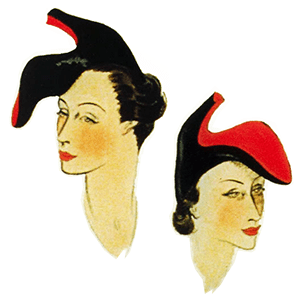
Elsa Schiaparelli [skap-uh-rel-ee] (1890 — 1973) was an Italian fashion designer. Along with Coco Chanel, her greatest rival, she is regarded as one of the most prominent figures in fashion in the early 20th century. Starting with knitwear, Schiaparelli’s designs were heavily influenced by surrealists like her collaborators Salvador Dalí and Alberto Giacometti. Her clients included the heiress Daisy Fellowes and actress Mae West. Schiaparelli did not adapt to the changes in fashion following World War II and her business closed in 1954.
read more »
Posted in Art, Money, World |
Leave a Comment »
November 18, 2010

Troma Entertainment is an American independent film production and distribution company founded by Lloyd Kaufman and Michael Herz in 1974. The company produces low-budget independent movies that play on 1950s horror with elements of farce. Many Troma films contain social commentary and have developed cult followings. Troma films are B-movies known for their surrealistic nature, along with their use of shocking imagery. They typically contain overt sexuality, graphic violence, gore and nudity, so much that the term ‘Troma Film’ has become synonymous with these characteristics.
Troma’s slogan is ‘Movies of the Future.’ Troma is also known for reusing the same props, actors, and scenes over and over again. Examples include a severed leg, a penis Monster, and the flipping/exploding car filmed for the movie ‘Sgt. Kabukiman, NYPD,’ which is used in place of any other car that needs to crash and explode. Troma produced or acquired many early films featuring several rising talents, such as Carmen Elektra (‘The Chosen One’), Billy Bob Thornton (‘Chopper Chicks in Zombietown’), Vanna White (‘Graduation Day’), Kevin Costner (‘Sizzle Beach, U.S.A.’), Samuel L. Jackson (‘Def by Temptation’), Marisa Tomei (‘The Toxic Avenger’), Vincent D’Onofrio (‘The First Turn-On!’), ‘Paul Sorvino’ (Cry Uncle), Trey Parker and Matt Stone (‘Cannibal! The Musical’), before they were discovered.
Posted in Art, Humor, Money |
Leave a Comment »
November 18, 2010
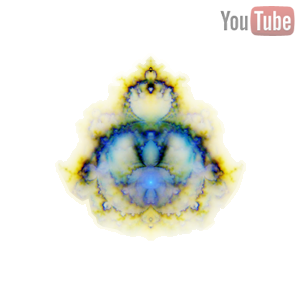
The Buddhabrot is a special rendering of the Mandelbrot set which, when traditionally oriented, resembles to some extent certain depictions of the Buddha. The rendering technique was discovered and later described in a 1993 Usenet post to sci.fractals by Melinda Green. Previous researchers had come very close to finding the precise Buddhabrot technique. In 1988 Linas Vepstas relayed similar images to Cliff Pickover for inclusion in Pickover’s forthcoming book Computers, Pattern, Chaos, and Beauty.
Posted in Art, Technology |
Leave a Comment »
November 18, 2010
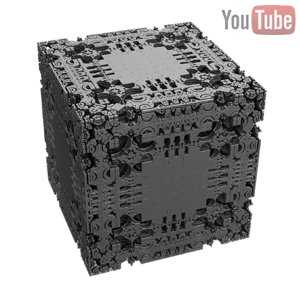
The Mandelbrot [man-del-brot] set is a mathematical fractal named after Benoît Mandelbrot, who studied and popularized it. When computed and graphed it displays an elaborate boundary which, being a fractal, does not simplify at any given magnification, meaning it shows more intricate detail the closer one looks or magnifies the image, usually called ‘zooming in.’
The Mandelbrot set has become popular outside mathematics both for its aesthetic appeal and for being a complicated structure arising from a simple definition, and is one of the best-known examples of mathematical visualization. Many mathematicians, including Mandelbrot, communicated this area of mathematics to the public.
Posted in Art, Technology |
1 Comment »
November 16, 2010

Vladimir Grigoryevich Tretchikoff (1913 – 2006) was one of the most commercially successful artists of all time – his painting Chinese Girl (popularly known as ‘The Green Lady’) is one of the best selling art prints ever. Tretchikoff was a self-taught artist who painted realistic figures, portraits, still life and animals, with subjects often inspired by his early life in China and Malaysia, and later life in South Africa. Tretchikoff’s work was immensely popular with the general public, but is often seen by art critics as the epitome of kitsch (indeed, he was nicknamed the ‘King of Kitsch’).
He worked in oil, watercolour, ink, charcoal and pencil but is best known for his reproduction prints which sold worldwide in huge numbers. The reproductions were so popular that it was said Tretchikoff was second only to Picasso in his popularity. Tretchikoff once said that the only difference between himself and Vincent Van Gogh was that Van Gogh had starved whereas he had become rich.
Posted in Art, Money, World |
Leave a Comment »





 The Daily Omnivore