November 28, 2010
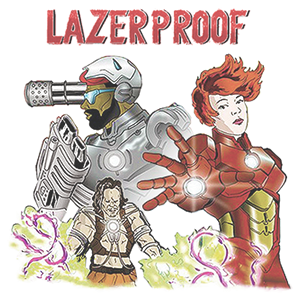
Thomas Wesley Pentz (b. 1978) better known by his stage name Diplo, is a Philadelphia-based American DJ, producer, and songwriter. Together with DJ Low Budget, he runs Hollertronix, a club and music collective. He also founded and manages record company Mad Decent, as well as the not for profit organization Heaps Decent. Among other jobs, Pentz has worked as a school teacher in Philadelphia.
During his rise to notability, Diplo worked with and dated British musician M.I.A., an artist who is credited with helping expose him in his early career. Later, Pentz and fellow M.I.A. producer Switch created a Jamaican dancehall project titled Major Lazer. Since then, Diplo has worked on production and mixtape projects with many other notable pop artists. Pentz’s alias, short for Diplodocus, derives from his childhood fascination with dinosaurs.
Posted in Art |
Leave a Comment »
November 22, 2010
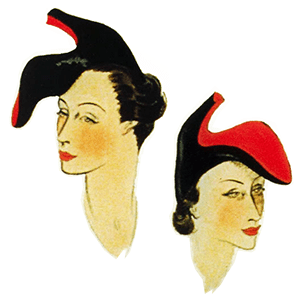
Elsa Schiaparelli [skap-uh-rel-ee] (1890 — 1973) was an Italian fashion designer. Along with Coco Chanel, her greatest rival, she is regarded as one of the most prominent figures in fashion in the early 20th century. Starting with knitwear, Schiaparelli’s designs were heavily influenced by surrealists like her collaborators Salvador Dalí and Alberto Giacometti. Her clients included the heiress Daisy Fellowes and actress Mae West. Schiaparelli did not adapt to the changes in fashion following World War II and her business closed in 1954.
read more »
Posted in Art, Money, World |
Leave a Comment »
November 18, 2010

Troma Entertainment is an American independent film production and distribution company founded by Lloyd Kaufman and Michael Herz in 1974. The company produces low-budget independent movies that play on 1950s horror with elements of farce. Many Troma films contain social commentary and have developed cult followings. Troma films are B-movies known for their surrealistic nature, along with their use of shocking imagery. They typically contain overt sexuality, graphic violence, gore and nudity, so much that the term ‘Troma Film’ has become synonymous with these characteristics.
Troma’s slogan is ‘Movies of the Future.’ Troma is also known for reusing the same props, actors, and scenes over and over again. Examples include a severed leg, a penis Monster, and the flipping/exploding car filmed for the movie ‘Sgt. Kabukiman, NYPD,’ which is used in place of any other car that needs to crash and explode. Troma produced or acquired many early films featuring several rising talents, such as Carmen Elektra (‘The Chosen One’), Billy Bob Thornton (‘Chopper Chicks in Zombietown’), Vanna White (‘Graduation Day’), Kevin Costner (‘Sizzle Beach, U.S.A.’), Samuel L. Jackson (‘Def by Temptation’), Marisa Tomei (‘The Toxic Avenger’), Vincent D’Onofrio (‘The First Turn-On!’), ‘Paul Sorvino’ (Cry Uncle), Trey Parker and Matt Stone (‘Cannibal! The Musical’), before they were discovered.
Posted in Art, Humor, Money |
Leave a Comment »
November 18, 2010

The Buddhabrot is a special rendering of the Mandelbrot set which, when traditionally oriented, resembles to some extent certain depictions of the Buddha. The rendering technique was discovered and later described in a 1993 Usenet post to sci.fractals by Melinda Green. Previous researchers had come very close to finding the precise Buddhabrot technique. In 1988 Linas Vepstas relayed similar images to Cliff Pickover for inclusion in Pickover’s forthcoming book Computers, Pattern, Chaos, and Beauty.
Posted in Art, Technology |
Leave a Comment »
November 18, 2010
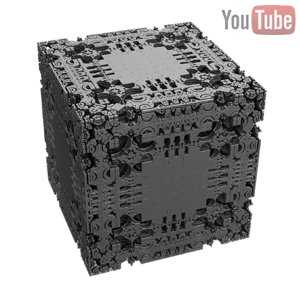
The Mandelbrot [man-del-brot] set is a mathematical fractal named after Benoît Mandelbrot, who studied and popularized it. When computed and graphed it displays an elaborate boundary which, being a fractal, does not simplify at any given magnification, meaning it shows more intricate detail the closer one looks or magnifies the image, usually called ‘zooming in.’
The Mandelbrot set has become popular outside mathematics both for its aesthetic appeal and for being a complicated structure arising from a simple definition, and is one of the best-known examples of mathematical visualization. Many mathematicians, including Mandelbrot, communicated this area of mathematics to the public.
Posted in Art, Technology |
1 Comment »
November 16, 2010

Vladimir Grigoryevich Tretchikoff (1913 – 2006) was one of the most commercially successful artists of all time – his painting Chinese Girl (popularly known as ‘The Green Lady’) is one of the best selling art prints ever. Tretchikoff was a self-taught artist who painted realistic figures, portraits, still life and animals, with subjects often inspired by his early life in China and Malaysia, and later life in South Africa. Tretchikoff’s work was immensely popular with the general public, but is often seen by art critics as the epitome of kitsch (indeed, he was nicknamed the ‘King of Kitsch’).
He worked in oil, watercolour, ink, charcoal and pencil but is best known for his reproduction prints which sold worldwide in huge numbers. The reproductions were so popular that it was said Tretchikoff was second only to Picasso in his popularity. Tretchikoff once said that the only difference between himself and Vincent Van Gogh was that Van Gogh had starved whereas he had become rich.
Posted in Art, Money, World |
Leave a Comment »
November 16, 2010

Catullus 16 is a poem by Gaius Valerius Catullus (ca. 84 BC – ca. 54 BC). The poem, written in a hendecasyllabic (11-syllable) meter, was considered so explicit that a full English translation was not openly published until the late twentieth century:
read more »
Posted in Art, Language, Sex |
Leave a Comment »
November 16, 2010
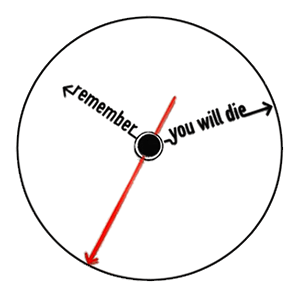
Memento mori is a Latin phrase translated as ‘Remember your mortality’ or “remember you will die’ – (literally: ‘[in the future] remember to die’). It names a genre of artistic creations that vary widely from one another, but which all share the same purpose: to remind people of their own mortality. The phrase has a tradition in art that dates back to antiquity. In ancient Rome, the words are believed to have been used on the occasions when a Roman general was parading through the streets during a victory triumph. Standing behind the victorious general was his slave, who was tasked to remind the general that, though his highness was at his peak today, tomorrow he could fall.
The thought came into its own with Christianity, whose strong emphasis on Divine Judgment, Heaven, Hell, and the salvation of the soul brought death to the forefront of consciousness. Most memento mori works are products of Christian art, although there are equivalents in Buddhist art.
Posted in Art, Death, Philosophy |
Leave a Comment »
November 16, 2010
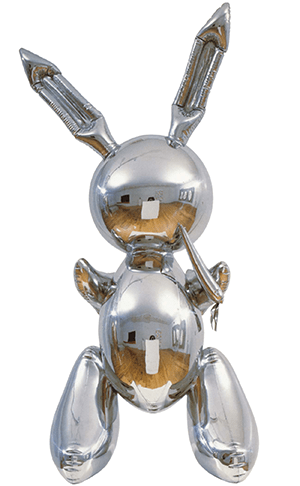
Jeff Koons’s ‘Rabbit‘ began as an inflatable, store-bought, plastic toy. Its transformation started when Koons bought it, blew it up, and had it cast in highly polished stainless steel. It has crinkled ears like an inflatable toy, a spherical head, and bulbous appendages, yet its face is blank. While it appears to be a shiny, lightweight, Mylar balloon, it is actually quite heavy and hard and stands 41 inches tall.
Rabbit’s surface also calls to mind the use of shiny metals in both historical and social contexts. According to Koons, ‘Polished objects have often been displayed by the church and by wealthy people to set a stage of both material security and enlightenment of spiritual nature; the stainless steel is a fake reflection of that stage.’
Posted in Art |
Leave a Comment »
November 16, 2010

Kilgore Trout is a fictional character created by author Kurt Vonnegut. He was originally created as a fictionalized version of author Theodore Sturgeon (Vonnegut’s colleague in the genre of science fiction), although Trout’s consistent presence in Vonnegut’s works has also led critics to view him as the author’s own alter ego.
Trout, who has supposedly written over 117 novels and over 2000 short stories, is usually described as an unappreciated science fiction writer whose works are used only as filler material in pornographic magazines. However, he does have at least three fans: Eliot Rosewater and Billy Pilgrim—both Vonnegut characters—have a near-complete collection of Trout’s work or have read most of his work.
read more »
Posted in Art, Humor |
Leave a Comment »
November 15, 2010

City Hall station, also known as City Hall Loop, was the original southern terminal of the first line of the New York City Subway, built by the Interborough Rapid Transit Company (IRT), named the ‘Manhattan Main Line,’ and now part of the IRT Lexington Avenue Line. Opened on October 27, 1904, this station underneath the public area in front of City Hall was designed to be the showpiece of the new subway. The station was designed by Spanish architect, Rafael Guastavino.
This station is unusually elegant in architectural style, and is unique among the original IRT stations, employing Romanesque Revival architecture. The platform and mezzanine feature Guastavino tile, skylights, colored glass tilework and brass chandeliers. Passenger service was discontinued on December 31, 1945, making it a ghost station, although the station is still used as a turning loop for 6 and <6> trains.
Posted in Art, Technology |
Leave a Comment »
November 15, 2010

The Voynich manuscript is a handwritten book thought to have been written between 1404 and 1438, composed of 240 vellum (mammal skin) pages, most with illustrations. Despite centuries of research, the author, script, and language remain unknown. Some think the manuscript is an elaborate hoax, others believe it was meant to serve as a pharmacopoeia or to address topics in medieval or early modern medicine.
Generally presumed to be some kind of ciphertext (an encrypted document), the Voynich manuscript has been studied by many professional and amateur cryptographers, including American and British codebreakers from both World War I and World War II. Yet it has defied all decipherment attempts, becoming a historical cryptology cause célèbre. The book is named after the Polish-Lithuanian-American book dealer Wilfrid M. Voynich, who acquired it in 1912. Currently the Voynich manuscript is owned by the Beinecke Rare Book and Manuscript Library of Yale University.
Posted in Art, Language |
Leave a Comment »





