December 7, 2010

Dan Deacon (b. 1981) is an American electronic musician. Dan was born and raised in suburban Long Island, New York. After high school he attended the Conservatory of Music at State University of New York where, in addition to performing his solo material, he played in many bands, including tuba for Langhorne Slim and guitar in the improvisational grindcore band Rated R. He completed his graduate studies in electro-acoustic and computer music composition.
In 2004 he moved to Baltimore, Maryland and moved into the Copycat Building and, along with friends from SUNY Purchase, formed Wham City, an arts and music collective.
read more »
Posted in Art, Technology |
Leave a Comment »
December 7, 2010
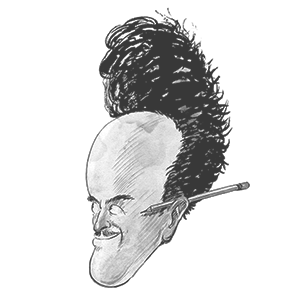
Ub Iwerks (1901 – 1971) was an American animator and special effects technician who created several of Walt Disney’s early characters including Mickey Mouse. Iwerks was considered by many to be Disney’s oldest friend, and he spent most of his career working for Disney in some capacity. The two met in 1918 while working for the Kansas City Art Studio, and would eventually start their own commercial art business together.
He was responsible for the distinctive style of the earliest Disney animated cartoons, and was also responsible for creating several early characters including Mickey Mouse, Clarabelle Cow, and Horace Horsecollar. The first few Mickey Mouse and Silly Symphonies cartoons were animated almost entirely by Iwerks. Disney and he had a falling out over the credit for the characters success. Their friendship and working partnership was severed when Iwerks accepted a contract with Disney competitor Pat Powers to start an animation studio under his own name.
read more »
Posted in Art, Humor, Money |
Leave a Comment »
December 6, 2010

Skiffle is a type of popular music with jazz, blues, folk, roots and country influences, usually using homemade or improvised instruments. Originating as a term in the United States in the first half of the twentieth century, it became popular again in the UK in the 1950s, where it was mainly associated with musician Lonnie Donegan and played a major part in beginning the careers of later eminent jazz, pop, blues, folk and rock musicians.
Improvised jug bands playing blues and jazz were common across the American South in the early decades of the twentieth century. They used instruments such as the washboard, jugs, tea chest bass, cigar-box fiddle, musical saw, and comb-and-paper kazoos, as well as more conventional instruments such as acoustic guitar and banjo.The term skiffle was originally one of many slang phrases for a rent party, a social event with a small charge designed to pay rent on a house.
Posted in Art, Language |
Leave a Comment »
December 6, 2010

Rick Rubin (b. 1963) is an American record producer and the co-president of Columbia Records. Rubin was the original DJ of the Beastie Boys, and co-founder of Def Jam Records with Russell Simmons. He helped popularize a fusion of hip hop and heavy metal music, and he has worked extensively with hard rock groups, notably Linkin Park, Red Hot Chili Peppers, Metallica, Slipknot, System of a Down, and Rage Against the Machine, but has produced for artists of all different genres including Shakira, Run-D.M.C., The Dixie Chicks, U2, and Green Day.
Rubin’s biggest trademark as a producer has been a ‘stripped-down’ sound, which involves eliminating production elements such as string sections, backup vocals, and reverb, and instead having naked vocals and bare instrumentation.
read more »
Posted in Art, Money |
Leave a Comment »
December 6, 2010

The Colossus of Rhodes was a statue of the Greek god Helios, erected in the city of Rhodes on the Greek island of Rhodes by Greek sculptor Chares of Lindos between 292 and 280 BC. It is considered one of the Seven Wonders of the Ancient World. It was constructed to celebrate Rhodes’ victory over the ruler of Cyprus, Antigonus I Monophthalmus, who unsuccessfully besieged Rhodes in 305 BC. Before its destruction, it stood over 30 meters (107 ft) high, making it one of the tallest statues of the ancient world.
read more »
Posted in Art, War |
Leave a Comment »
December 3, 2010
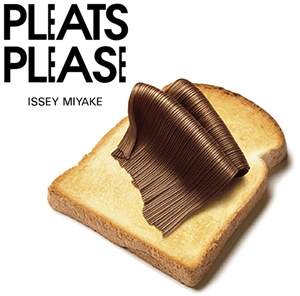
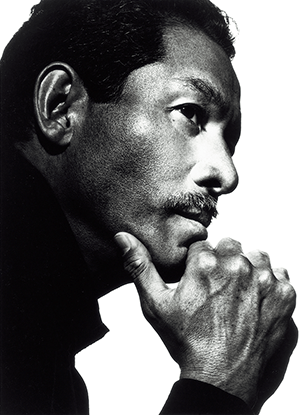
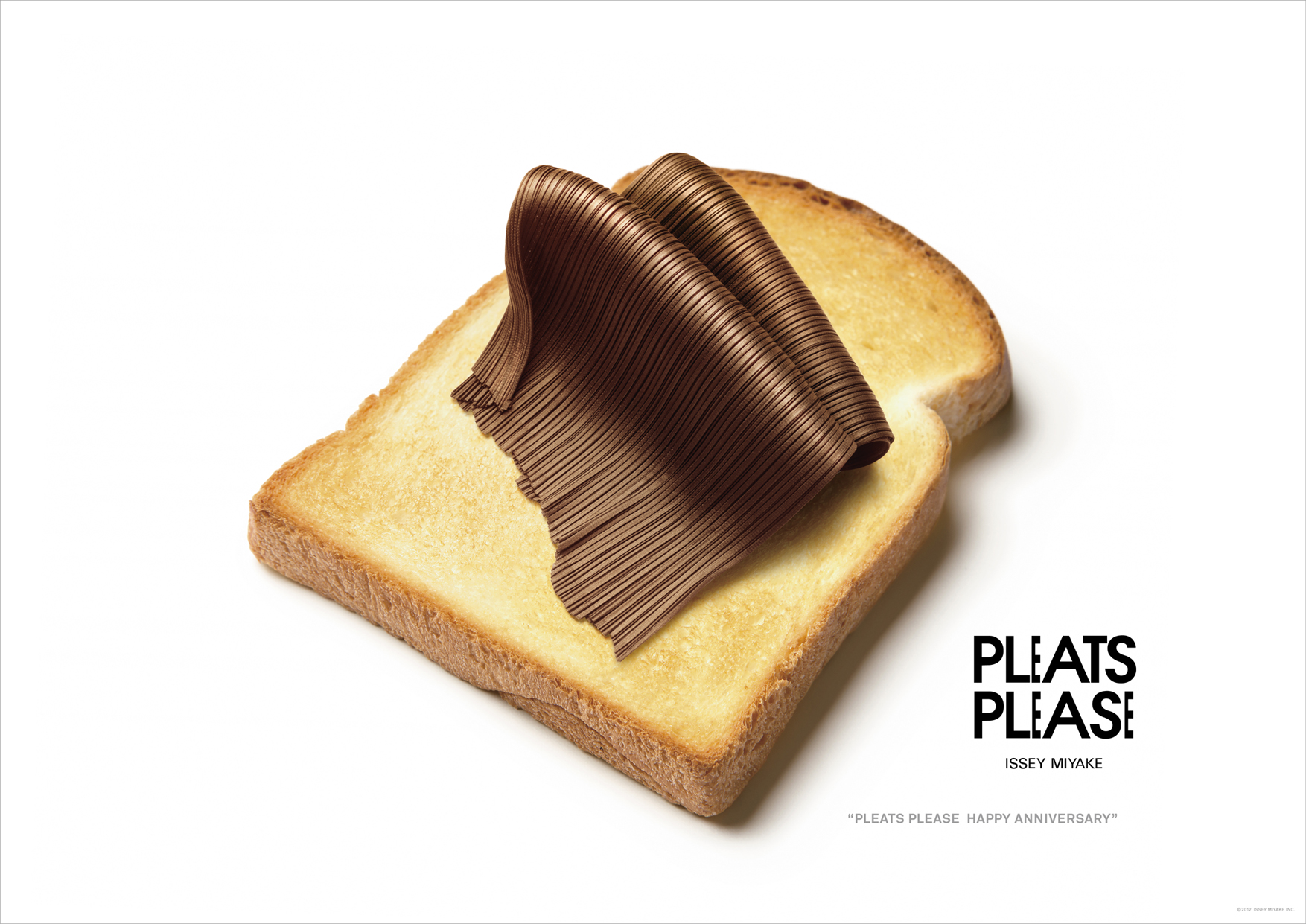
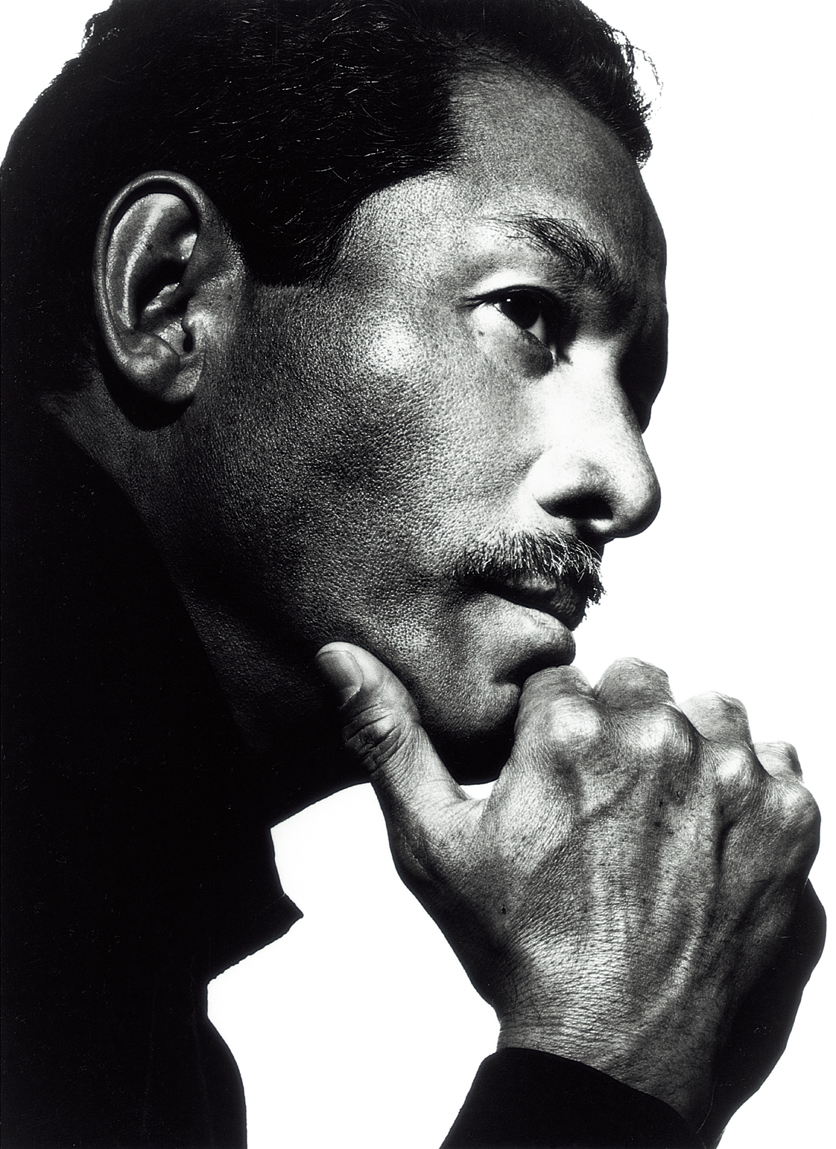
Issey Miyake (b. 1938) is a Japanese fashion designer. He is known for his technology-driven clothing designs, exhibitions and fragrances. Miyake was born in Hiroshima; as a seven year-old, he witnessed and survived the nuclear bomb. He studied graphic design at the Tama Art University in Tokyo, graduating in 1964. After graduation, he worked in Paris and New York City. Returning to Tokyo in 1970, he found the Miyake Design Studio. In the late ’80s, he began to experiment with new methods of pleating that would allow both flexibility of movement for the wearer as well as ease of care and production.
This eventually resulted in a new technique called ‘garment pleating’ and in 1993’s ‘Pleats Please’ in which the garments are cut and sewn first, then sandwiched between layers of paper and fed into a heat press, where they are pleated. The fabric’s ‘memory’ holds the pleats and when the garments are liberated from their paper cocoon, they are ready-to wear. He had a long friendship with Austrian-born pottery artist Dame Lucie Rie. She bequeathed to him her substantial collection of ceramic and porcelain buttons, which he integrated into his designs and presented them in new collections.
Posted in Art, Money, Technology |
Leave a Comment »
December 3, 2010

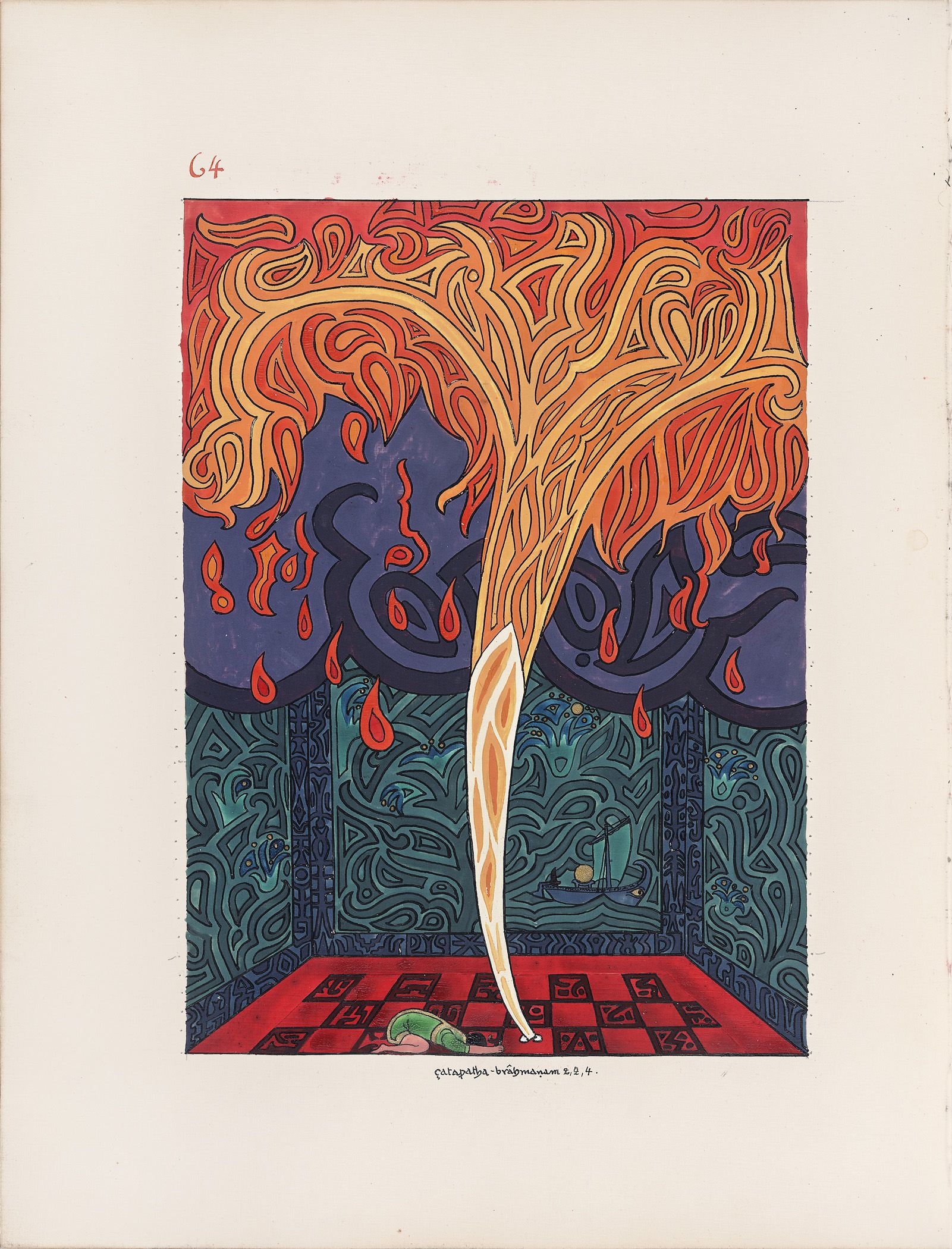
The Red Book, also known as Liber Novus (Latin for New Book), is a 205-page manuscript written and illustrated by Swiss psychiatrist Carl Gustav Jung between approximately 1914 and 1930, which was not published or shown to the public until 2009. It contain some of his most personal material, and during the sixteen years he worked on it, Jung developed his theories of archetypes, collective unconscious, and individuation. Until 2001, his heirs denied scholars access to the book.
read more »
Posted in Art, Philosophy, Science |
Leave a Comment »
December 1, 2010
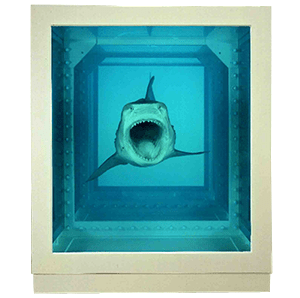

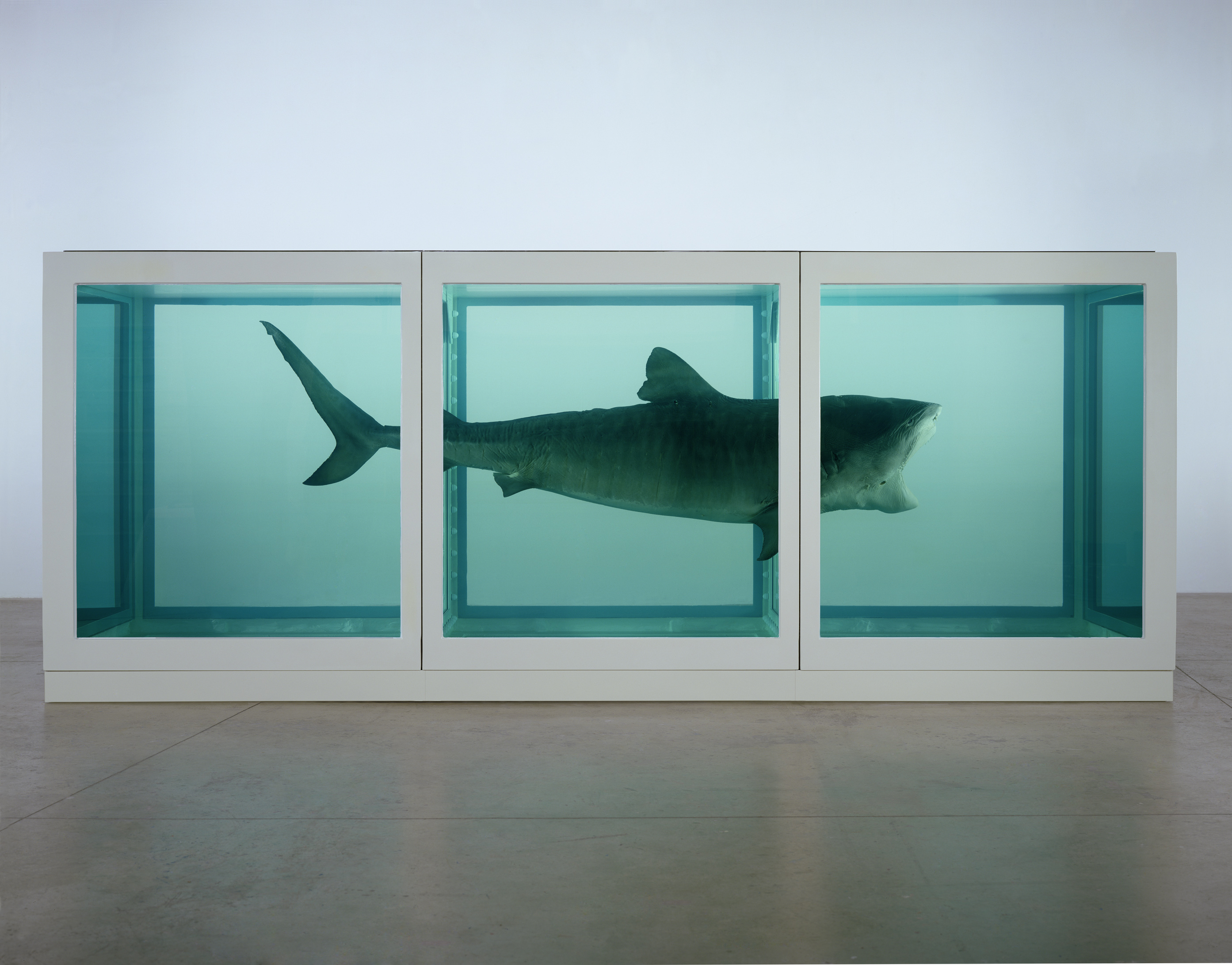
The Physical Impossibility of Death in the Mind of Someone Living is an artwork created in 1992 by Damien Hirst, an English artist and a leading member of the ‘Young British Artists’ (YBA). It consists of a tiger shark preserved in formaldehyde in a vitrine. It was originally commissioned in 1991 by Charles Saatchi, who sold it in 2004, to Steven A. Cohen for an undisclosed amount, widely reported to have been $8 – 12 million dollars.
Due to deterioration of the original 14-foot tiger shark, it was replaced with a new specimen in 2006. It is on display at the Metropolitan Museum of Art in New York City until 2010.
Posted in Art, Money |
Leave a Comment »
December 1, 2010

The Pickelhaube (from the old German pickel, ‘point’ or ‘pickaxe;’ and haube, ‘bonnet’) was a spiked helmet worn in the 19th and 20th centuries by German military, firefighters, and police. Although typically associated with the Prussian army, the helmet enjoyed wide use among uniformed occupations in the Western world. It was originally designed in 1842 by King Frederick William IV of Prussia, maybe as a copy of similar helmets that were adopted at the same time by the Russian military.It is not clear whether this was a case of imitation, or parallel invention.
Posted in Art, War, World |
Leave a Comment »
December 1, 2010

The pith helmet (also known as the safari helmet, sun helmet, topee, sola topee, salacot or topi) is a lightweight cloth-covered helmet made of cork or pith (typically pith from the sola Indian swamp growth). Designed to shade the wearer’s head and face from the sun, pith helmets were once often worn by Westerners in the tropics.
Crude forms of pith helmets had existed as early as the 1840s, but it was around 1870 that the pith helmet became popular with military personnel in Europe’s tropical colonies. The Franco-Prussian War had popularized the German Pickelhaube, which may have influenced the distinctive design of the pith helmet. Such developments may have merged with a traditional design from the Philippines, the salakot. The alternative name salacot (also written salakhoff) appears frequently in Spanish and French sources; it comes from the Tagalog word salacsac (or Salaksak).
Posted in Art, War, World |
1 Comment »
November 30, 2010

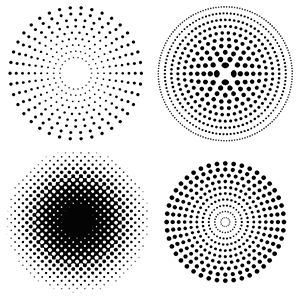
Halftone is the reprographic technique that simulates continuous tone imagery through the use of dots, varying either in size, in shape or in spacing. ‘Halftone’ can also be used to refer specifically to the image that is produced by this process. Whereas continuous tone imagery contains an infinite range of colors or greys, the halftone process reduces visual reproductions to a binary image that is printed with only one color of ink. This binary reproduction relies on a basic optical illusion— tiny halftone dots are perceived as smooth tones by the human brain.
At a microscopic level, developed black and white photographic film also consists of only two colors, and not an infinite range of continuous tones. For details, see film grain. Just as color photography evolved with the addition of filters and film layers, color printing is made possible by repeating the halftone process for each subtractive color—most commonly using what is called the ‘CMYK color model.’ The semi-opaque property of ink allows halftone dots of different colors to create another optical effect—full-color imagery.
Posted in Art, Technology |
Leave a Comment »
November 30, 2010

Hedcut is a term referring to a style of drawing, associated with ‘The Wall Street Journal’ half-column portrait illustrations. They use the stipple method of many small dots and the hatching method of small lines to create an image, and are designed to emulate the look of woodcuts from old-style newspapers, and engravings on certificates and currency. The phonetic spelling of ‘hed’ may be based on newspapers’ use of the term ‘hed’ for ‘headline.’ The ‘Wall Street Journal’ adopted the current form of this portraiture in 1979 when freelance artist Kevin Sprouls approached the paper with some ink dot illustrations he’d created. The front page editor felt that the drawings complemented the paper’s classical feeling and gave it a sense of stability. Additionally, they are generally more legible than photographs of the same size would be.
Sprouls was subsequently hired as a staff illustrator and remained there until 1987. Today, there are six hedcut artists on staff. Each drawing takes between three and five hours to produce. First, a high quality photograph must be secured. This photograph is scanned, converted to grayscale, and the contrast is adjusted. The photograph is then printed and placed on a light table, and overlaid with tracing vellum. The illustrators then trace directly over this image with ink pens, recreating the source photo using specific dot and line patterns. Women are sometimes more difficult to depict than men as they tend to have more complicated haircuts, which are often cropped for simplicity.
Posted in Art, Language |
Leave a Comment »