September 30, 2015
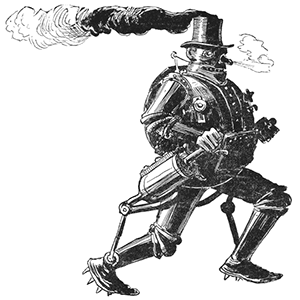
Edisonade is a modern term, coined in 1993 by John Clute in his and Peter Nicholls’ ‘The Encyclopedia of Science Fiction,’ for fictional stories about a brilliant young inventor and his inventions. This subgenre started in the Victorian and Edwardian eras and had its apex of popularity during the late 19th and early 20th centuries, and was common in ‘scientific romance,’ an archaic term for the genre of fiction now known as ‘science fiction.’
The term ‘Edisonade’ originated in the 1850s to describe both fiction and elements of scientific writing, but has since come to refer to the science fiction of the late nineteenth and early twentieth century, primarily that of Jules Verne, H. G. Wells, and Arthur Conan Doyle. In recent years, the term has come to be applied to science fiction written in a deliberately anachronistic style, as a homage to or pastiche of the original scientific romances.
read more »
Posted in Art, Language, Technology |
Leave a Comment »
September 28, 2015


Tinker Hatfield (b. 1952) is the designer of many of Nike’s most popular and innovative athletic shoe designs, including the Air Jordan 3 through Air Jordan 15, the twentieth anniversary Air Jordan, the Air Jordan XXIII, XXV, XXIX, and other athletic sneakers including the world’s first ‘cross training’ shoes, the Nike Air Trainer. Hatfield oversees Nike’s ‘Innovation Kitchen.’ He is Nike’s Vice President for Design and Special Projects.
He attended the University of Oregon, where he ran track for coach and Nike co-founder Bill Bowerman, and at one time had the pole-vault record at the school. Academically, he studied architecture and graduated with a degree from the University of Oregon School of Architecture. Hatfield joined Nike in 1981, and in 1985 started working on shoe design, believing that his architectural skills could be applied to footwear.
read more »
Posted in Art, Games, Money |
Leave a Comment »
September 20, 2015

A ghost light is an electric light that is left lit on the stage of an unoccupied theater. It typically consists of an exposed bulb mounted in a wire cage on a portable light stand near center stage. Ghost lights are also sometimes known as ‘equity lights’ or ‘equity lamps,’ possibly indicating their use was originally mandated by the Actors’ Equity Association. A ghost light enables one to navigate the theater to find the lighting control console and to avoid accidents such as falling into the orchestra pit or damaging set pieces. Aside from its obvious practical purpose, there are a number of superstitions associated with the origin and purpose of ghost lights.
A popular legend holds that every theater has a ghost. Some theaters have traditions to appease ghosts that reach far back into their history. For example, the Palace Theatre, London keeps two seats in their balcony permanently bolted open to provide seating for the theater ghosts. Similar superstitions hold that ghost lights provide opportunities for ghosts to perform onstage, thus appeasing them and preventing them from cursing the theater or sabotaging the set or production. The use of ghost lights might also be a throwback to the 1800s when theaters were lit with gas lamps. Leaving a flame burning would prevent the buildup of pressure in the gas lines which could cause an explosion.
Posted in Art, Philosophy, Technology |
Leave a Comment »
September 18, 2015

Colonel Tom Parker (1909 – 1997), born Andreas Cornelis van Kuijk, was a Dutch-born American entertainment impresario known best as the manager of Elvis Presley. Parker’s management of Presley defined the role of masterminding talent management, which involved every facet of his life and was seen as central to the success of Presley’s career.
‘The Colonel’ displayed a ruthless devotion to his own financial gain rather than his client’s interests and took more than the traditional 10 to 15 percent of his earnings (reaching up to 50 percent by the end of Presley’s life). Presley said of Parker: ‘I don’t think I’d have ever been very big if it wasn’t for him. He’s a very smart man.’ For many years Parker falsely claimed to have been US-born, but it eventually emerged that he was born in Breda in the Netherlands.
read more »
Posted in Art, Money, Politics |
Leave a Comment »
September 7, 2015
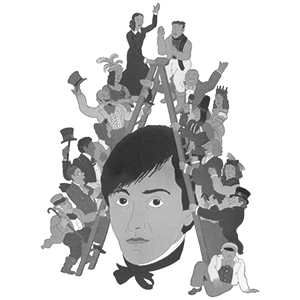
Nicholas Nickleby is a novel by Charles Dickens. Originally published as a monthly serial from 1838 to 1839, it was Dickens’ third novel. The book centers on the life and adventures of Nicholas Nickleby, a young man who must support his mother and sister after his father dies. Dickens began writing ‘Nickleby’ while still working on ‘Oliver Twist’ and while the mood is considerably lighter, his depiction of the Yorkshire school run by Wackford Squeers is as moving and influential as those of the workhouse and criminal underclass in ‘Twist.’
Like most of Dickens’ early works, the novel has a contemporary setting. Much of the action takes place in London, with several chapters taking place in Dickens’ birthplace of Portsmouth, as well as settings in Yorkshire and Devon. The tone of the work is that of ironic social satire, with Dickens taking aim at what he perceives to be the class injustices of Victorian England. Many memorable characters are introduced, including Nicholas’ malevolent Uncle Ralph, and the villainous Wackford Squeers, who operates an abusive all-boys boarding school at which Nicholas temporarily serves as a tutor.
read more »
Posted in Art, Language |
Leave a Comment »
September 6, 2015
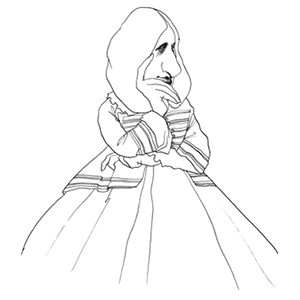
‘Silas Marner: The Weaver of Raveloe’ is the third novel by George Eliot, pen name of English novelist Mary Ann Evans. Published in 1861, it is an outwardly simple tale of a linen weaver, it is notable for its strong realism and its sophisticated treatment of a variety of issues ranging from religion to industrialization to community. Eliot’s novels often presented the cases of social outsiders and small-town persecution.
The novel is set in the early years of the 19th century. Silas Marner, a weaver, is a member of a small Calvinist congregation in Lantern Yard, a slum street in an unnamed city in Northern England. He is falsely accused of stealing the congregation’s funds while watching over the very ill deacon.
read more »
Posted in Art, Language |
1 Comment »
September 5, 2015

Don Herbert (1917 – 2007) was the creator and host of educational television programs for children devoted to science and technology, notably ‘Watch Mr. Wizard’ (1951–65, 1971–72) and ‘Mr. Wizard’s World’ (1983–90). He also produced many short video programs about science and authored several popular books about science for children. Marcel LaFollette of the Smithsonian notes that no fictional hero was able to rival the popularity and longevity of ‘the friendly, neighborly scientist.’
In Herbert’s obituary, Bill Nye wrote, ‘Herbert’s techniques and performances helped create the United States’ first generation of homegrown rocket scientists just in time to respond to Sputnik. He sent us to the moon. He changed the world.’ Herbert is credited with turning ‘a generation of youth’ in the 1950s and early 1960s onto ‘the promise and perils of science.’
read more »
Posted in Art, Education, Science |
2 Comments »
August 5, 2015

Resistance is a concept created by American novelist Steven Pressfield to describe a universal force that he claims acts against human creativity. It was first mentioned in his nonfiction book ‘The War of Art’ and elaborated in the follow-up books ‘Do The Work’ and ‘Turning Pro.’ It is also a recurring theme in some of his novels such as ‘The Legend of Bagger Vance’ and ‘The Virtues of War.’
Resistance is described in a mythical fashion as a universal force that has one sole mission: to keep things as they are. Pressfield claims that Resistance does not have a personal vendetta against anyone, rather it is simply trying to accomplish its only mission: maintenance of the status quo. It is the force that will stop an individual’s creative activity through any means necessary, such as rationalizing, inspiring fear and anxiety, emphasizing other distractions that require attention, or raising the voice of an inner critic.
read more »
Posted in Art, Language, Philosophy |
1 Comment »
July 22, 2015
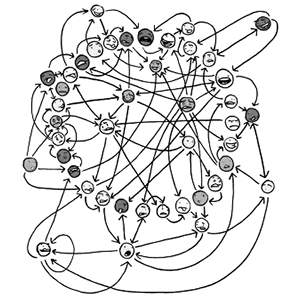
Fan service is a term originating from anime and manga fandom for material in a series which is intentionally added to please the audience (i.e. ‘giving the people what they want’). Fan service usually refers to ‘gratuitous titillation,’ but can also refer to intertextual references to other series and other ‘indulgent’ inclusions.
Long shots of robots in mecha shows, nudity, violent episode-long fight scenes, and emphasis on ‘shipping’ (the desire by fans for two people, either real-life celebrities or fictional characters, to be in a relationship, romantic or otherwise) can all be considered fan service as they are specifically aimed at pleasing the fans of any given show. Meta-references are intended to be seen and understood by the fans, as a way for creators to acknowledge and engage the more knowledgeable members of the fanbase.
read more »
Posted in Art, Money, Sex |
Leave a Comment »
May 26, 2015

A burl is a tree growth in which the grain has grown in a deformed manner. It is commonly found in the form of a rounded outgrowth on a tree trunk or branch that is filled with small knots from dormant buds. Insect infestation and certain types of molds are the most common causes of this condition, although other stresses can also promote burl formation, such as physical injury, or viral or fungal infection.
Most burls grow beneath the ground, attached to the roots as a type of malignancy that is generally not discovered until the tree dies or falls over. Such burls sometimes appear as groups of bulbous protrusions connected by a system of rope-like roots. Almost all burl wood is covered by bark, even if it is underground. In some tree species, burls can grow to great size. The largest, at 26 feet, occur in redwoods and can encircle the entire trunk. Burls yield a very peculiar and highly figured wood, prized for its beauty, strength, and rarity. It is sought after by furniture makers, artists, and wood sculptors.
read more »
Posted in Art, Money |
1 Comment »
May 17, 2015

Grim Fandango is a dark comedy neo-noir adventure game released by LucasArts in 1998 for Windows, with game designer Tim Schafer as project leader. It is the first adventure game by LucasArts to use 3D computer graphics overlaid on pre-rendered, static backgrounds. As with other LucasArts adventure games, the player must converse with other characters and examine, collect, and use objects correctly to solve puzzles in order to progress.
Grim Fandango ’s world combines elements of the Aztec belief of afterlife with style aspects of film noir, including ‘The Maltese Falcon,’ ‘On the Waterfront, ‘and ‘Casablanca,’ to create the Land of the Dead, through which recently departed souls, represented in the game as calaca-like figures, must travel before they reach their final destination, the Ninth Underworld. The story follows travel agent Manuel ‘Manny’ Calavera as he attempts to save Mercedes ‘Meche’ Colomar, a newly arrived but virtuous soul, during her long journey.
read more »
Posted in Art, Games, Humor |
Leave a Comment »
May 1, 2015

Leaves of Grass is a collection of poetry by Walt Whitman praising sensuality, the material world, nature, and the experience of the senses. The book was published at Whitman’s own expense in 1855, a period where poetry focused on the soul and organized religion, and was a failure at first. Whitman spent most of his professional life writing and rewriting the book, revising it multiple times until his death. This resulted in vastly different editions over four decades—the first a small book of twelve poems and the last a compilation of over 400.
The collection is notable for its discussion of delight in carnal pleasures during a time when such candid displays were considered immoral. Where much previous poetry, especially English, relied on symbolism, allegory, and meditation on the religious and spiritual, ‘Leaves of Grass’ (particularly the first edition) exalted the physical form and ephemera. Influenced by Ralph Waldo Emerson and the Transcendentalist movement, itself an offshoot of Romanticism, Whitman’s poetry praises nature and the individual’s role in it. However, much like Emerson, Whitman does not diminish the role of the mind or the spirit; rather, he elevates the human form and mind, deeming both worthy of poetic praise.
read more »
Posted in Art, Language, Philosophy |
Leave a Comment »


 The Daily Omnivore