September 5, 2015
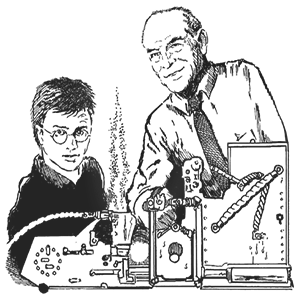
Don Herbert (1917 – 2007) was the creator and host of educational television programs for children devoted to science and technology, notably ‘Watch Mr. Wizard’ (1951–65, 1971–72) and ‘Mr. Wizard’s World’ (1983–90). He also produced many short video programs about science and authored several popular books about science for children. Marcel LaFollette of the Smithsonian notes that no fictional hero was able to rival the popularity and longevity of ‘the friendly, neighborly scientist.’
In Herbert’s obituary, Bill Nye wrote, ‘Herbert’s techniques and performances helped create the United States’ first generation of homegrown rocket scientists just in time to respond to Sputnik. He sent us to the moon. He changed the world.’ Herbert is credited with turning ‘a generation of youth’ in the 1950s and early 1960s onto ‘the promise and perils of science.’
read more »
Posted in Art, Education, Science |
2 Comments »
August 5, 2015
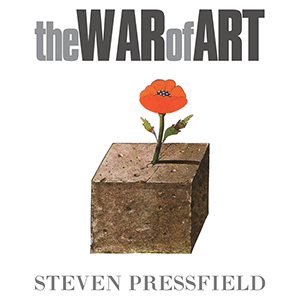
Resistance is a concept created by American novelist Steven Pressfield to describe a universal force that he claims acts against human creativity. It was first mentioned in his nonfiction book ‘The War of Art’ and elaborated in the follow-up books ‘Do The Work’ and ‘Turning Pro.’ It is also a recurring theme in some of his novels such as ‘The Legend of Bagger Vance’ and ‘The Virtues of War.’
Resistance is described in a mythical fashion as a universal force that has one sole mission: to keep things as they are. Pressfield claims that Resistance does not have a personal vendetta against anyone, rather it is simply trying to accomplish its only mission: maintenance of the status quo. It is the force that will stop an individual’s creative activity through any means necessary, such as rationalizing, inspiring fear and anxiety, emphasizing other distractions that require attention, or raising the voice of an inner critic.
read more »
Posted in Art, Language, Philosophy |
1 Comment »
July 22, 2015
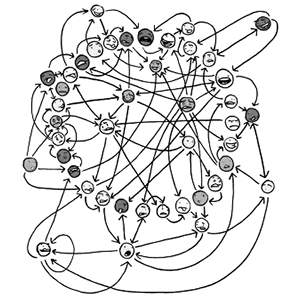
Fan service is a term originating from anime and manga fandom for material in a series which is intentionally added to please the audience (i.e. ‘giving the people what they want’). Fan service usually refers to ‘gratuitous titillation,’ but can also refer to intertextual references to other series and other ‘indulgent’ inclusions.
Long shots of robots in mecha shows, nudity, violent episode-long fight scenes, and emphasis on ‘shipping’ (the desire by fans for two people, either real-life celebrities or fictional characters, to be in a relationship, romantic or otherwise) can all be considered fan service as they are specifically aimed at pleasing the fans of any given show. Meta-references are intended to be seen and understood by the fans, as a way for creators to acknowledge and engage the more knowledgeable members of the fanbase.
read more »
Posted in Art, Money, Sex |
Leave a Comment »
May 26, 2015
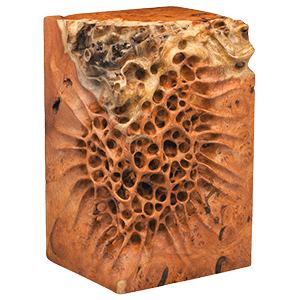
A burl is a tree growth in which the grain has grown in a deformed manner. It is commonly found in the form of a rounded outgrowth on a tree trunk or branch that is filled with small knots from dormant buds. Insect infestation and certain types of molds are the most common causes of this condition, although other stresses can also promote burl formation, such as physical injury, or viral or fungal infection.
Most burls grow beneath the ground, attached to the roots as a type of malignancy that is generally not discovered until the tree dies or falls over. Such burls sometimes appear as groups of bulbous protrusions connected by a system of rope-like roots. Almost all burl wood is covered by bark, even if it is underground. In some tree species, burls can grow to great size. The largest, at 26 feet, occur in redwoods and can encircle the entire trunk. Burls yield a very peculiar and highly figured wood, prized for its beauty, strength, and rarity. It is sought after by furniture makers, artists, and wood sculptors.
read more »
Posted in Art, Money |
1 Comment »
May 17, 2015
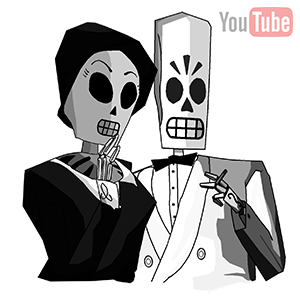
Grim Fandango is a dark comedy neo-noir adventure game released by LucasArts in 1998 for Windows, with game designer Tim Schafer as project leader. It is the first adventure game by LucasArts to use 3D computer graphics overlaid on pre-rendered, static backgrounds. As with other LucasArts adventure games, the player must converse with other characters and examine, collect, and use objects correctly to solve puzzles in order to progress.
Grim Fandango ’s world combines elements of the Aztec belief of afterlife with style aspects of film noir, including ‘The Maltese Falcon,’ ‘On the Waterfront, ‘and ‘Casablanca,’ to create the Land of the Dead, through which recently departed souls, represented in the game as calaca-like figures, must travel before they reach their final destination, the Ninth Underworld. The story follows travel agent Manuel ‘Manny’ Calavera as he attempts to save Mercedes ‘Meche’ Colomar, a newly arrived but virtuous soul, during her long journey.
read more »
Posted in Art, Games, Humor |
Leave a Comment »
May 1, 2015

Leaves of Grass is a collection of poetry by Walt Whitman praising sensuality, the material world, nature, and the experience of the senses. The book was published at Whitman’s own expense in 1855, a period where poetry focused on the soul and organized religion, and was a failure at first. Whitman spent most of his professional life writing and rewriting the book, revising it multiple times until his death. This resulted in vastly different editions over four decades—the first a small book of twelve poems and the last a compilation of over 400.
The collection is notable for its discussion of delight in carnal pleasures during a time when such candid displays were considered immoral. Where much previous poetry, especially English, relied on symbolism, allegory, and meditation on the religious and spiritual, ‘Leaves of Grass’ (particularly the first edition) exalted the physical form and ephemera. Influenced by Ralph Waldo Emerson and the Transcendentalist movement, itself an offshoot of Romanticism, Whitman’s poetry praises nature and the individual’s role in it. However, much like Emerson, Whitman does not diminish the role of the mind or the spirit; rather, he elevates the human form and mind, deeming both worthy of poetic praise.
read more »
Posted in Art, Language, Philosophy |
Leave a Comment »
April 29, 2015
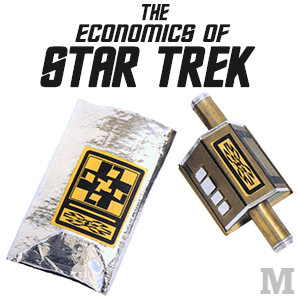
The United Federation of Planets, usually referred to as ‘the Federation,’ is an interstellar federal republic composed of planetary sovereignties depicted in the ‘Star Trek’ science fiction franchise. Formed in 2161, the planetary governments voluntarily exist semi-autonomously under a single central government based on the Utopian principles of universal liberty, rights, and equality, and to share their knowledge and resources in peaceful cooperation and space exploration.
The Federation is described a post-capitalist, libertarian, constitutional republic, which was composed of more than 150 member planets and thousands of colonies spread across some 6,000,000 cubic light years of the Milky Way Galaxy by 2373. The social structure within the Federation is classless and operates within a moneyless ‘New World Economy.’ It is described as stressing, at least nominally, the values of universal liberty, equality, justice, peace, and cooperation. The Federation also maintains its own quasi-militaristic and scientific exploratory agency, known as ‘Starfleet’ which handles many other governmental processes, sometimes with no other agency’s influence, such as border defense and diplomatic relations.
read more »
Posted in Art, Money, Politics |
Leave a Comment »
April 17, 2015
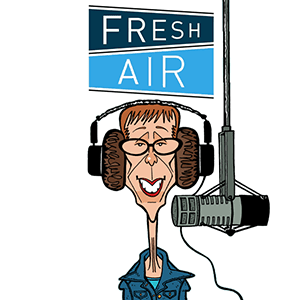
Terry Gross (b. 1951) is the host and co-executive producer of ‘Fresh Air,’ an interview format radio show produced by ‘WHYY-FM,’ the flagship National Public Radio (NPR) station in Philadelphia. The show is broadcast nationally by NPR. Gross has won praise over the years for her low-key and friendly yet often probing interview style and for the diversity of her guests. She has a reputation for researching her guests’ work largely the night before an interview, often asking them unexpected questions about their early careers.
Gross grew up in a Jewish family in Sheepshead Bay, Brooklyn. She earned a bachelor’s degree in English and a master’s degree in communications from SUNY, Buffalo. She began a teaching career, but said that she was ‘totally unequipped’ for the job, and was fired after only six weeks. Gross began her radio career in 1973 at ‘WBFO,’ a public radio station in Buffalo, where she had been volunteering. In 1975, she moved to WHYY-FM in Philadelphia to host and produce ‘Fresh Air,’ which was a local interview program at the time. In 1985, the show went national, being distributed weekly by NPR. It became a daily program two years later.
read more »
Posted in Art, Language, Politics |
1 Comment »
April 2, 2015

Stone Soup is an old folk story in which hungry strangers trick the local people of a town to share their food: a good confidence trick that benefits the group from combining their individual resources. The story is usually told as a lesson in cooperation, especially amid scarcity. In varying traditions, the stone has been replaced with other common inedible objects, and therefore the fable is also known as button soup, wood soup, nail soup, and axe soup. In the story, some hungry travellers come to a village carrying nothing more than an empty cooking pot. Upon their arrival, the villagers are unwilling to share any of their food stores with them.
The travellers go to a stream and fill the pot with water, drop a large stone in it, and place it over a fire. One of the villagers becomes curious and asks what they are doing. The travellers answer that they are making ‘stone soup,’ which tastes wonderful, but could use a little bit of garnish to improve the flavor. The villager does not mind parting with a few carrots to help them out, so that gets added to the soup. Another villager walks by, inquiring about the pot, and the travellers again mention their stone soup which has not reached its full potential yet. The villager hands them a little bit of seasoning to help them out. More and more villagers walk by, each adding another ingredient. Finally, a delicious and nourishing pot of soup is enjoyed by all.
read more »
Posted in Art, Food, Humor |
Leave a Comment »
March 26, 2015
The Truman Show delusion, informally known as Truman Syndrome, is a type of persecutory/grandiose delusion in which patients believe their lives are staged plays or reality television shows. The term was coined in 2008 by brothers Joel and Ian Gold, a psychiatrist and a neurophilosopher, respectively, after the 1998 film ‘The Truman Show,’ about a man who discovers he is living in a constructed reality televised globally around the clock. Since he was in the womb, all the people in Burbank’s life have been paid actors.
The concept predates this particular film. It was based on a 1989 episode of the ‘Twilight Zone,’ ‘Special Service,’ which begins with the protagonist discovering a camera in his bathroom mirror. This man soon learns that his life is being broadcast 24/7 on TV. Author Philip K. Dick has also written short stories and, most notably, a novel, ‘Time Out of Joint’ (1959), in which the protagonist lives in a created world in which his ‘family’ and ‘friends’ are paid to maintain the delusions.
read more »
Posted in Art, Health, Technology |
Leave a Comment »
March 11, 2015
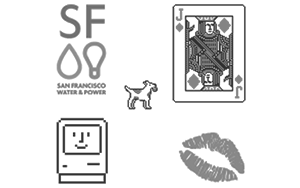
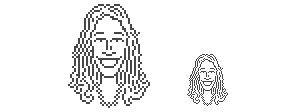
Susan Kare (b. 1954) is an artist and graphic designer who created many of the interface elements for the Apple Macintosh in the 1980s. She left Apple with Steve Jobs in 1985 to be the Creative Director at his new company NeXT.
Kare was born in Ithaca, New York, and is the sister of noted aerospace engineer Jordin Kare. She graduated from Harriton High School in 1971, received her B.A., summa cum laude, in Art from Mount Holyoke College in 1975 and her Ph.D. from New York University in 1978. She next moved to San Francisco and worked for the Museum of Modern Art. Today, the MOMA store in New York City carries stationery and notebooks featuring her designs.
read more »
Posted in Art, Technology |
Leave a Comment »
March 6, 2015
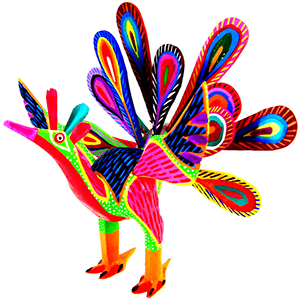
Alebrijes [ah-lay-bree-hay] are brightly colored Oaxacan folk art sculptures of fantastical creatures. The first alebrijes, along with use of the term, originated with Mexican artisan Pedro Linares (1906 – 1992). Linares specialized in making piñatas, carnival masks, and ‘Judas’ figures from papier-mâché. In the 1930s, he fell ill and dreamt of a strange place resembling a forest. There, he saw clouds that transformed into strange, brightly colored animals. He saw a donkey with butterfly wings, a rooster with bull horns, a lion with an eagle head, and all of them were shouting the nonsensical word, ‘Alebrijes.’ Upon recovery, he began recreating the creatures he saw in cardboard and paper mache and called them Alebrijes.
His work caught the attention of a gallery owner in Cuernavaca, in the south of Mexico and later, of artists Diego Rivera and Frida Kahlo. In the 1980s, British Filmmaker, Judith Bronowski, arranged an itinerant Mexican art craft demonstration workshop in the US featuring Linares, Manuel Jiménez, and a textile artisan Maria Sabina. Linares demonstrated his designs on family visits and which were adapted to the carving of a local wood called copal. The paper mache-to-wood carving adaptation was pioneered by Jiménez. This version of the craft has since spread to a number of other towns, most notably San Martín Tilcajete and La Unión Tejalapan, and become a major source of income for the area, especially for Tilcajete. The success of the craft, however, has led to the depletion of the native copal trees.
Posted in Art, World |
Leave a Comment »




