September 24, 2010
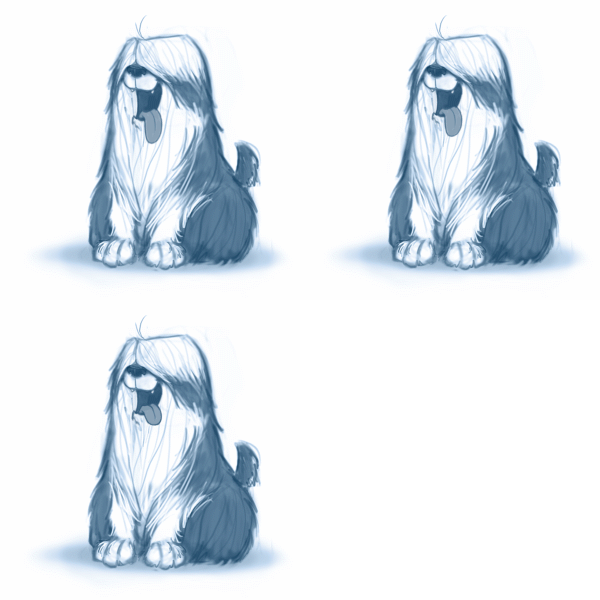
In its original sense, a shaggy dog story is an extremely long-winded tale featuring extensive narration of typically irrelevant incidents, usually resulting in a pointless or absurd punchline. These stories are a special case of yarns, coming from the long tradition of campfire yarns. Shaggy dog stories play upon the audience’s preconceptions of the art of joke telling. The audience listens to the story with certain expectations, which are either simply not met or met in some entirely unexpected manner.
A boy owned a dog that was uncommonly shaggy. Many people remarked upon its considerable shagginess. When the boy learned that there are contests for shaggy dogs, he entered his dog. The dog won first prize for shagginess in both the local and the regional competitions. The boy entered the dog in ever-larger contests, until finally he entered it in the world championship for shaggy dogs. When the judges had inspected all of the competing dogs, they remarked about the boy’s dog: ‘He’s not so shaggy.’
Posted in Art, Humor |
Leave a Comment »
September 21, 2010
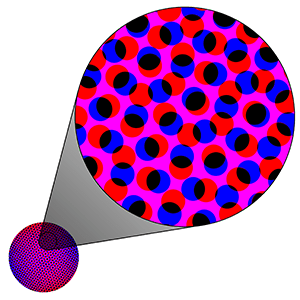

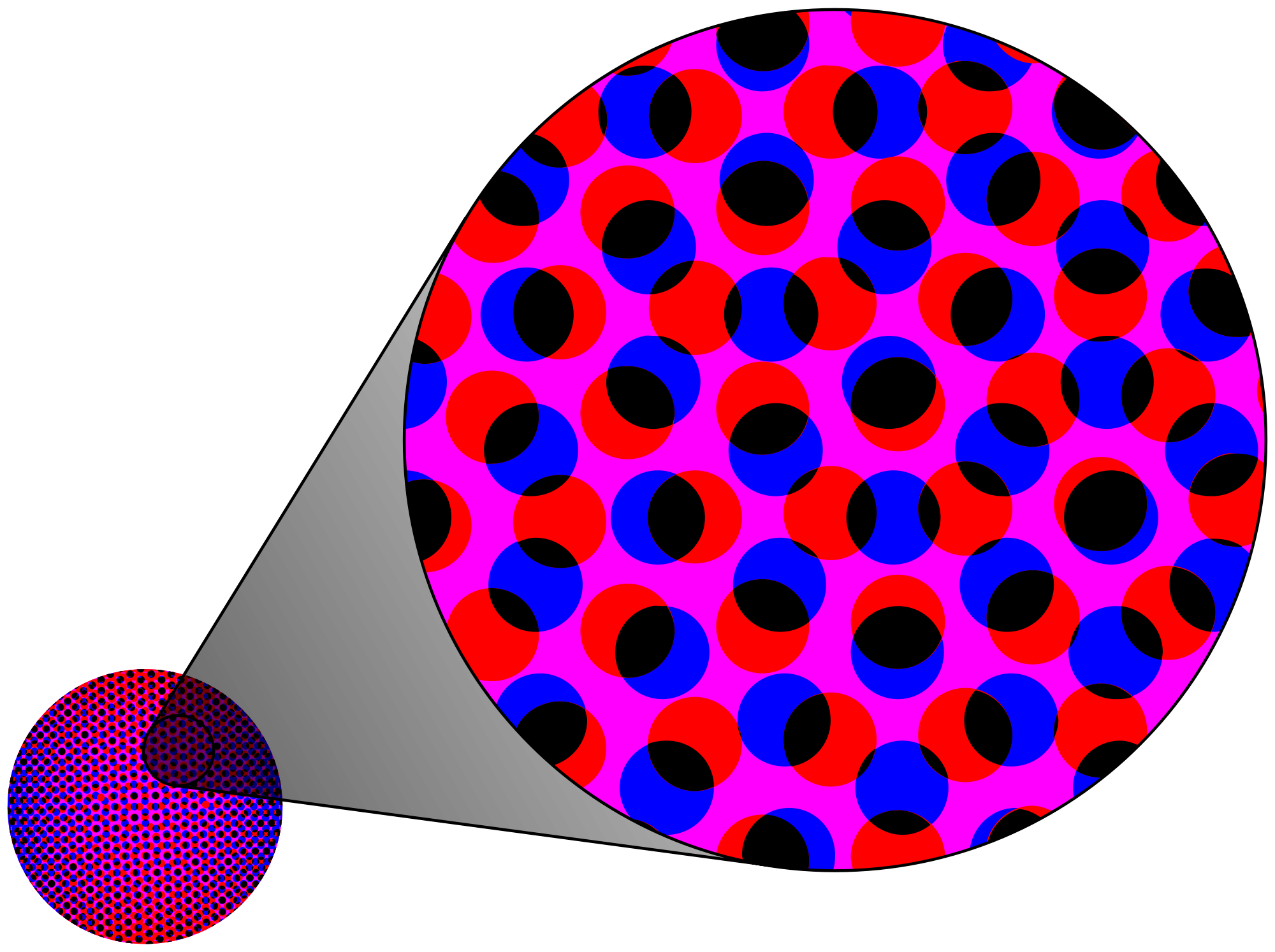
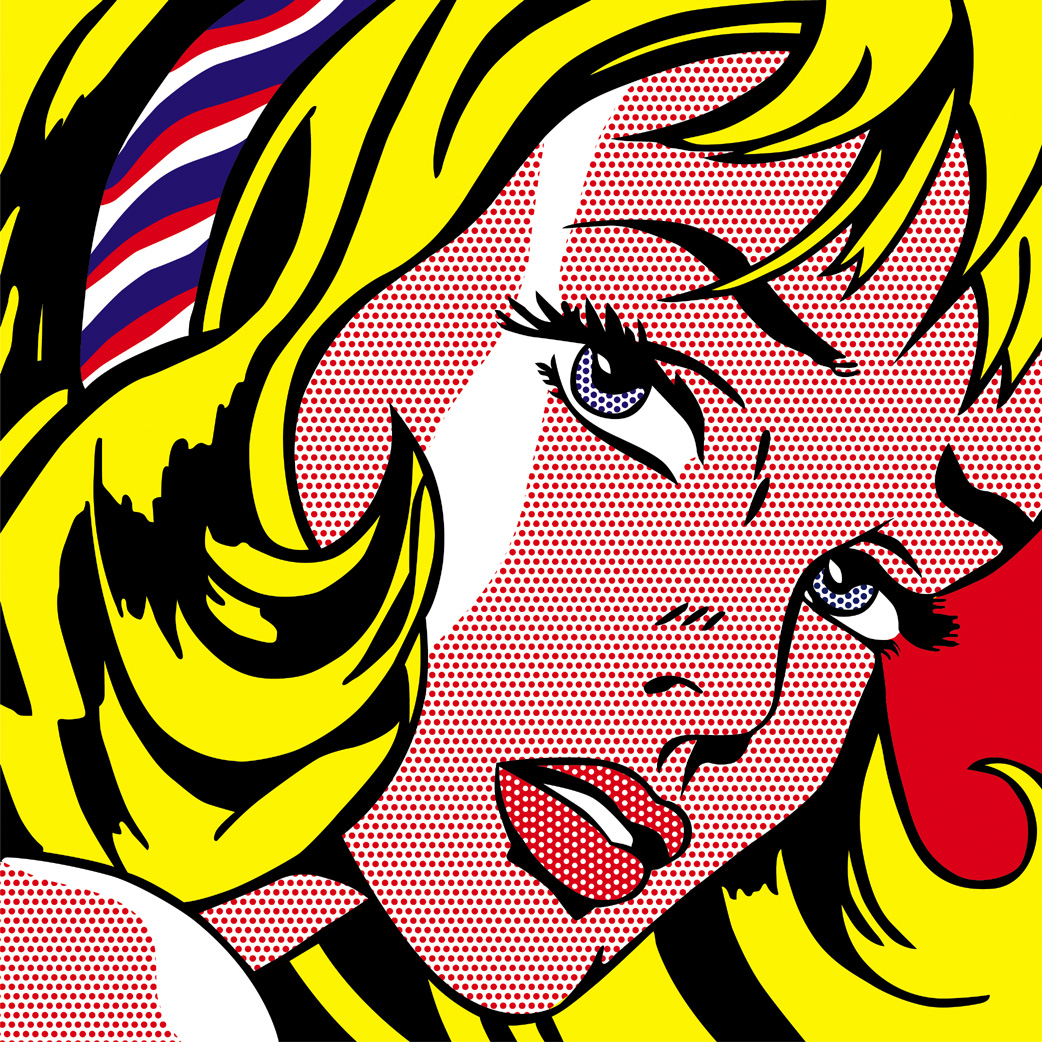
The Ben-Day Dots printing process, named after illustrator and printer Benjamin Day, is similar to Pointillism. Depending on the effect, color and optical illusion needed, small colored dots are closely-spaced, widely-spaced or overlapping. Magenta dots, for example, are widely-spaced to create pink. 1950s and 1960s pulp comic books used Ben-Day dots in the four process colors (cyan, magenta, yellow and black) to inexpensively create shading and secondary colors such as green, purple, orange and flesh tones.
Ben-Day dots differ from halftone dots in that the Ben-Day dots are always of equal size and distribution in a specific area. To apply the dots to a drawing the artist would purchase transparent overlay sheets from a stationery supplier. The sheets were available in a wide variety of dot size and distribution, which gave the artist a range of tones to use in the work. The overlay material was cut in the shapes of the tonal areas desired—i.e. shadow or background or surface treatment and rubbed onto the specific areas of the drawing with a burnisher. When photographically reproduced as a line cut for letterpress printing, the areas of Ben-Day overlay provided tonal shading to the printing plate.
Posted in Art, Money, Technology |
Leave a Comment »
September 20, 2010


A Munny doll is a designer toy from the American company Kidrobot. It is a blank figure the owner can decorate using pens, pencils, markers, paint, and other supplies. A Munny doll is made out of vinyl and has movable joints. The first doll was white, and has since been available in other colors such as black, pink, blue, and phosphorescent green. The figure is housed in a box which includes 4 random accessories such as a carrot or a hat.
Posted in Art, Money |
Leave a Comment »
September 20, 2010

Fabric is a nightclub in London by Keith Reilly and Cameron Leslie that opened on 29 October 1999. Fabric has three separate rooms (two of which feature stages for live acts) with independent sound systems. A feature of the club is its vibrating floor in Room One: known as a ‘bodysonic’ dancefloor, sections of the floors are attached to 400 bass transducers emitting bass frequencies of the music being played.
The musical genres played there vary. FabricLive is a Friday-night ‘soundclash,’ (music competition) including tempos from hip hop to breakbeat to drum and bass to electro. Fabric’s Saturday nights showcase house and techno. The club has been releasing monthly compilation albums mixed by popular DJs since November 2001. There are two series that alternate months, entitled fabric and FabricLive.
Posted in Art, Money, World |
Leave a Comment »
September 20, 2010
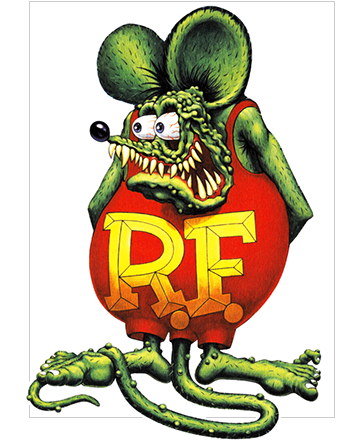
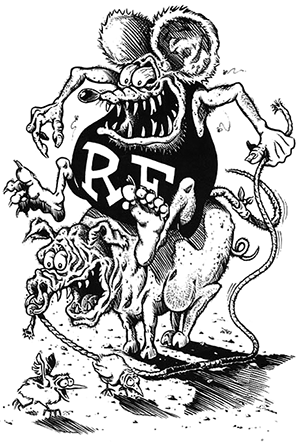
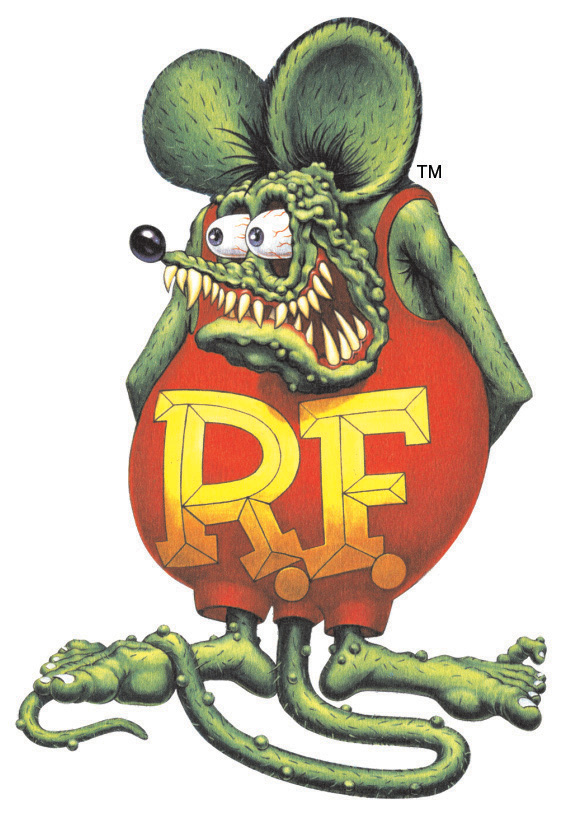
Rat Fink is one of the several hot-rod characters created by artist Ed ‘Big Daddy’ Roth. Roth’s hatred for Mickey Mouse led him to draw the original Rat Fink, who came to symbolize the hot-rod and ‘Kustom Kulture’ scene of the 1950s and 1960s. Although Detroit native Stanley Mouse is credited with creating the so-called ‘Monster Hot Rod’ art form, Roth is accepted as the individual who popularized it. The Rat Fink is a green, depraved-looking mouse with bulging, bloodshot eyes, an oversized mouth with yellowed, narrow teeth, and a red T-shirt with yellow ‘R.F.’ on it. Other artists associated with Roth also drew the character, including Steve Fiorilla, who illustrated Roth’s catalogs.
A Rat Fink revival in the late 1980s and the 1990s centered around the West Coast grunge/punk rock movements. The term ‘fink’ was originally underworld slang for an informer, comparable to ‘stool pigeon.’ It is also thought to have been a toned-down form of ‘ratfucking,’ a slang term for playing dirty tricks.
Posted in Art, Humor |
Leave a Comment »
September 16, 2010

Rococo [ruh-koh-koh] also referred to as ‘Late Baroque’ is an 18th century style which developed as Baroque artists gave up their symmetry and became increasingly more ornate, florid, and playful. Rococo rooms were designed as total works of art with elegant and ornate furniture, small sculptures, ornamental mirrors, and tapestry complementing architecture, reliefs, and wall paintings. It was largely supplanted by the Neoclassic style.
In 1835 the Dictionary of the French Academy stated that the word Rococo ‘usually covers the kind of ornament, style and design associated with Louis XV’s reign.’ The word Rococo is seen as a combination of the French rocaille, meaning stone, and coquilles, meaning shell, due to reliance on these objects as motifs of decoration. It may also be related to the Portuguese barroco (which refers to an irregularly shaped pearl), or Baroque style.
Posted in Art |
Leave a Comment »
September 14, 2010

For the Love of God is a sculpture by English artist Damien Hirst produced in 2007. It consists of a platinum cast of a human skull encrusted with 8,601 flawless diamonds, which weigh over 1,106.18 carats in total, including a pear-shaped pink diamond located in the forehead. Costing £14 million to produce, the work went on display at the White Cube gallery in London in an exhibition called ‘Beyond Belief’ with an asking price of £50 million. The work’s title was supposedly inspired by Hirst’s mother, who once asked, ‘For the love of God, what are you going to do next?’
Hirst said that the work was sold on August, 30 2007, for £50 million, to an anonymous consortium. Christina Ruiz, editor of The Art Newspaper, claims that Hirst had failed to find a buyer and had been trying to offload the skull for £38 million. Immediately after these allegations were made, Hirst claimed he had sold it for the full asking price, in cash, leaving no paper trail. The consortium that bought the piece included Hirst himself. Art critic David Lee commented, ‘Everyone in the art world knows Hirst hasn’t sold the skull. It’s clearly just an elaborate ruse to drum up publicity and rewrite the book value of all his other work.’
Posted in Art, Money |
Leave a Comment »
September 14, 2010

Italo disco is a broad term, encompassing much of the dance music output in Europe during the 1980s. It is one of the world’s first forms of completely electronic dance music and evolved during the late 1970s and early 1980s in Italy, Germany, the Netherlands and other parts of Europe. Italo disco music has a distinct, futuristic and spacey sound, which was created using synthesizers, drum machines and vocoders. The term ‘Italo disco’ was marketed only in Europe in the early 1980s by the German record label ZYX Music. Prior to 1983, the music was simply considered dance or disco music from Europe.
Posted in Art, World |
Leave a Comment »
September 13, 2010
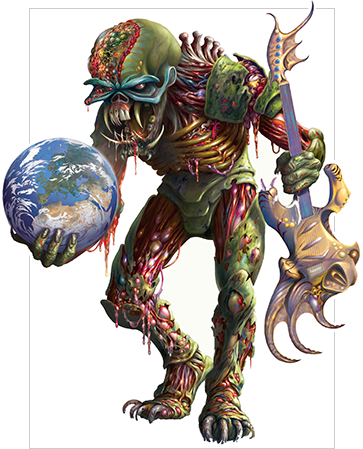
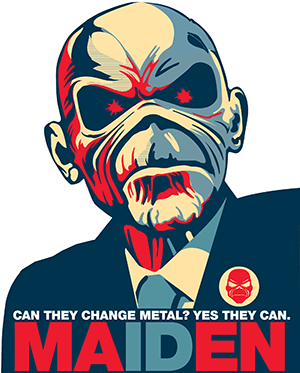
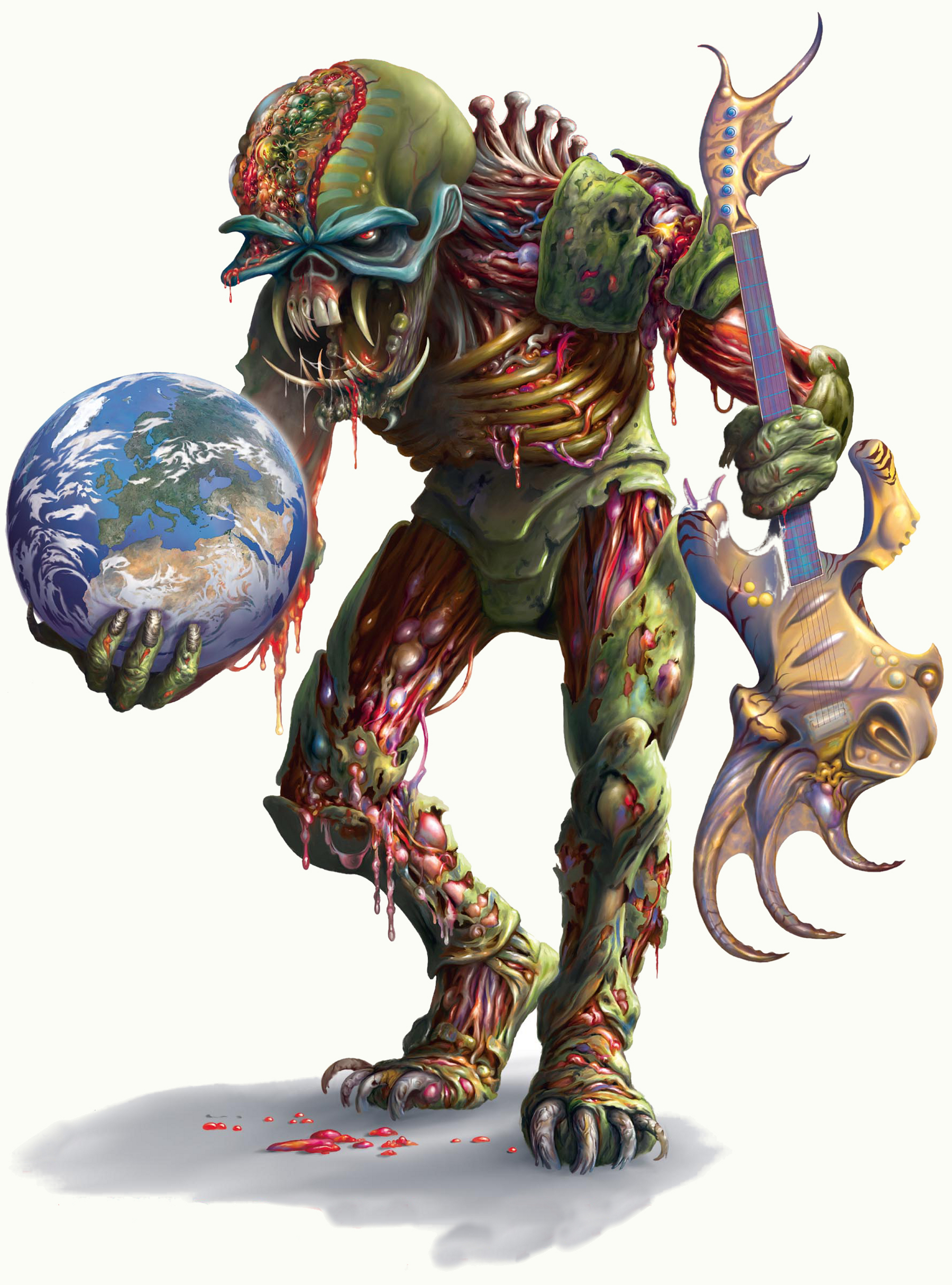
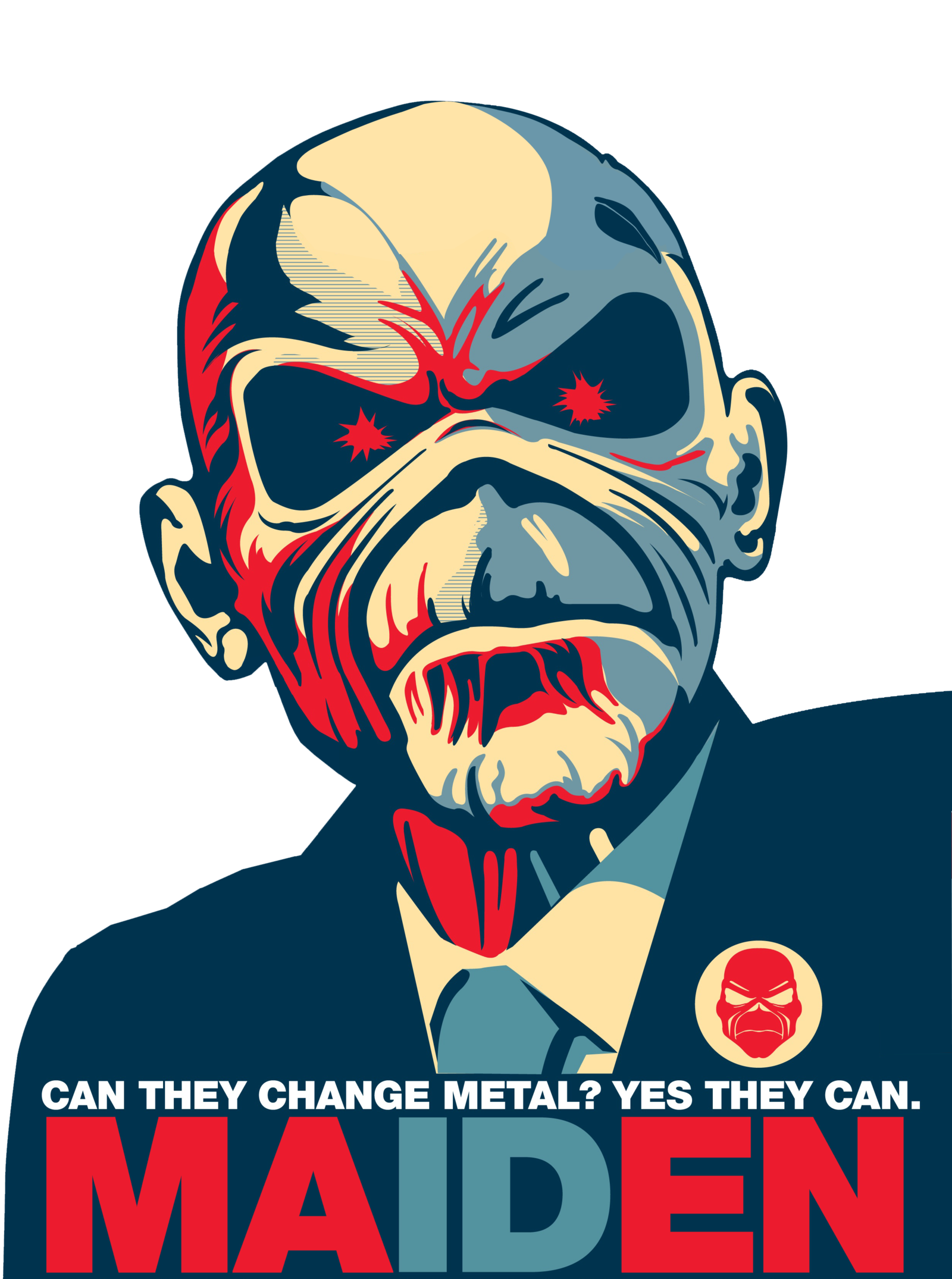
Eddie the Head is the mascot for the British heavy metal band Iron Maiden. He is a perennial fixture in the album cover art, as well as ever present in their live shows.The character was created by artist Derek Riggs. Riggs claimed that the design was based on a Japanese head he saw on a television documentary, hanging on the side of a burned out tank at the Matanikau River during the Battle for Henderson Field, October 24, 1942. The original Eddie was just a theatrical mask. It was connected to a pump that would eject various kinds of liquids, from food dye to paint, and would drool over Doug Sampson who was the drummer at the time.
The name originates from an old joke: Eddie the head was born with no body, no arms, and no legs. All he had was a head. But despite this major birth defect, his parents still loved him very much. So on his sixteenth birthday, his parents found a doctor that could surgically give Eddie a body. When the parents got home, they couldn’t wait to tell him that he could finally have a body and be like other normal people. When Eddie got there, they were really excited and said, ‘Have we got a surprise for you. It’s the best present ever!’ And Eddie said, ‘Oh no, not another f*****’ hat!’
Posted in Art, Humor |
Leave a Comment »
September 12, 2010

Bebop [bee-bop] or bop is a style of jazz characterized by fast tempo, instrumental virtuosity and improvisation based on the combination of harmonic structure and melody. It was developed in the early and mid-1940s. It first surfaced in musicians’ argot some time during the first two years of American involvement in WWII. This style of jazz ultimately became synonymous with modern jazz, as either category reached a certain final maturity in the 1960s.
read more »
Posted in Art, Language |
Leave a Comment »
September 12, 2010
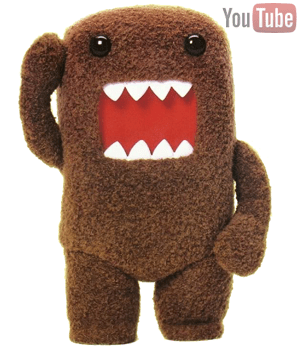
Domo Kun is the official mascot of NHK television station, appearing in several 30 second stop-motion interstitial sketches shown as station identification during shows. NHK is Japan’s national public broadcasting organization. The name ‘Domo’ was acquired during the second episode of his show in which a TV announcer said, ‘dōmo, konnichiwa,’ which is a greeting meaning something along the lines of, ‘Well, hello there!” but which can also be interpreted as ‘Hello, Domo!’ The suffix ‘kun’ is a Japanese honorific often used with young males.
Posted in Art, Humor, World |
Leave a Comment »
September 11, 2010
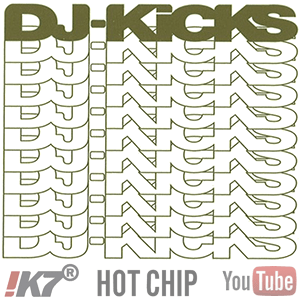
DJ-Kicks is a series of DJ mix albums, mixed by various artists for the independent record label !K7 Records. The series started out in 1995 as a compilation of electronic DJ club-style mixes in the techno or house genres, with the then-novel twist of being targeted to a home listening audience. Soon afterwards, both the choice of compilers and the genres included were expanded: In addition to DJs, more and more producers (like Terranova), remixers (like Kruder & Dorfmeister), bands (like the Stereo MCs) and musicians (like Nicolette) compiled DJ-Kicks albums. The actual music began to vary wildly as well, ranging from Trüby Trio’s downbeat jazz sound to Kemistry & Storm’s aggressive drum and bass. Still, all contributions remain broadly within the electronic music genre.
The first DJ-Kicks release was C.J. Bolland’s in 1995, and the series is still regularly expanded. As of October 2006, there are 28 releases in the series, with a release rate of roughly two to three new ones each year. Some of the DJ-Kicks mixes are very popular and counted among the regular albums of the compiler, most notably the one by Kruder & Dorfmeister. The DJ-Kicks series has been called ‘the most important DJ-mix series ever’ by Mixmag.
Posted in Art |
Leave a Comment »