October 19, 2010

Cymande [sah-mahn-day] were an electric funk band who released several albums throughout the early 1970s. The group was formed in 1971 in London, England by musicians from Guyana and Jamaica. The name Cymande is derived from a Calypso word for Dove, which symbolizes peace and love. The group developed a subtle and complex, deep funk style influenced by calypso rhythms, jazz, African music, American soul and UK rock of the time. Cymande can now be seen as one of the most sophisticated of the funk acts that evolved in the early 1970s.
By the mid-70s the band members were going their separate ways and the group was disbanded in 1974. It wasn’t until 20 years later that they reaped any financial rewards, as their music became a popular source for samplers. Cymande’s original albums are still widely sought-after by DJs and funk aficionados. Perhaps the band’s best known recording is the soulful dancefloor filler called ‘Bra,’ which was later sampled by the American hip-hop group De La Soul and used as a breakbeat record by the godfathers of hip-hop Kool Herc and Grandmaster Flash.
Posted in Art, World |
Leave a Comment »
October 19, 2010

Isabella ‘Issy’ Blow (1958 – 2007) was an English magazine editor and international style icon. The muse of hat designer Philip Treacy, she is credited with discovering the models Stella Tennant and Sophie Dahl as well as the fashion designer Alexander McQueen. Blow battled with depression and bipolar disorder most of her adult life.
In 2006, Blow attempted suicide with an overdose of sleeping pills. Later that year, she again attempted suicide by jumping from the Hammersmith Flyover, which resulted in her breaking both ankles. In 2007, Blow made several more suicide attempts by driving her car into the rear of a truck, by attempting to obtain horse tranquilizers, by drowning in a lake and by overdosing while on a beach in India. She died in May of 2007 after ingesting a weedkiller, in what was later ruled a suicide.
Posted in Art, Language |
Leave a Comment »
October 18, 2010

Robert Crumb (b. 1943) is an American artist, illustrator and musician recognized for the distinctive style of his drawings and his critical, satirical, subversive view of the American mainstream. Crumb was a founder of the underground comix movement and is regarded as its most prominent figure.
Though one of the most celebrated of comic book artists, Crumb’s entire career has unfolded outside the mainstream comic book publishing industry. One of his most recognized works is the ‘Keep on Truckin” comic, which became a widely distributed fixture of pop culture in the 1970s. Others are the characters Devil Girl, Fritz the Cat, and Mr. Natural.
read more »
Posted in Art, Humor |
Leave a Comment »
October 13, 2010

Controllerism is the art and practice of using musical software controllers (e.g. MIDI) to build upon, mix, scratch, remix, effect, modify, or otherwise create music, usually by a DJ or ‘Controllerist.’ Often on the side of Virtuoso performance art, Controllerism is also a nod to traditional musicianship and instrumental-ism paired with modern computer sequencing software such as Ableton Live and Native Instruments Traktor.
However a working knowledge of Scale and Chords is not necessarily required as the performers typically focus their efforts more on sequencing events, software effect and instrument manipulations using buttons, knobs, faders, keys, foot switches and pedals than on instrumental notes played in real time. The term was coined by musician Matt Moldover in 2007 and popularized by DJ Ean Golden to describe the process while paying homage to and giving respect to the art of turntablism.
Posted in Art, Technology |
Leave a Comment »
October 13, 2010
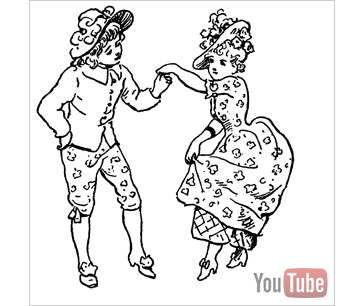
A minuet [min-yoo-et] is a social dance of French origin for two people, usually in 3/4 time. The word was adapted from Italian minuetto and French menuet, meaning small, pretty, delicate, a diminutive of menu, from the Latin minutus. At the period when it was most fashionable it was slow, soft, ceremonious, and graceful. The name is also given to a musical composition written in the same time and rhythm, but when not accompanying an actual dance the pace was quicker. As the other dances that made up a Baroque suite dropped out of use, the minuet retained its popularity.
Posted in Art, Language, World |
Leave a Comment »
October 10, 2010
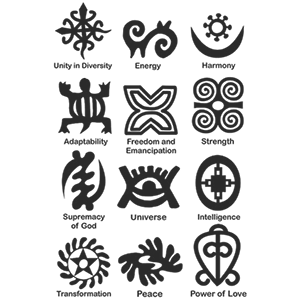
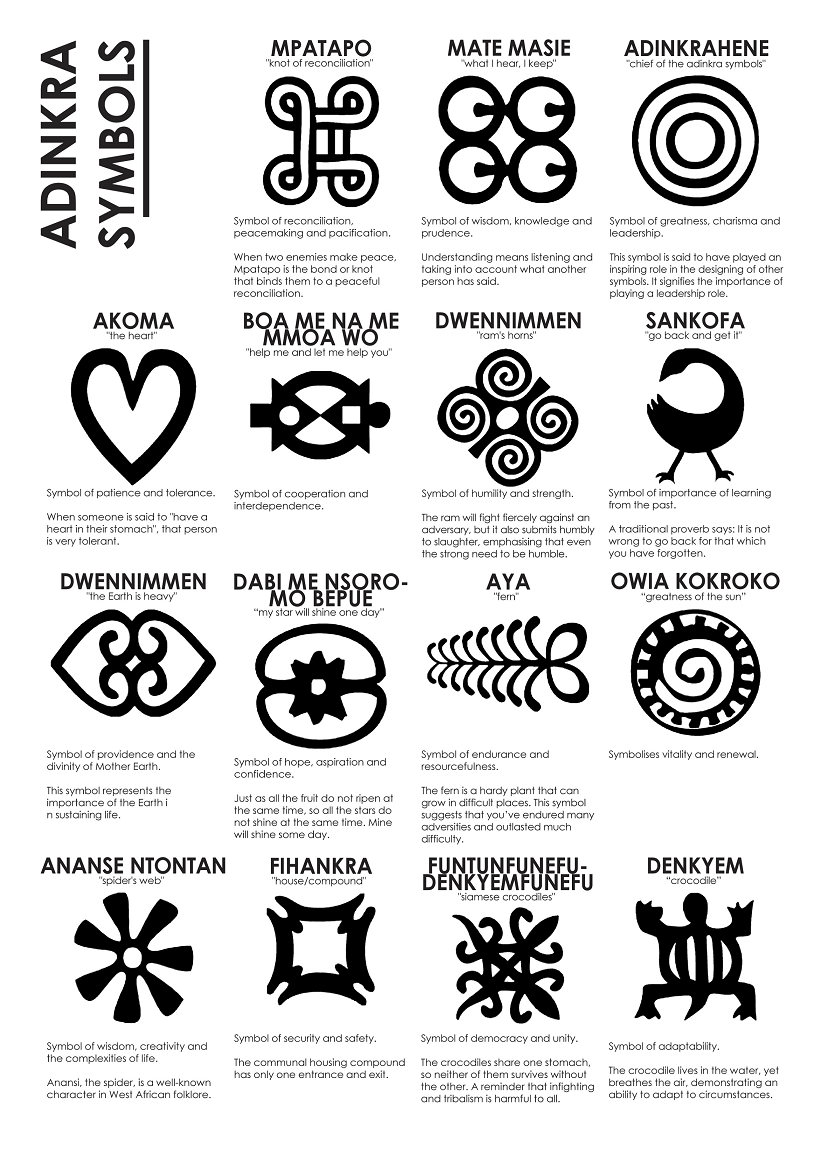
Adinkra [oon-din-krah] are visual symbols, originally created by the Akan of Ghana and the Gyaman of Cote d’Ivoire in West Africa, that represent concepts or aphorisms.
Adinkra are used on fabric, walls, in pottery, woodcarvings and logos. Fabric adinkra are often made by woodcut sign writing as well as screen printing. They also can be used to communicate evocative messages that represent parts of their life or those around them.
Posted in Art, Philosophy, World |
3 Comments »
October 10, 2010
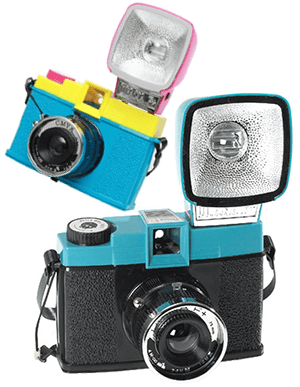
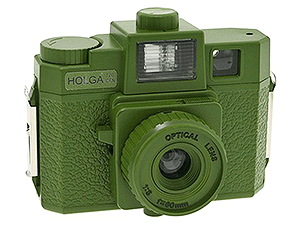
Lomography is the commercial trademark of Lomographische AG, an Austria photography company. The name is inspired by the former state-run optics manufacturer LOMO PLC of Saint Petersburg, Russia. LOMO created and produced the 35 mm LOMO LC-A Compact Automat camera — which became the centerpiece of Lomography’s marketing and sales activities. This camera was loosely based upon the Cosina CX-1 and introduced in the early 1980s.
read more »
Posted in Art, Money |
Leave a Comment »
October 10, 2010
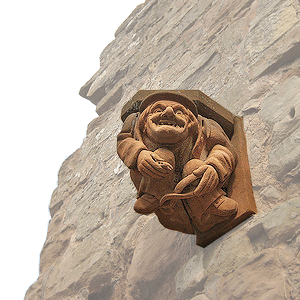
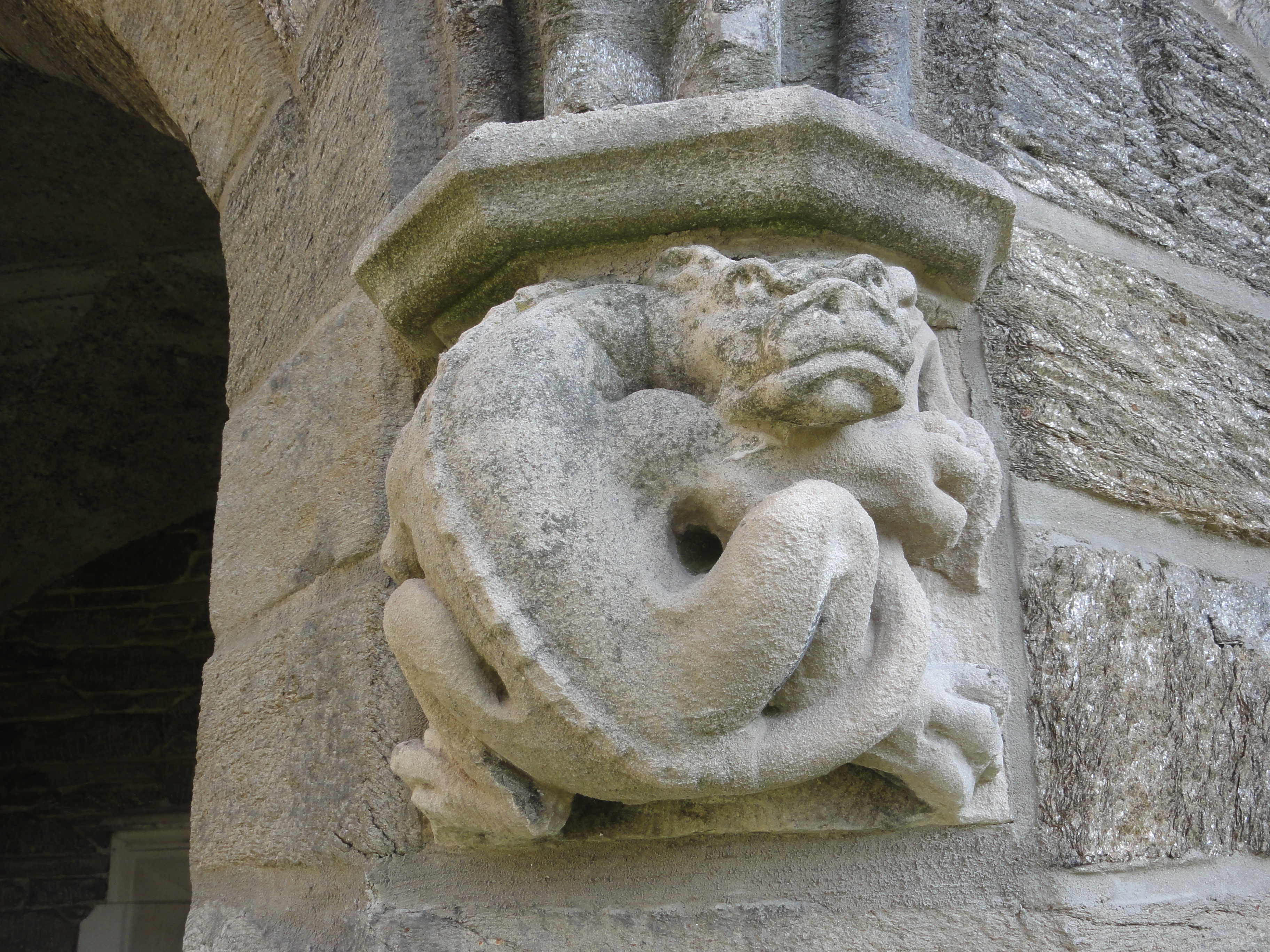
By definition, a hunky punk is an architectural feature that serves no purpose. Therefore, a true gargoyle is not a hunkypunk because it serves to drain water through its mouth. Hunky punks were often carved to create a balance of decoration. A typical example might be found at the corner of a church tower, along the coping ridge below any castellations. Often there are carvings on each corner, yet the roof may only drain in one direction and so there might be three hunkypunks and one true gargoyle.
There is a belief that a hunky punk is only a short squatting figure typical of those found in the churches of western England. The origin of the term hunkypunk has been ascribed to the Old English ‘hunkers’ which means haunches and ‘punchy’ which means short-legged. The balance of good and evil in church design reminds worshippers of the narrow path they tread. For every good and benign creature such as a saint or an animal to signify purity, there is typically an opposite to bring out the fear of evil.
Posted in Art, Philosophy |
Leave a Comment »
October 9, 2010

Sheela na Gigs are carvings of naked women displaying an exaggerated vulva found on churches, castles and other buildings, particularly in Ireland and Britain. Such carvings are said to ward off death and evil.
Other grotesques such as gargoyles and Hunky Punks are frequently found on churches all over Europe and it is commonly said that they are there to keep evil spirits away. They are often positioned over doors or windows, presumably to protect these openings.
Posted in Art, Philosophy, Sex |
Leave a Comment »
October 1, 2010

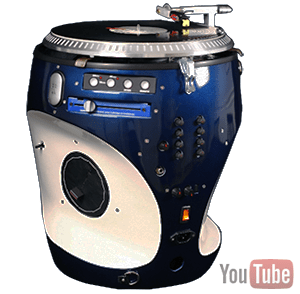
The Scratchophone is a portable scratch instrument, featuring a turntable, a special tonearm, scratch mixer, and a pair of speakers, a battery, and a harness. They are hand-made in Quebec, Canada and feature a direct drive Numark turntable, a 2-channel Vestax mixer, and a Stanton cartdidge needle. It sells for $2,179.99.
Posted in Art, Money, Technology |
Leave a Comment »
September 30, 2010
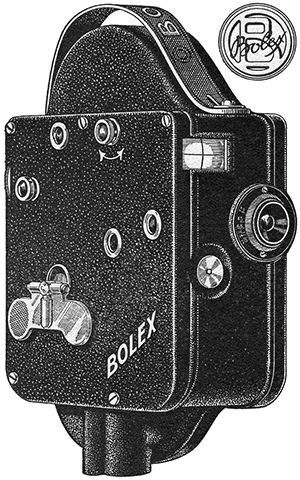
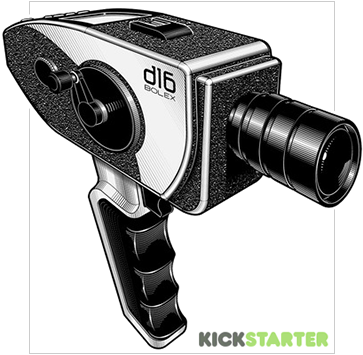
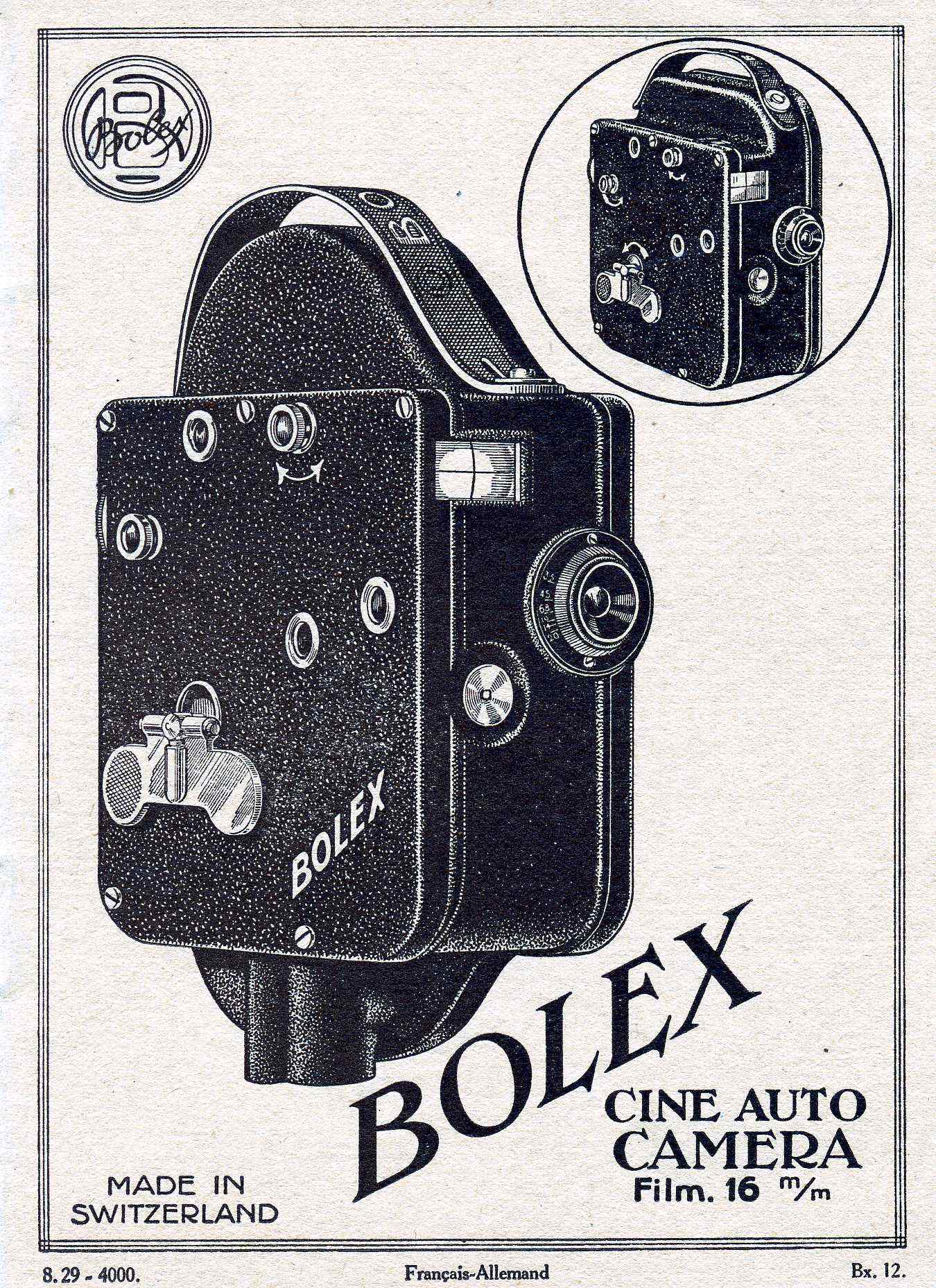
Bolex is a Swiss company that manufactures motion picture cameras and lenses. The most notable products of which are in the 16 mm and Super 16 mm formats. The Bolex was initially founded by Ukranian engineer and inventor Jacques Bogopolsky in the 1940s. Bolex is derived from his name. He had previously designed cameras for Alpa. Bolex cameras were particularly important for early television news, nature films, documentaries and the avant garde, and are still favoured by many animators today.
Some later models are electrically powered, the majority of those manufactured since the 1930s use a spring-wound clockwork. The 16 mm spring-wound Bolex is a popular introductory camera in film schools. Today, the Bolex factory in Switzerland continues to produce new 16mm and Super 16 film cameras and also can convert Bolex H16 reflex models to super 16mm.
Posted in Art, Technology, World |
1 Comment »
September 27, 2010
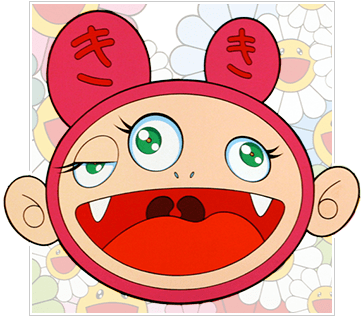
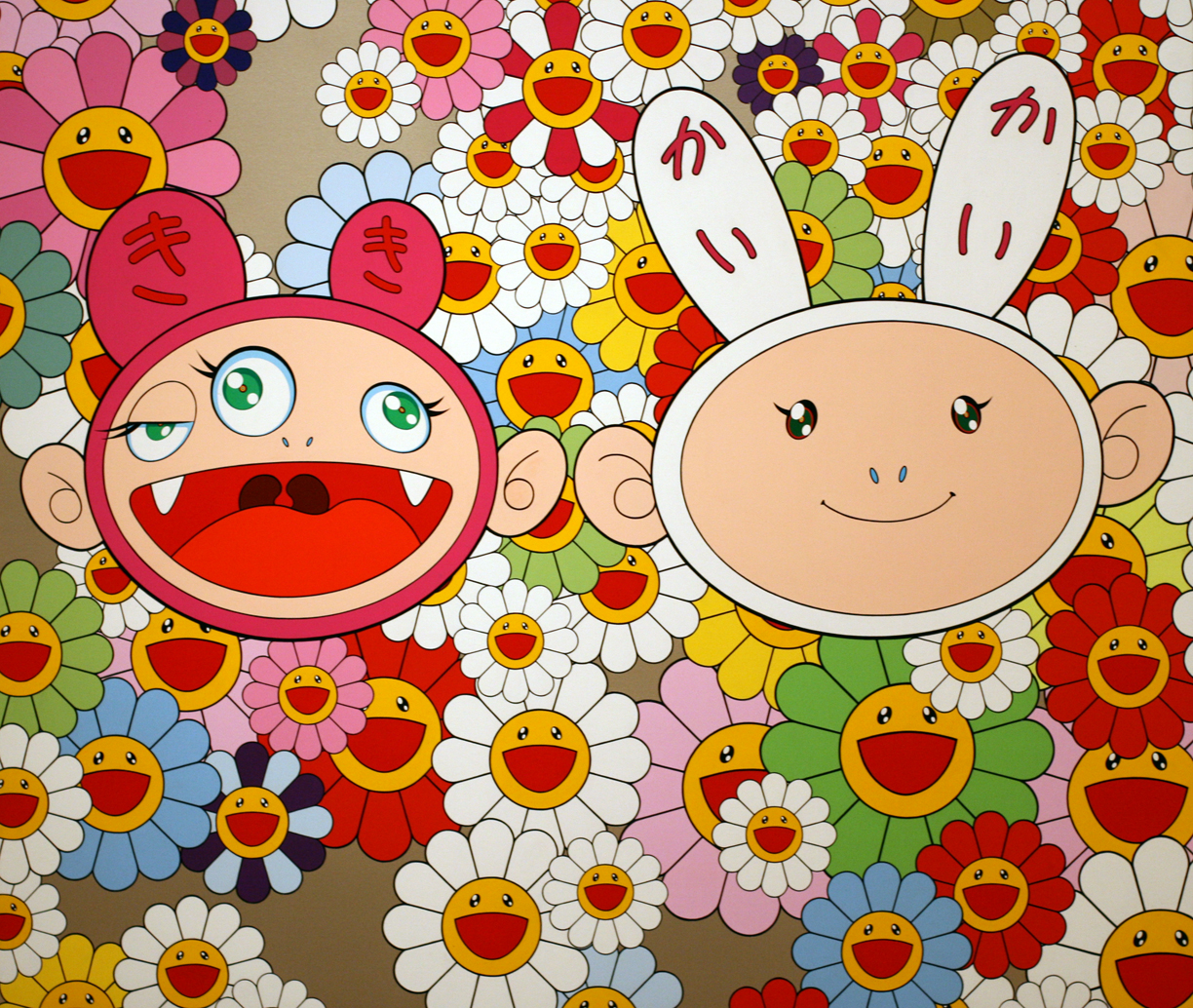
Superflat is a postmodern art movement, founded by Japanese artist Takashi Murakami, which is influenced by manga and anime. Superflat is used by Murakami to refer to various flattened forms in Japanese graphic art, animation, pop culture and fine arts, as well as the ‘shallow emptiness of Japanese consumer culture.’ A self-proclaimed art movement, it was a successful piece of niche marketing, a branded art phenomenon designed for Western audiences.
Murakami defines Superflat in broad terms, so the subject matter is very diverse. Often the works take a critical look at the consumerism and sexual fetishism that is prevalent in post-war Japanese culture. One target of this criticism is lolicon art, which is satirized by works such as those by Henmaru Machino. These works are an exploration of otaku sexuality through grotesque and/or distorted images. Other works are more concerned with a fear of growing up. For example, Yoshitomo Nara’s work often features playful graffiti on old Japanese ukiyo-e executed in a childish manner. And some works focus on the structure and underlying desires that comprise otaku and overall post-war Japanese culture.
Posted in Art, World |
Leave a Comment »