August 3, 2010
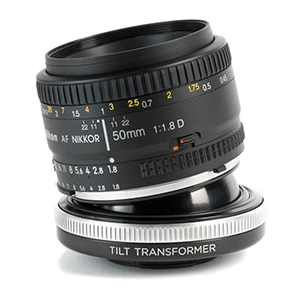
Tilt-shift photography refers to the use of camera movements on small- and medium-format cameras, and sometimes specifically refers to the use of tilt for selective focus, often for simulating a miniature scene. Sometimes the term is used when the shallow depth of field is simulated with digital post processing; the name may derive from the tilt-shift lens normally required when the effect is produced optically.
Nikon introduced a lens providing shift movements for their 35 mm SLR cameras in the mid 1960s, and Canon introduced a lens that provided both tilt and shift movements in 1973. Canon and Nikon each currently offer several lenses that provide both movements. Such lenses are frequently used in architectural photography to control perspective, and in landscape photography to get an entire scene sharp.
Posted in Art, Technology |
Leave a Comment »
August 3, 2010
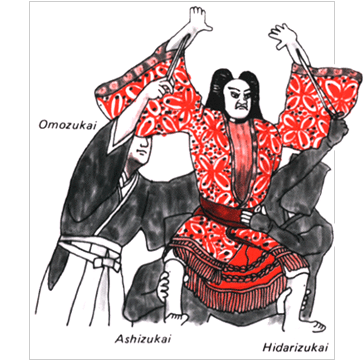
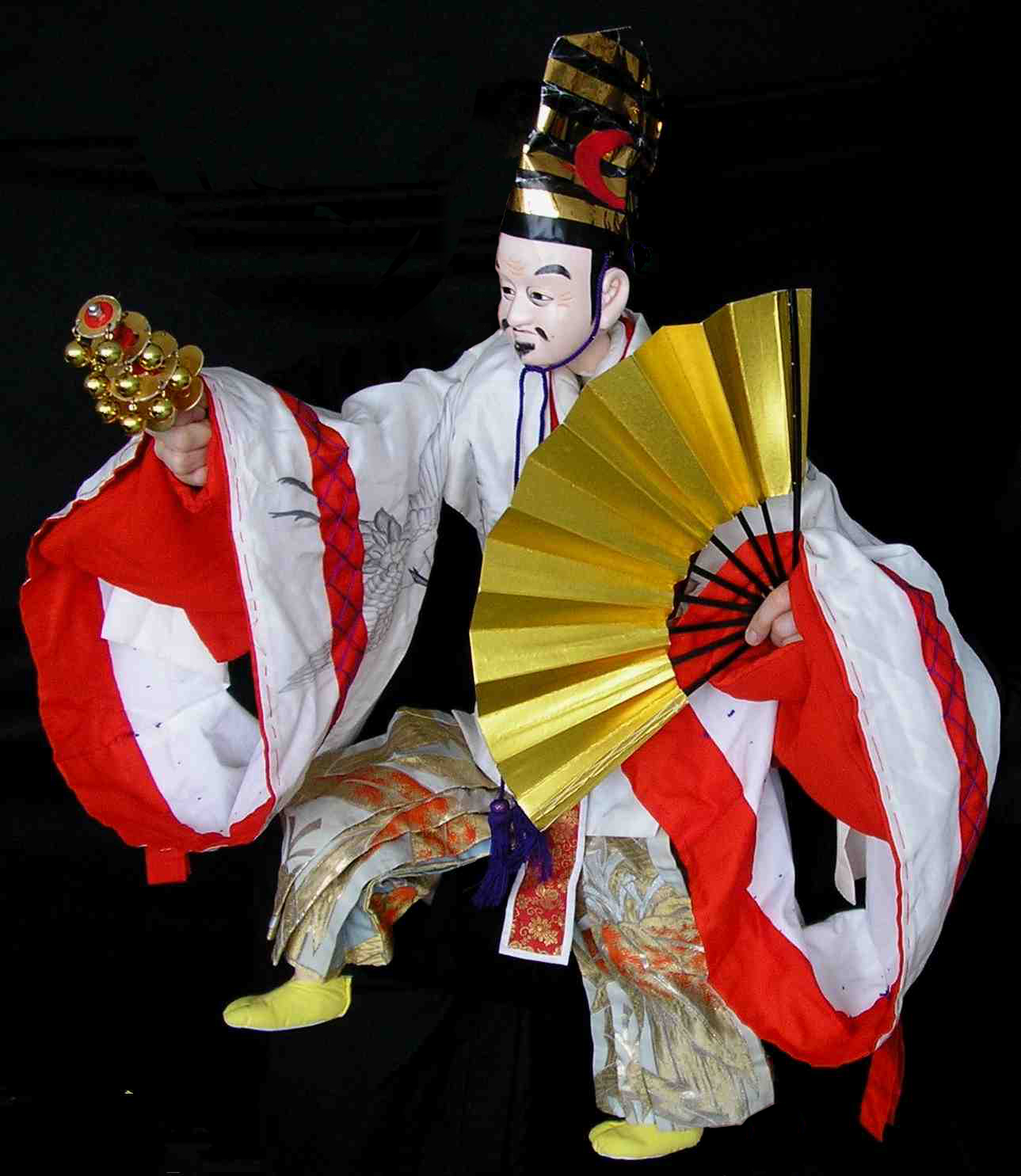
Bunraku [boon-rah-koo] is a form of traditional Japanese puppet theater, founded in Osaka in 1684. Bunraku puppets range in size from two-and-a-half to four feet tall or more, depending on the age and gender of the character and the conventions of the specific puppet troupe. All but the most minor characters require three puppeteers, who perform in full view of the audience, generally wearing black robes.
Originally, the term Bunraku referred only to a particular theater established in in Osaka, which was named the Bunrakuza. Today the term refers generically to any traditional puppet theater in Japan. Until the late 1800s there were hundreds of professional, semi-professional, and amateur troupes across Japan that performed traditional puppet drama. Since the end of World War II, the number of troupes has dropped to fewer than 30, most of which perform only once or twice a year, often in conjunction with local festivals.
Posted in Art, World |
Leave a Comment »
August 2, 2010

The Wilhelm scream is a frequently-used film and television stock sound effect first used in 1951 for the film Distant Drums. The effect gained new popularity after it was used in Star Wars and many other blockbuster films as well as television programs and video games. The scream is often used when someone is either pierced with an arrow, falling to their death from a great height or because of an explosion.
The sound is named for Private Wilhelm, a character in The Charge at Feather River, a 1953 western in which the character is shot with an arrow. This was believed to be the second movie to use the sound effect and its first use from the Warner Brothers stock sound library.
Posted in Art |
Leave a Comment »
August 1, 2010
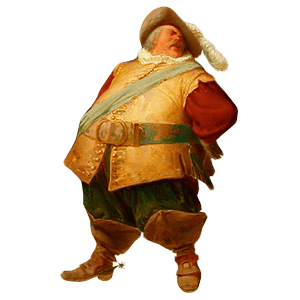
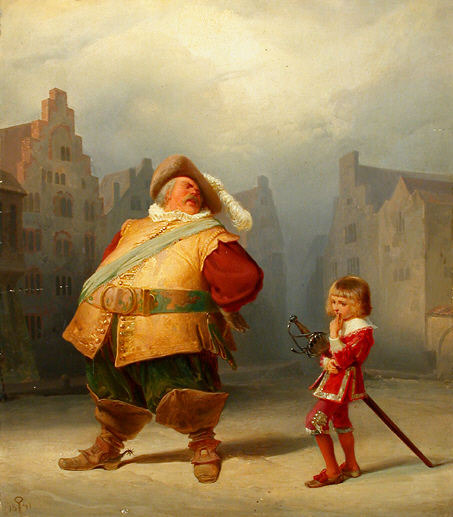
Sir John Falstaff is a fictional character who appears in three plays by William Shakespeare as a companion to Prince Hal, the future King Henry V. A fat, vainglorious, and cowardly knight, Falstaff leads the apparently wayward Prince Hal into trouble, and is ultimately repudiated after Hal becomes king. To describe someone as falstaffian is to say they are characterized by joviality and conviviality.
Posted in Art, Humor, Language |
Leave a Comment »
August 1, 2010

The Penrose stairs is an impossible object created by Lionel Penrose and his son Roger Penrose. It can be seen as a variation on the Penrose triangle. It is a two-dimensional depiction of a staircase in which the stairs make four 90-degree turns as they ascend or descend yet form a continuous loop, so that a person could climb them forever and never get any higher. This is clearly impossible in three dimensions; the two-dimensional figure achieves this paradox by distorting perspective.
The best known example of Penrose stairs appears in the lithograph Ascending and Descending by M. C. Escher, where it is incorporated into a monastery where several monks ascend and descend the endless staircase. The staircase had also been discovered previously by the Swedish artist Oscar Reutersvärd, but neither Penrose nor Escher were aware of his designs.
Posted in Art, Science |
Leave a Comment »
July 21, 2010
La Mexicaine De Perforation is a subdivision of a French group called the L’UX (Urban eXperiment), which holds clandestine artistic events. In September 2004, french police discovered a fully functional underground movie theatre run by La Mexicaine De Perforation in the catacombs of Paris.
When the police returned for a formal investigation, all the equipment had disappeared—all that was left was a note on the floor reading, ‘Do not search’ (‘Ne cherchez pas’). The members of L’UX are largely secret, but its spokesman is Lazar Kunstmann who published La Culture En Clandestins L’UX relating 25 years of clandestine cultural actions.
Posted in Art, Politics, World |
Leave a Comment »
July 20, 2010

Dada [dah-dah] or Dadaism is a movement in art and literature based on deliberate irrationality and negation of traditional artistic values. It began in Zürich, Switzerland, during World War I and peaked from 1916 to 1922. The movement primarily involved visual arts, literature—poetry, art manifestoes, art theory—theatre, and graphic design, and concentrated its anti-war politics through a rejection of the prevailing standards in art through anti-art cultural works.
Its purpose was to ridicule what its participants considered to be the meaninglessness of the modern world. In addition to being anti-war, dada was also anti-bourgeois and anarchistic in nature. The movement influenced later styles like the avant-garde and downtown music movements, and groups including surrealism, Nouveau réalisme, pop art, Fluxus and punk rock.
Posted in Art, Language |
Leave a Comment »
July 20, 2010
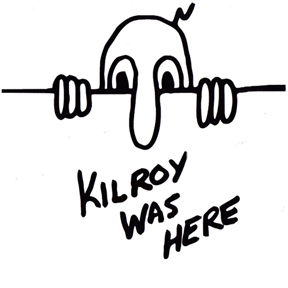
‘Kilroy was here‘ is an American popular culture expression, often seen in graffiti. Its origins are debated, but the phrase and the distinctive accompanying doodle — a bald man with his nose and fingers peeking over a wall – is widely known among U.S. residents who lived during World War II. The British equivalent of Kilroy is called ‘Mr. Chad,’ and the Australian equivalent is called ‘Foo.’ It is not certain which variation appeared first.
Posted in Art, Humor |
Leave a Comment »
July 20, 2010
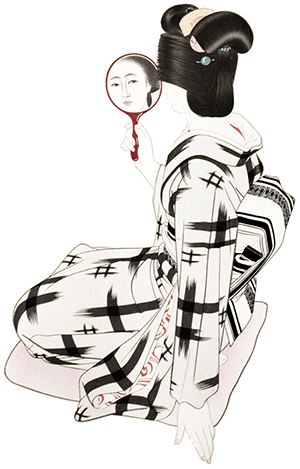
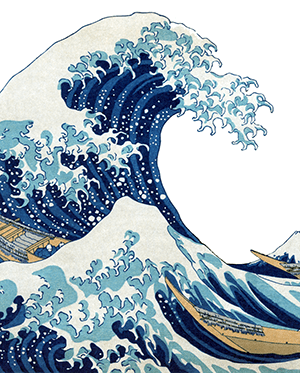
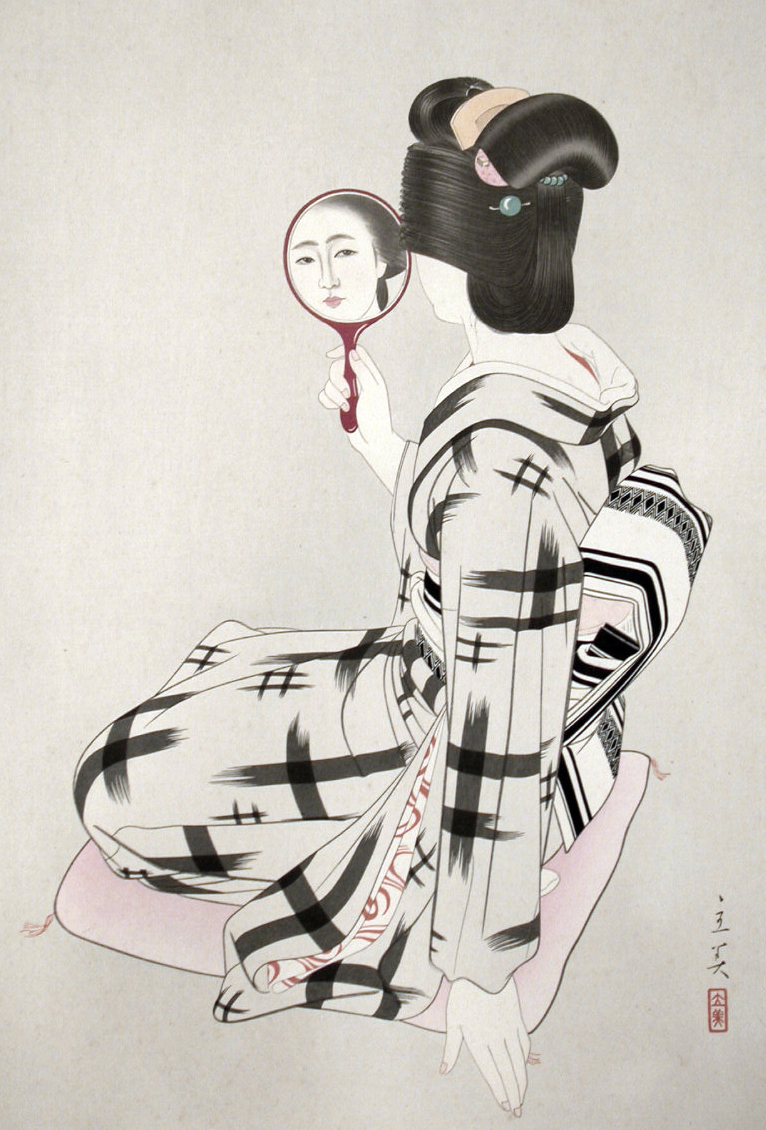
Ukiyo-e is a genre of Japanese woodblock prints (or woodcuts) and paintings produced between the 17th and the 20th centuries, featuring motifs of landscapes, tales from history, the theatre, and pleasure quarters. Usually the word ukiyo is literally translated as ‘floating world’ in English, referring to a conception of an evanescent world, impermanent, fleeting beauty and a realm of entertainments (kabuki, courtesans, geisha) divorced from the responsibilities of the mundane, everyday world.
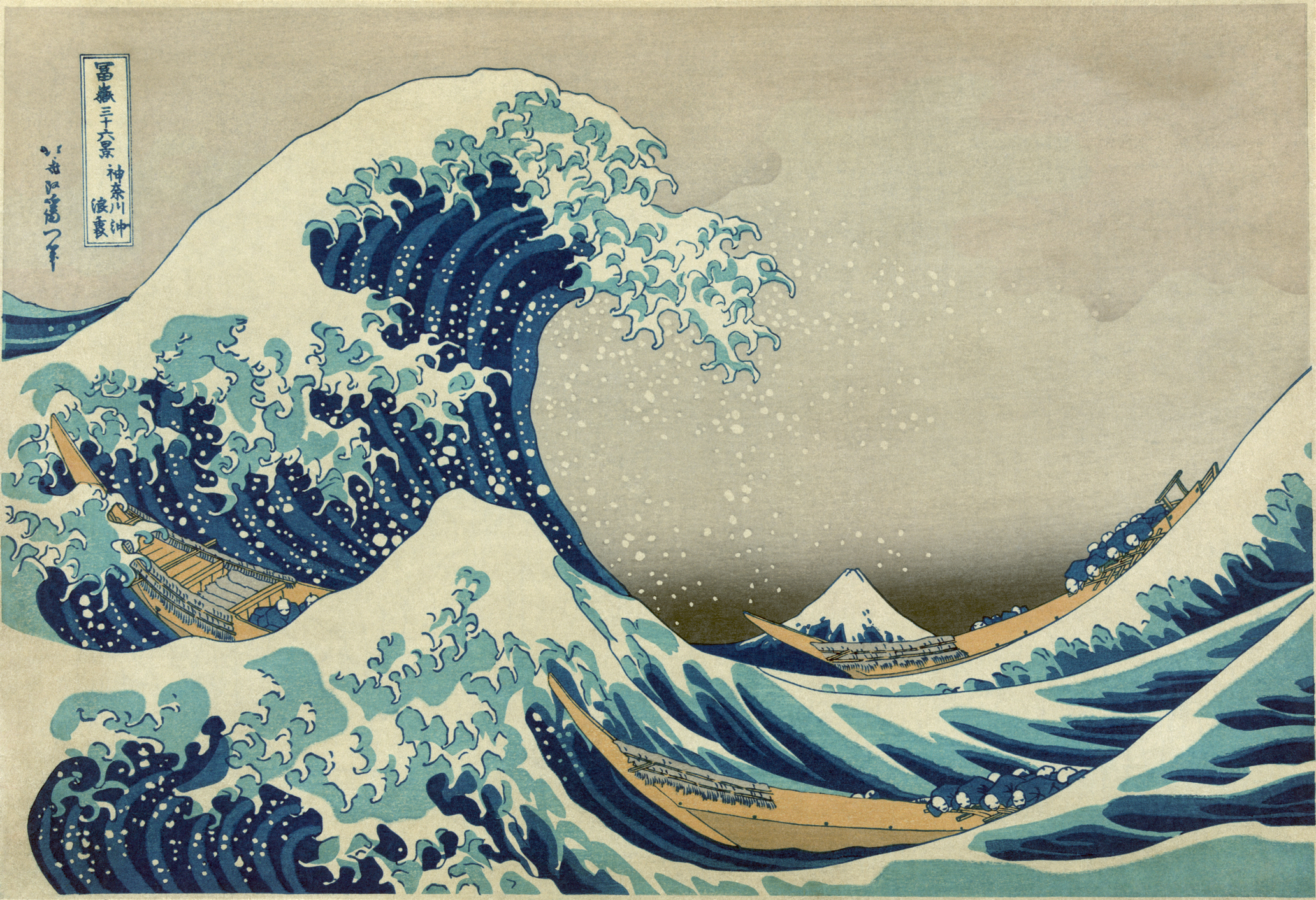
Ukiyo-e were affordable because they could be mass-produced, and they were mainly meant for townsmen, who were generally not wealthy enough to afford an original painting. Hokusai (1760 – 1849) is among the most reknown ukiyo-e artists. His woodblock print series Thirty-six Views of Mount Fuji, which includes The Great Wave off Kanagawa, has been shown in galleries and museums all over the world.
Posted in Art, World |
Leave a Comment »
July 17, 2010

The keffiyeh is a traditional headdress typically worn by Arab men made of a square of cloth, usually cotton, folded and wrapped in various styles around the head. It is commonly found in arid climate areas to provide protection from direct sun exposure, as well as for occasional use in protecting the mouth and eyes from blown dust and sand. Its distinctive woven check pattern originated in an ancient Mesopotamian representation of either fishing nets or ears of grain.
Posted in Art, World |
Leave a Comment »
July 17, 2010

The evil eye is a look that is superstitiously believed by many cultures to be able to cause injury or bad luck on the person at whom it is directed for reasons of envy or dislike. The idea appears several times in the Old Testament. It was a widely extended belief between many Mediterranean tribes and cultures: Classical Greece probably learned this belief from ancient Egypt, and later passed it to ancient Rome. The hamsa is a palm-shaped amulet popular throughout the Middle East and North Africa as a defense against the evil eye. It is believed to originate in ancient practices associated with the Phoenicians of Carthage.
Posted in Art, Philosophy, World |
Leave a Comment »
July 17, 2010


The Eye of Providence, or the all-seeing eye of God, is a symbol showing an eye often surrounded by rays of light or a glory and usually enclosed by a triangle. It is sometimes interpreted as representing the eye of God watching over humankind. Imagery of an all-seeing eye can be traced back to Egyptian mythology and the Eye of Horus. It also appears in Buddhism, where Buddha is also regularly referred to as the ‘Eye of the World,’ and is represented as a trinity in the shape of a triangle known as the Tiratna, or Triple Gem. In Medieval and Renaissance European iconography, the Eye (often with the addition of an enclosing triangle) was an explicit image of the Christian Trinity.
Posted in Art, Philosophy |
Leave a Comment »




 The Daily Omnivore