August 7, 2010

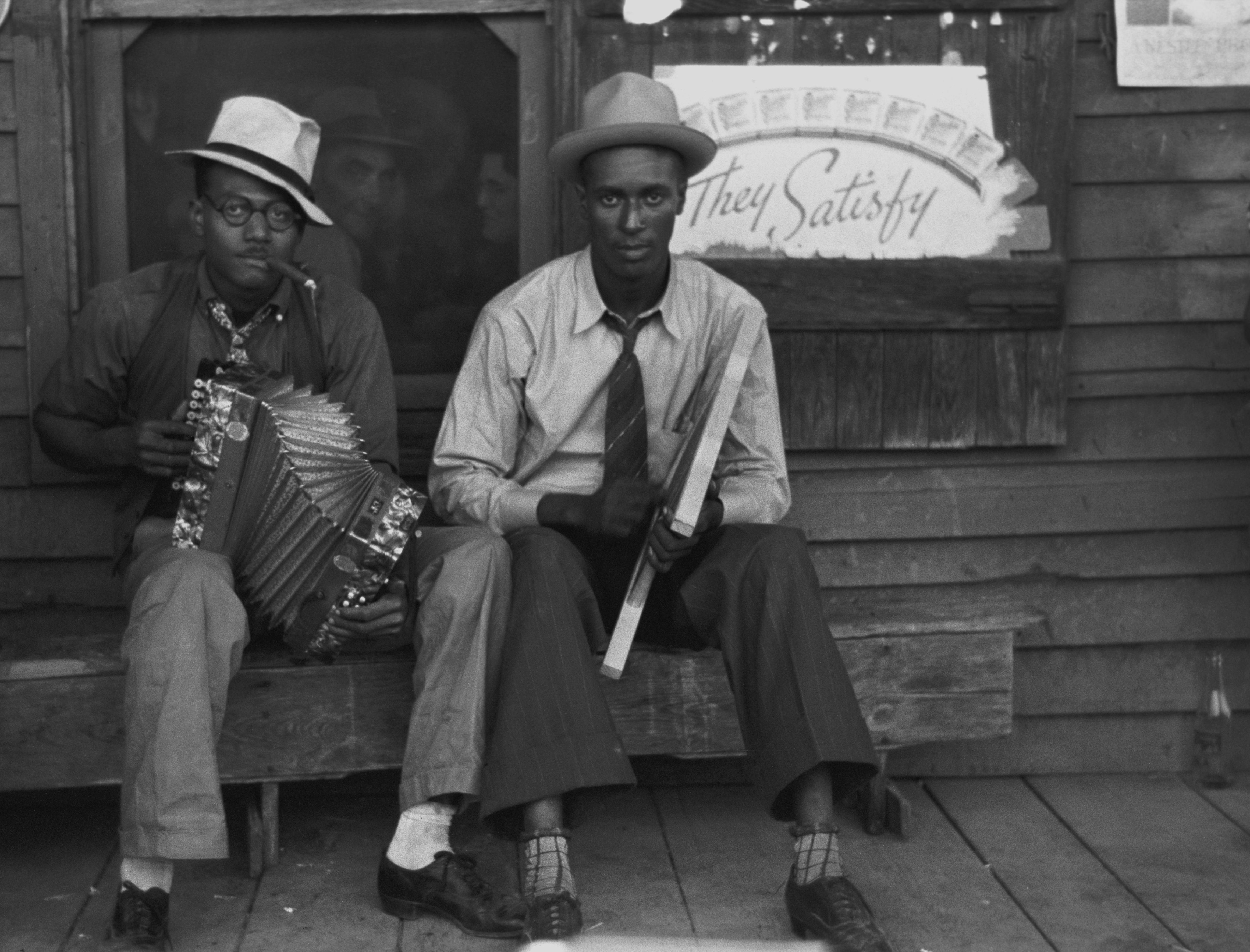
Zydeco [zahy-di-koh] is a form of American roots or folk music. It evolved in southwest Louisiana in the early 19th century from forms of Creole music. The rural black Creoles of southwest Louisiana and southeast Texas still sing in Louisiana Creole French. The word is derived from the French word le zaricot, which means ‘green beans’ or ‘snap beans.’
Usually fast tempo and dominated by accordion and a form of a washboard known as a ‘rub-board’ or frottoir, zydeco music was originally created at house dances, where families and friends gathered for socializing. Sometimes the music moved to the Catholic Church community center, as Creoles were mostly Catholic. Later it moved to rural dance halls and nightclubs. As a result, the music integrated waltzes, shuffles, two-steps, blues, rock and roll, and most dance music forms of the era. Today, the tradition of change and evolution in the music continues. It stays current while integrating even more genres such as R&B, soul, brass band, reggae, urban hip, ska, rock, Afro-Caribbean and other styles, in addition to the traditional forms.
Posted in Art |
Leave a Comment »
August 7, 2010

Playing for Change is a multimedia music project created by the American producer and sound engineer Mark Johnson with his Timeless Media Group, that seeks to bring together musicians from around the world. Playing For Change also created a separate non-profit organization called the Playing For Change Foundation which builds music schools for children around the world.
The creators of the project, Mark Johnson and Enzo Buono, traveled around the world to places such as New Orleans, Barcelona, South Africa, India, Nepal, the Middle East and Ireland. Using a mobile recording equipment, the duo recorded local musicians performing the same song, interpreted into their own style.
Posted in Art, World |
Leave a Comment »
August 5, 2010
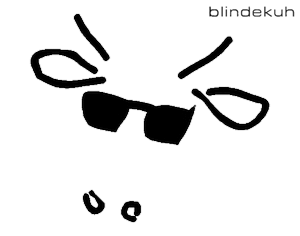

Blindekuh are two restaurants where patrons are served in the dark. The restaurants are located in Basel and Zürich, Switzerland. The name is derived from ‘Blinde Kuh’ (blind cow), the German name for blind man’s bluff. No lights are allowed inside a Blindekuh. Patrons are served by blind and visually impaired people. Both locations offer cultural events such as readings or concerts in the dark.
The first Blindekuh, opened on September 17, 1999 and is claimed to be the world’s first dark restaurant. The concept has subsequently been replicated elsewhere, including in London, Paris, Sydney, Amsterdam, Tel Aviv and Beijing as restaurants and multiple cities in the United States. Some dark restaurants supply night vision equipment to the wait staff.
Posted in Art, Food |
Leave a Comment »
August 5, 2010

A silent disco is a disco where people dance to music listened to on headphones. Rather using than a speaker system, music is broadcast via an FM transmitter with the signal being picked up by wireless headphone receivers worn by the partygoers. Those without the headphones hear no music, giving the effect of a room full of people dancing to nothing. Often two DJs compete for listeners. Silent discos and silent gigs are popular at music festivals as they allow dancing to continue past noise curfews. Similar events are ‘mobile clubbing’ gatherings, where a group of people meet up, often on short notice, to dance to the music on their personal music players.
Posted in Art, Technology |
1 Comment »
August 3, 2010
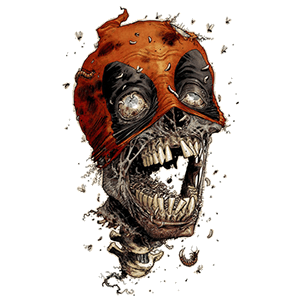
Deadpool is a fictional character and anti-hero appearing in comic books published by Marvel Comics. Created by artist Rob Liefeld and writer Fabian Nicieza, Deadpool first appeared in ‘The New Mutants’ #98 in 1991. A disfigured and mentally unstable mercenary, Deadpool originally appeared as a villain, but the character has since starred in several ongoing series, which is used by writers for humorous effect. The character is famous for his tendency to break the fourth wall and is frequently referred to by the moniker ‘Merc with a Mouth.’
In 1991 Rob Liefeld, a fan of the ‘Teen Titans’ comics, showed his new character to then writer Fabian Nicieza. Upon seeing the costume and noting his characteristics (killer with super agility), Nicieza said, ‘this is Deathstroke from Teen Titans.’ Nicieza gave Deadpool the real name of ‘Wade Wilson’ as an in-joke to being related to ‘Slade Wilson,’ aka Deathstroke. In his first appearance, Deadpool was hired to attack Cable and the New Mutants. After subsequently appearing in ‘X-Force’ as a recurring character, Deadpool began making guest appearances in various different Marvel Comics titles such as the ‘Avengers,’ ‘Daredevil,’ and ‘Heroes for Hire.’
read more »
Posted in Art, Humor |
Leave a Comment »
August 3, 2010

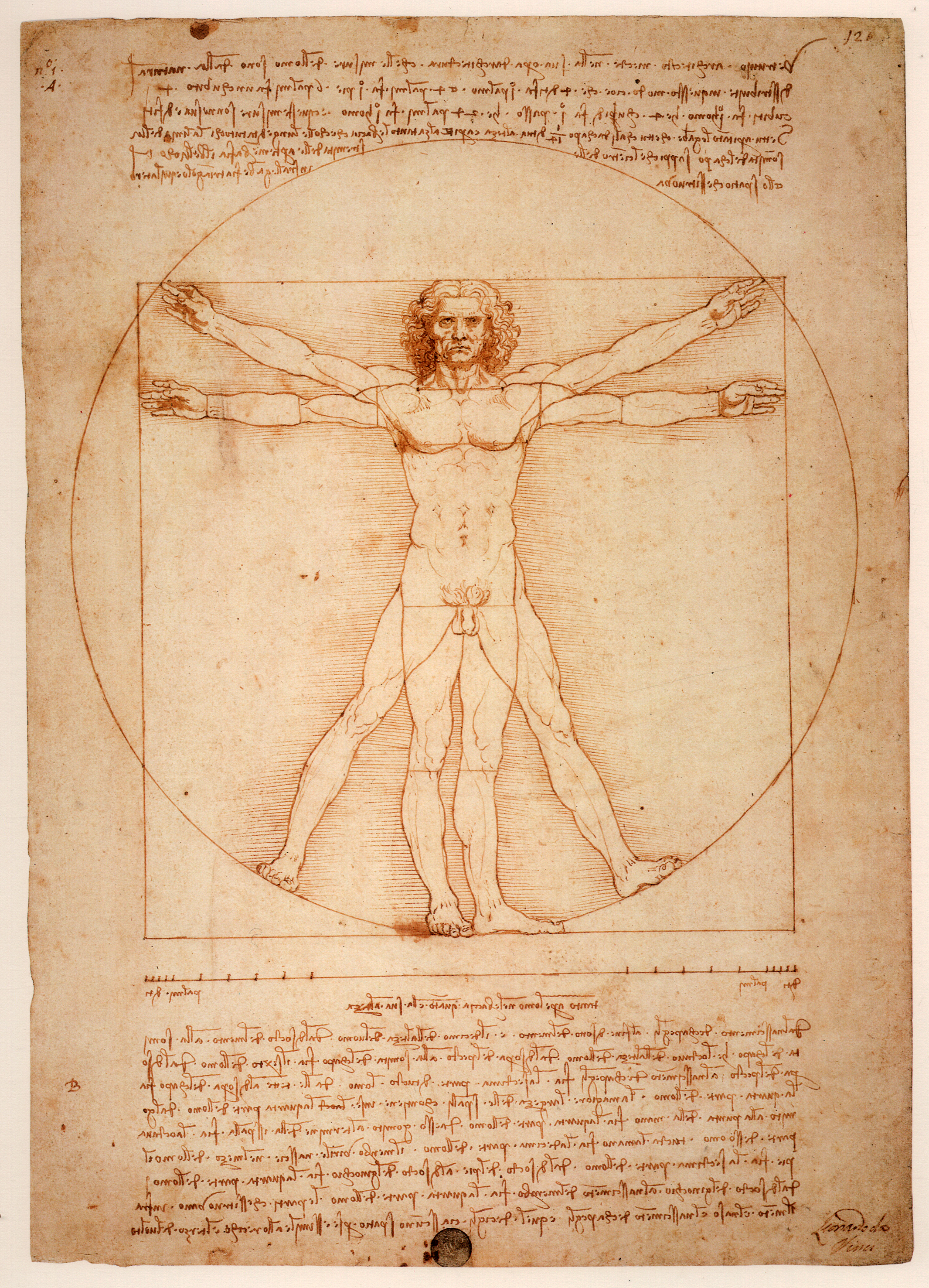
The Vitruvian [vi-troo-vee-uhn] Man is a world-renowned drawing created by Leonardo da Vinci around the year 1487. It is accompanied by notes based on the work of the famed architect, Vitruvius. The drawing, which is in pen and ink on paper, depicts a male figure in two superimposed positions with his arms and legs apart and simultaneously inscribed in a circle and square. The drawing and text are sometimes called the Canon of Proportions or, less often, Proportions of Man. It is stored in the Gallerie dell’Accademia in Venice, Italy, and, like most works on paper, is displayed only occasionally.
The drawing is based on the correlations of ideal human proportions with geometry described by the ancient Roman architect Vitruvius in Book III of his treatise De Architectura. Vitruvius described the human figure as being the principal source of proportion among the Classical orders of architecture. Other artists had attempted to depict this concept, with less success. Leonardo’s drawing is traditionally named in honor of the architect.
Posted in Art, Science |
Leave a Comment »
August 3, 2010
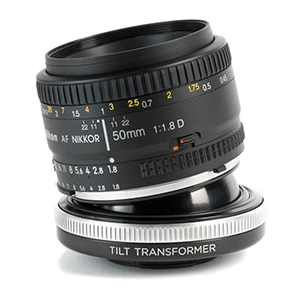
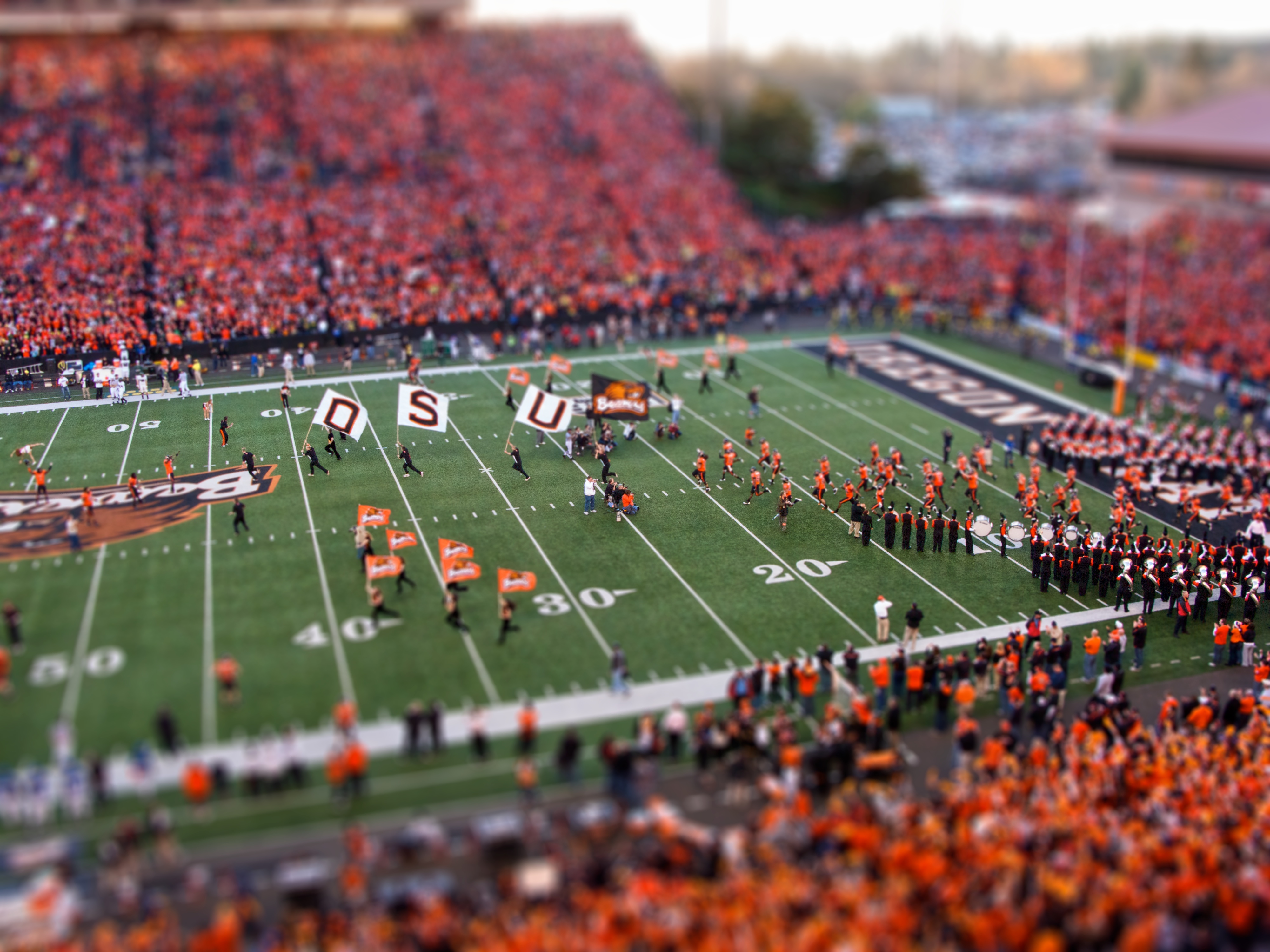
Tilt-shift photography refers to the use of camera movements on small- and medium-format cameras, and sometimes specifically refers to the use of tilt for selective focus, often for simulating a miniature scene. Sometimes the term is used when the shallow depth of field is simulated with digital post processing; the name may derive from the tilt-shift lens normally required when the effect is produced optically.
Nikon introduced a lens providing shift movements for their 35 mm SLR cameras in the mid 1960s, and Canon introduced a lens that provided both tilt and shift movements in 1973. Canon and Nikon each currently offer several lenses that provide both movements. Such lenses are frequently used in architectural photography to control perspective, and in landscape photography to get an entire scene sharp.
Posted in Art, Technology |
Leave a Comment »
August 3, 2010
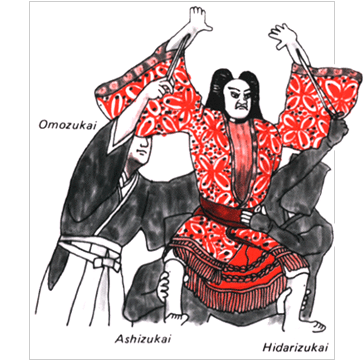
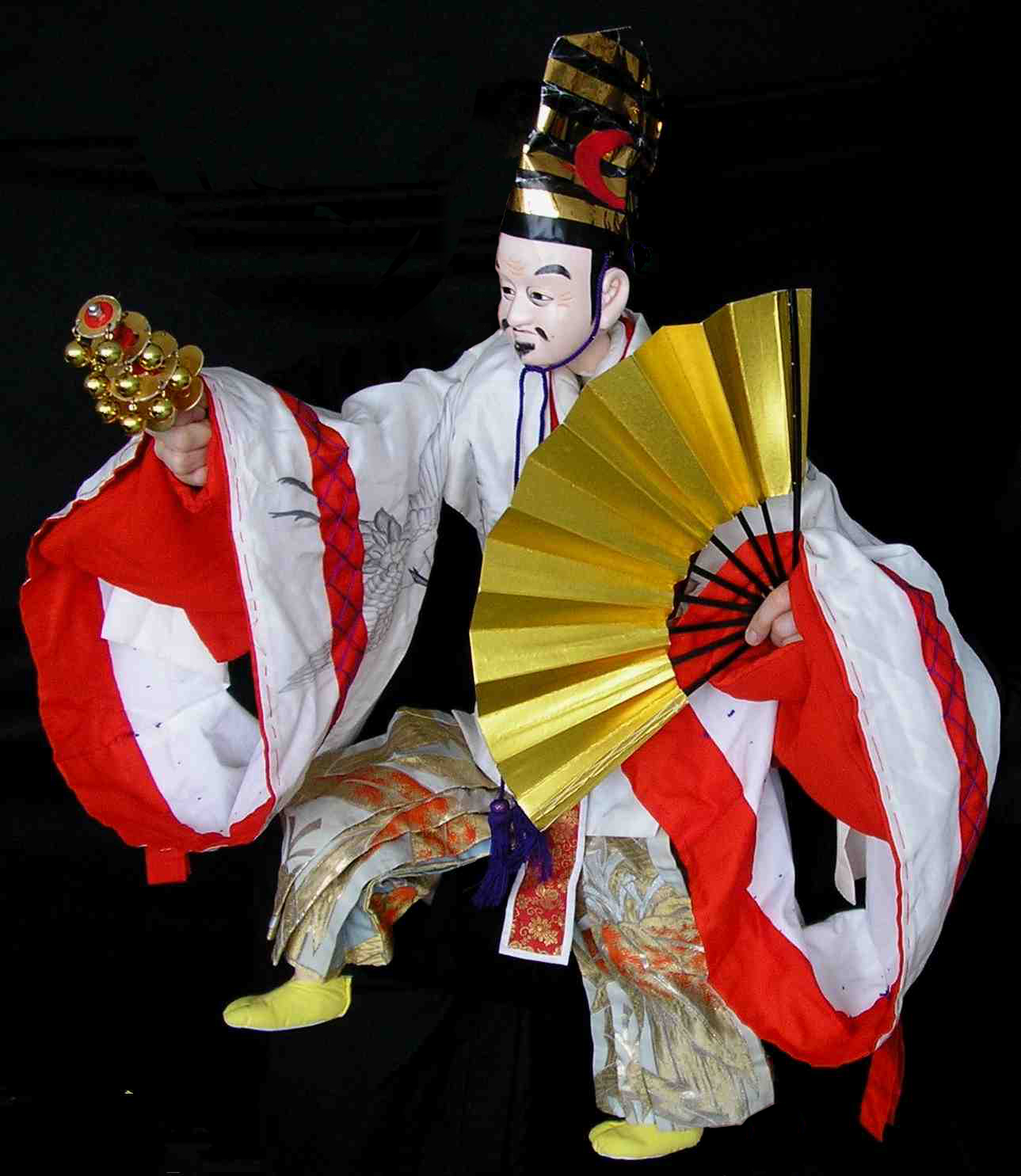
Bunraku [boon-rah-koo] is a form of traditional Japanese puppet theater, founded in Osaka in 1684. Bunraku puppets range in size from two-and-a-half to four feet tall or more, depending on the age and gender of the character and the conventions of the specific puppet troupe. All but the most minor characters require three puppeteers, who perform in full view of the audience, generally wearing black robes.
Originally, the term Bunraku referred only to a particular theater established in in Osaka, which was named the Bunrakuza. Today the term refers generically to any traditional puppet theater in Japan. Until the late 1800s there were hundreds of professional, semi-professional, and amateur troupes across Japan that performed traditional puppet drama. Since the end of World War II, the number of troupes has dropped to fewer than 30, most of which perform only once or twice a year, often in conjunction with local festivals.
Posted in Art, World |
Leave a Comment »
August 2, 2010

The Wilhelm scream is a frequently-used film and television stock sound effect first used in 1951 for the film Distant Drums. The effect gained new popularity after it was used in Star Wars and many other blockbuster films as well as television programs and video games. The scream is often used when someone is either pierced with an arrow, falling to their death from a great height or because of an explosion.
The sound is named for Private Wilhelm, a character in The Charge at Feather River, a 1953 western in which the character is shot with an arrow. This was believed to be the second movie to use the sound effect and its first use from the Warner Brothers stock sound library.
Posted in Art |
Leave a Comment »
August 1, 2010
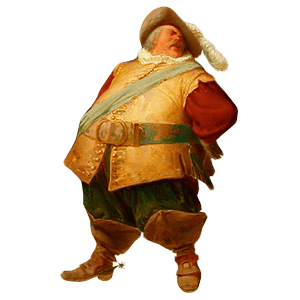
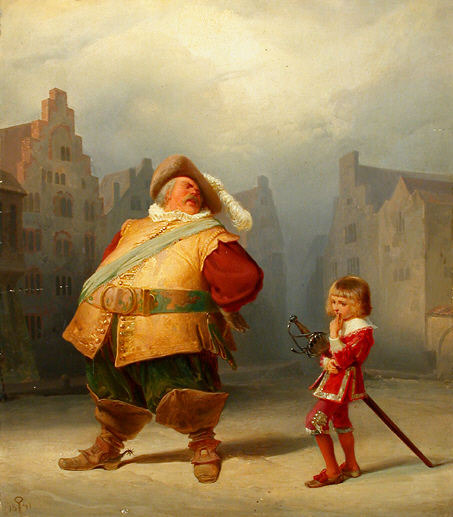
Sir John Falstaff is a fictional character who appears in three plays by William Shakespeare as a companion to Prince Hal, the future King Henry V. A fat, vainglorious, and cowardly knight, Falstaff leads the apparently wayward Prince Hal into trouble, and is ultimately repudiated after Hal becomes king. To describe someone as falstaffian is to say they are characterized by joviality and conviviality.
Posted in Art, Humor, Language |
Leave a Comment »
August 1, 2010

The Penrose stairs is an impossible object created by Lionel Penrose and his son Roger Penrose. It can be seen as a variation on the Penrose triangle. It is a two-dimensional depiction of a staircase in which the stairs make four 90-degree turns as they ascend or descend yet form a continuous loop, so that a person could climb them forever and never get any higher. This is clearly impossible in three dimensions; the two-dimensional figure achieves this paradox by distorting perspective.
The best known example of Penrose stairs appears in the lithograph Ascending and Descending by M. C. Escher, where it is incorporated into a monastery where several monks ascend and descend the endless staircase. The staircase had also been discovered previously by the Swedish artist Oscar Reutersvärd, but neither Penrose nor Escher were aware of his designs.
Posted in Art, Science |
Leave a Comment »
July 21, 2010
La Mexicaine De Perforation is a subdivision of a French group called the L’UX (Urban eXperiment), which holds clandestine artistic events. In September 2004, french police discovered a fully functional underground movie theatre run by La Mexicaine De Perforation in the catacombs of Paris.
When the police returned for a formal investigation, all the equipment had disappeared—all that was left was a note on the floor reading, ‘Do not search’ (‘Ne cherchez pas’). The members of L’UX are largely secret, but its spokesman is Lazar Kunstmann who published La Culture En Clandestins L’UX relating 25 years of clandestine cultural actions.
Posted in Art, Politics, World |
Leave a Comment »