October 20, 2014


In engineering, fiction, and thought experiments, unobtainium [uhn-uhb-tey-nee-uhm] is any fictional, extremely rare, costly, or impossible material, or (less commonly) device needed to fulfill a given design for a given application. The properties of any particular unobtainium depend on the intended use. For example, a pulley made of unobtainium might be massless and frictionless; however, if used in a nuclear rocket, unobtainium would be light, strong at high temperatures, and resistant to radiation damage. The concept of unobtainium is often applied flippantly or humorously.
Since the late 1950s, aerospace engineers have used the term when referring to unusual or costly materials, or when theoretically considering a material perfect for their needs in all respects, except that it does not exist. By the 1990s, the term was in wide use, even in formal engineering papers such as ‘Towards unobtainium [new composite materials for space applications].’ The word may well have been coined in the aerospace industry to refer to materials capable of withstanding the extreme temperatures expected in reentry. Aerospace engineers are frequently tempted to design aircraft which require parts with strength or resilience beyond that of currently available materials.
read more »
Posted in Art, Humor, Technology |
Leave a Comment »
October 16, 2014
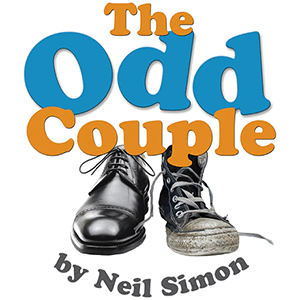
In fiction, a foil is a character who contrasts with another character (usually the protagonist) in order to highlight particular qualities in their counterpart (the term derives from the practice of backing gems with foil to increase their brilliance). In some cases, a subplot can be used as a foil to the main plot, particularly in metafiction (‘breaking the fourth wall’) and the ‘story within a story’ motif. A foil often differs drastically from the lead character, but can also be extremely similar, with only a key difference setting them apart. Foils generally serve one or more of three broad functions: contrast (‘this is different than X’), exclusion (‘this is not X’), or blame (‘X did this’).
In ‘Frankenstein,’ by Mary Shelley, the two main characters of Dr. Frankenstein and his ‘Adam of your Labors,’ his ‘creature,’ his ‘wretch,’ are both together literary foils. Both are hungry for knowledge, but whereas the doctor is selfish and arrogant, the monster is compassionate and gentle. In ‘Pride and Prejudice,’ Mary’s absorption in her studies places her as a foil to her sister Lydia Bennet’s lively and distracted nature. Similarly, in Shakespeare’s ‘Julius Caesar,’ the naive Brutus has foils in Cassius and Mark Antony, who are ambitious and experienced politicians.
Posted in Art, Language |
Leave a Comment »
October 6, 2014
A sidekick is a close companion who is generally regarded as subordinate to the one he accompanies. Some well-known fictional sidekicks include Don Quixote’s Sancho Panza, Sherlock Holmes’ Doctor Watson, The Lone Ranger’s Tonto, and Batman’s Robin.
The origin of the term is unknown. It was originally ‘side kicker’ (as seen in the short stories of American writer O Henry), having grown from the 1850s term ‘side partner.’ Contrary to popular folk etymology, it is unrelated to the early-20th century British pickpocket slang ‘kick,’ referring to a trouser pocket. One of the earliest recorded sidekicks may be Enkidu, who adopted a sidekick role to Gilgamesh after they became allies in the ‘Epic of Gilgamesh’ (an epic poem from Mesopotamia). Other early examples include Achilles’ Patroclus from the ‘Iliad,’ and Moses’ Aaron from the Bible.
read more »
Posted in Art, Language |
Leave a Comment »
October 3, 2014

Comic relief is the inclusion of a humorous character, scene, or witty dialogue in an otherwise serious work, often to relieve tension. It is a narrative technique that momentarily alleviates the stressful emotions and angst building up in a dramatic story. Comic relief often takes the form of a bumbling, wisecracking sidekick of the hero or villain in a work of fiction. The secondary character will often remark on the absurdity of the hero’s situation and make comments that would be inappropriate for a character who is to be taken seriously. Other characters may use comic relief as a means to irritate others or keep themselves confident.
Comic relief can also occur during dramatic moments in comedies. Greek tragedy does not allow any comic relief. Even the Elizabethan critic Sidney following Horace’s ‘Ars Poetic’ pleaded for the exclusion of comic elements from a tragic drama. But in Renaissance England, Marlowe among the University Wits (a group of late-16th-century English playwrights and pamphleteers who were educated at Oxford or Cambridge) introduced comic relief through the presentation of crude scenes in ‘Doctor Faustus’ following the native tradition of Interlude which was usually introduced between two tragic plays. In fact, in the classical tradition the mingling of the tragic and the comic was not allowed.
Posted in Art, Humor |
Leave a Comment »
October 2, 2014
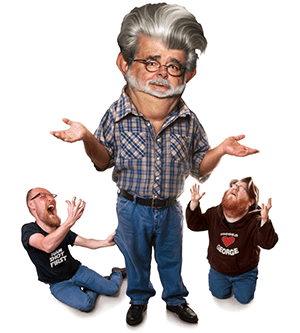
Jar Jar Binks is a fictional character from the Star Wars saga created by George Lucas for his prequel trilogy. He was the first lead computer generated character of the franchise, he was portrayed by Ahmed Best in most of his appearances. Jar Jar’s primary role in ‘Episode I’ was to provide comic relief for the audience, and was generally met with extremely negative comments from both critics and viewers. He is often acknowledged as one of the worst and most hated characters of all time.
Joe Morgenstern of ‘The Wall Street Journal’ described him as a ‘Rastafarian Stepin Fetchit on platform hoofs, crossed annoyingly with Butterfly McQueen.’ Race theorist Patricia J. Williams suggested that many aspects of Jar Jar’s character are reminiscent of blackface minstrelsy, while others have suggested the character is a ‘laid-back clown character’ representing a black Caribbean stereotype. George Lucas has denied any racist implications. Ahmed Best also rejected the allegations, saying that ‘Jar Jar has nothing to do with the Caribbean.’
read more »
Posted in Art, Humor |
Leave a Comment »
October 1, 2014

A fan edit is a version of a film modified by a viewer, that removes, reorders, or adds material in order to create a new interpretation of the source material. This includes the removal of scenes or dialogue, replacement of audio and/or visual elements, and adding material from sources such as deleted scenes or even other films. The field was popularized by an individual calling himself the ‘Phantom Editor’ (later revealed as professional editor Mike J. Nichols). He removed elements from George Lucas’ ‘The Phantom Menace’ that he felt detracted from the film, and made minor changes in dialogue, languages, and subtitles to give the film’s villains a more menacing tone.
There were a total of 18 minutes cut from the original film, reducing the run time from 136 minutes to 118 minutes. The end result became known as ‘The Phantom Edit,’ which circulated Hollywood studios on VHS in 2000. It was the first unauthorized re-edit of a major film to receive publicity and acclaim and inspired dozens of other edits to surface on the internet. Lucasfilm, the production company of series creator George Lucas, condoned the edit, and did not pursue legal action against its distributors.
read more »
Posted in Art, Money |
1 Comment »
August 27, 2014
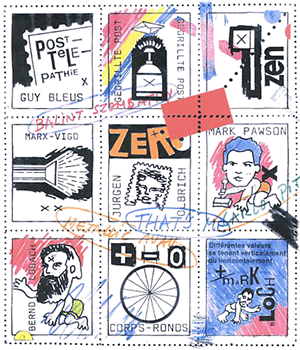
The term artistamp (a portmanteau of the words ‘artist’ and ‘stamp’) or artist’s stamp refers to a postage stamp-like art form used to depict or commemorate any subject its creator chooses. Artistamps are a form of ‘Cinderella stamp’ (unofficial stamps, not valid for postage), but they differ from forgeries or bogus Illegal stamps in that typically the creator has no intent to defraud postal authorities or stamp collectors.
Artistamp creators often include their work on legitimate mail, alongside valid postage stamps, in order to decorate the envelope with their art. In many countries this practice is legal, provided the artistamp isn’t passed-off as or likely to be mistaken for a genuine postage stamp. When so combined (and sometimes, less strictly speaking, even when not so) the artistamp may be considered part of the ‘mail art’ genre (a populist artistic movement centered around sending small scale works through the postal service, initially developed out of the Fluxus movement in the 1950s and 60s).
read more »
Posted in Art, Politics |
Leave a Comment »
August 26, 2014

The Congress is a 2013 French-Israeli live-action/animation science fiction drama film written and directed by Ari Folman. The film premiered at the Cannes Film Festival. Independent film distributor Drafthouse Films announced, along with Films We Like In Toronto, their co-acquisition of the North American rights to the film and a US theatrical and VOD/digital release planned for 2014.
Robin Wright plays an aging actress with a reputation for being fickle and unreliable, so much so that nobody is willing to offer her roles anymore. She agrees to sell the film rights to her digital image to Miramount Studios (a portmanteau of Miramax and Paramount) in exchange for a hefty sum and the promise to never act again. After her body is digitally scanned, the studio will be able to make films starring her using only computer-generated characters.
read more »
Posted in Art, Technology |
Leave a Comment »
August 20, 2014
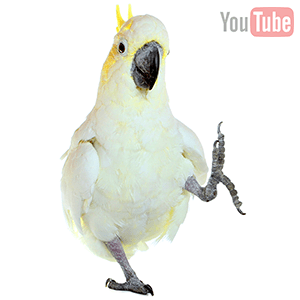
Snowball (hatched c. 1996) is a male Eleonora Cockatoo, noted as being the first non-human animal conclusively demonstrated to be capable of beat induction— perceiving music and synchronizing body movements to the beat (i.e., dancing).
Snowball’s abilities first became apparent after being acquired from a bird show at the age of six by his previous owner. He was observed bobbing his head in time to the Backstreet Boys song, ‘Everybody (Backstreet’s Back).’ The owner and his children encouraged this behavior and observed him developing rhythmic foot-lifting gestures, perhaps in imitation of his human companions’ arm-lifting gestures.
read more »
Posted in Art, Humor, Science |
Leave a Comment »
August 20, 2014

Entrainment [en-treyn-muhnt] in the biomusicological [bahy-oh-myoo-zi-kol-loj-i-kuhl] sense refers to the synchronization of organisms to an external rhythm, usually produced by other organisms with whom they interact socially. Examples include firefly flashing, mosquito wing clapping, as well as human music and dance such as foot tapping.
Beat induction is the process in which a regular isochronous pulse is activated while one listens to music (i.e. the beat to which one would tap one’s foot). It was thought that the cognitive mechanism that allows us to infer a beat from a sound pattern, and to synchronize or dance to it, was uniquely human. No other primate can dance or collaboratively clap to the beat of the music. Humans know when to start, when to stop, when to speed up or to slow down, in synchronizing with their fellow dancers or musicians. Although apes do not appear to display beat induction, some parrots do. The most famous example, Snowball was shown to display genuine dance, including changing his movements to a change in tempo in a 2009 study.
read more »
Posted in Art, Health, Science |
Leave a Comment »
August 20, 2014

Zoomusicology [zoh-uh-myoo-zi-kol-uh-jee] is a field of musicology and zoology or more specifically, zoosemiotics (animal communication). It is the study of the music of non-human animals, or rather the musical aspects of sound or communication produced and received by animals, and is related to ethnomusicology (the study of human music). Italian musicologist and semiotician Dario Martinelli describes the subject of as the ‘aesthetic use of sound communication among animals.’
Musicologist Marcello Sorce Keller attributes musical qualities to animal sounds, specifically whales’ and birds’ songs, by stating that regional variations can be found that resemble cultural traits in human music. He advocates for a combined study of zoomusicology and ethnomusicology with the remark that he ‘would like to suggest that musical scholarship excluding non-human animals cannot ultimately describe ‘how musical is man.”
read more »
Posted in Art, Science |
Leave a Comment »
August 20, 2014

Soundscape ecology is the study of sound within a landscape and its effect on organisms. The discipline of conservation biology has traditionally been concerned with the preservation of biodiversity and the habitats that organisms are dependent upon. However, soundscape ecology encourages biologists to consider natural soundscapes as resources worthy of conservation efforts. Unaltered soundscapes have value for wildlife as demonstrated by the numerous negative effects of anthropogenic (human created) noise on various species.
Organisms that use acoustic cues generated by their prey may be particularly impacted by human-altered soundscapes. In this situation, the (unintentional) senders of the acoustic signals will have no incentive to compensate for masking imposed by anthropogenic sound. In addition, natural soundscapes can have benefits for human wellbeing and may help generate a distinct sense of place, connecting people to the environment and providing unique aesthetic experiences. Because of the various values inherent in natural soundscapes, they may be considered ecosystem services that are provisioned by intact, functioning ecosystems.
Posted in Art, Science, World |
Leave a Comment »


 The Daily Omnivore