February 12, 2014
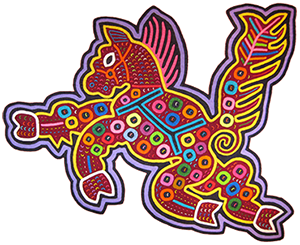
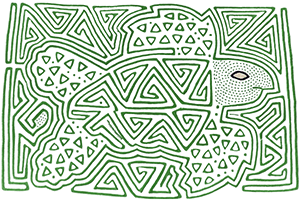
The mola [moh-luh] forms part of the traditional woman’s attire for the Kuna (an indigenous people of Panama and Colombia), two mola panels being incorporated as front and back panels in a blouse. The full costume traditionally includes a patterned wrapped skirt (saburet), a red and yellow headscarf (musue), arm and leg beads (wini), a gold nose ring (olasu), and earrings in addition to the mola blouse (dulemor).
In Dulegaya, the Kuna’s native language, ‘mola’ means ‘shirt’ or ‘clothing.’ The mola originated with the tradition of Kuna women painting their bodies with geometrical designs, using available natural colors; in later years these same designs were woven in cotton, and later still, sewn using cloth bought from the European settlers of Panamá.
read more »
Posted in Art, World |
Leave a Comment »
February 10, 2014

The Monuments, Fine Arts, and Archives (MFAA) program under the Civil Affairs and Military Government Sections of the Allied armies was established in 1943 to help protect cultural property in war areas during and after World War II. The group of about 400 servicemembers and civilians worked with military forces to safeguard historic and cultural monuments from war damage, and as the conflict came to a close, to find and return works of art and other items of cultural importance that had been stolen by the Nazis or hidden for safekeeping.
Many of the men and women of the MFAA, also known as Monuments Men, went on to have prolific careers. Largely art historians and museum personnel, they had formative roles in the growth of many of the United States’ greatest cultural institutions, including the National Gallery of Art, the Metropolitan Museum of Art, and the New York City Ballet, as well as in museums and other institutions in Europe.
read more »
Posted in Art, War |
Leave a Comment »
February 3, 2014


An eponymous [uh-pon-uh-muhs] hairstyle is a particular style of hair that has become fashionable during a certain period of time through its association with a prominent individual. Imitation of such styles can sometimes be attributed to what became known in the 1980s as the ‘wannabe’ effect, a term used particularly with reference to young women who wished to emulate (i.e. ‘wanna be’ like) the American singer Madonna. A 2010 study of British women found that half took a copy of a celebrity’s photograph to their salons to obtain a similar hairstyle.
The quest for a particular eponymous style was caricatured in Plum Sykes’ novel ‘Bergdorf Blondes’ (2004), in which it was rumored that a glamorous New York heiress (Julie Bergdorf) had her blonde hair touched up every thirteen days (‘$450 a highlight’) by a stylist at her family’s store, Bergdorf Goodman. Thus, other ‘Thirteen Day Blondes’ who attained Julie’s precise color—likened to that of the ‘very white’ hair of Carolyn Bessette Kennedy—became known as ‘Bergdorf Blondes.’
read more »
Posted in Art, Humor |
Leave a Comment »
January 27, 2014

CuteCircuit is a fashion company based in London founded in 2004 by Ryan Genz and Francesca Rosella that designs wearable technology and interactive fashion. The company is among the first in fashion to offer smart textile-based garments with micro electronics. CuteCircuit designs dresses and costumes for international artist special performances or tours. Such as, Katy Perry’s catsuit for her performance on ‘American Idol,’ U2 leather jackets for their ‘U2 360 Tour,’ and Azealia Banks’ mermaid dress.
The Kinetic Dress, designed in 2004, lights up and changes its patterns following the person’s movement. The Hug Shirt is a t-shirt that recreates the sensation of touch, warmth, and emotion of a hug from the distant one using Bluetooth and sensors technology. The 2008 M Dress accepts a standard SIM card and allows to make and receive calls. Designed in partnership with Ballantine’s, TshirtOS is the world’s first t-shirt, that can be programmed by an iOS app to show images and texts, play music, take photos and share them.
Posted in Art, Technology |
Leave a Comment »
January 16, 2014
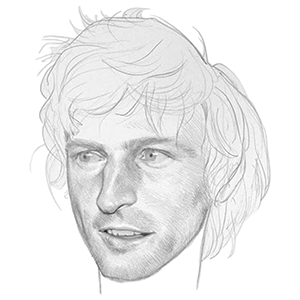
Spike Jonze (b. 1969) is an American filmmaker best known for his collaborations with writer Charlie Kaufman, which include the 1999 film ‘Being John Malkovich’ and the 2002 film ‘Adaptation,’ and as the co-writer and director of the 2009 film ‘Where the Wild Things Are.’ He is also well known for his music video collaborations with Fatboy Slim, Weezer, Beastie Boys, and Björk.
He was also a co-creator and executive producer of ‘MTV’s Jackass.’ Since 2007, he has been the creative director at VBS.tv, an online television network supplied by Vice and funded by MTV. He is also part owner of skateboard company Girl Skateboards with riders Rick Howard and Mike Carroll. He also co-founded Directors Label, with filmmakers Chris Cunningham and Michel Gondry, and the Palm Pictures company
read more »
Posted in Art |
Leave a Comment »
January 13, 2014

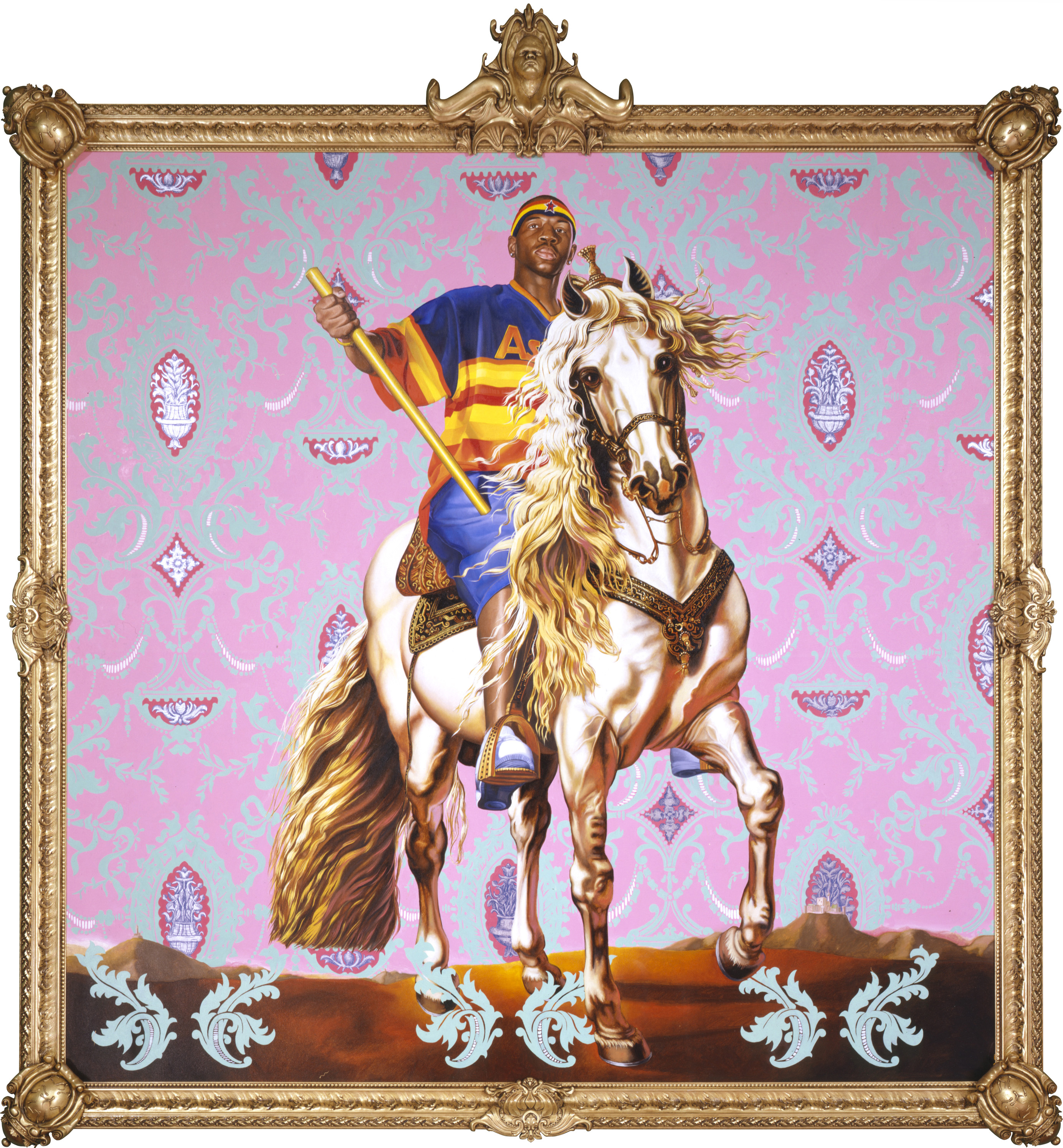
Kehinde [keh-hin-day] Wiley (b. 1977) is a New York-based portrait painter, who is known for his highly naturalistic paintings of people with black and brown skin in heroic poses. His portraits are based on photographs of young men who Wiley sees on the street. He painted men from Harlem’s 125th Street, then South Central neighborhood where he was born.
Dressed in street clothes, his models were asked to assume poses from the paintings of Renaissance masters, such as Tiziano Vecellio and Giovanni Battista Tiepolo. The artist describes his approach as ‘interrogating the notion of the master painter, at once critical and complicit.’ His figurative paintings ‘quote historical sources and position young black men within that field of power.’
read more »
Posted in Art, Politics, World |
Leave a Comment »
December 18, 2013
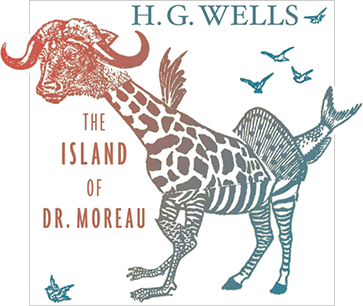
‘The Limits of Individual Plasticity‘ is an 1895 essay by science fiction author H.G. Wells offering his theories on the plasticity of animals. He argues that the default biological form of an animal could be altered so radically that it is no longer recognizable and still survive. This could, according to Wells, theoretically be achieved through surgical, or chemical modification. Wells was fully aware that surgical modification is only a physical change, and would not alter an animal’s genetic blueprint. He made note that should an animal be surgically modified, their offspring would most likely retain their parent creature’s original physical form.
These concepts were central to his 1896 science fiction novel, ‘The Island of Doctor Moreau.’ In the book, an Englishman is shipwrecked on a secluded island owned and operated by an eminent British physiologist named Dr. Moreau. Moreau was shunned from the scientific community when his horrific experiments of vivisection were brought to the public spotlight, but continued his work on his private island, where animals are altered with great detail to resemble human beings. They are a defective experiment, as they will revert to their bestial forms after a period of time.
Posted in Art, Health, Science |
Leave a Comment »
December 17, 2013
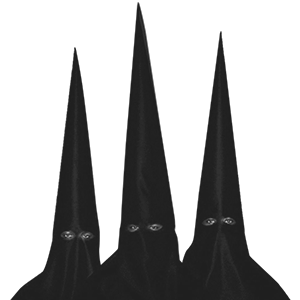
‘Black Skinhead‘ (also stylized as ‘BLKKK SKKKN HEAD’) is a 2013 song by Kanye West, from his sixth studio album ‘Yeezus.’ It was produced by West alongside Daft Punk, Gesaffelstein, Brodinski, Mike Dean, Lupe Fiasco, No ID, Jack Donoghue and Noah Goldstein.
For five months leading up to the single’s announcement, West worked on a music video with photographer Nick Knight. An interactive portion of the video allows users to control the video’s speed down to almost one-sixteenth the normal rate, as well as take screenshots for use in social media platforms. The user’s cursor changes to that of a black hand giving the middle finger when interacting with the video.
Posted in Art, Politics |
Leave a Comment »
December 16, 2013

The Land of Gorch was a recurring skit in season one of ‘Saturday Night Live’ featuring Jim Henson’s Muppets. It was set on a swampy alien wasteland on an unnamed planet (which was claimed to also be named ‘Gorch’ in one sketch) ruled by the oafish King Ploobis who has different misadventures with his wife Queen Peuta, his right-hand man Scred, his servant Vazh, his son Wisss, and a carved-from-stone deity called The Mighty Favog.
The intro narrated by Don Pardo states: ‘Come with us now from the bubbling tar pits to the sulfurous wasteland, from the rotting forest to the stagnant mud flats, to the Land of Gorch.’ The segments dealt with a number of racy issues ranging from alcohol abuse, adultery, species extinction, drugs, and other ‘adult’ topics, though each was treated with the expected SNL irreverence.
read more »
Posted in Art, Humor |
Leave a Comment »
December 9, 2013
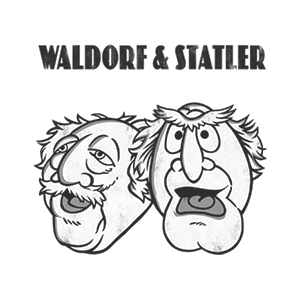
A heckler is a person who harasses and tries to disconcert others with questions, challenges, or gibes. They are often known to shout disparaging comments at a performance or event, or to interrupt set-piece speeches, with the intent of disturbing performers and/or participants.The term originates from the textile trade, where to heckle was to tease or comb out flax or hemp fibers.
The additional meaning, to interrupt speakers with awkward or embarrassing questions, was added in Scotland, and specifically perhaps in early nineteenth century Dundee, a famously radical town where the hecklers who combed the flax had established a reputation as the most radical and belligerent element in the workforce. In the heckling factory, one heckler would read out the day’s news while the others worked, to the accompaniment of interruptions and furious debate.
read more »
Posted in Art, Humor, Language |
2 Comments »
December 4, 2013
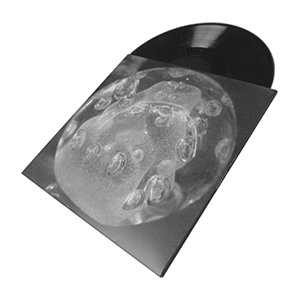
Darkside is the collaboration of electronic musician Nicolas Jaar and Brooklyn multi-instrumentalist Dave Harrington who met as students at Brown University. Harrington was recommended to Jaar by frequent collaborator Will Epstein when he was looking for a third musician for his live band, with the three subsequently touring together to support Jaar’s 2011 album ‘Space Is Only Noise.’
Darkside first formed during a Berlin stop on this tour. Jaar and Harrington were writing in their hotel room together when their converter plug popped, filling their room with smoke and forcing them to finish the song in the hallway on a laptop. Upon returning to New York, they continued to write together, developing their sound in their Brooklyn studio.
read more »
Posted in Art |
Leave a Comment »
December 3, 2013

Electric is the twelfth studio album by English synthpop duo Pet Shop Boys, released in 2013. Stuart Price produced the album. He stated that his goal was for every track to have a ‘euphoric, fresh feel to it.’ The more dance-influenced nature of ‘Electric’ was a response to the ‘reflective mood’ of their previous album, ‘Elysium.’
In support of the album, the duo embarked on the ‘Electric’ tour in March 2013 at the Cumbre Tajín festival in Veracruz, Mexico, where they debuted two songs from the album: ‘Axis’ and a cover of Bruce Springsteen’s 2007 song ‘The Last to Die.’ The tour’s first official date took place at the Movistar Arena in Santiago, Chile two months later.
Posted in Art |
Leave a Comment »