October 21, 2013

Stroszek is a 1977 film by German director Werner Herzog. It was written in four days specifically for German actor and musician Bruno Schleinstein (known as Bruno S.) and was shot in Berlin, two towns in Wisconsin, and in North Carolina. Most of the lead roles are played by non-actors. Schleinstein was often beaten as a child, and spent much of his youth in mental institutions. He was a largely self-taught musician, who over the years developed considerable skill on the piano, accordion, glockenspiel and handbells.
He was spotted by director Werner Herzog in the documentary ‘Bruno der Schwarze – Es blies ein Jäger wohl in sein Horn’ (1970). Herzog promptly cast Schleinstein (under the name Bruno S.) as his lead actor in ‘The Enigma of Kaspar Hauser’ (1974), though he had no acting experience, and the historical figure he portrayed was only in his teens. ‘Stroszek’ has a number of biographical details from Schleinstein’s life, including the use of his own flat as the home of Bruno Stroszek. He also played his own instruments.
read more »
Posted in Art, Death, Humor |
Leave a Comment »
October 16, 2013

‘The Fox (What Does the Fox Say?)’ is a 2013 electronic dance music song and viral video by Norwegian comedy duo Ylvis. Brothers Vegard and Bård Ylvisåker produced the song and music video to promote the upcoming season of their television talk show ‘Tonight with Ylvis.’ Vegard was initially skeptical about making a song about a fox, but soon relented, saying in an interview:
‘The way we work is we just sit around and talk about things and get ideas and take some notes. I guess we must have been talking about what sound a fox makes. And then we had a chance to work with Stargate, a production company in New York City… We actually did a favor for them and we asked them if they could produce a song for the new season in exchange.’
Posted in Art, Humor, World |
Leave a Comment »
October 15, 2013

Mothra is a kaiju, a type of fictional monster who first appeared in the serialized novel ‘The Luminous Fairies and Mothra.’ Since her film début in the 1961 film ‘Mothra,’ she has appeared in several Toho tokusatsu films. Mothra is a giant lepidopteran with characteristics both of butterflies and of moths.
She closely resembles an Inachis io, or a European Peacock Butterfly, but it is said that the Atlas moth is its inspiration. The name ‘Mothra’ is the suffixation of ‘-ra’ (a common last syllable in kaiju names (e.g. ‘Goji-ra’ [Godzilla]) to ‘moth’; since the Japanese language does not have dental fricatives, it is approximated ‘Mosura’ in Japanese.
read more »
Posted in Art, Humor, World |
1 Comment »
October 11, 2013

5 Pointz: The Institute of Higher Burnin’ or the 5Pointz Aerosol Art Center, Inc. is an outdoor art exhibit space in Long Island City, New York, considered to be the world’s premiere ‘graffiti Mecca,’ where aerosol artists from around the globe paint colorful pieces on the walls of a 200,000-square-foot factory building.
The complex was first established as the ‘Phun Phactory’ in 1993 by Pat DiLillo under a program called ‘Graffiti Terminators’ to discourage graffiti vandalism by encouraging artists to display their work in a formal showcase. In 2002, Jonathan Cohen, a graffiti artist operating under the name ‘Meres’ began curating the work. If he is not familiar with an artist, Cohen will ask for a sample of their work; if it is a mural, he will ask for a layout as well.
read more »
Posted in Art, Money |
Leave a Comment »
October 10, 2013

‘Phantom of the Paradise‘ is a 1974 American musical film written and directed by Brian De Palma. The story is a loosely adapted mixture of ‘The Phantom of the Opera,’ ‘The Picture of Dorian Gray,’ and ‘Faust.’
It was panned by critics and failed at the box office, but has since acquired a cult following. Its music was nominated for an Academy Award and a Golden Globe Award.
Posted in Art, Humor |
Leave a Comment »
October 8, 2013

Northern soul is a music and dance movement that emerged, initially in Northern England in the late 1960s, from the British mod scene (a youth subculture). Northern soul is devoted to American soul music based on the heavy beat and fast tempo of the mid-1960s Tamla Motown sound.
The movement, however, generally eschews Motown or Motown-influenced music that has met with significant mainstream success. The recordings most prized by enthusiasts of the genre are usually by lesser-known artists, and were initially released only in limited numbers, often by small regional United States labels such as Ric-Tic and Golden Records (Detroit), Mirwood (Los Angeles) and Shout and Okeh (New York/Chicago).
read more »
Posted in Art, World |
Leave a Comment »
October 4, 2013

George Grosz [grohs] (1893 – 1959) was a German artist known especially for his caricatural drawings of Berlin life in the 1920s. He was a prominent member of the Berlin Dada and New Objectivity group during the Weimar Republic before he emigrated to the United States in 1933.
According to art critic Robert Hughes: ‘In Grosz’s Germany, everything and everybody is for sale. All human transactions, except for the class solidarity of the workers, are poisoned. The world is owned by four breeds of pig: the capitalist, the officer, the priest and the hooker, whose other form is the sociable wife. He was one of the hanging judges of art.’
read more »
Posted in Art, Politics |
2 Comments »
September 26, 2013

‘The Adventures of Pete & Pete‘ was an American children’s television series produced by Wellsville Pictures and broadcast by Nickelodeon than ran from 1993 to 1996. The show featured humorous and surreal elements in its narrative, and many recurring themes centered on two brothers both named Pete Wrigley, and their various interactions with family, friends, and enemies.
The show was created by Will McRobb and Chris Viscardi and began as minute-long shorts in 1989 that aired in between regular programs. Owing to the popularity of the shorts, five half-hour specials were made, followed by a regular half-hour series.
read more »
Posted in Art, Humor |
1 Comment »
September 24, 2013
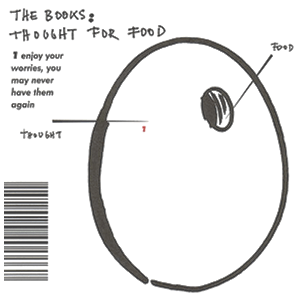
‘Thought for Food‘ is The Books’ first album. It contains all the characteristic elements of their sound: rich and varied sampling from a variety of mundane and instrumental sources combined into songs. In 2000, The Books started work on what would become their début album.
Guitarist and vocalist Nick Zammuto and cellist Paul de Jong moved locations constantly during this time, recording in New York, Los Angeles, Boston, and finally in the basement of a hostel in North Carolina where Zammuto worked for a while after hiking the Appalachian Trail. The album was released in 2002 and was praised by critics for its distinctive sound: extensive sampling from obscure sources coupled with acoustic instrumentation.
Posted in Art |
Leave a Comment »
September 24, 2013

‘Music for a French Elevator and Other Short Format Oddities by The Books‘ is a 2006 release by NY electronic duo The Books. It is a compendium on mini CD of four pieces created for the ‘1%’ art and sound installation in the Ministry of Culture in Paris, France in 2004.
The pieces were created to be played in the elevator of the Ministry, giving the release its title. Following the initial four tracks (those designed for the elevator) are ‘several ‘classic’ spoken word tracks’ taken from The Books’ sample libraries.
Posted in Art, World |
Leave a Comment »
September 24, 2013
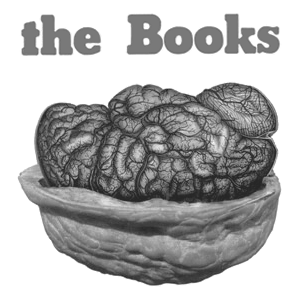
The Books were an American duo consisting of guitarist and vocalist Nick Zammuto and cellist Paul de Jong. Their releases typically incorporated samples of obscure sounds and speech. They released three critically acclaimed albums on the German label Tomlab, and released their fourth studio album, ‘The Way Out,’ on Temporary Residence Limited in 2010.
Zammuto and de Jong met in New York City in 1999 as they shared the same apartment building. De Jong invited Zammuto to dinner at his apartment, where he played him some of his collection of audio and video samples, including a Shooby Taylor scat record. Zammuto said of their meeting that ‘we both kind of knew at that moment that we listened (to music) in interesting ways and had similar approaches to music.’ Soon after, they began playing what they considered to be pop music, in comparison to their own works, under the name ‘The Books.’
read more »
Posted in Art |
Leave a Comment »
September 21, 2013

Erwin Wurm (b. 1954) is an Austrian artist; since the late 1980s, he has developed an ongoing series of ‘One Minute Sculptures,’ in which he poses himself or his models in unexpected relationships with everyday objects close at hand, prompting the viewer to question the very definition of sculpture. He seeks to use the ‘shortest path’ in creating a sculpture — a clear and fast, sometimes humorous, form of expression. As the sculptures are fleeting and meant to be spontaneous and temporary, the images are only captured in photos or on film.
Most Recently, Erwin Wurm has worked on a series of sculpture titled ‘Fat Car,’ which depict ‘puffy, obese, life-size sculptures that bulge like overfilled sacks.’ The first of this series was developed with Opel designers but they were unsuccessful in achieving the kind of shape that Wurm had in mind. In order to create the quality of fat, the artist uses polyurethane foam and styrofoam covered with lacquer.
read more »
Posted in Art, Humor |
1 Comment »


 The Daily Omnivore