June 3, 2013
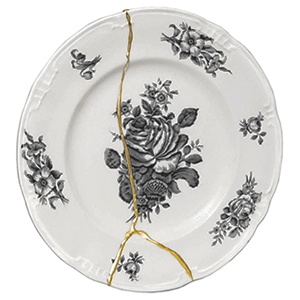
Kintsugi (‘golden joinery’) or Kintsukuroi (golden repair) is the Japanese art of fixing broken pottery with a lacquer resin sprinkled with powdered gold. Kintsugi may have originated when shogun Ashikaga Yoshimasa sent a damaged Chinese tea bowl back to China for repairs in the late 15th century.
When it was returned repaired with ugly metal staples, it may have prompted Japanese craftsmen to look for a more aesthetic means of repair. Collectors became so enamored of the new art that some were accused of deliberately smashing valuable pottery so it could be repaired with the gold seams of kintsugi. Kintsugi became closely associated with the ceramic utensils used for Japanese tea ceremony.
Posted in Art, World |
Leave a Comment »
May 29, 2013
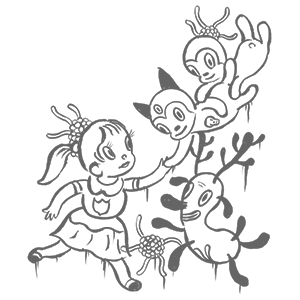
Gary Baseman (b. 1960) is a contemporary artist who works in various creative fields, including illustration, fine art, toy design, and animation. He is the creator of the Emmy-winning ABC/Disney cartoon series, ‘Teacher’s Pet,’ and the artistic designer of ‘Cranium,’ a popular board game.
Baseman’s aesthetic combines iconic pop art images, pre- and post-war vintage motifs, cross-cultural mythology and literary and psychological archetypes. He is noted for his playful, devious and cleverly named creatures, which recur throughout his body of work. Baseman’s art is frequently associated with the lowbrow pop movement, also known as pop surrealism.
read more »
Posted in Art, Games, Humor |
Leave a Comment »
May 25, 2013
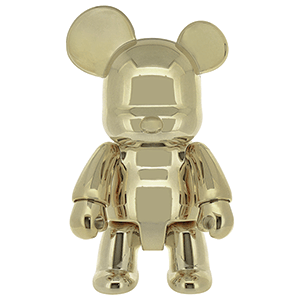
Toy2R (‘Toy to Raymond’) is a designer toy company based in Hong Kong that was founded by Raymond Choy in 1995. Choy spent 10 years as an employee of an American footwear company. After much research and planning, he opened a toy store in 1995. Four years later, Choy observed a trend in collectible toys, now known as designer toys, specifically the ‘urban vinyl’ movement of toy design. He decided to put all his funds into the development of a vinyl figure, intended more as art than as a plaything.
He called this figure the ‘Toyer’; the design, which resembles a simplified human form with a head that resembles a cartoon skull, became his first trademark. The commercial response to this figure led to support from artists and designers all over the world, and enabled his next endeavor, the ‘Qee’ figure.
read more »
Posted in Art, Money |
Leave a Comment »
May 25, 2013
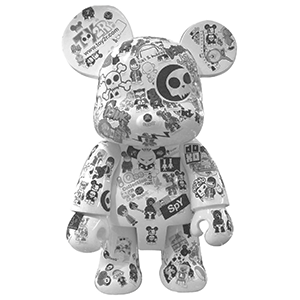
Qee [kee] are a collection of designer toys created by Hong Kong-based company Toy2R, which was founded by Raymond Choy in 1995. Qee figures vary in their design. The original Qee has a body that resembles an extremely simplified human form, somewhat similar in appearance to Playmobil or LEGO figures, though distinctively round and squat.
Depending on its theme, a figure may have the head of a bear with asymmetrical ears called a ‘BearBearQ’; a cat called ‘KitCatQ’; a dog called ‘DoggyQ’; a monkey called ‘MonQ’; or a rabbit called ‘Bunee.’
read more »
Posted in Art |
Leave a Comment »
May 24, 2013
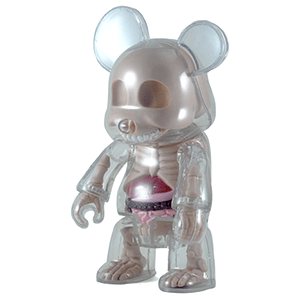
Jason Freeny (b. 1970) is a New York-based artist specialising in sculpture and computer-generated imagery. He is the owner of the Moist Production studio, which acts as the primary publisher and distributor of his works. He is best known for his anatomical art, where he produces cutaway drawings of (typically toy) inanimate objects such as a Lego man, Barbie doll, the animated fish Nemo or a balloon art dog. Jason’s sculptural and illustration work has been the basis for several mass-produced toys.
He has collaborated with Hong Kong-based Toy2R (working on the Qee figurines), Hong Kong-based Fame Master toys producing Gummy bear anatomical toys, United States-based Jailbreak Collective producing the ‘CAPSL’ collectable series and United States-based Marbles the Brain Store creating Freeny’s Brain Cube puzzle.
Posted in Art, Humor |
Leave a Comment »
May 24, 2013
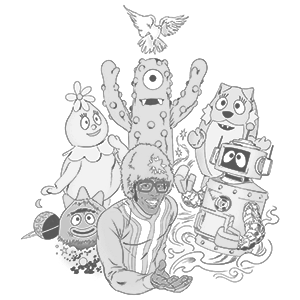
Yo Gabba Gabba! is an American children’s television show that airs on the Nick Jr. cable network. Created by Christian Jacobs (lead singer of the Aquabats) and Scott Schultz, the series premiered in 2007.
Popular artists appearing on the show include The Killers, Jimmy Eat World, Solange Knowles, Devo, Of Montreal, Chromeo, My Chemical Romance, Weezer, The Roots, MGMT, Jack Black, Tony Hawk, Elijah Wood, and The Ting Tings. Among the varied animation sequences during the show is ‘Super Martian Robot Girl,’ designed by indie cartoonists Evan Dorkin and Sarah Dyer. The toy models of the characters that appear at the beginning and end of each show were made by designer toy firm Kidrobot.
read more »
Posted in Art, Education, Humor |
Leave a Comment »
May 24, 2013


Star Wars, the popular science fantasy saga, and cultural touchstone, is acknowledged to have been inspired by many sources. These include Hinduism, Qigong (‘Life Energy Cultivation’), Greek philosophy, Greek mythology, Roman history, Roman mythology, parts of the Abrahamic religions, Confucianism, Shintō, and Taoism, not to mention countless cinematic precursors including Akira Kurosawa and Sergio Leone.
George Lucas has said that chivalry, knighthood, paladinism, and related institutions in feudal societies inspired some concepts in the Star Wars movies, most notably the Jedi Knights. The work of the mythologist Joseph Campbell, most notably his book ‘The Hero with a Thousand Faces,’ directly influenced Lucas, and was what drove him to create the ‘modern myth’ of ‘Star Wars.’ The supernatural flow of energy known as The Force is believed to have originated from the concept of prana, or ki/qi/chi, ‘the all-pervading vital energy of the universe.’
read more »
Posted in Art, War, World |
Leave a Comment »
May 24, 2013

The Hidden Fortress is a 1958 jidai-geki (period drama) film directed by Akira Kurosawa and starring Toshiro Mifune as General Makabe Rokurōta and Misa Uehara as Princess Yuki. The film begins with two bedraggled peasants, Tahei and Matashichi (Minoru Chiaki and Kamatari Fujiwara).
Through conversation, they reveal that they had intended to fight with the Yamana clan, but turned up too late, were taken for soldiers of the defeated Akizuki clan, and forced to bury dead. After quarreling and splitting up, the two are both captured again and forced to dig for gold in the Akizuki castle with other prisoners.
read more »
Posted in Art, World |
Leave a Comment »
May 24, 2013

Rear Window is a 1954 American suspense film directed by Alfred Hitchcock, written by John Michael Hayes and based on Cornell Woolrich’s 1942 short story ‘It Had to Be Murder.’ Originally released by Paramount Pictures, the film stars Jimmy Stewart and Grace Kelly. The film is considered by many filmgoers, critics and scholars to be one of Hitchcock’s best.
After breaking his leg photographing a racetrack accident, professional photographer L.B. ‘Jeff’ Jefferies (James Stewart) is confined in his Greenwich Village apartment, using a wheelchair while he recuperates. His rear window looks out onto a small courtyard and several other apartments. During a summer heat wave, he passes the time by watching his neighbors, who keep their windows open to stay cool.
read more »
Posted in Art |
Leave a Comment »
May 21, 2013
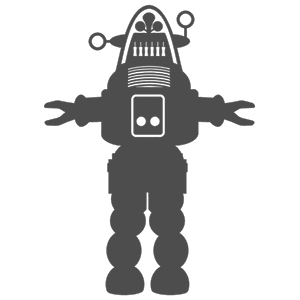
In the classic 1956 science fiction film, ‘Forbidden Planet,’ the extinct race of advanced beings of the planet Altair IV are known as the ‘Krell.’
The Krell had reached a stage of technological and scientific development so advanced that they were able to construct a machine with virtually unlimited power, a machine that turned their thoughts into reality.
read more »
Posted in Art, Technology |
Leave a Comment »
May 21, 2013
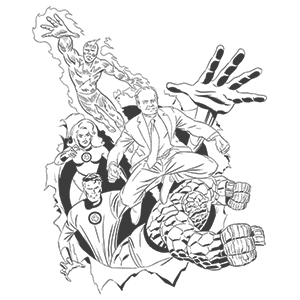
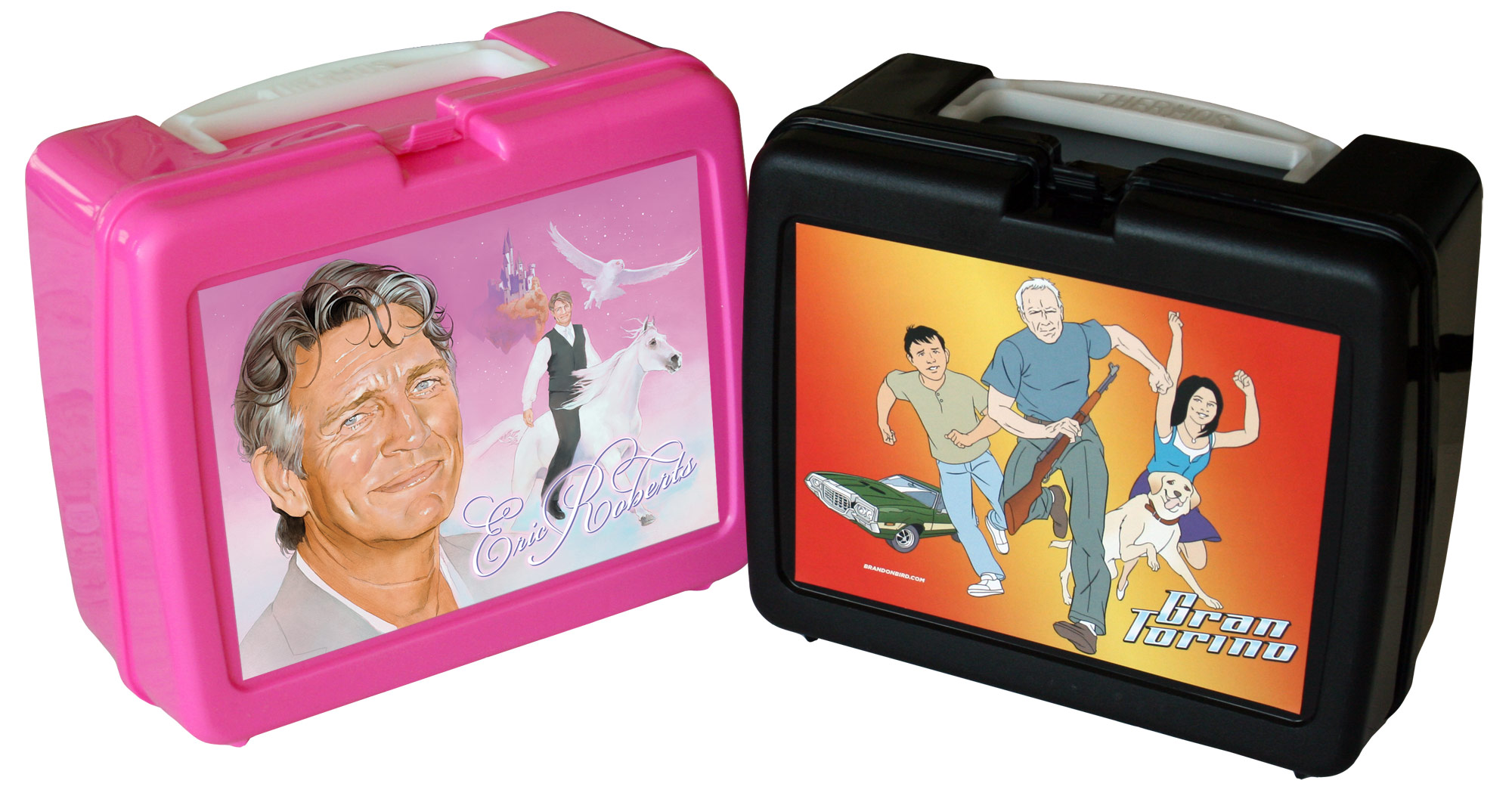
Brandon Bird (b. 1980) is an artist. He attended University of California, Santa Cruz and was an artist-in-residence from 2004-2006 at Risley Residential College at Cornell University.
His most common medium is oil paints on canvas, but works in a number of genres, including pen and ink and digital mediums. He has a significant cult following for his tendency to paint figures from history and popular culture such as Christopher Walken, Chuck Norris, and Abraham Lincoln, in absurd situations. He is a regular contributor to ‘The Believer’ (an American literary magazine that also covers other arts and general culture). He has also done work for ‘Las Vegas Weekly’ and rock band, The Aquabats.
Posted in Art, Humor |
Leave a Comment »
May 8, 2013

Borg is a collective proper noun for a fictional alien race that appears as recurring antagonists in various incarnations of the ‘Star Trek’ franchise. The Borg are a collection of species that have been turned into cybernetic organisms functioning as drones of the Collective, or the hive. A pseudo-race, dwelling in the Star Trek universe, the Borg force other species into their collective and connect them to ‘the hive mind’; the act is called assimilation and entails violence, abductions, and injections of cybernetic implants. The Borg’s ultimate goal is ‘achieving perfection.’
Aside from being the main threat in ‘Star Trek: First Contact,’ the Borg play major roles in ‘The Next Generation’ and ‘Voyager’ television series, primarily as an invasion threat to the United Federation of Planets, but also of some use to the Voyager. The Borg have become a symbol in popular culture for any juggernaut against which ‘resistance is futile.’
read more »
Posted in Art, Technology |
Leave a Comment »


 The Daily Omnivore