November 18, 2012
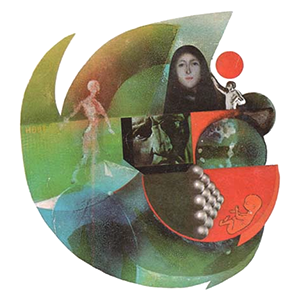
Reverse chronology is a method of story-telling whereby the plot is revealed in reverse order. In a story employing this technique, the first scene shown is actually the conclusion to the plot. Once that scene ends, the penultimate scene is shown, and so on, so that the final scene the viewer sees is the first chronologically. Many stories employ flashback, showing prior events, but whereas the scene order of most conventional films is chronological. The unusual nature of this method means it is only used in stories of a specific nature.
For example, ‘Memento’ features a man with anterograde amnesia, meaning he is unable to form new memories. The film parallels the protagonist’s perspective by unfolding in reverse chronological order, leaving the audience as ignorant of the events that occurred prior to each scene (which, played in reverse chronological order, will not be revealed until later) as the protagonist is.
read more »
Posted in Art, Language |
Leave a Comment »
November 17, 2012

‘In medias res‘ (‘into the middle of things’) is a Latin phrase denoting the literary and artistic narrative technique wherein the relation of a story begins either at the midpoint or at the conclusion, rather than at the beginning (‘ab ovo,’ ‘ab initio’), establishing setting, character, and conflict via flashback or expository conversations relating the pertinent past.
The main advantage of in medias res is to open the story with dramatic action rather than exposition which sets up the characters and situation. Because it is a feature of the style in which a story is structured and is independent of the story’s content, it can be employed in any narrative genre, epic poetry, novels, plays, or film.
read more »
Posted in Art, Language |
Leave a Comment »
November 17, 2012

Nonlinear narrative, disjointed narrative or disrupted narrative is a narrative technique, sometimes used in literature, film, websites and other mediums, where events are portrayed out of chronological order. It is often used to mimic the structure and recall of human memory but has been applied for other reasons as well.
Beginning a narrative ‘in medias res’ (Latin: ‘into the middle of things’) began in ancient times as an oral tradition and was established as a convention of epic poetry with Homer’s ‘Iliad’ in the 8th century BCE. The technique of narrating most of the story in flashback also dates back to the Indian epic, the ‘Mahabharata,’ around the 5th century BCE. Several medieval ‘Arabian Nights’ tales also have nonlinear narratives employing ‘in medias res’ and flashback techniques.
read more »
Posted in Art, Games, Language |
Leave a Comment »
November 17, 2012

Chronological snobbery, a term coined by friends C. S. Lewis and philosopher Owen Barfield, is a logical fallacy describing the erroneous argument that the thinking, art, or science of an earlier time is inherently inferior when compared to that of the present. As Barfield explains it, it is the belief that ‘intellectually, humanity languished for countless generations in the most childish errors on all sorts of crucial subjects, until it was redeemed by some simple scientific dictum of the last century.’
The subject came up between them when Barfield had converted to Anthroposophy (a philosophy popularized in the early 1900s that teaches that through inner development a person can better know the spiritual world) and was persuading Lewis (an atheist at that time) to join him.
read more »
Posted in Art, Language, Philosophy |
Leave a Comment »
November 17, 2012
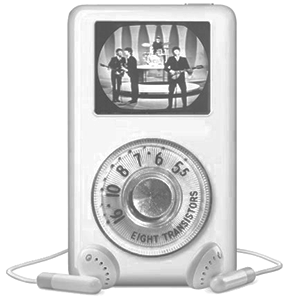
An anachronism [uh-nak-ruh-niz-uhm] is a chronological inconsistency in some arrangement, especially a juxtaposition of person(s), events, objects, or customs from different periods of time. Often the item misplaced in time is an object, but it may be a verbal expression, a technology, a philosophical idea, a musical style, a material, a custom, or anything else associated with a particular period in time so that it is incorrect to place it outside its proper temporal domain.
The intentional use of older, often obsolete cultural artifacts may be regarded as anachronistic. For example, it could be considered anachronistic for a modern-day person to wear a top hat, write with a quill, or carry on a conversation in Latin. Such choices may reflect an eccentricity, or an aesthetic preference.
read more »
Posted in Art, Humor, Technology |
Leave a Comment »
November 13, 2012

According to ancient astronaut theories, intelligent extraterrestrial beings visited Earth during the origins or development of human cultures, technologies, and/or religions. Some of these theories propose that deities from most – if not all – religions are actually extraterrestrials, and their technologies were taken as evidence of their divine status. Ancient astronaut theories have been widely used as a plot device in science fiction (e.g. ‘2001: A Space Odyssey,’ ‘Stargate’).
Such theories have not received support within the scientific community, and have received little or no attention in peer reviewed studies from scientific journals.
read more »
Posted in Art, Philosophy, Science |
Leave a Comment »
November 11, 2012

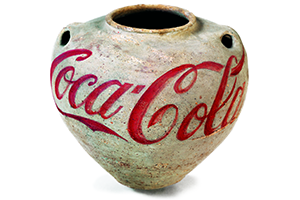
Appropriation [uh-proh-pree-ey-shuhn] in the arts is the use of pre-existing objects or images with little or no transformation applied to them. The use of appropriation has played a significant role in the history of the arts (literary, visual, and musical).
Appropriation can be understood as ‘the use of borrowed elements in the creation of a new work.’ In the visual arts, to appropriate means to properly adopt, borrow, recycle, or sample aspects (or the entire form) of man-made visual culture. Most notable in this respect are the ‘Readymades’ of Marcel Duchamp (are ordinary manufactured objects that the artist selected and modified, as an antidote to what he called ‘retinal art’).
read more »
Posted in Art, Money, Politics |
Leave a Comment »
November 10, 2012
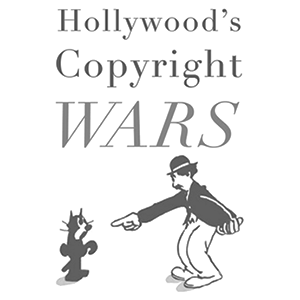
Scène à faire (French for ‘scene to be made’ or ‘scene that must be done’) is a scene in a book or film which is almost obligatory for a genre of its type. In the U.S. it also refers to a principle in copyright law in which certain elements of a creative work are held to be not protected when they are mandated by or customary to the genre.
For example, a spy novel is expected to contain elements such as numbered Swiss bank accounts, a femme fatale, and various spy gadgets hidden in wristwatches, belts, shoes, and other personal effects. These elements are not protected by copyright, though specific sequences and compositions of them can be.
read more »
Posted in Art, Money, Politics |
Leave a Comment »
November 9, 2012

Reverse graffiti, also known as clean tagging or grime writing, is often done by removing dirt/dust with the fingertip(s) from windows or other dirty surfaces, such as writing ‘wash me’ on a dirty vehicle. Others, such as English artist Paul Curtis (aka Moose), use a cloth or a high power washer to remove dirt on a larger scale.
The first large scale reverse graffiti art piece was made by Alexandre Orion in 2006, the intervention ‘Ossario’ with over 1000 foot is washed by the municipality of São Paulo in the end of the video.
read more »
Posted in Art, Money, Politics |
Leave a Comment »
November 7, 2012

Pablo Ferro (b. 1935) is a graphic designer and film titles designer. Born in Cuba, he was raised on a remote farm before emigrating to New York with his family as a teenager. Ferro taught himself animation from a book by Preston Blair.
Ferro worked on films as diverse as Stanley Kubrick’s ‘Dr. Strangelove’ to the split-screen montage of the original ‘The Thomas Crown Affair.’ He was a pioneer of quick-cut editing, multiple screen images (the first in film and television in 1963). Ferro’s visual style has influenced many in film, television, animation, commercials, novels and children’s books.
read more »
Posted in Art |
Leave a Comment »
November 7, 2012
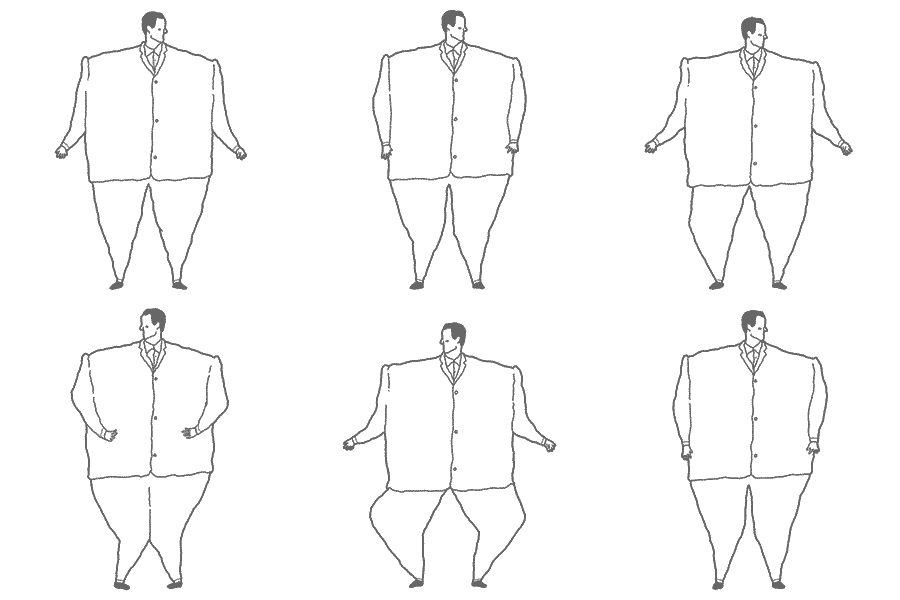
Stop Making Sense (1984) is a concert movie featuring Talking Heads live on stage. Directed by Jonathan Demme, it was shot over the course of three nights at Hollywood’s Pantages Theater in December 1983, as the group was touring to promote their new album ‘Speaking in Tongues.’ The movie is notable for being the first made entirely using digital audio techniques. The band raised the budget of $1.2 million themselves.
The title comes from the lyrics of the song ‘Girlfriend Is Better’: ‘As we get older and stop making sense…’ The movie begins with the opening credits, using a style similar to Stanley Kubrick’s ‘Dr. Strangelove or: How I Learned to Stop Worrying and Love the Bomb’ (the movie trailer also makes references to ‘Dr. Strangelove’). Title designer Pablo Ferro was responsible for both title sequences.
read more »
Posted in Art |
1 Comment »
November 7, 2012

Remain in Light is the fourth studio album by American New Wave band Talking Heads, released in 1980. It was recorded at locations in the Bahamas and the United States and was produced by the quartet’s long-time collaborator Brian Eno. Two singles were released from the album: ‘Once in a Lifetime’ and ‘Houses in Motion’ as well as promotional single ‘Crosseyed and Painless.’
The members of Talking Heads wanted to make an album that dispelled notions of frontman and chief lyricist David Byrne leading a back-up band. They decided to experiment with African polyrhythms and, with Eno, recorded the instrumental tracks as a series of samples and loops, a novel idea at the time.
read more »
Posted in Art |
Leave a Comment »


 The Daily Omnivore