May 11, 2012

Himanshu Kumar Suri aka Heems is an American rapper from Queens best known for being part of the alternative hip hop group Das Racist. Suri is also the founder of Greedhead Entertainment, an independent record label. In 2012, he released his first solo mixtape, ‘Nehru Jackets’ on his Greedhead imprint and in conjunction with SEVA NY, a community-based organization from Queens of which Suri is a board member. Suri has also written about music and all things South Asian for the ‘Village Voice,’ ‘Death and Taxes’ magazine, ‘Fuse,’ ‘Stereogum,’ and ‘Alternet.’ Suri graduated from Stuyvesant High School in 2003, where he was vice president when the September 11 attacks happened two blocks away. Suri then attended Wesleyan University where he studied economics.
In 2008, Suri formed Das Racist with his college friend Victor Vazquez. Shortly thereafter, Suri’s high school friend Ashok Kondabolu joined as their hype man. Das Racist first found success on the internet with their 2008 song ‘Combination Pizza Hut and Taco Bell,’ and then quickly established themselves within the underground rap scene with their 2010 mixtapes ‘Shut Up, Dude’ and ‘Sit Down, Man,’ both of which earned them critical acclaim.
Posted in Art |
Leave a Comment »
May 11, 2012
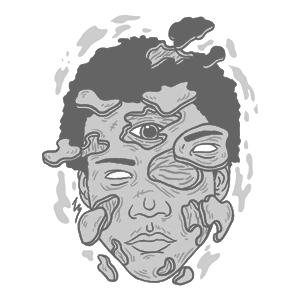
Donald Glover (b. 1983) is an American actor, writer, comedian, and musician. Glover first came to attention for his work in the sketch group Derrick Comedy. He is best known for being a writer for ’30 Rock,’ and for his role the NBC comedy series ‘Community.’ In 2011, Glover signed to Glassnote Records under the stage name Childish Gambino; his first studio album, ‘Camp,’ was released in 2011. Glover DJs and produces his own music under the moniker ‘mcDJ.’
His music is of the electronic/remix variety and is often made available for free download via his official site. Glover raps as Childish Gambino, a name he found from a Wu-Tang Clan name generator. His work touches on family issues, schoolyard bullying, troubled romantic relationships, suicidal thoughts, and alcoholism. He has disowned his 2005 album, ‘The Younger I Get,’ as the too-raw ramblings of what he calls a ‘decrepit Drake.’
Posted in Art, Humor |
Leave a Comment »
May 10, 2012

Mireille Suzanne Francette Porte (b. 1947), better known as ORLAN, is a French artist. She lives and works in Los Angeles, New York, and Paris. She was invited to be a scholar in residence at the Getty Research Institute in Los Angeles, for the 2006-2007 academic year. She sits on the board of administrators for the Palais de Tokyo in Paris, and is a professor at the École Nationale Supérieure des Beaux-Arts in Cergy (a suburb of Paris).
Although ORLAN is best known for her work with plastic surgery in the early-to-mid 1990s, she has not limited her work to a particular medium.
read more »
Posted in Art, Politics, Sex |
Leave a Comment »
May 9, 2012

MC Skat Kat is an animated cat who appeared with Paula Abdul in the video for her song ‘Opposites Attract’ in 1989. The idea of Skat Kat came from the Gene Kelly movie ‘Anchors Aweigh,’ in which Kelly’s character dances with Jerry, the mouse from the ‘Tom and Jerry’ cartoon series. According to Virgin Records’ media information, Skat Kat is a ‘street philosopher with an alley Kat point of view.’ He likes to dance, is interested in the ladies, and ‘remains on the smooth tip with an old school rap influence which adds the street to his new school hip hop.’
The character was animated by members of the Disney animation team, working outside the studio between major projects, under the direction of Chris Bailey. He was created by Michael Patterson and performed by The Wild Pair duo of Bruce DeShazer and Marv Gunn. He was also voiced by Romany Malco for the first rap of the song and by Derrick ‘Delite’ Stevens for the second rap, the latter of whom would provide vocals for the character in the MC Skat Kat solo album. The character released an album entitled ‘The Adventures of MC Skat Kat and the Stray Mob’ in 1991, but it flopped instantly.
Posted in Art, Humor |
Leave a Comment »
May 9, 2012
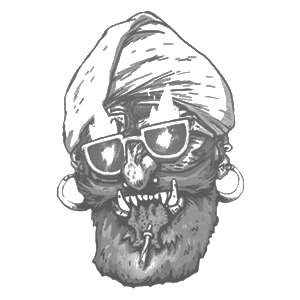
American Gods is a 2001 novel by Neil Gaiman. The novel is a blend of Americana, fantasy, and various strands of ancient and modern mythology, all centering on a mysterious and taciturn protagonist, Shadow. Several of the themes touched upon in the book were previously glimpsed in Gaiman’s ‘The Sandman’ graphic novels. The central premise of the novel is that gods and mythological creatures exist because people believe in them. Immigrants to the United States brought with them dwarves, elves, leprechauns, and other spirits and gods.
However, the power of these mythological beings has diminished as people’s beliefs wane. New gods have arisen, reflecting America’s obsessions with media, celebrity, technology, and drugs, among others. In addition to the numerous figures from real-world myths, a few characters from ‘The Sandman’ and its spinoffs make brief cameos in the book. Other mythological characters featured in the novel are not divine, but are legendary or folk heroes, such as Johnny Appleseed. Shadow himself is implied to be Baldr (the Norse god of sun and light, son of Odin)
read more »
Posted in Art, Language, Philosophy |
1 Comment »
May 8, 2012

Passion Pit is an American electropop band from Cambridge, Massachusetts, formed in 2007. The band consists of Michael Angelakos (lead vocals, keyboards), Ian Hultquist (keyboards, guitar), Ayad Al Adhamy (synthesizer, samples), Jeff Apruzzese (bass, synth bass), and Nate Donmoyer (drums).
All of the band members, with the exception of Angelakos, attended Berklee College of Music in Boston. The band culled their name from the ‘Slanguage Dictionary,’ a glossary of ‘Variety’ magazine’s frequently-used slang, which was provided by the Hollywood-insider publication to help not-so-savvy readers decipher its content. The magazine used the term to refer to drive-in theaters, because of their privacy and romantic allure for teenagers.
read more »
Posted in Art |
Leave a Comment »
May 5, 2012

Neighbours is a 1952 anti-war film by Scottish-Canadian filmmaker Norman McLaren. Produced at the National Film Board of Canada in Montreal, the film uses the technique known as pixilation, an animation technique using live actors as stop-motion objects. McLaren created the soundtrack by scratching the edge of the film, leaving various blobs, lines, and triangles which the projector read as sound.
In the short, two men live peacefully in adjacent cardboard houses. When a flower blooms between their houses, they fight each other to the death over the ownership of the single small flower. According to McLaren: ‘I was inspired to make ‘Neighbours’ by a stay of almost a year in the People’s Republic of China. Although I only saw the beginnings of Mao’s revolution, my faith in human nature was reinvigorated by it. Then I came back to Quebec and the Korean War began. (…) I decided to make a really strong film about anti-militarism and against war.’
read more »
Posted in Art, Politics, War |
Leave a Comment »
May 4, 2012

Malice in Wonderland is a 1982 American independent short film directed by Vince Collins, and with graphic design by Miwako. It is loosely based on the Lewis Carroll’s ‘Alice in Wonderland,’ displaying surreal images and an aggressive animation style.
It is 4 minutes long. A jet-propelled white rabbit flies through the vulva of a supine woman into a wonderland where people and objects turn inside out, changing shapes and identities at warp speed. Events roughly follow Lewis Carroll’s ‘Alice in Wonderland.’ The Caterpillar, the Cheshire Cat, the Mad Hatter, and the Queen of Hearts make appearances, as does Alice. Images and symbols are often sexual. At the end, Alice says, ‘Oh, I’ve had such a curious dream.’
Posted in Art, Drugs |
Leave a Comment »
May 3, 2012

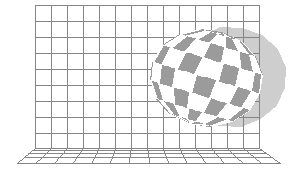
A 64k intro is a demo (a non-interactive multimedia presentation) where the size of the executable file is limited to 65,536 bytes. At demo parties there is a category for this kind of demo. 64k intros generally apply many techniques to be able to fit in the given size, usually including procedural generation, sound synthesis, and executable compression.
The size of 64 kilobytes is a traditional limit which was inherited from the maximum size of a COM file. An intro originally referred to an endless demo where all the action happened on a single graphical screen, often to promote a BBS or a game crack. Nowadays it can refer to any demo written within a strict size limit, such as 4 kB or 64 kB.
Posted in Art, Games, Technology |
Leave a Comment »
May 3, 2012
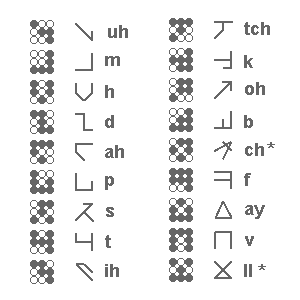
Excession, first published in 1996, is Scottish writer Iain M. Banks’s fourth science fiction novel to feature the Culture (a fictional interstellar anarchist, socialist, and utopian society). It concerns the response of the Culture and other interstellar societies to an unprecedented alien artifact, the Excession of the title.
The book is largely about the response of the Culture’s Minds (AIs with enormous intellectual and physical capabilities and distinctive personalities) to the Excession itself and the way in which another society, whose systematic brutality horrifies the Culture, tries to use the Excession to increase its power.
read more »
Posted in Art, Language, Technology |
Leave a Comment »
May 1, 2012
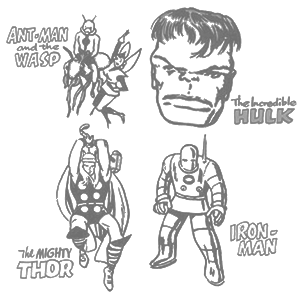
The Avengers is a team of superheroes, appearing in magazines published by Marvel Comics. The team made its debut in 1963 in ‘The Avengers #1,’ and was created by writer-editor Stan Lee and artist/co-plotter Jack Kirby, following the trend of super-hero teams after the success of DC Comics’ Justice League of America. Labeled ‘Earth’s Mightiest Heroes,’ the Avengers originally consisted of Iron Man, Ant-Man, Wasp, Thor, and the Hulk.
The original Captain America was discovered by the team in issue #4, trapped in ice, and he joined the group when they revived him. The rotating roster has become a hallmark of the team, although one theme remains consistent: the Avengers fight ‘the foes no single superhero can withstand.’ The team, famous for its battle cry of ‘Avengers Assemble!,’ has featured humans, mutants, robots, gods, aliens, supernatural beings, and even former villains.
Posted in Art |
Leave a Comment »
May 1, 2012

James Jean is a Taiwanese-American visual artist, known for both his commercial and fine art gallery work. He is also known in the American comics industry as a cover artist for various books published by DC Comics, as well as for his work for Prada, ESPN, and Atlantic Records. His work, which has been collected in numerous volumes, has been compared to Maxfield Parrish (known for his distinctive saturated hues and idealized neo-classical imagery). Jean was born in Taiwan and was raised in Parsippany-Troy Hills, New Jersey. He illustrated covers for the comic book series ‘Fables’ and ‘The Umbrella Academy.’ In 2008, Jean retired from illustration and commercial projects to focus on painting.
In 2007, Jean created a mural for the Prada Epicenter stores in New York and Los Angeles. He also created a backdrop for Prada’s Spring/Summer 2008 show in Milan. Aspects of the Epicenter mural and the Milan wallpaper were transformed into clothing, handbags, shoes, and packaging. Prada undertook a global campaign that featured Jean’s work in advertising environments, animation, and special events. Jean developed an animated short based on the theme titled ‘Trembled Blossoms,’ taken from the poem ‘Ode to Psyche,’ by John Keats (one of his darker and more experimental odes). In 2010, Jean was commissioned by fashion designer Phillip Lim to paint a series of portraits featuring Los Angeles-based actors, musicians, and tastemakers, including Rachel Bilson, Selma Blair, and Devendra Banhart.
Posted in Art, Money |
2 Comments »



 The Daily Omnivore