April 17, 2012
Electric Daisy Carnival is an annual electronic dance music festival held in the South West United States on the last weekend of June. The first Electric Daisy Carnival was held in 1997 at the Shrine Expo Hall in Southern California. The name usage was acquired by Insomniac’s partner Philip Blaine. This refers to the name borrowed from Steve Kool-Aid’s original creation from several years prior whom Philip knew through his colleague Gary (Steve’s partner) at 1500 Records.
In 2010, the event drew criticism from local authorities and promoters alike after minors gained entrance and numerous people were taken to the hospital by paramedics, and as well after an underage (15 year old female) attendee who died of an overdose of ecstasy. The city of Los Angeles began to consider banning all raves from being held in the city. The Coliseum Commission put a moratorium on booking any future events, pending the outcome of the use of new security and safety provisions. Those new provisions include a minimum age of 18 on all future events and the presence of on-site doctors.
Posted in Art, Drugs, Money |
Leave a Comment »
April 17, 2012
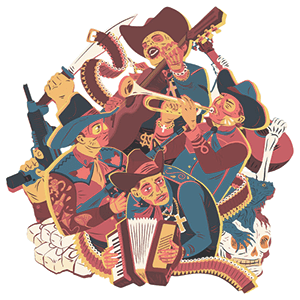
A Narcocorrido [nahr-koh-koh-ree-doh] is a type of Mexican music and song tradition which evolved out of the norteño folk corrido tradition. This type of music is heard on both sides of the US–Mexican border. It uses a danceable, accordion-based polka as a rhythmic base. The first corridos that focus on drug smugglers dated to the 1930s. Early corridos (non-narco) go back as far to the Mexican Revolution of 1910, telling the stories of revolutionary fighters. Music critics have compared narcocorrido music to gangster rap. Narcocorrido lyrics refer to particular events and include real dates and places. The lyrics tend to speak approvingly of illegal criminal activities such as murder, torture, racketeering, extortion, drug smuggling, illegal immigration, and sometimes political protest due to government corruption.
Among the earliest exponents of narcocorrido music were Los Alegres de Teran, who recorded many. In the 1980s, Rosalino ‘Chalino’ Sánchez contributed to narcocorridos. Known throughout Mexico as ‘l Pelavacas’ (‘Cow Skin Peeler’), El Indio (The Indian, from his corrido ‘El Indio Sánchez’), and ‘Mi Compa’ (‘My Friend’), Sánchez was a Mexican immigrant living in Los Angeles. He then began distributing his music. His lyrics composed of heartbreak, revolution, and socioeconomic issues. Soon he was selling mass copies. Chalino Sánchez was murdered in 1992 after a concert in Culiacán. In death, he became a legend and one of the most influential musicians to emerge from California, he was known throughout Mexico and United States as El Rey del Corrido (‘The King of the Corrido’).
Posted in Art, Death, Drugs |
1 Comment »
April 17, 2012

Madchester was a music scene that developed in Manchester, England, towards the end of the 1980s and into the early 1990s. The music that emerged from the scene mixed alternative rock, psychedelic rock, and dance music. Artists associated with the scene included New Order, The Stone Roses, Happy Mondays, Inspiral Carpets, Northside, 808 State, James, The Charlatans, The Fall, and A Guy Called Gerald.
At that time, the Haçienda nightclub was a major catalyst for the distinctive musical ethos in the city that was called the ‘Second Summer of Love.’ The music scene in Manchester immediately before the Madchester era had been dominated by bands such as The Smiths, New Order, The Fall and James. These bands were to become a significant influence on the Madchester scene.
read more »
Posted in Art, Drugs, World |
Leave a Comment »
April 17, 2012

Paisley Underground is an early genre of alternative rock, based primarily in Los Angeles, which was at its most popular in the mid-1980s. The term refers to a comment made by Michael Quercio of the band The Three O’Clock during a radio interview. Paisley Underground bands incorporated psychedelia, rich vocal harmonies, and guitar interplay in a folk rock style that owed a particular debt to The Byrds, but more generally referenced the whole range of 1960s West Coast pop and garage rock, from the Seeds to the Beach Boys.
The Dream Syndicate channeled Crazy Horse and Creedence Clearwater Revival via The Velvet Underground, while The Bangles recalled The Mamas & the Papas, Green on Red came on as a cousin to The Doors, The Long Ryders honored Gram Parsons and Buffalo Springfield, The Three O’Clock owed debt to the Bee Gees and The Monkees, and so on. The 1970s Memphis cult band Big Star, whose ‘eptember Gurls’ was covered by The Bangles, was also influential, as were Britain’s Soft Boys. Although there were accomplished musicians among them, it was also rooted—as was the punk rock that preceded it—in an inspired amateurism.
read more »
Posted in Art |
Leave a Comment »
April 17, 2012

Neo-psychedelia is music that emulates or is heavily influenced by the psychedelic music of the 1960s. It began to be revived among British post-punk bands of the later 1970s and early 1980s and was taken up by groups including bands of the Paisley Underground and Madchester scenes, as well as occasional interest from mainstream artists and bands into the new millennium.
Neo-psychedelic acts borrowed a variety of elements from 1960s psychedelic music. Some emulated the psychedelic pop of bands like The Beatles and early Pink Floyd, others adopted the jangly guitars of folk rock bands like the Byrds-influenced guitar rock, or distorted free-form jams and sonic experimentalism of late 1960s acid rock. Some neo-psychedelia has been explicitly focused on drug use and experiences, while other bands have used it to accompany surreal or political lyrics.
read more »
Posted in Art, Drugs, World |
Leave a Comment »
April 16, 2012

The Residents are an American art collective best known for avant-garde music and multimedia works. The first official release under the name of The Residents was in 1972, and the group has since released over sixty albums, numerous music videos and short films, three CD-ROM projects and ten DVDs. They have undertaken seven major world tours and scored multiple films. Throughout the group’s existence, the individual members have ostensibly attempted to operate under anonymity, preferring instead to have attention focused on their art output.
Much outside speculation and rumor has focused on this aspect of the group. In public, the group appears silent and costumed, often wearing eyeball helmets, top hats and tuxedos – a long-lasting costume now recognized as their signature iconography. Their albums generally fall into two categories: deconstructions of Western popular music, or complex conceptual pieces, composed around a theme, theory or plot. They are noted for surrealistic lyrics and sound, disregard for conventional music composition, and the over the top, theatrical spectacle of their live performances.
read more »
Posted in Art, Humor |
Leave a Comment »
April 12, 2012


A calligram [kal-uh-gram] is a poem, phrase, or word in which the typeface, calligraphy, or handwriting is arranged in a way that creates a visual image. The image created by the words expresses visually what the word, or words, say. In a poem, it manifests visually the theme presented by the text of the poem.
Guillaume Apollinaire was a famous calligram writer and author of a book of poems called ‘Calligrammes.’ His poem written in the form of the Eiffel Tower is an example of a calligram.
Posted in Art, Language |
Leave a Comment »
April 12, 2012

Eye music (often referred to in English by its exact German translation ‘Augenmusik’) describes graphical features of scores that when performed are unnoticeable by the listener. A clear definition of eye music is elusive, for the border between eye music, word painting, and representations of melody and form depends on the relationships of composer, performer, and listener. Word painting (also known as tone painting or text painting) is writing music that reflects the literal meaning of a song (r.g. ascending scales would accompany lyrics about going up; slow, dark music would accompany lyrics about death).
To a person well-versed in the style of Baroque music, word painting is, as intended, noticed. But someone unused to Baroque musical style may not appreciate that musical effect – to them they are merely notes and lyrics. In this case, word painting is no longer the issue. For them, the ‘leaps’ of written notes are unhearable, but are visible only to the composer or performer: a definition of eye music.
read more »
Posted in Art, Language |
Leave a Comment »
April 12, 2012

Graphic notation is the representation of music through the use of visual symbols outside the realm of traditional music notation. Graphic notation evolved in the 1950s, and it is often used in combination with traditional music notation. Composers often rely on graphic notation in experimental music, where standard musical notation can be ineffective. A common aspect of graphic notation is the use of symbols to convey information to the performer about the way the piece is to be performed. These symbols first began to appear in the works of avant-garde composers such as Morton Feldman, Karlheinz Stockhausen, and Krzysztof Penderecki, as well as the works of experimental composers such as John Cage and Earle Brown during the 1950s and 60s. In the late 1970s, the Brazilian composer Emanuel Dimas de Melo Pimenta started producing graphic notation in four dimensions, inside virtual reality.
After working as Stockhausen’s assistant, Cornelius Cardew began work on a massive graphic score, which he titled ‘Treatise.’ The piece consists of 193 pages of highly abstract scores. The score itself is almost its own separate work of art. In 2008, Theresa Sauer edited a compendium featuring graphic scores by composers from over fifty countries, demonstrating how widespread the practice has become. Notable graphic scores(in which the music is represented using symbols and illustrations) include: Hans-Christoph Steiner’s score for ‘Solitude,’ created using the Pure Data programming language. Altered Notation can be seen in George Crumb’s work, where he uses traditional notation but presents the music on the page in a graphic or nontraditional manner such as spirals or circles.
Posted in Art, Language |
Leave a Comment »
April 11, 2012
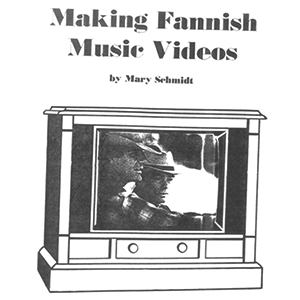
Vidding is the fan labor practice in media fandom of creating music videos from the footage of one or more visual media sources, thereby exploring the source itself in a new way. The creator may explore a single character, support a particular romantic pairing between characters, criticize or celebrate the original text, or point out an aspect of the TV show or film that they find under-appreciated. The creators refer to themselves as ‘vidders,’ their product as ‘vids,’ ‘fanvids,’ or ‘songvids,’ and the act itself as ‘vidding.’
Vidding can occur within a fandom; however, it is also often considered its own fandom, as vidding fans will often watch vids simply because they are vids. (This is distinct from fan fiction readers and other fans, for instance, who tend to choose what to engage based on source text more than form.) Accordingly, vidding has its own dedicated fan convention, Vividcon. Fan videos within the world of anime fandom are distinct from the videos created by vidders. A fan-made music video using anime footage fans is called an anime music video or AMV, not a fanvid. While a large number of anime video makers are male, the bulk of vidders in media fandom are women.
read more »
Posted in Art, Money, Technology |
1 Comment »
April 11, 2012

ccMixter.org is a community music site that promotes remix culture and makes samples, remixes, and a cappella tracks licensed under Creative Commons available for download and re-use in creative works. Visitors are able to listen to, sample, mash-up, or interact with music in a variety of ways including the download and use of tracks and samples in their own remixes.
Most sampling or mash-up web sites on the Internet stipulate that users forgo their rights to the new song once it is created. By contrast, the material on ccMixter.org is generally licensed to be used in any arena, not just the ccMixter site or a specific contest. The ccMixter site contains over 10,000 samples from a wide range of recording artists, including high profile artists such as Beastie Boys and David Byrne.
read more »
Posted in Art, Money, Politics |
Leave a Comment »
April 11, 2012
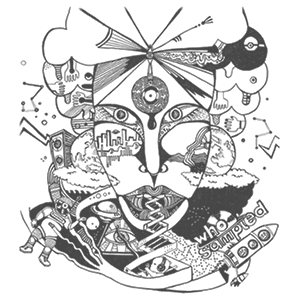
WhoSampled is a website and database of information about sample-based music founded in London. WhoSampled compares original songs with covered songs or songs that ‘borrowed’ samples, it serves as a historical line of where songs have come from and where they’re going. Registered users can submit information about a sample, remix or cover and subject, waiting for moderator’s approval that will let the entry to be published on the site.
The visitor of the site gets a comprehensive list of who that artist has sampled and how, and how that artist him/herself has been sampled. The comparison of original song and the song that sampled, covered or remixed it, is done side by side with embedded tracks or videos. All audio and video clips shown on the site are embedded links to content hosted by third party services, such as YouTube or DailyMotion. The process and idea of the site of being a tool for research and music discovery, is similar to another project called Music Genome Project, both wanting to ‘explore the DNA of music.’
Posted in Art, Money, Politics |
Leave a Comment »



