April 4, 2012
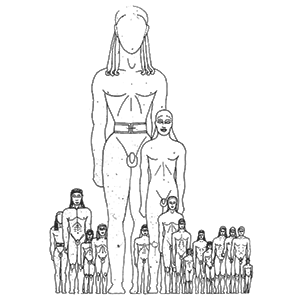
The Getty kouros [koor-os] is an over-life-sized statue in the form of a late archaic Greek kouros (representations of male youths). The dolomitic marble sculpture was bought by the J. Paul Getty Museum, Malibu, California, in 1985 for $7 million. Despite initial favorable scientific analysis of the patina and aging of the marble, a question of its authenticity has persisted from the start.
Subsequent demonstration of an artificial means of creating the de-dolomitization observed on the stone has prompted a number of art historians to revise their opinions of the work. If genuine, it is one of only twelve complete kouroi still extant. If fake, it exhibits a high degree of technical and artistic sophistication by an as-yet unidentified forger. Its status remains undetermined: today the museum’s label reads ‘Greek, about 530 B.C., or modern forgery.’
read more »
Posted in Art, Money, Science |
1 Comment »
April 3, 2012


Simian Mobile Disco are an electronic music duo and production team from London, formed in 2005 by James Ford and Jas Shaw. Musically, they are known for their analog production. In addition to his work with Simian Mobile Disco, Ford is a producer and has worked with artists such as Florence and the Machine, Peaches, Arctic Monkeys, and Klaxons. Simian Mobile Disco originally formed as a DJ duo, on the side of their early four-piece band Simian. They released a number of early tastemaker singles, such as ‘The Mighty Atom / Boatrace / Upside Down’ on I’m a Cliché and ‘The Count’ on Kitsuné, but gained more fame for their remixes of artists such as Muse, Klaxons, The Go! Team, Air, and others.
In 2006, Kitsuné released the duo’s underground hit ‘Hustler,’ which features guest vocals from New York singer Char Johnson. The band’s debut album, ‘Attack Decay Sustain Release’ was released in 2007 on Wichita Recordings. The lead single, ‘It’s the Beat,’ features Ninja from UK indie band The Go! Team on vocals. Their sophomore studio album, ‘Temporary Pleasure’ was released in 2009, and featured many guests including Gruff Rhys of Super Furry Animals, Alexis Taylor of Hot Chip, Beth Ditto of Gossip, and Chris Keating of Yeasayer.
Posted in Art, Technology |
Leave a Comment »
April 2, 2012
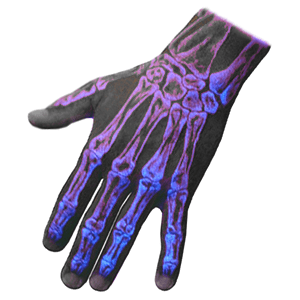
UV tattoos are tattoos made with a special ink that is visible under an ultraviolet light (blacklight). Depending upon the ink, they can be nearly invisible in non-UV environments, thus they are a popular consideration for people seeking a subtler tattoo. They are particularly popular in the raver subculture. Although the tattoos are sometimes considered invisible in normal light, scarring from the tattoo machine in the application process may remain, and therefore still show.
A UV tattoo becomes visible under blacklight, when it glows in colors ranging from white to purple, depending on the ink chosen. Colored ink is also available, where the ink is visible in normal light (as with a regular tattoo) but the ink will glow vividly under UV light. However, some UV inks are not as bright under normal light as normal tattoo ink and are considered not as vibrant.
Posted in Art, Health, Technology |
Leave a Comment »
April 2, 2012

The Orange Catholic Bible (abbreviated to O. C. Bible or OCB) is a fictional book from the ‘Dune’ universe created by Frank Herbert. Created in the wake of the crusade against thinking machines known as the Butlerian Jihad, the Orange Catholic Bible is the key religious text in the Dune universe and is described thus in the glossary of the 1965 novel:
‘ORANGE CATHOLIC BIBLE: the ‘Accumulated Book,’ the religious text produced by the Commission of Ecumenical Translators. It contains elements of most ancient religions, including the Maometh Saari, Mahayana Christianity, Zensunni Catholicism, and Buddislamic traditions. Its supreme commandment is considered to be: ‘Thou shalt not disfigure the soul,’ followed by ‘Thou shalt not make a machine in the likeness of a human mind.’
read more »
Posted in Art, Language, Philosophy |
Leave a Comment »
March 29, 2012
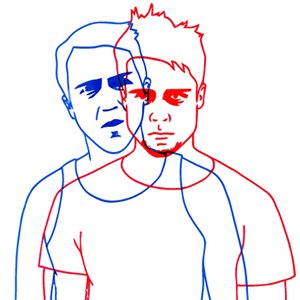
An unreliable narrator is a narrator, whether in literature, film, or theater, whose credibility has been seriously compromised. The term was coined in 1961 by Wayne C. Booth in ‘The Rhetoric of Fiction.’ This narrative mode is one that can be developed by an author for a number of reasons, usually to deceive the reader or audience.
Unreliable narrators are usually first-person narrators, but third-person narrators can also be unreliable. The nature of the narrator is sometimes immediately clear. For instance, a story may open with the narrator making a plainly false or delusional claim or admitting to being severely mentally ill, or the story itself may have a frame in which the narrator appears as a character, with clues to his unreliability.
read more »
Posted in Art, Language |
Leave a Comment »
March 29, 2012
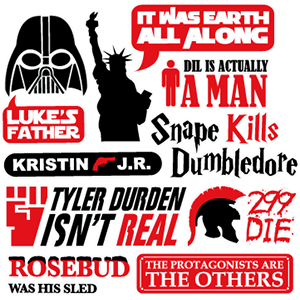
Spoiler is any element of any summary or description of any piece of fiction that reveals any plot element which will give away the outcome of a dramatic episode within the work of fiction, or the conclusion of the entire work. It can also be used to refer to any piece of information regarding any part of a given media. Because enjoyment of fiction sometimes depends upon the dramatic tension and suspense which arises within it, the external revelation of such plot elements can ‘spoil’ the enjoyment that some consumers of the narrative would otherwise have experienced.
The term spoiler was introduced in the early days of the internet, and is often associated with specialist internet sites and in newsgroup postings. Early rules of netiquette insisted that spoilers could and should be normally avoided, but if the posting of “‘spoiling’ information was unavoidable, it be preceded by a warning (‘SPOILER!’), or the spoiler itself has to be masked so that it can not be visible to any but those keen for details and not fazed at the thought of such potentially plot-revealing information.
read more »
Posted in Art, Language |
1 Comment »
March 29, 2012
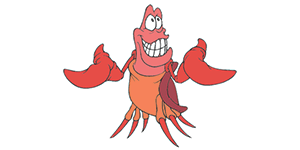

The tricky slave is a stock character. He is a clever, lower-class person who brings about the happy ending of a comedy for the lovers. He is more clever than the upper-class people about him, both the lovers and the characters who block their love, and typically also looking out for his own interests; in the New Comedy, the tricky slave or ‘dolosus servus’ aimed to get his freedom by assisting his young master in love. Besides the actual slaves of classical theater, he also appears as the scheming valet in Renaissance comedy, called the ‘gracioso’ in Spanish. The ‘zanni’ of Commedia dell’arte are often tricky slaves, as are Puss-in-Boots in Perrault’s fairy tale, Jeeves in P. G. Wodehouse’s work, and Figaro. In fairy tales, the same function is often fulfilled by fairy godmothers, talking animals, and like creatures.
A female version of the tricky slave would be Morgiana, a clever slave girl from ‘Ali Baba and the Forty Thieves’ in the ‘One Thousand and One Nights.’ She is initially in Cassim’s household but on his death she joins his brother Ali Baba and through her quick wittedness she saves Ali’s life many times and eventually kills his worst enemy, the leader of the Forty Thieves. As reward, Ali frees her and Morgiana marries Cassim’s son. In contrast to these positive depictions, the tricky slave is portrayed as the antagonist in another Arabian Nights tale, ‘The Three Apples,’ an early example of a murder mystery. After the murderer reveals himself near the middle of a story, he narrates the events leading up to the murder in a flashback. Within this flashback, a slave convinces him of his wife’s infidelity, thus leading to her murder.
Posted in Art, Language |
Leave a Comment »
March 29, 2012
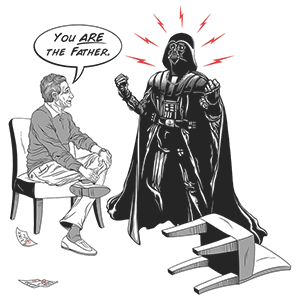
Anagnorisis [an-ag-nawr-uh-sis] is a moment in a play or other work when a character makes a critical discovery. Anagnorisis originally meant recognition in its Greek context, not only of a person but also of what that person stood for. It was the hero’s sudden awareness of a real situation, the realization of things as they stood, and finally, the hero’s insight into a relationship with an often antagonistic character in Aristotelian tragedy.
In the Aristotelian definition of tragedy, it was the discovery of one’s own identity or true character (e.g. Cordelia, Edgar, Edmund, etc. in Shakespeare’s ‘King Lear’) or of someone else’s identity or true nature (e.g. Lear’s children, Gloucester’s children) by the tragic hero. In his ‘Poetics,’ Aristotle defined anagnorisis as ‘a change from ignorance to knowledge, producing love or hate between the persons destined by the poet for good or bad fortune.’ Shakespeare did not base his works on Aristotelian theory of tragedy, including use of hamartia (an injury committed in ignorance), yet his tragic characters still commonly undergo anagnorisis as a result of their struggles.
read more »
Posted in Art, Language, Philosophy |
2 Comments »
March 29, 2012
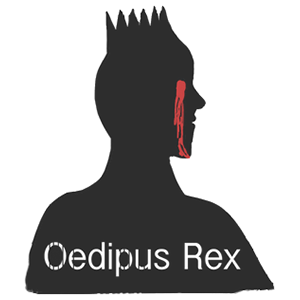
Peripeteia [per-uh-pi-tee-uh] is a reversal of circumstances, or turning point. The term is primarily used with reference to works of literature. The English form of peripeteia is peripety. Peripety is a sudden reversal dependent on intellect and logic. Aristotle defines it as ‘a change by which the action veers round to its opposite, subject always to our rule of probability or necessity.’ According to Aristotle, peripeteia, along with discovery, is the most effective when it comes to drama, particularly in a tragedy. Aristotle wrote ‘The finest form of Discovery is one attended by Peripeteia, like that which goes with the Discovery in ‘Oedipus’…’
Peripeteia includes changes of character, but also more external changes. A character who becomes rich and famous from poverty and obscurity has undergone peripeteia, even if his character remains the same. When a character learns something he had been previously ignorant of, this is normally distinguished from peripeteia as ‘anagnorisis’ (‘discovery’), a distinction derived from Aristotle’s work. Aristotle considered anagnorisis, leading to peripeteia, the mark of a superior tragedy. One such play is ‘Oedipus the King,’ where the oracle’s information that Oedipus had killed his father and married his mother brought about his mother’s death and his own blindness and exile. That plot is considered complex and superior to simple plots without anagnorisis or peripeteia, such as when Medea resolves to kill her children, knowing they are her children, and does so.
Posted in Art, Language |
1 Comment »
March 29, 2012

A plot twist is a change in the expected direction or outcome of the plot of a work of fiction. It is a common practice in narration used to keep the interest of an audience, usually surprising them with a revelation. Some ‘twists’ are foreshadowed and can thus be predicted by many viewers/readers, whereas others are a complete shock. When a plot twist happens near the end of a story, especially if it changes one’s view of the preceding events, it is known as a twist ending.
Revealing the existence of a plot twist often spoils a movie, since the majority of the movie generally builds up to the plot twist. A device used to undermine the expectations of the audience is the false protagonist. It involves presenting a character at the start of the film as the main character, but then disposing of this character, usually killing them. It is a red herring (a clue intended to mislead).
read more »
Posted in Art, Language |
Leave a Comment »
March 29, 2012

TV Tropes is a wiki that collects and expands on various conventions and devices (tropes) found within creative works. Since its establishment in 2004, the site has gone from covering only television and film tropes to also covering those in a number of other media such as literature, comics, video-games, and even advertisements and toys. It is known for approaching topics with a casual and humorous tone.
The site initially focused on the television show ‘Buffy the Vampire Slayer,’ and has since increased its scope to include thousands of other series, films, novels, plays, video games, anime, manga, comic strips and books, fan fiction, and other subjects, including Internet works such as Wikipedia, which is referred to in-wiki as ‘The Other Wiki.’ Some believe that use of ‘TV Tropes’ teaches the user to analyze and dissect works of media. An unanticipated side effect causes some readers to become jaded and cynical, ‘[replacing] surprise almost entirely with recognition.’ This is referred to on the site as ‘TV Tropes Will Ruin Your Life,’ referring to the inability to read books, watch films, etc. without identifying each trope as it occurs.
Posted in Art, Games, Humor |
Leave a Comment »
March 28, 2012
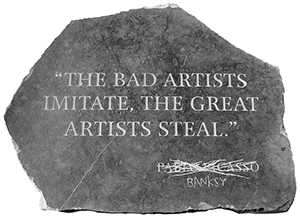
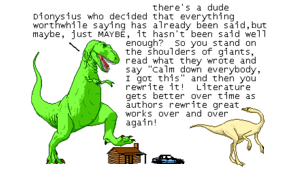
Dionysian imitatio is the influential literary method of imitation as formulated by Greek author Dionysius of Halicarnassus in the first century BCE, which conceived it as the rhetoric practice of emulating, adapting, reworking and enriching a source text by an earlier author. It marked the beginning of the doctrine of imitation, which dominated the Western history of art up until 18th century, when the notion of romantic originality was introduced.
The imitation literary approach is closely linked with the widespread observation that ‘everything has been said already,’ which was also stated by Egyptian scribes around 2000 BCE. The ideal aim of this approach to literature was not originality, but to surpass the predecessor by improving their writings and set the bar to a higher level.
read more »
Posted in Art, Language, Philosophy |
Leave a Comment »


 The Daily Omnivore