March 29, 2012
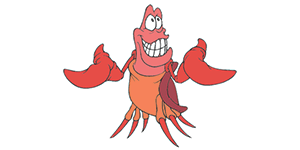

The tricky slave is a stock character. He is a clever, lower-class person who brings about the happy ending of a comedy for the lovers. He is more clever than the upper-class people about him, both the lovers and the characters who block their love, and typically also looking out for his own interests; in the New Comedy, the tricky slave or ‘dolosus servus’ aimed to get his freedom by assisting his young master in love. Besides the actual slaves of classical theater, he also appears as the scheming valet in Renaissance comedy, called the ‘gracioso’ in Spanish. The ‘zanni’ of Commedia dell’arte are often tricky slaves, as are Puss-in-Boots in Perrault’s fairy tale, Jeeves in P. G. Wodehouse’s work, and Figaro. In fairy tales, the same function is often fulfilled by fairy godmothers, talking animals, and like creatures.
A female version of the tricky slave would be Morgiana, a clever slave girl from ‘Ali Baba and the Forty Thieves’ in the ‘One Thousand and One Nights.’ She is initially in Cassim’s household but on his death she joins his brother Ali Baba and through her quick wittedness she saves Ali’s life many times and eventually kills his worst enemy, the leader of the Forty Thieves. As reward, Ali frees her and Morgiana marries Cassim’s son. In contrast to these positive depictions, the tricky slave is portrayed as the antagonist in another Arabian Nights tale, ‘The Three Apples,’ an early example of a murder mystery. After the murderer reveals himself near the middle of a story, he narrates the events leading up to the murder in a flashback. Within this flashback, a slave convinces him of his wife’s infidelity, thus leading to her murder.
Posted in Art, Language |
Leave a Comment »
March 29, 2012
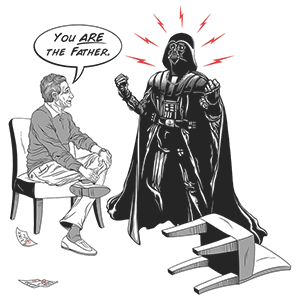
Anagnorisis [an-ag-nawr-uh-sis] is a moment in a play or other work when a character makes a critical discovery. Anagnorisis originally meant recognition in its Greek context, not only of a person but also of what that person stood for. It was the hero’s sudden awareness of a real situation, the realization of things as they stood, and finally, the hero’s insight into a relationship with an often antagonistic character in Aristotelian tragedy.
In the Aristotelian definition of tragedy, it was the discovery of one’s own identity or true character (e.g. Cordelia, Edgar, Edmund, etc. in Shakespeare’s ‘King Lear’) or of someone else’s identity or true nature (e.g. Lear’s children, Gloucester’s children) by the tragic hero. In his ‘Poetics,’ Aristotle defined anagnorisis as ‘a change from ignorance to knowledge, producing love or hate between the persons destined by the poet for good or bad fortune.’ Shakespeare did not base his works on Aristotelian theory of tragedy, including use of hamartia (an injury committed in ignorance), yet his tragic characters still commonly undergo anagnorisis as a result of their struggles.
read more »
Posted in Art, Language, Philosophy |
2 Comments »
March 29, 2012
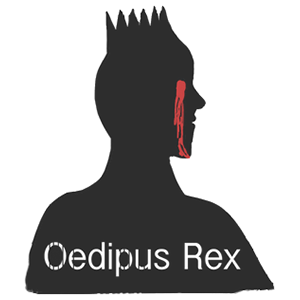
Peripeteia [per-uh-pi-tee-uh] is a reversal of circumstances, or turning point. The term is primarily used with reference to works of literature. The English form of peripeteia is peripety. Peripety is a sudden reversal dependent on intellect and logic. Aristotle defines it as ‘a change by which the action veers round to its opposite, subject always to our rule of probability or necessity.’ According to Aristotle, peripeteia, along with discovery, is the most effective when it comes to drama, particularly in a tragedy. Aristotle wrote ‘The finest form of Discovery is one attended by Peripeteia, like that which goes with the Discovery in ‘Oedipus’…’
Peripeteia includes changes of character, but also more external changes. A character who becomes rich and famous from poverty and obscurity has undergone peripeteia, even if his character remains the same. When a character learns something he had been previously ignorant of, this is normally distinguished from peripeteia as ‘anagnorisis’ (‘discovery’), a distinction derived from Aristotle’s work. Aristotle considered anagnorisis, leading to peripeteia, the mark of a superior tragedy. One such play is ‘Oedipus the King,’ where the oracle’s information that Oedipus had killed his father and married his mother brought about his mother’s death and his own blindness and exile. That plot is considered complex and superior to simple plots without anagnorisis or peripeteia, such as when Medea resolves to kill her children, knowing they are her children, and does so.
Posted in Art, Language |
1 Comment »
March 29, 2012

A plot twist is a change in the expected direction or outcome of the plot of a work of fiction. It is a common practice in narration used to keep the interest of an audience, usually surprising them with a revelation. Some ‘twists’ are foreshadowed and can thus be predicted by many viewers/readers, whereas others are a complete shock. When a plot twist happens near the end of a story, especially if it changes one’s view of the preceding events, it is known as a twist ending.
Revealing the existence of a plot twist often spoils a movie, since the majority of the movie generally builds up to the plot twist. A device used to undermine the expectations of the audience is the false protagonist. It involves presenting a character at the start of the film as the main character, but then disposing of this character, usually killing them. It is a red herring (a clue intended to mislead).
read more »
Posted in Art, Language |
Leave a Comment »
March 29, 2012

TV Tropes is a wiki that collects and expands on various conventions and devices (tropes) found within creative works. Since its establishment in 2004, the site has gone from covering only television and film tropes to also covering those in a number of other media such as literature, comics, video-games, and even advertisements and toys. It is known for approaching topics with a casual and humorous tone.
The site initially focused on the television show ‘Buffy the Vampire Slayer,’ and has since increased its scope to include thousands of other series, films, novels, plays, video games, anime, manga, comic strips and books, fan fiction, and other subjects, including Internet works such as Wikipedia, which is referred to in-wiki as ‘The Other Wiki.’ Some believe that use of ‘TV Tropes’ teaches the user to analyze and dissect works of media. An unanticipated side effect causes some readers to become jaded and cynical, ‘[replacing] surprise almost entirely with recognition.’ This is referred to on the site as ‘TV Tropes Will Ruin Your Life,’ referring to the inability to read books, watch films, etc. without identifying each trope as it occurs.
Posted in Art, Games, Humor |
Leave a Comment »
March 28, 2012
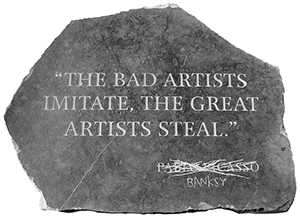
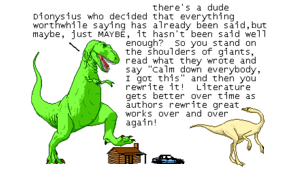
Dionysian imitatio is the influential literary method of imitation as formulated by Greek author Dionysius of Halicarnassus in the first century BCE, which conceived it as the rhetoric practice of emulating, adapting, reworking and enriching a source text by an earlier author. It marked the beginning of the doctrine of imitation, which dominated the Western history of art up until 18th century, when the notion of romantic originality was introduced.
The imitation literary approach is closely linked with the widespread observation that ‘everything has been said already,’ which was also stated by Egyptian scribes around 2000 BCE. The ideal aim of this approach to literature was not originality, but to surpass the predecessor by improving their writings and set the bar to a higher level.
read more »
Posted in Art, Language, Philosophy |
Leave a Comment »
March 28, 2012
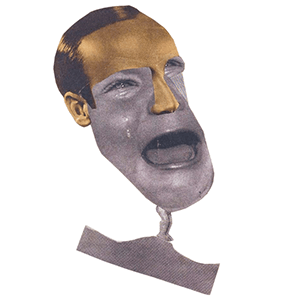
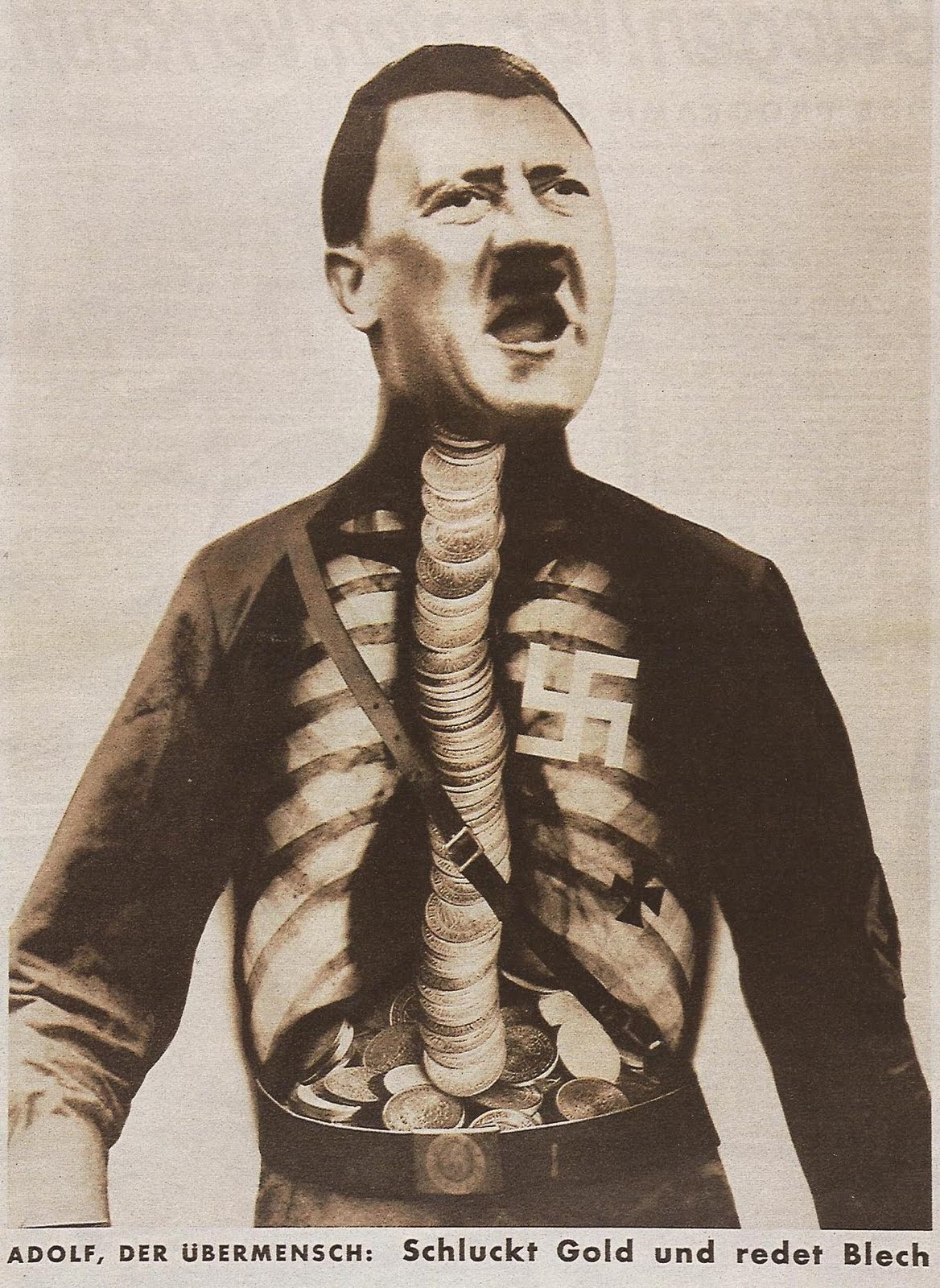
Photomontage is the process and result of making a composite photograph by cutting and joining a number of other photographs. The composite picture was sometimes photographed so that the final image is converted back into a seamless photographic print. A similar method, although one that does not use film, is realized today through image-editing software.
This latter technique is referred to by professionals as ‘compositing,’ and in casual usage is often called ‘photoshopping.’ Author Oliver Grau in his book ‘Virtual Art: From Illusion to Immersion’ notes that the creation of artificial immersive virtual reality, arising as a result of technical exploitation of new inventions, is a long-standing human practice throughout the ages. Such environments as dioramas were made of composited images.
read more »
Posted in Art, Technology |
Leave a Comment »
March 28, 2012
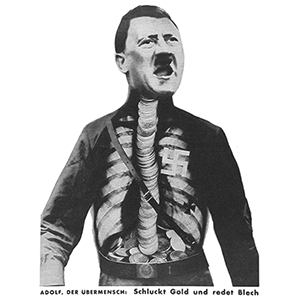
John Heartfield (1891 – 1968) born Helmut Herzfeld, was a pioneer in the use of art as a political weapon. His photomontages were anti-Nazi anti-Fascist statements.
Heartfield also created book jackets for authors such as Upton Sinclair, as well as stage sets for such noted playwrights as Bertold Brecht and Erwin Piscator.
read more »
Posted in Art, Politics, War |
Leave a Comment »
March 28, 2012
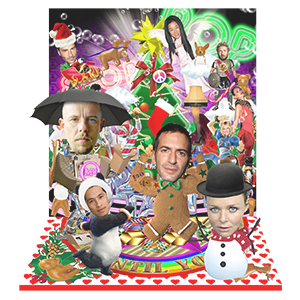
Kenneth Tin-Kin Hung (b. 1976) is a Chinese-American new media artist who lives and works in New York. He earned his Bachelor of Arts in Arts degree from San Francisco State University. Hung’s works are digital collages of popular culture and current events.
His media includes hi-definition video animation, video games, net.art, digital graphics and mixed-media installations. Hung has been called the ‘John Heartfield of Digital Era.’ He loans 5 percent of his art earnings to low-income entrepreneurs listed on Kiva Microfunds.
Posted in Art, Money, Politics |
Leave a Comment »
March 27, 2012
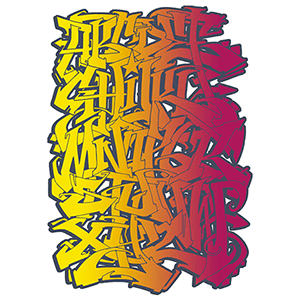
Inkie is a London based painter and street artist, originally from Bristol. He is cited as being part of Bristol’s graffiti heritage, along with Banksy, 3D and Nick Walker. Inkie began working as part of Crime Incorporated Crew (CIC) in 1983, along with Felix and Joe Braun. He was one of many arrested in 1989 during ‘Operation Anderson,’ the UK’s largest ever graffiti bust. He arranged 1998’s ‘Walls On Fire’ event with Banksy, on the site of the future At-Bristol center.
He has subsequently worked in the video game industry, including some time as head of creative design at Sega, where his work featured in ‘Jet Set Radio.’ Inkie was one artist present to do live painting at the launch of Banksy’s book ‘Bristol: Home Sweet Home.’ Inkie has likened the time spent training as a graffiti artist to that of classical musicians.
Posted in Art, Games, World |
Leave a Comment »
March 27, 2012
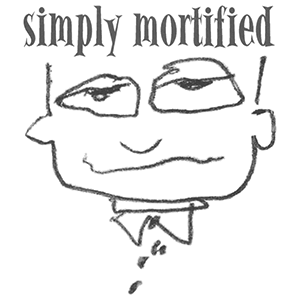
BS 2000 is the name of a musical side project of Beastie Boys’ Adam ‘Adrock’ Horovitz and Amery ‘AWOL’ Smith also with tracks featuring Janay North. In 1997, BS 2000 released their vinyl-only self-titled debut.
BS 2000 later released a limited-edition vinyl/CD, ‘Buddy,’ in 2000 and ‘Simply Mortified’ on vinyl and CD in 2001. Their song ‘The Scrappy’ was featured on the American and European versions of the Xbox video game, ‘Jet Set Radio Future.’
Posted in Art |
Leave a Comment »
March 27, 2012
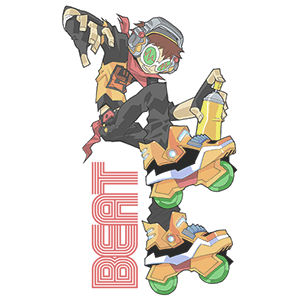
Jet Set Radio Future is a video game developed by Smilebit and the sequel to ‘Jet Set Radio’ (also known as ‘Jet Grind Radio’). It was published by Sega in 2002 in the US, near the beginning of the Xbox’s lifespan. Similar to the original, it depicts a future Tokyo where freedom of expression is outlawed. The user plays a character in the GG’s, a gang of in-line skating graffiti artists who skate around Tokyo covering up rival gangs’ graffiti, knocking over Rokkaku police, and dancing to the eclectic soundtrack.
The game uses a cel-shaded style of animation, and has been widely acclaimed for its unique music style, detailed art, and gameplay. The soundtrack introduces artists that are either foreign, not found mainstream, or work under gaming licenses such as Guitar Vader, BS 2000 (the side project of Adrock of the Beastie Boys), Hideki Naganuma, Scapegoat Wax, The Latch Brothers (including Mike D of the Beastie Boys, Richard Jacques, Chris ‘Wag’ Wagner and Kenny Tick Salcido), Cibo Matto, and The Prunes.
Posted in Art, Games, World |
Leave a Comment »