March 20, 2012
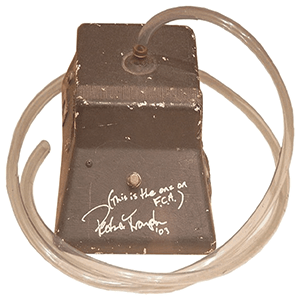
A talk box is an effects unit that allows a musician to modify the sound of a musical instrument. The musician controls the modification by lip syncing, or by changing the shape of the mouth. The effect can be used to shape the frequency content of the sound and to apply speech sounds (in the same way as singing) onto a musical instrument, typically a guitar (its non-guitar use is often confused with the vocoder) and keyboards.
A talk box is usually an effects pedal that sits on the floor and contains a speaker attached with an airtight connection to a plastic tube; however, it can come in other forms, such as the ‘Ghetto Talkbox’ (a crude homemade version). The speaker is generally in the form of a compression driver, the sound-generating part of a horn loudspeaker with the horn replaced by the tube connection.
read more »
Posted in Art, Technology |
Leave a Comment »
March 20, 2012

Auto-Tune is an audio processor created by Antares Audio Technologies, which uses proprietary software to alter pitch in vocal and instrumental performances. It was originally intended to disguise off-key inaccuracies, allowing vocal tracks to be perfectly tuned despite originally being slightly off-key. The processor slightly blends pitches to the nearest true semitone (to the exact pitch of the nearest tone in traditional equal temperament). Auto-Tune can also be used as an effect to distort the human voice when pitch is raised or lowered significantly. The overall effect to the discerning ear can be described as hearing the voice leap from note to note stepwise, like a synthesizer.
Auto-Tune was initially created by Andy Hildebrand, an engineer working for Exxon. Hildebrand developed methods for interpreting seismic data and subsequently realized that the technology could be used to detect, analyze, and modify pitch. Auto-Tune was used to produce the prominent altered vocal effect on Cher’s ‘Believe.’ Recorded in 1998, ‘Believe’ was the first commercial recording to use the software for this purpose. In an early interview, the producers claimed that they had used a Digitech Talker FX pedal, in an attempt to preserve a trade secret. After the success of the single, the technique became known as the ‘Cher Effect.’ The use of Auto-Tune as a musical effect was revived in the late-2000s by R&B singer T-Pain, who elaborated on the effect and made active use of Auto-Tune in his songs.
Posted in Art, Money, Technology |
Leave a Comment »
March 20, 2012
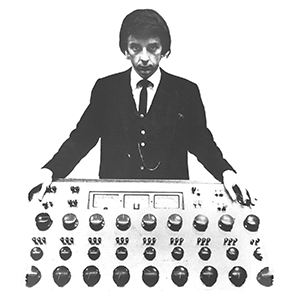
Overproduction is the excessive use of audio effects, layering, or digital manipulation in music production. Common traits include: audio processing effects such as reverb, delay, or dynamic range compression; heavy layering or multi-tracking (in the context of pop and rock music, this may refer to the addition of elements such as chorused vocals or backing strings).
Other modifications include pitch correction, time correction, and quantization (correcting to perfect notes). Records are sometimes overseen by a producer who ‘imposes’ his or her own distinctive ‘sound’ or techniques on a band or artist (producers frequently accused of this kind of ‘overproduction’ include Phil Spector and Mutt Lange). The term ‘overproduction’ implies that a producer or mastering engineer has made ‘unnecessary’ additions or changes to a record in the production process, and in doing so has decreased the quality or enjoyability of the music.
Posted in Art, Money, Technology |
Leave a Comment »
March 20, 2012
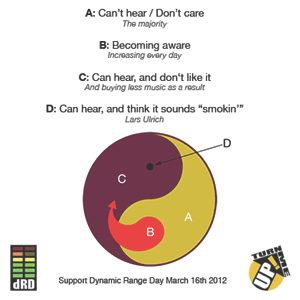
The loudness war is a pejorative term for the apparent competition to digitally master and release recordings with increasing loudness. Older music typically has a very diverse dynamic, that is, there are quiet parts of the track and much louder parts. For example, acoustic interludes leading up to the body of a song might be produced at a very quiet level, with some of the loudest sounds being snare drums and other kinds of percussion.
While the rationale for the loudness war is often described as an attempt to make the quieter parts of music more accessible to a listener, the overall effect is that that dynamic between sounds becomes leveled out, with no sound standing out from the track as a much louder sound. This results in a loss of clarity, where it’s no longer possible to experience music as a distinct interplay of louder and quieter parts.
read more »
Posted in Art, Money, Technology |
Leave a Comment »
March 20, 2012


A needle drop is a common term used to describe a version of a music album that has been transferred from a vinyl record to digital audio or other formats. Needle drops are sometimes traded among music collectors, especially when the original vinyl recording has not been released officially on a subsequent consumer format.
Other reasons for trading needle drops include the lack of availability of certain recordings on digital media, the non-availability of less compressed versions in digital form, or the lack of availability of certain versions or mixes of that record, e.g. mono or stereo versions, or the loss of the master tape. The term is thought to have been coined in 1949 by recording engineer Peter Goldmark during the first rush of transfers of lacquer and 78 rpm records to the then-new long playing 33 ⅓ RPM format.
Posted in Art, Technology |
Leave a Comment »
March 19, 2012
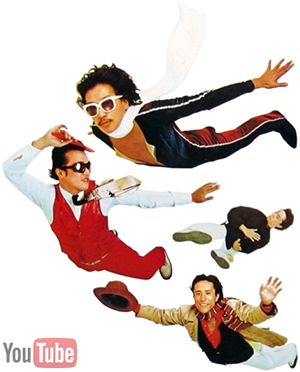
Sadistic Mika Band was a Japanese rock group formed in 1972. Its name is a parody of the ‘Plastic Ono Band.’ Produced by Masatoshi Hashiba on Toshiba-EMI Records (now EMI Music Japan), the band was led by the then husband and wife team of guitarist Kazuhiko Kato, and his wife, singer Mika Fukui. The word ‘sadistic’ is reported to be inspired by her insensitive sense of humor.
Kazuhiko Kato moved to London in 1972 and impressed by the burgeoning glam rock scene led by T. Rex and David Bowie, he set about forming a new group in Japan to emulate the style. Kato passed the album to Malcolm McLaren who at the time had a shop with Vivienne Westwood, and McLaren passed it on to Bryan Ferry, whose band Roxy Music would later support on a tour.
Posted in Art, Humor, World |
Leave a Comment »
March 19, 2012
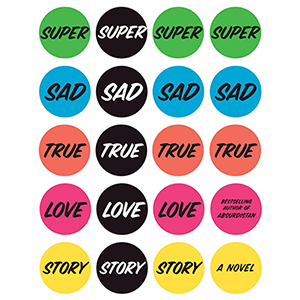
Gary Shteyngart (b. 1972) is an American writer born in Leningrad, USSR. Much of his work is satirical and relies on the invention of elaborately fictitious yet somehow familiar places and times. Shteyngart spent the first seven years of his childhood living in a square dominated by a huge statue of Vladimir Lenin in what is now St. Petersburg, Russia; (he alternately calls it ‘St. Leningrad’ or ‘St. Leninsburg’). He comes from a Jewish family and describes his family as typically Soviet. His father worked as an engineer in a LOMO camera factory; his mother was a pianist. Shteyngart emigrated to the United States in 1979 and was brought up with no television in the apartment in which he lived, where English was not the household language. He did not shed his thick Russian accent until the age of 14.
Shteyngart took a trip to Prague, and this experience helped spawn his first novel, set in the fictitious European city of Prava. He is a graduate of Stuyvesant High School in New York City, Oberlin College in Ohio, where he earned a degree in politics, and Hunter College of the City University of New York, where he earned an MFA in Creative Writing. Shteyngart now lives in the Lower East Side of Manhattan. He has taught writing at Hunter College, and currently teaches writing at Columbia University and Princeton University. Shteyngart’s novels include ‘The Russian Debutante’s Handbook’ (2002), ‘Absurdistan’ (2006), and ‘Super Sad True Love Story’ (2010).
Posted in Art, Humor, Language |
Leave a Comment »
March 19, 2012
Mike Daisey (b. 1976) is an American monologist, author, and actor best known for his full-length extemporaneous monologues, particularly ‘The Agony and the Ecstasy of Steve Jobs.’ The story was subsequently retracted following allegations that many of the events were fabricated. ‘The Agony and the Ecstasy of Steve Jobs’ (2010) is a one-man show. It debuted at Portland’s TBA Festival in 2010
. It purports to examine globalization by exploring the exploitation of Chinese workers through the lens of ‘the rise and fall and rise of Apple, industrial design, and the human price we are willing to pay for our technology, woven together in a complex narrative.’ Excerpts from the show were presented as an exposé of conditions at a Foxconn factory in China on the Public Radio International show ‘This American Life’ in 2012. After it was retracted, Daisey apologized for presenting his work as journalism, saying it is actually theater, but refused to acknowledge that he had lied — even in the face of obvious discrepancies.
Posted in Art, Money, Politics |
Leave a Comment »
March 18, 2012
The Space Traders is a science fiction short story by Derrick Bell (1930 – 2011), the first tenured African-American Professor of Law at Harvard Law School, and one of the originators of critical race theory (which argues that racism is engrained in the fabric and system of the American society). Published in 1992, its subject is the arrival of apparently benevolent and powerful extraterrestrials that offer the United States a wide range of benefits such as gold, clean nuclear power and other technological advances, in exchange for one thing: handing over all black people in the U.S. to the aliens. The story posits that the people and political establishment of the U.S. are willing to make this deal, passing a constitutional amendment to enable it.
‘The Space Traders’ was adapted for television in 1994 by director Reginald Hudlin and writer Trey Ellis. It aired on HBO as the leading segment of a three-part television anthology entitled ‘Cosmic Slop,’ which focused on minority-centric science fiction. In the run-up to the 2012 U.S. presidential election, the story became the subject of political controversy. A review of the TV adaptation on the conservative news site Breitbart.com argued that it ‘captures the stupidity, paranoia, and shameless race-hustling of the people that Obama embraces.’ In ‘The Atlantic,’ Conor Friedersdorf replied by arguing that the story’s critics ‘would do well to acknowledge that for many decades of American history, including years during Professor Bell’s life, a majority of Americans would have voted in favor of trading blacks for fantastic wealth, unlimited energy, and an end to pollutants.’
Posted in Art, Politics, World |
Leave a Comment »
March 18, 2012

A Princess of Mars (1917) is a science fantasy novel by Edgar Rice Burroughs, the first of his Barsoom series. Full of swordplay and daring feats, the novel is considered a classic example of 20th century pulp fiction. It is also a seminal instance of the planetary romance, a sub-genre of science fantasy that became highly popular in the decades following its publication. Its early chapters also contain elements of the Western. The story is set on Mars, imagined as a dying planet with a harsh desert environment. This vision of Mars was based on the work of the astronomer Percival Lowell, whose ideas were widely popularized in the late 19th and early 20th centuries.
The Barsoom series inspired a number of well-known 20th century science fiction writers, including Ray Bradbury, Arthur C. Clarke, Robert A. Heinlein, and John Norman, and was also inspirational for many scientists in the fields of space exploration and the search for extraterrestrial life, including Carl Sagan, who read ‘A Princess of Mars’ when he was a child.
read more »
Posted in Art, Language |
Leave a Comment »
March 18, 2012
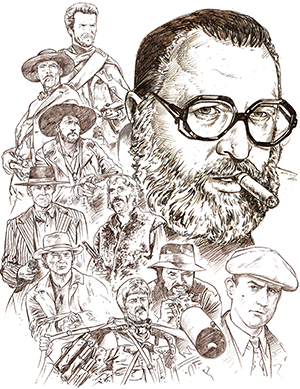
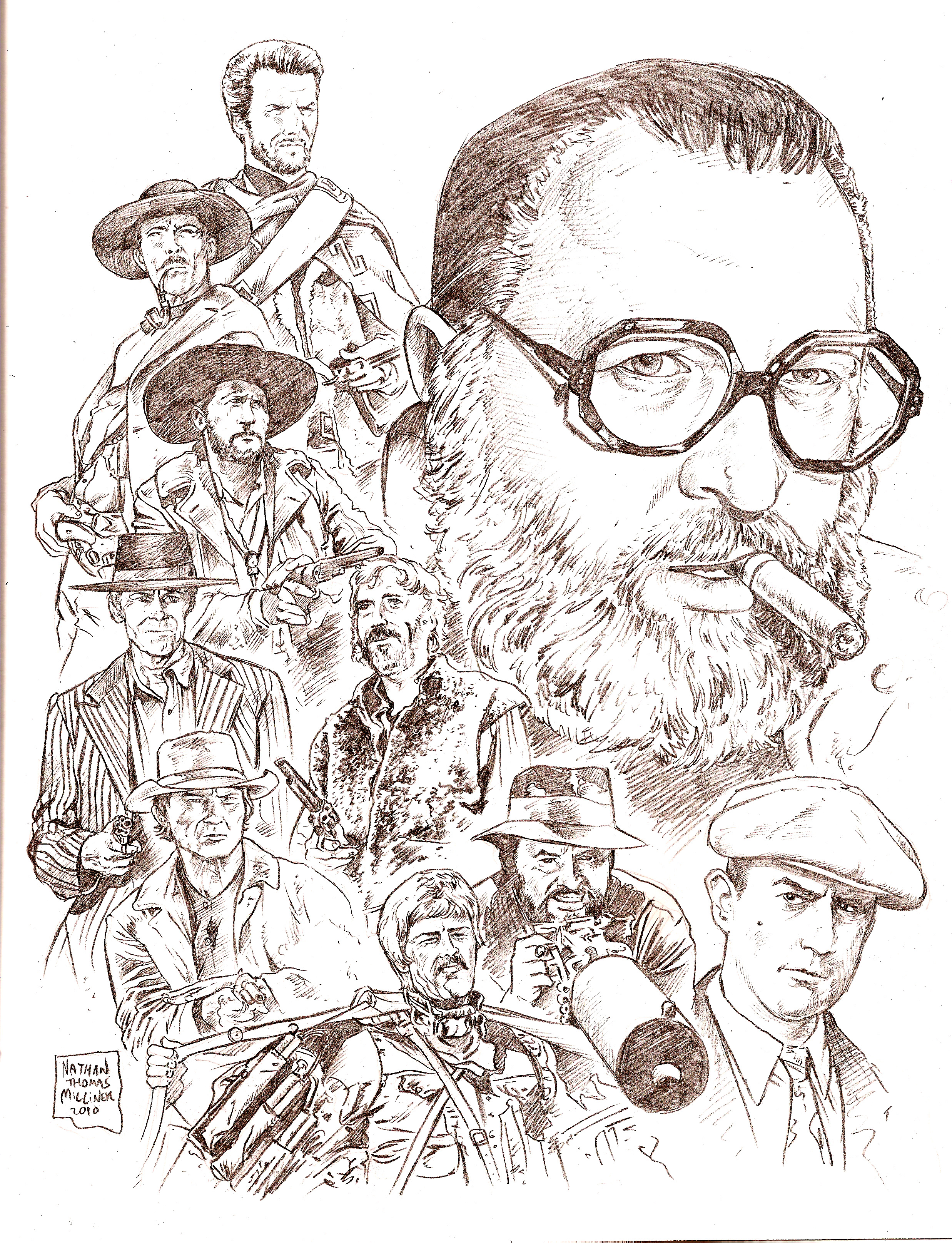
Sergio Leone [lee-oh-nee] (1929 – 1989) was an Italian film director, producer and screenwriter most associated with the ‘Spaghetti Western’ genre. Leone’s film-making style includes juxtaposing extreme close-up shots with lengthy long shots. His movies include ‘The Last Days of Pompeii,’ ‘The Colossus of Rhodes,’ the Dollars Trilogy (‘A Fistful of Dollars,’ ‘For a Few Dollars More,’ and ‘The Good, the Bad and the Ugly’), Once ‘Upon a Time in the West,’ ‘Duck, You Sucker!’, and ‘Once Upon a Time in America.’
Born in Rome, Leone was the son of the cinema pioneer Vincenzo Leone (known as director Roberto Roberti) and the silent film actress Edvige Valcarenghi (Bice Waleran). During his schooldays, Leone was a classmate of his later musical collaborator Ennio Morricone for a time. After watching his father work on film sets, Leone began his own career in the film industry at the age of 18 after dropping out of law studies at the university.
read more »
Posted in Art, Money, World |
Leave a Comment »
March 17, 2012
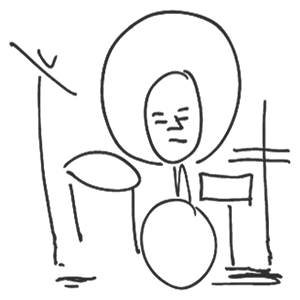
Okayplayer is an online hip-hop and alternative music website and community. The group was co-founded by The Roots’ drummer Ahmir ‘Questlove’ Thompson as a loose musical collective in 1987, and evolved into an online community in 1999. In 2004, Questlove launched Okayplayer Records as a spin-off of the community, in partnership with Decon. The community is made up of recording artists (who keep their official internet homes there) and message board users. Artists and staff, as well as those who post to the site’s message board, call themselves ‘okayplayers’ or ‘OKPs.’
Okayplayer has been identified as an online community that allows people to bypass traditional media. An example of such a collaboration fostered by the site is the Foreign Exchange project, with Little Brother’s vocalist Phonte Coleman and Dutch producer named Nicolay meeting on Okayplayer, and making an album together by sending tracks and verses back and forth over the Internet. The album, ‘Connected,’ was released before the pair had met in real life. Okayplayer organize regular tours and an annual ‘Roots Picnic’ all day event. Okayplayer artists include: The Roots, Mos Def, Lupe Fiasco, Common, Erykah Badu, India.Arie, and RJD2.
Posted in Art, Technology |
Leave a Comment »


 The Daily Omnivore