November 21, 2011

In body modification, an implant is a device placed under the human skin for decorative purposes. Such implants may be subdermal (beneath the skin) or transdermal (partially below and partially above the skin). In the context of body modification, some may consider injections of silicone and other substances a type of implant as well. Some types of implants may be performed by doctors or other medical professionals, while others are performed by body modification artists.
Examples include collarbone piercing, deep chest piercing, eyeball implants, flesh stapling, genital beading, magnetic implants, and scrotal implants. A clavicle or collarbone piercing is a very deep piercing that passes beneath the collarbone, and therefore enters the body cavity. These are highly prone to rejection as the collarbone placement is a high movement area.
read more »
Posted in Art, Health, Technology |
Leave a Comment »
November 21, 2011
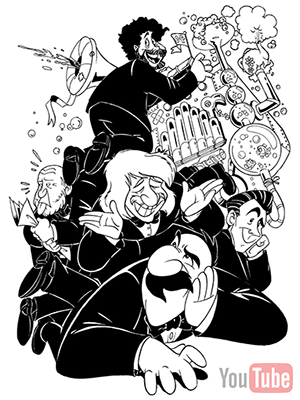
Les Luthiers [loo-tee-ers] is an Argentine comedy-musical group, very popular also in several other Spanish-speaking countries. They were formed in 1967 by Gerardo Masana, during the height of a period of very intense Choral Music activity in Argentina’s state universities.
Their outstanding characteristic is the home-made musical instruments (hence the name luthiers, French for ‘musical instrument maker’), some of them extremely sophisticated, which they skillfully employ in their recitals to produce music and texts full of high class and refined humor.
read more »
Posted in Art, Humor, World |
1 Comment »
November 21, 2011
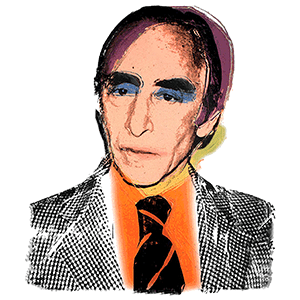
Leo Castelli (1907 – 1999), born Leo Krausz, was an American art dealer whose gallery showcased cutting edge Contemporary art for five decades. Castelli showed Surrealism, Abstract Expressionism, Neo-Dada, Pop Art, Op Art, Color field painting, Hard-edge painting, Lyrical Abstraction, Minimal Art, Conceptual Art, and Neo-expressionism, among other movements. Leo Castelli was born at Trieste, of Italian and Austro-Hungarian Jewish origin. Castelli’s first American curatorial effort was the famous Ninth Street Show of 1951, a seminal event of Abstract Expressionism.
In 1957, he opened the Leo Castelli Gallery in a townhouse on 77th Street between Madison and Fifth Avenues. Initially the gallery showcased European Surrealism, Wassily Kandinsky, and other European artists. However the gallery also exhibited American Abstract Expressionism. Jackson Pollock and Willem de Kooning were some artists who were included in group shows. In 1958, Robert Rauschenberg and Jasper Johns joined the gallery, signaling a turning away from Abstract Expressionism, towards Pop Art, Minimalism and Conceptual Art. From the early 1960s through the late 70s, Frank Stella, Roy Lichtenstein, Andy Warhol, and Ed Ruscha joined the stable of Castelli artists.
Posted in Art, Money |
Leave a Comment »
November 20, 2011
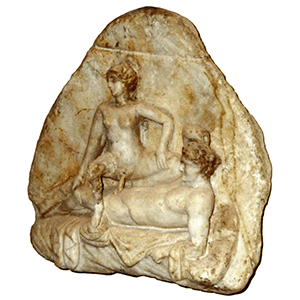
The term Secret Museum (Gabinetto Segreto) principally refers to the collection of erotic or sexually explicit finds from Pompeii, held in separate galleries in the Naples National Archaeological Museum, the former Museo Borbonico. The British Museum also contained secret rooms containing erotica. Throughout ancient Pompeii, erotic frescoes, depictions of the god Priapus, sexually explicit symbols, inscriptions, and even household items (such as phallic oil lamps) were found.
Ancient Roman culture had a different sense of shame for sexuality, and viewed sexually explicit material very differently to most present-day cultures. Ideas about obscenity developed from the 18th century to the present day into a modern concept of pornography.
read more »
Posted in Art, Sex, World |
Leave a Comment »
November 19, 2011

A lip dub is a type of music video that combines lip synching and audio dubbing. It is made by filming individuals or a group of people lip synching while listening to a song or any recorded audio then dubbing over it in post editing with the original audio of the song. There is often some form of mobile audio device used such as an MP3 player. Often they look like simple music videos, although many involve a lot of preparation and production. Lip dubs can be done in a single unedited shot that often travels through different rooms and situations within a building. They have become popular with the advent of mass participatory video content sites like YouTube.
Jake Lodwick, the co-founder of video sharing website Vimeo, coined the term in 2006, in a video entitled ‘Lip Dubbing: Endless Dream.’ In the video’s description, he wrote, ‘I walked around with a song playing in my headphones, and recorded myself singing. When I got home I opened it in iMovie and added an MP3 of the actual song, and synchronized it with my video. Is there a name for this? If not, I suggest ‘lip dubbing’.’ Lodwick also directed the ‘Flagpole Sitta’ ‘office lip dub’ in 2007.
Posted in Art, Humor, Technology |
Leave a Comment »
November 18, 2011


A fictional currency is some form of defined or alluded currency in works of fiction. The names of such units of currency are sometimes based on extant or historic currencies (e.g. ‘Altairian dollars’ or ‘Earth yen’) while others, such as ‘Kalganids’ in Asimov’s ‘Foundation’ series, may be wholly invented. A particularly common type, especially in science fiction, is electronically managed ‘credits.’ In some works of fiction, exchange media other than money are used. These are not currency as such, but rather nonstandard media of exchange used to avoid the difficulties of ensuring ‘double coincidence of wants’ in a barter system.
Authors have to take care when naming fictional currencies because of the associations between currency names and countries; recognizable names for currencies of the future may be used to imply how history has progressed, but would appear out of place in an entirely alien civilization. Historical fiction may need research. Writers need not explain the exact value of their fictional currencies or provide an exchange rate to modern money; they may rely on the intuitive grasp of their readers, for instance that one currency unit is probably of little value, but that millions of units will be worth a lot.
read more »
Posted in Art, Language, Money |
Leave a Comment »
November 17, 2011

A zoot suit is a suit with high-waisted, wide-legged, tight-cuffed, pegged trousers, and a long coat with wide lapels and wide padded shoulders. This style of clothing was popularized by African, Mexican, and Italian Americans during the late 1930s and the 1940s. It started during the Jazz Age in Harlem and slowly spread throughout other ethnic-neighborhoods across America. Malcolm X was known to have loved zoot suits in his early days as Detroit Red, a Harlem drug dealer, racketeer, and pimp. In Britain the bright-colored suits with velvet lapels worn by Teddy Boys (young men wearing clothes inspired by dandies) bore a slight resemblance to zoot suits in the length of the jacket. Often zoot suiters wear a felt hat with a long feather and pointy, French-style shoes. A young Malcolm X described the zoot suit as: ‘a killer-diller coat with a drape shape, reet pleats and shoulders padded like a lunatic’s cell.’ Zoot suits usually featured a watch chain dangling from the belt to the knee or below, then back to a side pocket.
The amount of material and tailoring required made them luxury items, so much so that the U.S. War Production Board said that they wasted materials that should be devoted to the World War II war effort. This extravagance, which many considered unpatriotic in wartime, was a factor in the Zoot Suit Riots, a series of riots in 1943 that erupted in Los Angeles between white sailors and Marines stationed throughout the city and Latino youths, who were recognizable by the zoot suits they favored. Wearing the oversized suit was a declaration of freedom and self-determination, even rebelliousness. The word zoot probably comes from a reduplication of suit. The creation and naming of the zoot suit have been variously attributed to Harold C. Fox, a Chicago clothier and big-band trumpeter; Louis Lettes, a Memphis tailor; and Nathan (Toddy) Elkus, a Detroit retailer. Zoot suits were initially called drapes.
Posted in Art, Money, Politics |
Leave a Comment »
November 17, 2011

Skweee is a musical style, with origin in Sweden and Finland. Skweee combines simple synth leads and basslines with funk, r’n’b or soul-like rhythms, overall rendering a stripped-down funky sound. The tracks are mostly entirely instrumental, though there are exceptions. The name Skweee was coined by Daniel Savio, one of the originators of the emerging sound. The name refers to the use of vintage synthesizers in the production process, where the aim is to ‘squeeze out’ the most interesting sounds possible.
The major outlets of skweee music are the Swedish record label Flogsta Danshall and Finnish record label Harmönia. The preferred media format of skweee enthusiasts is the 7″ vinyl record. Early releases were exclusively released in this format. More recently, however, a series 12″ vinyl records, digital releases and CD compilations have been released through these outlets as well. Skweee has during late 2008 and early 2009 started to influence the sound of dubstep. Producers such as Rusko, Gemmy, Joker, Zomby, Rustie, and Jamie Vex’d, among others, have given their take on the sound resulting in several interesting releases on the boundary between skweee and dubstep.
Posted in Art |
Leave a Comment »
November 13, 2011
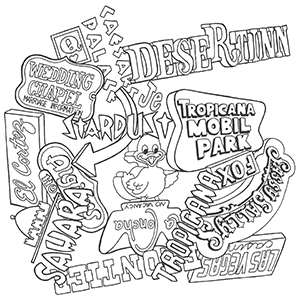
The Neon Museum in Las Vegas features signs from old casinos and other businesses displayed outdoors on over 6 acres. The museum is restoring the La Concha Motel lobby as its visitor center. For many years, the Young Electric Sign Company stored many of these old signs in their ‘boneyard.’ The signs were slowly being destroyed by exposure to the elements. The museum is restoring the signs and placing them around the Fremont Street Experience. The Neon Museum maintains twelve restored signs throughout Downtown Las Vegas. Some can be seen on a self-guided visitors walk through the Fremont Street Experience. Three others have been added in recent years to the median of Las Vegas Boulevard in front of the eventual site for the Neon Museum itself.
The Neon Museum is located on Las Vegas Boulevard and Bonanza, across the street from Cashman Center and along the Las Vegas downtown museum corridor. The boneyard preserves over 150 neon signs from the Nevada area. While the core of the collection is from the old Yesco Boneyard, private donations and loans have expanded the collection to the current size. Important historical pieces in the boneyard include the signage from the Moulin Rouge Hotel, the Stardust, Desert Inn and Caesar’s Palace as well as many others. Not just neon signage, the museum also houses fiberglass sculptures including a giant skull from the Treasure Island among others.
Posted in Art, Money, Technology |
Leave a Comment »
November 13, 2011
Young Electric Sign Company (YESCO) is a privately owned manufacturer of electric signs based in Salt Lake City. The company was founded by Thomas Young in 1920 and today has divisions and branches in 10 western states, as well as in Louisiana, Mississippi and Texas. YESCO offers a comprehensive range of services for electronic signs, including design, fabrication, installation and ongoing maintenance.
Many notable sign projects have been produced by YESCO. These include the NBC Experience globe in New York City, the historic El Capitan Theatre and Wax Museum marquees in Hollywood, the most recent incarnation of the Reno Arch and numerous icons in Las Vegas, such as Vegas Vic, the Fremont Street Experience, the Astrolabe in The Venetian and the recent Wynn Las Vegas resort sign.
read more »
Posted in Art, Money, Technology |
Leave a Comment »
November 10, 2011


A vanity label (related to the term ‘vanity press’) is an informal name given to a record label founded as a wholly or partially owned subsidiary of another, larger and better established (at least at the time of the vanity label’s founding) record label, where the subsidiary label is (at least nominally) controlled by a successful recording artist, designed to allow this artist to release music by other artists he or she admires. The parent label handles the production and distribution and funding of the vanity label, but the album is usually released with the vanity label brand name prominent. Usually, the artist/head of the vanity label is signed to the parent label, and this artist’s own recordings will be released under the vanity label’s brand name.
Creating a vanity label can be an attractive idea for the parent label primarily as a ‘perk’ to keep a successful artist on the label’s roster happy, providing an ego boost and a venue to bring fellow artists to the public’s attention. The parent label also hopes that the vanity label’s association with the famous artist will entice that artist’s audience to purchase other records on the vanity label, although only a relatively small number of new artists introduced by vanity labels have gone on to become major successes in their own right.
Posted in Art, Money |
Leave a Comment »
November 9, 2011
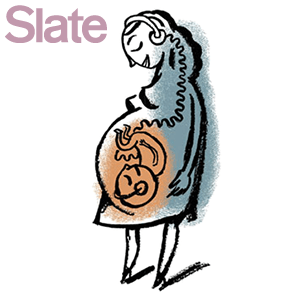
The Mozart effect can refer to: A set of research results that indicate that listening to Mozart’s music may induce a short-term improvement on the performance of certain kinds of mental tasks known as spatial-temporal reasoning; popularized versions of the theory, which suggest that ‘listening to Mozart makes you smarter, or that early childhood exposure to classical music has a beneficial effect on mental development. The term was first coined by Alfred A. Tomatis who used Mozart’s music as the listening stimulus in his work attempting to cure a variety of disorders.
The approach has been popularized in a book by Don Campbell, and is based on an experiment published in ‘Nature’ suggesting that listening to Mozart temporarily boosted scores on one portion of the IQ test. As a result, the Governor of Georgia, Zell Miller, proposed a budget to provide every child born in Georgia with a CD of classical music. Subsequent studies have had limited success duplicating the Mozart effect, and its validity is debated.
Posted in Art, Education, Health |
Leave a Comment »


 The Daily Omnivore