November 17, 2011

A zoot suit is a suit with high-waisted, wide-legged, tight-cuffed, pegged trousers, and a long coat with wide lapels and wide padded shoulders. This style of clothing was popularized by African, Mexican, and Italian Americans during the late 1930s and the 1940s. It started during the Jazz Age in Harlem and slowly spread throughout other ethnic-neighborhoods across America. Malcolm X was known to have loved zoot suits in his early days as Detroit Red, a Harlem drug dealer, racketeer, and pimp. In Britain the bright-colored suits with velvet lapels worn by Teddy Boys (young men wearing clothes inspired by dandies) bore a slight resemblance to zoot suits in the length of the jacket. Often zoot suiters wear a felt hat with a long feather and pointy, French-style shoes. A young Malcolm X described the zoot suit as: ‘a killer-diller coat with a drape shape, reet pleats and shoulders padded like a lunatic’s cell.’ Zoot suits usually featured a watch chain dangling from the belt to the knee or below, then back to a side pocket.
The amount of material and tailoring required made them luxury items, so much so that the U.S. War Production Board said that they wasted materials that should be devoted to the World War II war effort. This extravagance, which many considered unpatriotic in wartime, was a factor in the Zoot Suit Riots, a series of riots in 1943 that erupted in Los Angeles between white sailors and Marines stationed throughout the city and Latino youths, who were recognizable by the zoot suits they favored. Wearing the oversized suit was a declaration of freedom and self-determination, even rebelliousness. The word zoot probably comes from a reduplication of suit. The creation and naming of the zoot suit have been variously attributed to Harold C. Fox, a Chicago clothier and big-band trumpeter; Louis Lettes, a Memphis tailor; and Nathan (Toddy) Elkus, a Detroit retailer. Zoot suits were initially called drapes.
Posted in Art, Money, Politics |
Leave a Comment »
November 17, 2011

Skweee is a musical style, with origin in Sweden and Finland. Skweee combines simple synth leads and basslines with funk, r’n’b or soul-like rhythms, overall rendering a stripped-down funky sound. The tracks are mostly entirely instrumental, though there are exceptions. The name Skweee was coined by Daniel Savio, one of the originators of the emerging sound. The name refers to the use of vintage synthesizers in the production process, where the aim is to ‘squeeze out’ the most interesting sounds possible.
The major outlets of skweee music are the Swedish record label Flogsta Danshall and Finnish record label Harmönia. The preferred media format of skweee enthusiasts is the 7″ vinyl record. Early releases were exclusively released in this format. More recently, however, a series 12″ vinyl records, digital releases and CD compilations have been released through these outlets as well. Skweee has during late 2008 and early 2009 started to influence the sound of dubstep. Producers such as Rusko, Gemmy, Joker, Zomby, Rustie, and Jamie Vex’d, among others, have given their take on the sound resulting in several interesting releases on the boundary between skweee and dubstep.
Posted in Art |
Leave a Comment »
November 13, 2011
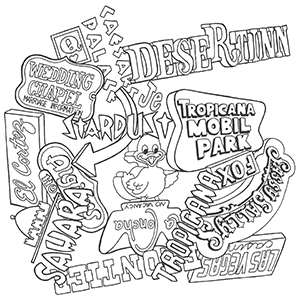
The Neon Museum in Las Vegas features signs from old casinos and other businesses displayed outdoors on over 6 acres. The museum is restoring the La Concha Motel lobby as its visitor center. For many years, the Young Electric Sign Company stored many of these old signs in their ‘boneyard.’ The signs were slowly being destroyed by exposure to the elements. The museum is restoring the signs and placing them around the Fremont Street Experience. The Neon Museum maintains twelve restored signs throughout Downtown Las Vegas. Some can be seen on a self-guided visitors walk through the Fremont Street Experience. Three others have been added in recent years to the median of Las Vegas Boulevard in front of the eventual site for the Neon Museum itself.
The Neon Museum is located on Las Vegas Boulevard and Bonanza, across the street from Cashman Center and along the Las Vegas downtown museum corridor. The boneyard preserves over 150 neon signs from the Nevada area. While the core of the collection is from the old Yesco Boneyard, private donations and loans have expanded the collection to the current size. Important historical pieces in the boneyard include the signage from the Moulin Rouge Hotel, the Stardust, Desert Inn and Caesar’s Palace as well as many others. Not just neon signage, the museum also houses fiberglass sculptures including a giant skull from the Treasure Island among others.
Posted in Art, Money, Technology |
Leave a Comment »
November 13, 2011

Young Electric Sign Company (YESCO) is a privately owned manufacturer of electric signs based in Salt Lake City. The company was founded by Thomas Young in 1920 and today has divisions and branches in 10 western states, as well as in Louisiana, Mississippi and Texas. YESCO offers a comprehensive range of services for electronic signs, including design, fabrication, installation and ongoing maintenance.
Many notable sign projects have been produced by YESCO. These include the NBC Experience globe in New York City, the historic El Capitan Theatre and Wax Museum marquees in Hollywood, the most recent incarnation of the Reno Arch and numerous icons in Las Vegas, such as Vegas Vic, the Fremont Street Experience, the Astrolabe in The Venetian and the recent Wynn Las Vegas resort sign.
read more »
Posted in Art, Money, Technology |
Leave a Comment »
November 10, 2011


A vanity label (related to the term ‘vanity press’) is an informal name given to a record label founded as a wholly or partially owned subsidiary of another, larger and better established (at least at the time of the vanity label’s founding) record label, where the subsidiary label is (at least nominally) controlled by a successful recording artist, designed to allow this artist to release music by other artists he or she admires. The parent label handles the production and distribution and funding of the vanity label, but the album is usually released with the vanity label brand name prominent. Usually, the artist/head of the vanity label is signed to the parent label, and this artist’s own recordings will be released under the vanity label’s brand name.
Creating a vanity label can be an attractive idea for the parent label primarily as a ‘perk’ to keep a successful artist on the label’s roster happy, providing an ego boost and a venue to bring fellow artists to the public’s attention. The parent label also hopes that the vanity label’s association with the famous artist will entice that artist’s audience to purchase other records on the vanity label, although only a relatively small number of new artists introduced by vanity labels have gone on to become major successes in their own right.
Posted in Art, Money |
Leave a Comment »
November 9, 2011
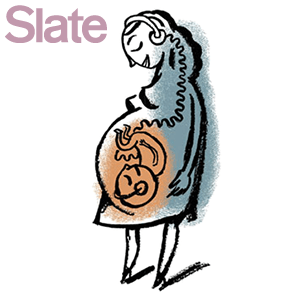
The Mozart effect can refer to: A set of research results that indicate that listening to Mozart’s music may induce a short-term improvement on the performance of certain kinds of mental tasks known as spatial-temporal reasoning; popularized versions of the theory, which suggest that ‘listening to Mozart makes you smarter, or that early childhood exposure to classical music has a beneficial effect on mental development. The term was first coined by Alfred A. Tomatis who used Mozart’s music as the listening stimulus in his work attempting to cure a variety of disorders.
The approach has been popularized in a book by Don Campbell, and is based on an experiment published in ‘Nature’ suggesting that listening to Mozart temporarily boosted scores on one portion of the IQ test. As a result, the Governor of Georgia, Zell Miller, proposed a budget to provide every child born in Georgia with a CD of classical music. Subsequent studies have had limited success duplicating the Mozart effect, and its validity is debated.
Posted in Art, Education, Health |
Leave a Comment »
November 9, 2011

‘Maus: A Survivor’s Tale,’ by Art Spiegelman, is a biography of the author’s father, Vladek Spiegelman, a Polish Jew and Holocaust survivor. It alternates between descriptions of Vladek’s life in Poland before and during the Second World War and Vladek’s later life in the Rego Park neighborhood of New York City.
The work is a graphic narrative in which Jews are depicted as mice, while Germans are depicted as cats. It is the only comic book ever to have won a Pulitzer Prize.
read more »
Posted in Art, Language, War |
Leave a Comment »
November 9, 2011

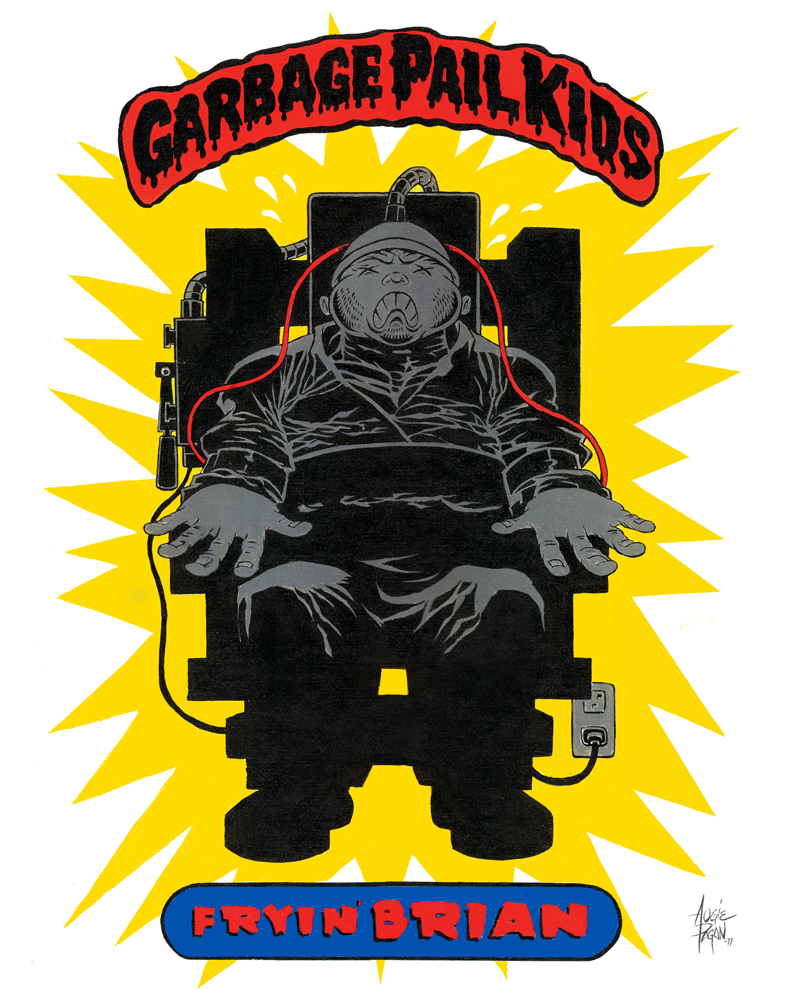
Garbage Pail Kids (also known as ‘Basuritas’ in Latin America, ‘Gang do Lixo’ in Brazil, ‘Sgorbions’ in Italy, ‘Les Crados’ in France and ‘Die total kaputten Kids’ in Germany) is a series of trading cards produced by the Topps Company, originally released in 1985 and designed to parody the Cabbage Patch Kids dolls, which were immensely popular at the time.
Each sticker card features a character with a comical abnormality and/or suffering some terrible fate, and punning name, such as ‘Glandular Angela’ or ‘Half-Nelson.’ Fifteen series of regular trading cards were released in the United States, with various sets released in other countries.
read more »
Posted in Art, Humor, Language |
Leave a Comment »
November 9, 2011
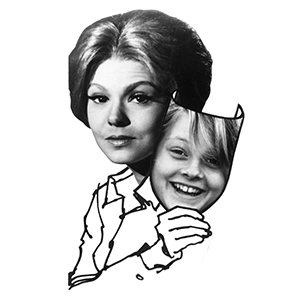
A body swap is a storytelling device seen in a variety of fiction, most often in television shows and movies, in which two people (or beings) exchange minds and end up in each other’s bodies. Alternatively, their minds may stay where they are as their bodies adjust. The two people usually keep their voices in cartoons, for purposes of knowing who is who. There are three distinct types of body swapping. Switches can be caused by magic items such as amulets, heartfelt wishes, or just strange quirks of the universe. The switches typically reverse after the subjects have expanded their world views, gained a new appreciation for each other’s troubles by literally ‘walking in another’s shoe’ and/or caused sufficient amounts of farce. Notable examples include the books ‘Vice Versa’ (1882) and ‘Freaky Friday’ (1972), as well as the film versions of both.
Switches accomplished by technology, exempting gadgets advanced sufficiently to appear as magic, are the fare of mad scientists. Body-swapping devices are characterized by highly experimental status, straps, helmets with complicated cables that run to a central system and a tendency to direly malfunction before their effects can be reversed. Those without such means may resort to brain transplants. Such experiments can have overtones of horror; evil mad scientists seldom use willing test subjects.
Posted in Art, Humor, Language |
Leave a Comment »
November 3, 2011
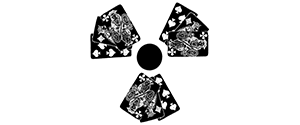

The Magic Castle in Hollywood is a nightclub for magicians and magic enthusiasts, as well as the clubhouse for the Academy of Magical Arts. It bills itself as ‘the most unusual private club in the world.’ The facility is a performance venue, restaurant and private club. A typical evening features several magic and sometimes variety arts performances, as well as a full service dining room and several bars in a nightclub atmosphere. A dress code of formal party attire is strictly enforced. Entry is only allowed to members and their guests, although low-cost, 30-day memberships are openly offered to the general public, with the savings in door charges often being sufficient to cover the membership fee.
The lobby of the Castle has no visible doors to the interior, and visitors must say a secret phrase to a sculpture of an owl to gain access, exposing the entrance to the club. Nightly, five different magic performances are showcased in three different theaters, with additional performances added on weekends. Magicians perform in several different theaters, including the intimate Close-Up Gallery, a larger Parlor of Prestidigitation, and stage illusions in the Palace of Mystery. Informal performance areas around the five bars give magician members the space for impromptu magic for guests and other patrons. In the music room, a piano is played by invisible ‘Irma,’ the Castle’s ‘resident ghost,’ who takes requests.
Posted in Art, Humor |
1 Comment »
November 1, 2011


The Fifth Beatle is an informal title that various commentators in the press and entertainment industry have applied to persons who were at one point a member of The Beatles, or who had a strong association with the ‘Fab Four.’ The ‘Fifth Beatle’ claims started appearing in the press immediately upon the band’s sensational rise to global fame in 1963 as the most famous quartet in pop culture. At The Beatles’ 1988 induction into the Rock and Roll Hall of Fame, George Harrison at one point stated that there were only two ‘fifth Beatles’: Derek Taylor and Neil Aspinall (the Beatles’ public relations manager and road manager-turned-business-executive, respectively). In a 1997 BBC interview, Paul McCartney stated: ‘If anyone was the fifth Beatle, it was [Beatles’ manager] Brian Epstein.’
The term is not used to indicate the chronology of band members joining the group. Pete Best joined Lennon, McCartney, Stuart Sutcliffe and Harrison on the eve of their Hamburg sojourn, the five using the monikers, ‘The Silver Beetles’ and ‘The Silver Beatles’ (they would experiment with ‘The Beat Brothers’ and ultimately ‘The Beatles’ while in Hamburg with Best).
read more »
Posted in Art, Language |
Leave a Comment »
October 31, 2011
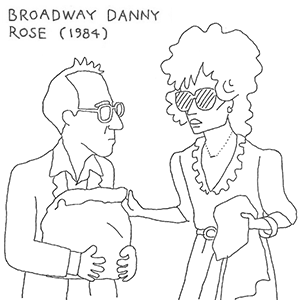
Beard is a slang term describing a person who is used, knowingly or unknowingly, as a date, romantic partner (Boyfriend or Girlfriend), or spouse either to conceal infidelity or to conceal one’s sexual orientation.
The term can be used in heterosexual and homosexual contexts, but with increasing acceptance of gay culture, references to beards are seen in mainstream television and movies as well as other entertainment.
read more »
Posted in Art, Language, Sex |
Leave a Comment »