November 10, 2011


A vanity label (related to the term ‘vanity press’) is an informal name given to a record label founded as a wholly or partially owned subsidiary of another, larger and better established (at least at the time of the vanity label’s founding) record label, where the subsidiary label is (at least nominally) controlled by a successful recording artist, designed to allow this artist to release music by other artists he or she admires. The parent label handles the production and distribution and funding of the vanity label, but the album is usually released with the vanity label brand name prominent. Usually, the artist/head of the vanity label is signed to the parent label, and this artist’s own recordings will be released under the vanity label’s brand name.
Creating a vanity label can be an attractive idea for the parent label primarily as a ‘perk’ to keep a successful artist on the label’s roster happy, providing an ego boost and a venue to bring fellow artists to the public’s attention. The parent label also hopes that the vanity label’s association with the famous artist will entice that artist’s audience to purchase other records on the vanity label, although only a relatively small number of new artists introduced by vanity labels have gone on to become major successes in their own right.
Posted in Art, Money |
Leave a Comment »
November 9, 2011
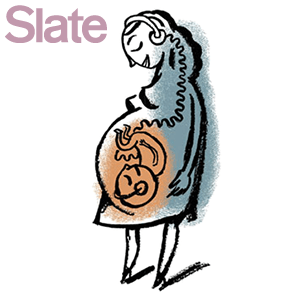
The Mozart effect can refer to: A set of research results that indicate that listening to Mozart’s music may induce a short-term improvement on the performance of certain kinds of mental tasks known as spatial-temporal reasoning; popularized versions of the theory, which suggest that ‘listening to Mozart makes you smarter, or that early childhood exposure to classical music has a beneficial effect on mental development. The term was first coined by Alfred A. Tomatis who used Mozart’s music as the listening stimulus in his work attempting to cure a variety of disorders.
The approach has been popularized in a book by Don Campbell, and is based on an experiment published in ‘Nature’ suggesting that listening to Mozart temporarily boosted scores on one portion of the IQ test. As a result, the Governor of Georgia, Zell Miller, proposed a budget to provide every child born in Georgia with a CD of classical music. Subsequent studies have had limited success duplicating the Mozart effect, and its validity is debated.
Posted in Art, Education, Health |
Leave a Comment »
November 9, 2011

‘Maus: A Survivor’s Tale,’ by Art Spiegelman, is a biography of the author’s father, Vladek Spiegelman, a Polish Jew and Holocaust survivor. It alternates between descriptions of Vladek’s life in Poland before and during the Second World War and Vladek’s later life in the Rego Park neighborhood of New York City.
The work is a graphic narrative in which Jews are depicted as mice, while Germans are depicted as cats. It is the only comic book ever to have won a Pulitzer Prize.
read more »
Posted in Art, Language, War |
Leave a Comment »
November 9, 2011

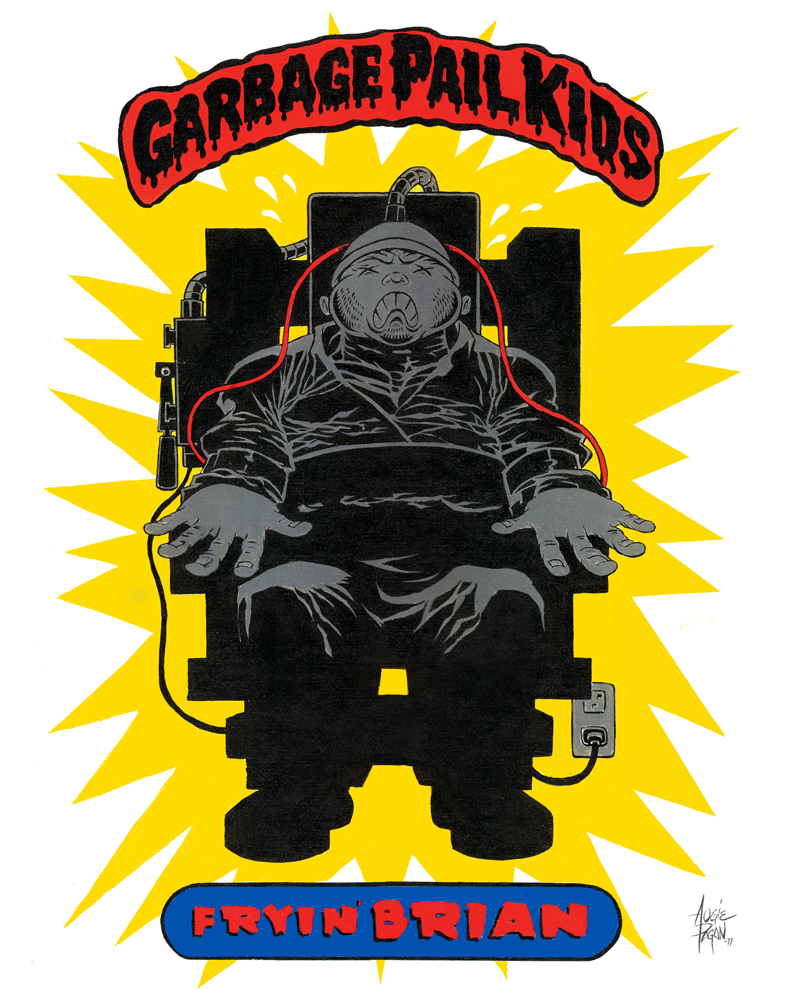
Garbage Pail Kids (also known as ‘Basuritas’ in Latin America, ‘Gang do Lixo’ in Brazil, ‘Sgorbions’ in Italy, ‘Les Crados’ in France and ‘Die total kaputten Kids’ in Germany) is a series of trading cards produced by the Topps Company, originally released in 1985 and designed to parody the Cabbage Patch Kids dolls, which were immensely popular at the time.
Each sticker card features a character with a comical abnormality and/or suffering some terrible fate, and punning name, such as ‘Glandular Angela’ or ‘Half-Nelson.’ Fifteen series of regular trading cards were released in the United States, with various sets released in other countries.
read more »
Posted in Art, Humor, Language |
Leave a Comment »
November 9, 2011
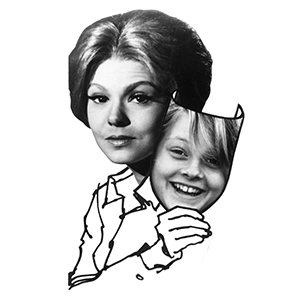
A body swap is a storytelling device seen in a variety of fiction, most often in television shows and movies, in which two people (or beings) exchange minds and end up in each other’s bodies. Alternatively, their minds may stay where they are as their bodies adjust. The two people usually keep their voices in cartoons, for purposes of knowing who is who. There are three distinct types of body swapping. Switches can be caused by magic items such as amulets, heartfelt wishes, or just strange quirks of the universe. The switches typically reverse after the subjects have expanded their world views, gained a new appreciation for each other’s troubles by literally ‘walking in another’s shoe’ and/or caused sufficient amounts of farce. Notable examples include the books ‘Vice Versa’ (1882) and ‘Freaky Friday’ (1972), as well as the film versions of both.
Switches accomplished by technology, exempting gadgets advanced sufficiently to appear as magic, are the fare of mad scientists. Body-swapping devices are characterized by highly experimental status, straps, helmets with complicated cables that run to a central system and a tendency to direly malfunction before their effects can be reversed. Those without such means may resort to brain transplants. Such experiments can have overtones of horror; evil mad scientists seldom use willing test subjects.
Posted in Art, Humor, Language |
Leave a Comment »
November 3, 2011


The Magic Castle in Hollywood is a nightclub for magicians and magic enthusiasts, as well as the clubhouse for the Academy of Magical Arts. It bills itself as ‘the most unusual private club in the world.’ The facility is a performance venue, restaurant and private club. A typical evening features several magic and sometimes variety arts performances, as well as a full service dining room and several bars in a nightclub atmosphere. A dress code of formal party attire is strictly enforced. Entry is only allowed to members and their guests, although low-cost, 30-day memberships are openly offered to the general public, with the savings in door charges often being sufficient to cover the membership fee.
The lobby of the Castle has no visible doors to the interior, and visitors must say a secret phrase to a sculpture of an owl to gain access, exposing the entrance to the club. Nightly, five different magic performances are showcased in three different theaters, with additional performances added on weekends. Magicians perform in several different theaters, including the intimate Close-Up Gallery, a larger Parlor of Prestidigitation, and stage illusions in the Palace of Mystery. Informal performance areas around the five bars give magician members the space for impromptu magic for guests and other patrons. In the music room, a piano is played by invisible ‘Irma,’ the Castle’s ‘resident ghost,’ who takes requests.
Posted in Art, Humor |
1 Comment »
November 1, 2011


The Fifth Beatle is an informal title that various commentators in the press and entertainment industry have applied to persons who were at one point a member of The Beatles, or who had a strong association with the ‘Fab Four.’ The ‘Fifth Beatle’ claims started appearing in the press immediately upon the band’s sensational rise to global fame in 1963 as the most famous quartet in pop culture. At The Beatles’ 1988 induction into the Rock and Roll Hall of Fame, George Harrison at one point stated that there were only two ‘fifth Beatles’: Derek Taylor and Neil Aspinall (the Beatles’ public relations manager and road manager-turned-business-executive, respectively). In a 1997 BBC interview, Paul McCartney stated: ‘If anyone was the fifth Beatle, it was [Beatles’ manager] Brian Epstein.’
The term is not used to indicate the chronology of band members joining the group. Pete Best joined Lennon, McCartney, Stuart Sutcliffe and Harrison on the eve of their Hamburg sojourn, the five using the monikers, ‘The Silver Beetles’ and ‘The Silver Beatles’ (they would experiment with ‘The Beat Brothers’ and ultimately ‘The Beatles’ while in Hamburg with Best).
read more »
Posted in Art, Language |
Leave a Comment »
October 31, 2011
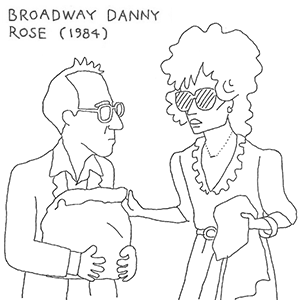
Beard is a slang term describing a person who is used, knowingly or unknowingly, as a date, romantic partner (Boyfriend or Girlfriend), or spouse either to conceal infidelity or to conceal one’s sexual orientation.
The term can be used in heterosexual and homosexual contexts, but with increasing acceptance of gay culture, references to beards are seen in mainstream television and movies as well as other entertainment.
read more »
Posted in Art, Language, Sex |
Leave a Comment »
October 29, 2011
Mickey Hart (b. 1943), real name Michael Steven Hartman, is an American percussionist and musicologist. He is best known as one of the two drummers of the rock band the Grateful Dead. He and fellow Dead drummer Bill Kreutzmann earned the nickname ‘the rhythm devils.’ Before joining the Grateful Dead, Hart and his father, Leonard Hart, a champion rudimental drummer, owned and operated Hart Music, selling drums and musical instruments in San Carlos, California. Hart joined the Grateful Dead in 1967, and left in 1971 when he extricated himself from the band, due to conflict between band management and Mickey’s father. During his sabbatical, in 1972, he recorded the album ‘Rolling Thunder.’ He returned to the Dead in 1974, and remained with the group until their official dissolution in 1995. Collaboration with the remaining members of the Grateful Dead continues, under the band name The Dead.
Alongside his work with the Grateful Dead, Mickey Hart has flourished as a solo artist, percussionist, and the author of several books. In these endeavors he has pursued a lifelong interest in ethnomusicology and in world music. His travels and his interest in all things percussion-related led him to collect percussion instruments, and to collaborate with percussion masters the world over.
read more »
Posted in Art, Health, World |
1 Comment »
October 28, 2011

Comprachicos is a compound Spanish neologism meaning ‘child-buyers,’ which was coined by Victor Hugo in his novel ‘The Man Who Laughs’ (1869). It refers to various groups in folklore who were said to change the physical appearance of human beings by manipulating growing children, in a similar way to the horticultural method of bonsai – that is, deliberate mutilation.
The most common methods said to be used in this practice included stunting children’s growth by physical restraint, muzzling their faces to deform them, slitting their eyes, dislocating their joints, and malforming their bones. The resulting human monsters made their living as mountebanks (con artists and hustlers) or were sold to lords and ladies to be used as pages or court jester.
read more »
Posted in Art, Language |
Leave a Comment »
October 28, 2011

After consuming large amounts of sugar or caffeine, Beavis sometimes undergoes a radical personality change, or psychotic break. He will raise his forearms in a 90-degree angle next to his chest, pull his shirt over his head, and then begin to yell or scream erratically, producing a stream of gibberish and strange noises, his eyes wide. This is an alter-ego named ‘Cornholio,’ a normally dormant persona. Cornholio tends to wander aimlessly while reciting ‘I am the Great Cornholio! I need TP for my bunghole!’ in an odd faux-Spanish accent. Sometimes Beavis will momentarily talk normally before resuming the persona of Cornholio. Once his Cornholio episode is over, Beavis usually has no memory of what happened.
In the guise of Cornholio, Beavis becomes a successful beat poet (Buttniks), and in ‘Vaya Con Cornholio’ he is deported to Mexico after wrongfully being subjected to immigration detention by an agent of the INS. During his detention the agent and his superior attempt to make sense of the gibberish that is Cornholio, going so far as to look up the definition of ‘bunghole.’ In that same episode, he claims to be from Lake Titicaca, but when asked where it was, he responded with ‘Nicaragua,’ despite the fact that Lake Titicaca is in Peru/Bolivia.
Posted in Art, Humor |
1 Comment »
October 26, 2011

Ubik [ew-bik] is a 1969 science fiction novel by Philip K. Dick. It has been described as ‘a deeply unsettling existential horror story, a nightmare you’ll never be sure you’ve woken up from.’ The novel takes place in the ‘North American Confederation’ of 1992, wherein technology has advanced to the extent of permitting civilians to reach the Moon and psi phenomena are common. The protagonist is Joe Chip, a debt-ridden technician for Glen Runciter’s ‘prudence organization,’ which employs people with the ability to block certain psychic powers (as in the case of an anti-telepath, who can prevent a telepath from reading a client’s mind) to enforce privacy by request. Runciter runs the company with the assistance of his deceased wife Ella, who is kept in a state of ‘half-life,’ a form of cryonic suspension that gives the deceased person limited consciousness and communication ability. In the novel Ubiq, a product whose name is derived from the word ‘ubiquity,’ has the property of preserving people who are in half-life.
Dick’s former wife Tessa remarked that ‘Ubik is a metaphor for God. Ubik is all-powerful and all-knowing, and Ubik is everywhere. The spray can is only a form that Ubik takes to make it easy for people to understand it and use it. It is not the substance inside the can that helps them, but rather their faith in the promise that it will help them.’ She also interpreted the ending by writing, ‘Many readers have puzzled over the ending of Ubik, when Glen Runciter finds a Joe Chip coin in his pocket. [It] is meant to tell you that we can’t be sure of anything in the world that we call ‘reality.’ It is possible that they are all dead and in cold pac or that the half-life world can affect the full-life world. It is also possible that they are all alive and dreaming.’
Posted in Art, Language, Technology |
Leave a Comment »


 The Daily Omnivore