October 21, 2011

Action Comics #1 (June 1938) features the first appearance of Jerry Siegel/Joe Shuster creation Superman. Published on April 18, 1938 by National Allied Publications, a corporate predecessor of DC Comics, it is considered the first true superhero comic; and though today ‘Action Comics’ is a monthly title devoted to Superman, it began, like many early comics, as an anthology. Copies have sold at auction for $1.5 million.
The first issue had a print run of 200,000 copies. Jerry Siegel and Joe Shuster were paid $10 per page, for a total of $130 for their work on this issue. They effectively signed away millions in future rights and royalties payments. Starting in 1978, Siegel and Shuster were provided with a $20,000 a month annuity which was later raised to $30,000. Liebowitz would later say that selecting Superman to run in Action Comics #1 was ‘pure accident’ based on deadline pressure and that he selected a ‘thrilling’ cover, depicting Superman lifting a car over his head. It has been compared ‘Hercules Clubs the Hydra’ by Antonio del Pollaiolo.
read more »
Posted in Art, Language, Money |
Leave a Comment »
October 21, 2011

Blake Snyder (1957 – 2009) was an American screenwriter based in Los Angeles, who became one of the most popular writing mentors in the film industry. The author of three books on screenwriting and story structure, Snyder led international seminars and workshops for writers in various disciplines, as well as consultation sessions for some of Hollywood’s largest studios. His nonfiction book ‘Save the Cat!
The Last Book on Screenwriting You’ll Ever Need’ was written in a no-nonsense and conversational tone, which has resonated with both seasoned and novice screenwriters. The title is a term coined by Snyder and describes the scene where the audience meets the hero of a movie for the first time. The hero does something nice — e.g. saving a cat—that makes the audience like the hero and root for him. According to Snyder, it is a simple scene that helps the audience invest themselves in the character and the story, but is often lacking in many movies.
read more »
Posted in Art, Language, Money |
Leave a Comment »
October 21, 2011

In a monomyth, (the theory that all myths are the same story) the hero begins in the ordinary world, and receives a call to enter an unknown world of strange powers and events. The hero who accepts the call to enter this strange world must face tasks and trials, either alone or with assistance. In the most intense versions of the narrative, the hero must survive a severe challenge, often with help. If the hero survives, he may achieve a great gift or ‘boon.’ The hero must then decide whether to return to the ordinary world with this boon. If the hero does decide to return, he or she often faces challenges on the return journey. If the hero returns successfully, the boon or gift may be used to improve the world. The stories of Osiris, Prometheus, Moses, and Buddha, for example, follow this structure closely.
Campbell describes 17 stages or steps along this journey. Very few myths contain all 17 stages—some myths contain many of the stages, while others contain only a few; some myths may focus on only one of the stages, while other myths may deal with the stages in a somewhat different order. These 17 stages may be organized in a number of ways, including division into three sections: ‘Departure’ (sometimes called ‘Separation’), the hero’s adventure prior to the quest; ‘Initiation,’ the hero’s many adventures along the way; and ‘Return,’ the hero’s return home with knowledge and powers acquired on the journey.
read more »
Posted in Art, Language, Philosophy |
Leave a Comment »
October 21, 2011
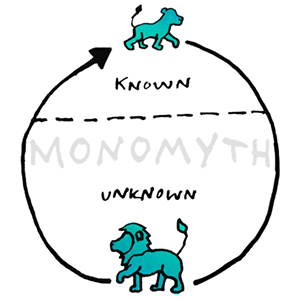
The Hero with a Thousand Faces (first published in 1949) is a non-fiction book, and seminal work of comparative mythology by Joseph Campbell. In this publication, Campbell discusses his theory of the journey of the archetypal hero found in world mythologies. Since publication, Campbell’s theory has been consciously applied by a wide variety of modern writers and artists. The best known is perhaps George Lucas, who has acknowledged a debt to Campbell regarding the stories of the ‘Star Wars’ films.
Campbell explores the theory that important myths from around the world which have survived for thousands of years all share a fundamental structure, which Campbell called the monomyth and ‘the hero’s journey. ‘In a well-known quote from the introduction to ‘The Hero with a Thousand Faces,’ Campbell summarized the monomyth: ‘A hero ventures forth from the world of common day into a region of supernatural wonder: fabulous forces are there encountered and a decisive victory is won: the hero comes back from this mysterious adventure with the power to bestow boons on his fellow man.’
read more »
Posted in Art, Language, Philosophy |
Leave a Comment »
October 19, 2011

The Rapture is a dance-punk band based in New York City. The band mixes influences from many genres including post-punk, acid house, disco, electronic music, and rock, pioneering the post-punk revival genre. The Rapture formed in 1998 by keyboardist Chris Relyea, drummer Vito Roccoforte and guitarist/vocalist Luke Jenner. In 1999 the band released its debut ‘mini-album’, ‘Mirror.’ Following this release, the band relocated to New York. They were finally joined by Matt Safer having gone through five keyboard players and two bassists in an eighteen-month period. After touring extensively for two years, the band released the six-song EP ‘Out of the Races and Onto the Tracks’ on the Sub Pop label, with the lead track featuring in the film adaptation of the Bret Easton Ellis novel ‘The Rules Of Attraction.’
The Rapture were forerunners of the post-punk revival of the early 2000s, as they mixed their early post-punk sound with electronic and dance elements via their collaboration with the celebrated New York production team DFA. Multi-instrumentalist Gabriel Andruzzi joined the band in 2002. Their first full-length record, ‘Echoes,’ was released to critical acclaim in 2003. The Rapture released their second full-length album, ‘Pieces of the People We Love,’ on Universal Motown Records in 2006. Paul Epworth, Ewan Pearson and Danger Mouse produced the album.
Posted in Art |
Leave a Comment »
October 19, 2011

Little Dragon is a Swedish electronic band, formed in Gothenburg in 1996. It consists of Swedish-Japanese singer Yukimi Nagano (vocals, percussion) and her close high school friends Erik Bodin (drums), Fredrik Källgren Wallin (bass) and Håkan Wirenstrand (keyboards). Little Dragon’s first release was the single ‘Twice/Test’ in 2006. The following year, the band signed with the larger British indie label Peacefrog Records and released their self-titled debut album. Their second album, ‘Machine Dreams,’ was released in 2009, followed by their third album, ‘Ritual Union,’ in 2011.
The band’s name was inspired by the ‘Little Dragon’ nickname Nagano earned due to the ‘fuming tantrums’ she used to throw while recording in the studio. ‘It’s a little exaggerated but there is some truth in it,’ Nagano said. ‘But we’ve grown up a bit and I realized you can’t have a fit every day because otherwise you won’t be able to stand each other.’
Posted in Art |
Leave a Comment »
October 18, 2011
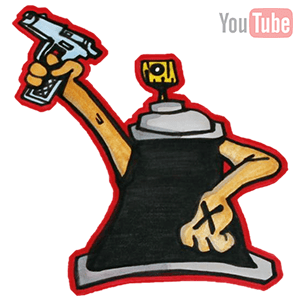
Cool “Disco” Dan is the pseudonym of graffiti artist Dan Hogg (b. 1969). His standard mark, a particularly styled rendering of his name, has proliferated in the Washington metropolitan area, notably on surfaces along the route of the Washington Metro Red Line.
He has been spraying his tag since 1984. Part of the Go-Go scene of the 80’s in Washington; he managed to avoid being jailed or killed unlike a lot of his contemporaries by devoting himself to graffiti rather than becoming involved with drugs or gangs. The pervasiveness of his mark was reported frequently in the local press.
Posted in Art, Politics |
Leave a Comment »
October 18, 2011


Borf was a graffiti campaign seen in and around Washington, D.C. during 2004 and 2005, carried out by John Tsombikos while studying at the Corcoran College of Art and Design. This four letter word was ubiquitous around the Northwest quadrant of Washington, and ranged from simple tagging to complete sentences to two-color stencils to the massive defacement on an overhead exit sign from the Theodore Roosevelt Bridge to Constitution Avenue. Tsombikos was arrested after tips led police to his latest tag.
The campaign attracted widespread attention without first explaining its motivations. According to Tsombikos and subsequent Borf communiqués, both the nickname ‘Borf’ and the Borf face belonged to Bobby Fisher, a close friend of Tsombikos’ who had committed suicide. In a video shown in 2006, the Borf Brigade – the group claiming responsibility for the graffiti spree – asserted that capitalism and the culture of aesthetics created alienation and feelings of worthlessness that contributed to the 16-year-old’s suicide. The group said that they used other peoples’ property to commemorate and pay homage to their deceased friend. The graffiti usually had overtones of anti-authority sentiments and youth liberation.
read more »
Posted in Art, Politics |
Leave a Comment »
October 18, 2011

Multistable perceptual phenomena are a form of perceptual phenomena in which there are unpredictable sequences of spontaneous subjective changes. While usually associated with visual perception, such phenomena can be found for auditory and olfactory percepts. Perceptual multistability can be evoked by visual patterns that are too ambiguous for the human visual system to recognise with one unique interpretation.
Famous examples include the ‘Necker cube,’ ‘structure from motion,’ ‘monocular rivalry’ (two different images, optically superimposed), and ‘binocular rivalry’ (perception alternates between different images presented to each eye), but many more visually ambiguous patterns are known. Since most of these images lead to an alternation between two mutually exclusive perceptual states, they are sometimes also referred to as bistable perception.
read more »
Posted in Art, Language, Science |
Leave a Comment »
October 18, 2011

Pseudorealism is an artistic and a dramatic technique in which an apparently unreal matter is presented in a fashion that makes it appear real. Though use of pseudorealism has been in practice for sometime in theater, film, fashion, textiles and literature, as an art genre, it was initiated in Indian art in early 21st century by Devajyoti Ray.
The idea that something unreal can still give the impression of the real has a parallel in mathematical field of representation theory. The idea has also often been used to describe certain set of movies, TV programs, and video games where special effects, computer generated imagery and 3D animation are used to create a fantasy but which has the impact of a reality based image. However in this context the word has a negative connotation.
Posted in Art, Language, Technology |
Leave a Comment »
October 18, 2011
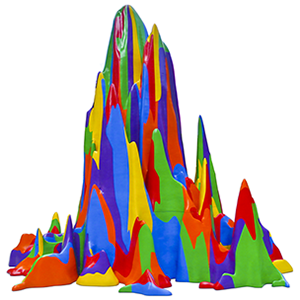
Plop art (or Plonk art) is a pejorative slang term for public art (usually large, abstract, modernist or contemporary sculpture) made for government or corporate plazas, spaces in front of office buildings, skyscraper atriums, parks, and other public venues. The term connotes that the work is unattractive or inappropriate to its surroundings – that is, it has been thoughtlessly ‘plopped’ where it lies.
The very word ‘plop’ suggested something falling wetly and heavily in the manner of excrement — extruded, as it were, from the fundament of the art world, and often at public expense. Plop art is a play on the term pop art. The term was coined by architect James Wines in 1969. Wines was critical of the failure of much public art to take an environmentally-oriented approach to the relationship between public art and architecture.
Posted in Art, Humor, Language |
Leave a Comment »
October 18, 2011
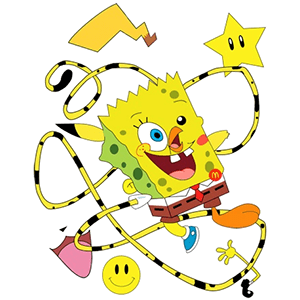
A digital mashup refers to digital media content (e.g. text, graphics, audio, video, animation) drawn from pre-existing sources, to create a new derivative work. Digital media have made it easier for potential mashup creators to create derivative works than was the case in the past, when significant technical equipment and knowledge was required to manipulate analog content. Mashups raise significant questions of intellectual property and copyright. While questioning the law, mashups are also questioning the very act of creation. Are the artists creating when they use other individuals’ work? How will artists prove their creative input?
A major contributing factor to the spread of digital mashups is the World Wide Web, which provides channels both for acquiring source material and for distributing derivative works, both often at negligible cost. Web or cloud computing based applications are a combination of separate parts brought together with the use of the open architecture of public Application Programming Interfaces (API). For example, a mashup between Google Maps and Weather.com could be made available as an iphone application, where the content and context of that content are drawn from outside sources through the published API.
Posted in Art, Money, Technology |
1 Comment »



 The Daily Omnivore