October 17, 2011
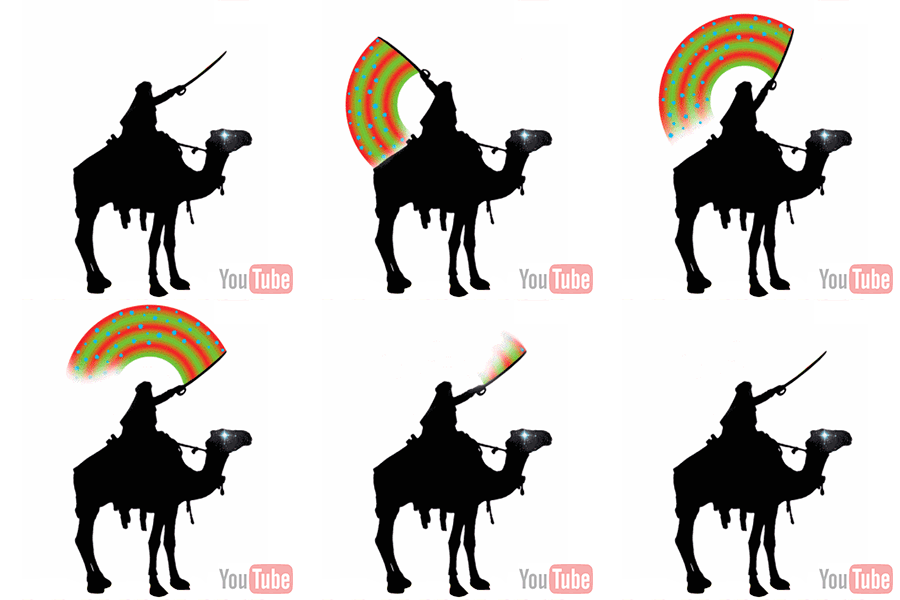
Shabazz Palaces are a Seattle-based hip-hop collective, led by Ishmael Butler aka ‘Palaceer Lazaro’ (once ‘Butterfly’ of jazz-rap group Digable Planets) and multi-instrumentalist Tendai Maraire, son of Mbira master Dumisani Maraire.
The group anonymously self-released two EPs, ‘Eagles Soar, Oil Flows’ and ‘The Seven New’ (often referred to simply as ‘Shabazz Palaces and Of Light’) in 2009 before becoming the first hip-hop act to be signed to the Sub Pop label and releasing their debut full-length album, ‘Black Up,’ in 2011.
Posted in Art |
Leave a Comment »
October 10, 2011
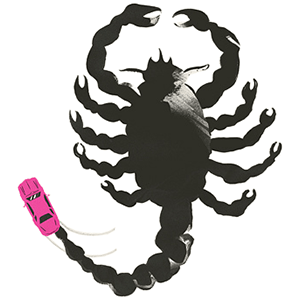
‘Drive‘ is a 2011 film directed by Nicolas Winding Refn, and starring Ryan Gosling as the eponymous driver, with Carey Mulligan, Ron Perlman, Bryan Cranston, Christina Hendricks, and Albert Brooks. Although ‘Drive’ shares several characteristics with the similarly-named 1978 Walter Hill car-chase film, ‘The Driver,’ it is actually adapted from the 2005 James Sallis novel of the same name, with a screenplay by Hossein Amini.
Like the book, the movie is about a Hollywood stunt performer who moonlights as a getaway driver. The director has said influences came from ‘Bullitt’ (1968) and ‘The Day of the Locust’ (1975); and that ‘Drive’ was a tribute to cult film legend Alejandro Jodorowsky and shares some of his existentialist themes.
read more »
Posted in Art |
1 Comment »
October 9, 2011
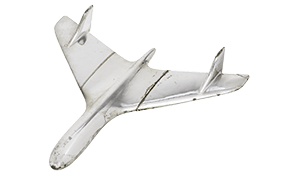

In the late 1960s, the term supergroup was coined to describe ‘a rock music group whose performers are already famous from having performed individually or in other groups.’ In some cases, an act will later be referred to as a supergroup when multiple members from said group end up securing individual fame later on.
Supergroups are often short-lived, lasting only for an album or two, although this is not always the case. They are sometimes formed as side projects that are not intended to be permanent, while other times can become the primary project of the band members’ careers.
read more »
Posted in Art, Language |
Leave a Comment »
October 7, 2011
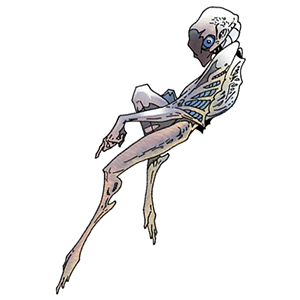
The Spacing Guild is an organization in Frank Herbert’s science fiction ‘Dune’ universe. With its monopoly on interstellar travel and banking, the Guild is a balance of power against the Padishah Emperor and the assembled noble Houses of the Landsraad. Mutated Guild Navigators use the spice drug melange to successfully navigate ‘folded space’ and safely guide enormous heighliner starships from planet to planet instantaneously. Essentially apolitical, the Guild is primarily concerned with the flow of commerce and preservation of the economy that supports them; though their ability to dictate the terms of and fees for all transport gives them influence in the political arena, they do not pursue political goals beyond their economic ones.
It is noted in ‘Dune’ (1965) that Houses of the Imperium may contract with the Guild to be removed ‘to a place of safety outside the System;’ in the past some Houses in danger of ruin or defeat have ‘become renegade Houses, taking family atomics and shields and fleeing beyond the Imperium.’ The Guild controls a ‘sanctuary planet’ (or planets) known as Tupile intended for such ‘defeated Houses of the Imperium … Location(s) known only to the Guild and maintained inviolate under the Guild Peace.’
read more »
Posted in Art, Language |
1 Comment »
October 7, 2011

A Mentat is a profession or discipline in Frank Herbert’s fictional ‘Dune’ universe. Mentats are humans trained to mimic computers: human minds developed to staggering heights of cognitive and analytical ability. In Herbert’s fiction, following the defeat of the thinking machines by humanity in the Butlerian Jihad, it is forbidden to create sentient machines. The Mentat discipline is developed as a replacement for computerized calculation, just as the Bene Gesserit and the Spacing Guild take on functions previously performed by thinking machines. For thousands of years, society considers Mentats the embodiment of logic and reason.
Unlike computers, however, Mentats are not simply calculators. Instead, the exceptional cognitive abilities of memory and perception are the foundations for supra-logical hypothesizing. Mentats are able to sift large volumes of data and devise concise analyses in a process that goes far beyond logical deduction: Mentats cultivate ‘the naïve mind,’ the mind without preconception or prejudice, so as to extract essential patterns or logic from data and deliver useful conclusions with varying degrees of certainty. They are not limited to formulating syllogisms; they are the supreme counselors of the Dune universe, filling roles as menial as archivist and clerk, or as grand as advisor to the Emperor.
read more »
Posted in Art, Language |
2 Comments »
October 7, 2011
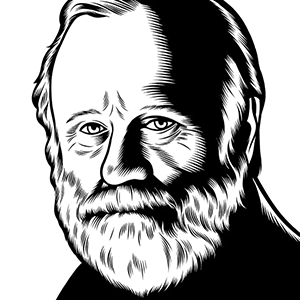
The political, scientific, and social fictional setting of Frank Herbert’s novels and derivative works is known as the Dune universe, or Duniverse. Set tens of thousands of years in the future, the saga chronicles a civilization which has banned computers but has also developed advanced technology and mental and physical abilities. Vital to this empire is the harsh desert planet Arrakis, only known source of the spice melange, the most valuable substance in the universe.
Creative works set in the Dune universe can be said to fall into five general time periods: The Butlerian Jihad; The Corrino-led Imperium; The ascension of the Atreides; The reign and fall of the God Emperor; and The return from the Scattering.
read more »
Posted in Art, Language |
1 Comment »
October 7, 2011

‘Dune‘ is a science fiction novel written by Frank Herbert, published in 1965. It won the Hugo Award in 1966, and the inaugural Nebula Award for Best Novel, the highest honors bestowed in science fiction and fantasy writing.
‘Dune’ is frequently cited as the world’s best-selling science fiction novel. Set in the far future amidst a sprawling feudal interstellar empire where planetary fiefdoms are controlled by noble houses that owe an allegiance to the Imperial House Corrino, Dune tells the story of young Paul Atreides (heir of House Atreides) as he and his family accept control of the desert planet Arrakis, the only source of the ‘spice’ melange, the most important and valuable substance in the universe. The story explores the complex and multi-layered interactions of politics, religion, ecology, technology, and human emotion, as the forces of the Empire confront each other for control of Arrakis and its ‘spice.’
read more »
Posted in Art, Language |
1 Comment »
September 30, 2011
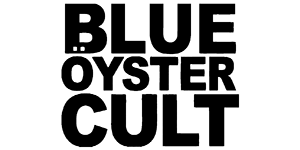

A metal umlaut [oom-lout] (also known as röck döts) is a trema (in Germanic languages called Umlaut) that is sometimes used gratuitously or decoratively over letters in the names of hard rock or heavy metal bands—for example those of Mötley Crüe and Motörhead. Amongst English speakers, the use of umlaut marks and other diacritics with a blackletter style typeface is a form of foreign branding intended to give a band’s logo a Teutonic quality—denoting stereotypes of boldness and strength commonly attributed to ancient northern European peoples, such as the Vikings and Goths. Its use has been attributed to a desire for a ‘Gothic horror’ feel. The metal umlaut is not generally intended to affect the pronunciation of the band’s name.
These decorative umlauts have been parodied in film and fiction; in the mockumentary film ‘This Is Spinal Tap’ (spelled with an umlaut mark over the n and a dotless i), fictional rocker David St. Hubbins (Michael McKean) says, ‘It’s like a pair of eyes. You’re looking at the umlaut, and it’s looking at you.’
read more »
Posted in Art, Humor, Language |
1 Comment »
September 29, 2011
‘Original Soundtracks 1’ is a 1995 album recorded by U2 and Brian Eno, as a side project, under the pseudonym Passengers. It is a collection of songs written for mostly imaginary movies (the exclusions being songs for ‘Ghost in the Shell,’ ‘Miss Sarajevo,’ and ‘Beyond the Clouds’). U2 and Eno formed Passengers as a side-project during the preliminary recording sessions for U2’s 1997 album, ‘Pop.’
Their intention was to record a soundtrack for Peter Greenaway’s 1996 film ‘The Pillow Book’ as a warm up before the main ‘Pop’ sessions. Though the plan did not come to fruition, Eno suggested they continue recording for imaginary films. U2 were unsure of the idea at first, but agreed after Eno told them that producing radio hits was not the goal of the collaboration
read more »
Posted in Art |
Leave a Comment »
September 28, 2011

The Statue of Responsibility is a proposed structure to be built on the West Coast of the United States. The prototype, sculpted by project artist Gary Lee Price, consists of a pair of clasped hands oriented vertically, symbolizing the responsibility that comes with liberty. The person who suggested the statue was scholar Viktor Frankl in his book ‘Man’s Search for Meaning.’ He recommended ‘that the Statue of Liberty on the East Coast should be supplemented by a Statue of Responsibility on the West Coast.’ His thought was that ‘Freedom, however, is not the last word. Freedom is only part of the story and half of the truth. Freedom is but the negative aspect of the whole phenomenon whose positive aspect is responsibleness. In fact, freedom is in danger of degenerating into mere arbitrariness unless it is lived in terms of responsibleness.’
The project is being managed by the non-profit foundation. The project has progressed slowly, but in 2010, the Utah state legislature unanimously declared their support for the project and declared Utah (Mr. Price’s home state) the Birthplace of the Statue of Responsibility. The statue foundation would like to build it in one of five cities: Long Beach, San Diego, Los Angeles, San Francisco, or Seattle.
Posted in Art, Politics, War |
1 Comment »
September 28, 2011

Morphing is a special effect in motion pictures and animations that changes (or morphs) one image into another through a seamless transition. Most often it is used to depict one person turning into another through technological means or as part of a fantasy or surreal sequence. Traditionally such a depiction would be achieved through cross-fading techniques on film. Since the early 1990s, this has been replaced by computer software to create more realistic transitions.
Though the 1986 movie ‘The Golden Child’ implemented very crude morphing effects from animal to human and back, the first movie to employ detailed morphing was ‘Willow,’ in 1988. A similar process was used a year later in ‘Indiana Jones and the Last Crusade’ to create Walter Donovan’s gruesome demise. Both effects were created by Industrial Light and Magic using grid warping techniques developed by Tom Brigham and Doug Smythe.
read more »
Posted in Art, Money, Technology |
1 Comment »
September 27, 2011

Nazi chic refers to the approving use of Nazi-era style, imagery, and paraphernalia in clothing and popular culture, especially when used for taboo breaking or shock value rather than out of genuine nazist sympathies. Its use began in the mid-seventies with the emergence of the punk movement in London; during the Sex Pistols’ first television appearance a person of their entourage was seen wearing a swastika. Nazi chic was later appropriated by the fashion industry.
In the 1970s punk subculture, several items of clothing designed to shock and offend The Establishment became popular. Among these punk fashion items was a T-shirt displaying a Swastika, an upside-down crucifix and the word ‘DESTROY’– which was worn by Johnny Rotten, seen in the video for ‘Pretty Vacant.’ Rotten wore the swastika another time with a gesture that looked like a Nazi salute.
read more »
Posted in Art, Politics, War |
Leave a Comment »


 The Daily Omnivore