June 27, 2018
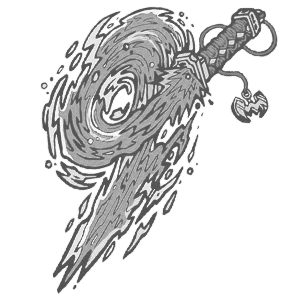
Boom bap is a style of production in hip-hop music. The term is an onomatopoeia for the drum sounds prominent in the 90’s East Coast hip hop. The style is famous for its hard bass drum and snare drum.
In a typical ‘boom bap’ beat, the snare drum comes in on beats two and four of a four-beat measure, while the bass drum appears on the first and third beat. Prominent hip-hop artists that incorporated ‘boom bap’ in their music include Nas, Eminem, the Wu-Tang Clan, and 2Pac.
Posted in Art |
Leave a Comment »
June 7, 2018
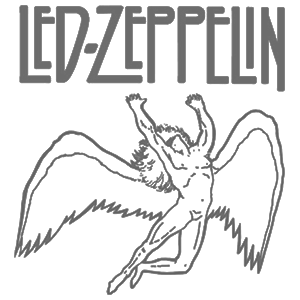
The swan song is a metaphorical phrase for a final gesture, effort, or performance given just before death or retirement. The phrase refers to an ancient belief that swans sing a beautiful song just before their death, having been silent (or alternatively, not so musical) during most of their lifetime. This belief, whose basis in actuality is long-debated, had become proverbial in ancient Greece by the 3rd century BCE, and was reiterated many times in later Western poetry and art.
In Greek mythology, the swan was a bird consecrated to Apollo and was therefore considered a symbol of harmony and beauty.
read more »
Posted in Art, Death, Language |
Leave a Comment »
May 15, 2018

Wearing socks and sandals together is a controversial fashion combination and social phenomenon that is discussed in various countries and cultures. In some places it is considered a fashion faux pas.
The earliest evidence of wearing socks and sandals is documented at an archaeological site in England. The discovery suggests that old Romans wore socks with sandals at least 2,000 years ago. The earliest known surviving pair of socks were designed for use with sandals. Dating from 300–500, they were excavated from Oxyrhynchus on the Nile in Egypt.
read more »
Posted in Art |
Leave a Comment »
April 21, 2018

Ben Burtt (b. 1948) is an American sound designer, film editor, director, screenwriter, and voice actor. As a sound designer, his credits include the ‘Star Wars’ and ‘Indiana Jones’ film series, ‘Invasion of the Body Snatchers’ (1978), ‘E.T. the Extra-Terrestrial’ (1982), ‘WALL-E’ (2008), and ‘Star Trek’ (2009).
Burtt is notable for popularizing the ‘Wilhelm scream’ in-joke and creating many of the iconic sound effects heard in the ‘Star Wars’ film franchise, including the ‘voice’ of R2-D2, the lightsaber hum, the sound of the blaster guns, and the heavy-breathing sound of Darth Vader. Burtt was also the sound editor for ‘WALL-E’ and performed the vocalizations of the titular character as well as other robots in the film.
read more »
Posted in Art, Technology |
Leave a Comment »
April 14, 2018

‘Twelfth Night, or ‘What You Will” is a comedy by William Shakespeare, believed to have been written around 1601–02 for a festival marking the close of the Christmas season, on the twelfth night after Christmas Day, called the Eve of the Feast of Epiphany. The play centers on the twins Viola and Sebastian, who are separated in a shipwreck. Viola (who disguises herself as Cesario) falls in love with Duke Orsino, who in turn is in love with the Countess Olivia. Upon meeting Viola, Countess Olivia falls in love with her thinking she is a man.
The play expanded on the musical interludes and riotous disorder expected of the occasion, with plot elements drawn from the short story ‘Of Apollonius and Silla’ by English author Barnabe Rich, based on a story by Italian writer Matteo Bandello.
read more »
Posted in Art |
Leave a Comment »
March 19, 2018
The Sheats Goldstein Residence is a house designed and built between 1961 and 1963 by American architect John Lautner in Beverly Crest, Los Angeles, just a short distance from the Beverly Hills border. The building was conceived from the inside out and built into the sandstone ledge of the hillside; a cave-like dwelling that opens to embrace nature and view.
The house is an example of ‘American Organic Architecture’ that derives its form as an extension of the natural environment and of the individual for whom it was built. Lautner, an apprentice of Frank Lloyd Wright, sought to create unique structures that solved the challenges of their sites.
read more »
Posted in Art, Humor, Technology |
Leave a Comment »
January 29, 2018

A Mary Sue is an idealized and seemingly perfect fictional character. Typically, this character is recognized as an author insert or wish fulfillment. They can usually perform better at tasks than should be possible given the amount of training or experience, and usually are able through some means to upstage the protagonist of an established fictional setting, such as by saving the hero.
The term comes from the name of a character created by fan fiction writer Paula Smith in 1973 for her parody story ‘A Trekkie’s Tale’ published in her fanzine ‘Menagerie.’ The story starred Lieutenant Mary Sue (‘the youngest Lieutenant in the fleet — only fifteen and a half years old’), and satirized unrealistic characters in Star Trek fan fiction.
read more »
Posted in Art, Politics |
Leave a Comment »
January 12, 2018

The sweater curse, or the ‘curse of the love sweater,’ is a knitting folktale which claims that if a knitter gives a hand-knit sweater to a significant other, it will lead to the recipient breaking up with them. In an alternative formulation, the relationship will end before the sweater is even completed. In a 2005 poll, 15% of active knitters said that they had experienced the sweater curse firsthand, and 41% considered it a possibility that should be taken seriously.
Despite its name, the ‘sweater curse’ is treated in knitting literature not as a superstition governed by paranormal forces, but rather as a real-world pitfall of knitting that has rational explanations. Several plausible mechanisms for the sweater curse have been proposed, but it has not been studied systematically.
read more »
Posted in Art, Humor, Sex |
1 Comment »
December 7, 2017

Tommy Wiseau is an American actor and filmmaker. He produced and directed ‘The Room’ (2003), which has been described by many critics as ‘one of the worst movies ever made’ and has gained cult film status. He also directed the 2004 documentary ‘Homeless in America’ and the 2015 sitcom ‘The Neighbors.’
Wiseau is secretive about his early life. In various interviews, he has claimed to have lived in France ‘a long time ago,’ asserted that he grew up in New Orleans, and described having ‘an entire family’ in Chalmette, Louisiana.
read more »
Posted in Art, Humor |
Leave a Comment »
November 30, 2017

Dick Proenneke [pren-uh-kee] (1916 – 2003) was a self-educated naturalist who lived alone for nearly thirty years in the mountains of Alaska in a log cabin he had constructed by hand near the shore of Twin Lakes.
Proenneke hunted, fished, raised and gathered his own food, and also had supplies flown in occasionally. He documented his activities in journals and on film, and also recorded valuable meteorological and natural data. The journals and film were later used by others to write books and produce documentaries about his time in the wilderness.
read more »
Posted in Art, Science |
Leave a Comment »
October 12, 2017

The Tramp (also known as ‘Charlot’ in several languages) was British actor Charlie Chaplin’s most memorable on-screen character and an icon in world cinema during the era of silent film. ‘The Tramp’ is also the title of a silent film starring Chaplin, which he wrote and directed in 1915.
The Tramp, as portrayed by Chaplin, is a childlike, bumbling but generally good-hearted character who is most famously portrayed as a vagrant who endeavors to behave with the manners and dignity of a gentleman despite his actual social status. However, while he is ready to take what paying work is available, he also uses his cunning to get what he needs to survive and escape the authority figures who will not tolerate his antics.
read more »
Posted in Art, Humor |
1 Comment »
October 6, 2017
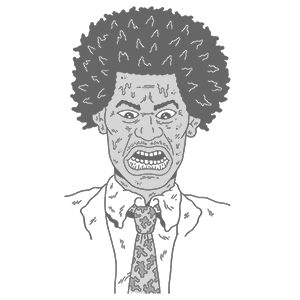
Eric Andre (b. 1983) is an American actor, comedian, and television host. He is the creator, host, and co-writer of ‘The Eric Andre Show,’ a surreal parody of low-budget public-access talk shows that airs on ‘Adult Swim’ (a nighttime programming block on ‘Cartoon Network’). Andre also played ‘Mike’ on the ‘FXX’ comedy series ‘Man Seeking Woman.’
‘The Eric Andre Show’ premiered in 2012. The series is hosted along with comedian Hannibal Buress, who serves as André’s sidekick. The show was influenced, in part, by surreal spoof talk show ‘Space Ghost Coast to Coast,’ a series that has previously aired on ‘Cartoon Network’ and later ‘Adult Swim.’
read more »
Posted in Art, Humor |
1 Comment »



