July 20, 2017

In Greek mythology, Daedalus [ded-l-uhs] (lit. ‘cunningly wrought’) was a skillful craftsman and artist in Greek mythology associated with the island of Crete, especially the labyrinth he built there to contain the Minotaur (part man, part bull). He is the father of Icarus (who flew too close the sun on wings his father designed), the uncle of Perdix (the mythological inventor of the saw), and possibly also the father of Iapyx (an Apollonian healer who aided Troy in the Trojan War).
Daedalus’ parentage was supplied as a later addition to the mythos, with numerous figures reported as his mother and father. Athenians rewrote Cretan Daedalus to make him Athenian-born, the grandson of the ancient king Erechtheus, claiming that Daedalus fled to Crete after killing his nephew Talos.
read more »
Posted in Art, Philosophy, Technology |
Leave a Comment »
July 13, 2017
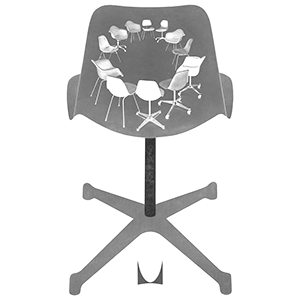
Herman Miller, Inc., based in Zeeland, Michigan, is a major American manufacturer of office furniture, equipment and home furnishings. It is notable as one of the first companies to produce modern furniture and, under the guidance of Design Director George Nelson, is likely the most prolific and influential producer of furniture of the modernist style. Among classic Herman Miller products are the Equa chair, Aeron chair, Noguchi table, Marshmallow sofa, and the Eames Lounge Chair.
Herman Miller is credited with the invention of the office cubicle (originally known as the ‘Action Office II’) in 1968 under then-director of research Robert Propst. Herman Miller holds a unique position among furniture manufacturers for having cultivated the talents of a large number of modernist designers, producing a significant number of pieces that are now considered icons of industrial design.
read more »
Posted in Art, Money, Technology |
Leave a Comment »
June 26, 2017

Charles (1907–1978) and Ray Eames (1912–1988) were husband and wife American designers who made significant historical contributions to the development of modern architecture and furniture. Among their most well-known designs is the ‘Eames Lounge Chair.’ They also worked in the fields of industrial and graphic design, fine art, and film.
Charles was an American designer, architect and filmmaker. He and his second wife Ray Kaiser are responsible for groundbreaking contributions in the field of architecture, furniture design, industrial design, manufacturing and the photographic arts.
read more »
Posted in Art, Money |
Leave a Comment »
June 20, 2017
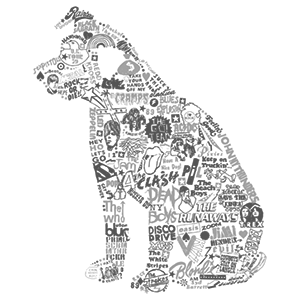
His Master’s Voice (HMV) is a famous trademark in the music and recording industry and was for many years the unofficial name of a large British record label. The name was coined in the 1890s as the title of a painting by English artist Francis Barraud of a dog named ‘Nipper,’ listening to a wind-up gramophone. In the original painting, the dog was listening to a cylinder phonograph. In the 1970s, a bronze statue of the dog and gramophone was awarded by the record company (EMI) to artists and or music producers and or composers as a Music Award and often only after selling more than 100,000 LP’s.
The original painting was acquired from the original artist in 1899 by the newly formed Gramophone Company and adopted by the Victor Talking Machine Company in the United States. According to contemporary Gramophone Company publicity material, the dog, a terrier, had originally belonged to Francis Barraud’s brother, Mark. When Mark Barraud died, Francis inherited Nipper, with a cylinder phonograph and recordings of Mark’s voice. Francis noted the peculiar interest that the dog took in the recorded voice of his late master emanating from the horn, and conceived the idea of committing the scene to canvas.
read more »
Posted in Art, Money |
Leave a Comment »
May 22, 2017

The phenakistiscope [fen-uh-kiss-tuh-skohp] was the first widespread animation device that created a fluent illusion of motion. The phenakistiscope is regarded as one of the first forms of moving media entertainment that paved the way for the future motion picture and film industry. It is sometimes compared to GIF animation since both show a short continuous loop.
A phenakisticope usually comes in the form of a spinning cardboard disc attached vertically to a handle. Arrayed radially around the disc’s center are a series of pictures showing sequential phases of the animation. Small rectangular apertures are spaced evenly around the rim of the disc. The user would spin the disc and look through the moving slits at the images reflected in a mirror. The scanning of the slits across the reflected images keeps them from simply blurring together, so that the user can see a rapid succession of images that appear to be a single moving picture.
read more »
Posted in Art, Science, Technology |
Leave a Comment »
April 24, 2017


Gary Anderson (b. 1947) is an influential graphic designer and architect. He is most well known as the designer of the ‘recycling symbol,’ one of the most readily recognizable logos in the world. His contribution to modern graphic design has been compared to those of early pioneering modernists such as Herbert Bayer. His design for a symbol to embody the concept of recycling has been compared to iconic trademarks such as those for Coca-Cola and Nike.
It has been called one of America’s ‘most important design icons’ and has helped to encourage global recycling. In some countries, such as the UK, the symbol carries such implicit meaning that it requires government permission to be used. Although the symbol is the most widely known of his accomplishments, Anderson has also made important contributions in the areas of urban planning and urban development.
read more »
Posted in Art, Politics, World |
Leave a Comment »
April 20, 2017
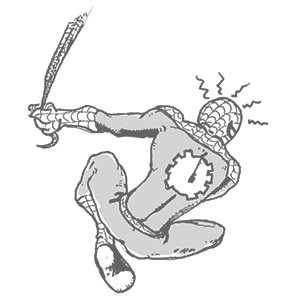
Spider-Man’s ‘spider-sense‘ manifests in a tingling feeling at the base of his skull, alerting him to personal danger in proportion to the severity of that danger. For instance, a little tingling such as a happenstance passing by of an enemy would prompt Peter to be alert, while a strong tingling, sometimes to the point of being painful, is interpreted as a need to take immediate evasive action.
Spider-Man can choose to ignore his spider-sense, and distraction or fatigue can cause decreased unawareness. Spider-sense is depicted in most comics as wavy lines appearing around Spider-Man’s head; when he is unmasked, this effect is sometimes accompanied by a symbolic half-mask appearing on his face. In the 90’s cartoon, negative colored shapes appeared around him.
read more »
Posted in Art |
Leave a Comment »
April 17, 2017

In literary criticism, an idiot plot is ‘a plot which is kept in motion solely by virtue of the fact that everybody involved is an idiot’ and where the story would otherwise be over if this were not the case. It is a narrative where its conflict comes from characters not recognizing, or not being told, key information that would resolve the conflict, often because of plot contrivance.
The only thing that prevents the conflict’s resolution is the character’s constant avoidance or obliviousness of it throughout the plot, even if it was already obvious to the viewer, so the characters are all ‘idiots’ in that they are too obtuse to simply resolve the conflict immediately.
read more »
Posted in Art, Humor, Language |
1 Comment »
March 13, 2017
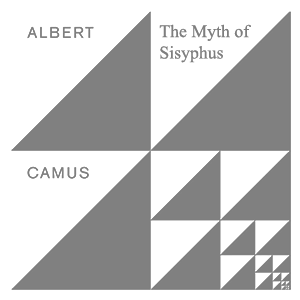
Absurdism is a type of philosophy centered on the conflict between the human tendency to seek inherent value and meaning in life and the human inability to find any. The conflict itself is called ‘the absurd,’ by absurdist philosophers.
Absurdists, most notably French philosopher Albert Camus, believe that when human beings realize this fundamental absurdity the most sensible response was to accept the absurd, and also to keep trying to overcome it. He believed that a human being could become happy by finding meaning in their relationship with the absurdity of their existence. In acknowledging the absurdity of seeking any inherent meaning, but continuing this search regardless, one can be happy, gradually developing meaning from the search alone.
read more »
Posted in Art, Humor, Philosophy |
Leave a Comment »
January 23, 2017

George Miller, commonly known by his internet pseudonym ‘Filthy Frank,’ is a musician and YouTube personality. He was born to Australian and Japanese parents, and attended Canadian Academy, where he graduated from in 2012. Aside from the comedic and often rap based music he creates under his ‘Pink Guy’ alias, Miller also creates more serious and traditional music under the stage name ‘Joji.’ He first became known for his absurdist YouTube channel, ‘TVFilthyFrank,’ which features music, rants and a bizarre ‘show’ featured in an alternate universe, with all of the main characters played by him.
Miller’s video titled ‘Do the Harlem Shake (Original)’ has been viewed 57.2 million times and spawned the ‘Harlem Shake’ meme. The earliest known video of Miller is a YouTube video titled ‘2cool4u92,’ uploaded to a channel sharing the same name in 2006 and features a young Miller performing a break dance move in front of the camera. Miller created the ‘Filthy Frank’ character during his time on his ‘Dizasta Music’ channel, where he created other content but started gaining popularity once he conceptualized Frank, who is described as the anti-vlogger of YouTube. The first known video on this particular channel was uploaded in 2011, and was titled ‘Filthy Shit.’
Posted in Art, Humor, Politics |
Leave a Comment »
January 11, 2017

The dab is a dance move in which the dancer simultaneously drops the head while raising an arm and the elbow in a gesture that has been noted to resemble sneezing.The dab has its origins in the Atlanta hip-hop scene, particularly among artists on the Quality Control record label.
When dabbing first caught popular attention several Quality Control artists were mentioned as possible originators including Migos (‘Look at My Dab’), Peewee Longway, Jose Guapo, and Rich The Kid. OG Maco eventually called out labelmate Migos for taking credit when the move was actually the brainchild of Skippa da Flippa. Though Migos later confirmed da Flippa as the originator of the dance, they expressed displeasure with the way Maco handled the situation.
read more »
Posted in Art, Games, Humor |
1 Comment »
December 29, 2016
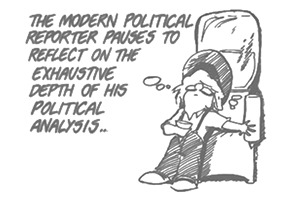

Bloom County is an American comic strip by Berkeley Breathed which ran from 1980 until 1989. It examined events in politics and culture through the viewpoint of a fanciful small town in Middle America, where children often have adult personalities and vocabularies and where animals can talk.
The fictional setting of ‘Bloom County’ served as a recurring backdrop for the comic and its sequels, although the nature of the setting was frequently altered. In the comics, the county is presented as a stereotypical American midwestern small town. The small town setting was frequently contrasted with the increasing globalization taking place in the rest of the world; though Bloom County contained the likes of farmers and wilderness creatures by default, it was frequented by Hare Krishnas, feminists, and rock stars.
read more »
Posted in Art, Language, Politics |
Leave a Comment »



