June 30, 2011
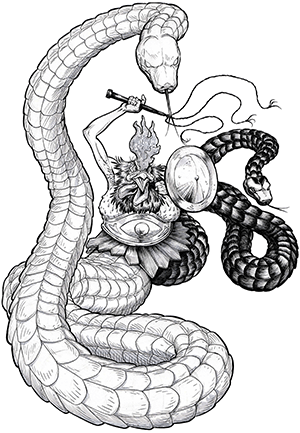
‘Abraxas‘ [uh-brak-suhs] is the second studio album by the latin band Santana. Consolidating their live success at the Woodstock Festival in 1969, and the interest generated by their first album the band took some time to issue a follow-up. Released in 1970, the album’s mix of rock, blues, jazz, salsa and other influences made it a classic that defined Santana’s early sound, and showed a musical maturation from their first album. The album’s cover features the 1961 painting ‘Annunciation,’ by Mati Klarwein.
Abraxas is the name of a deity in Gnostic cosmology. The title of the album comes from a line from Herman Hesse’s book ‘Demian.’ Abraxas is used as a symbol throughout the text, idealizing the harmonious union of all that is good and evil in the world. Demian argues that the Christian God is an insufficient god; it rules over all that is wholesome, but there is another half of the world. The symbol of Abraxas appears as a bird breaking free from an egg or a globe.
Posted in Art, Language, Philosophy |
1 Comment »
June 29, 2011
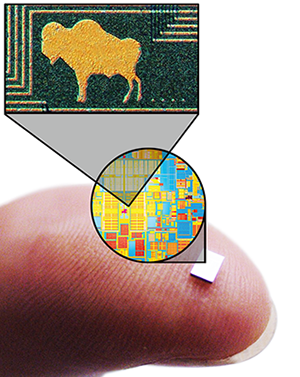
Chip art, also known as silicon art, chip graffiti or silicon doodling, refers to microscopic artwork built into integrated circuits, also called chips or ICs. Since ICs are printed by photolithography, not constructed a component at a time, there is no additional cost to include features in otherwise unused space on the chip.
Designers have used this freedom to put all sorts of artwork on the chips themselves, from designers’ simple initials to rather complex drawings. Given the small size of chips, these figures cannot be seen without a microscope. Chip graffiti is sometimes called the hardware version of software easter eggs (an intentional hidden message or feature).
read more »
Posted in Art, Humor, Technology |
Leave a Comment »
June 29, 2011
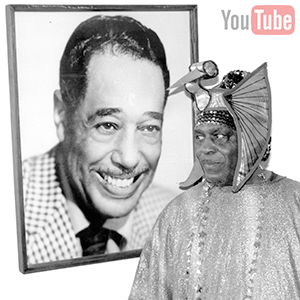
Sun Ra (1914 – 1993), born Herman Poole Blount, was a prolific jazz artist and philosopher known for his ‘cosmic’ music and philosophies. His eclectic music and unorthodox lifestyle made him controversial. Claiming that he was of the ‘Angel Race’ and not from Earth, but from Saturn, Sun Ra developed a complex persona using ‘cosmic’ philosophies and lyrical poetry that made him a pioneer of afrofuturism. He preached awareness and peace above all.
He abandoned his birth name and took on the name and persona of Sun Ra (Ra being the Egyptian God of the Sun), and used several other names throughout his career, including Le Sonra and Sonny Lee. Sun Ra denied any connection with his birth name, saying ‘That’s an imaginary person, never existed … Any name that I use other than Ra is a pseudonym.’
read more »
Posted in Art, Humor, Philosophy |
Leave a Comment »
June 29, 2011
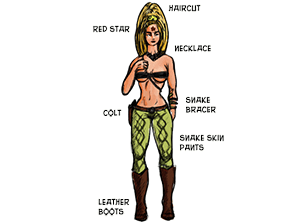
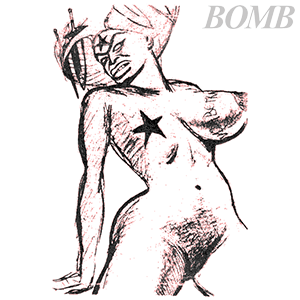
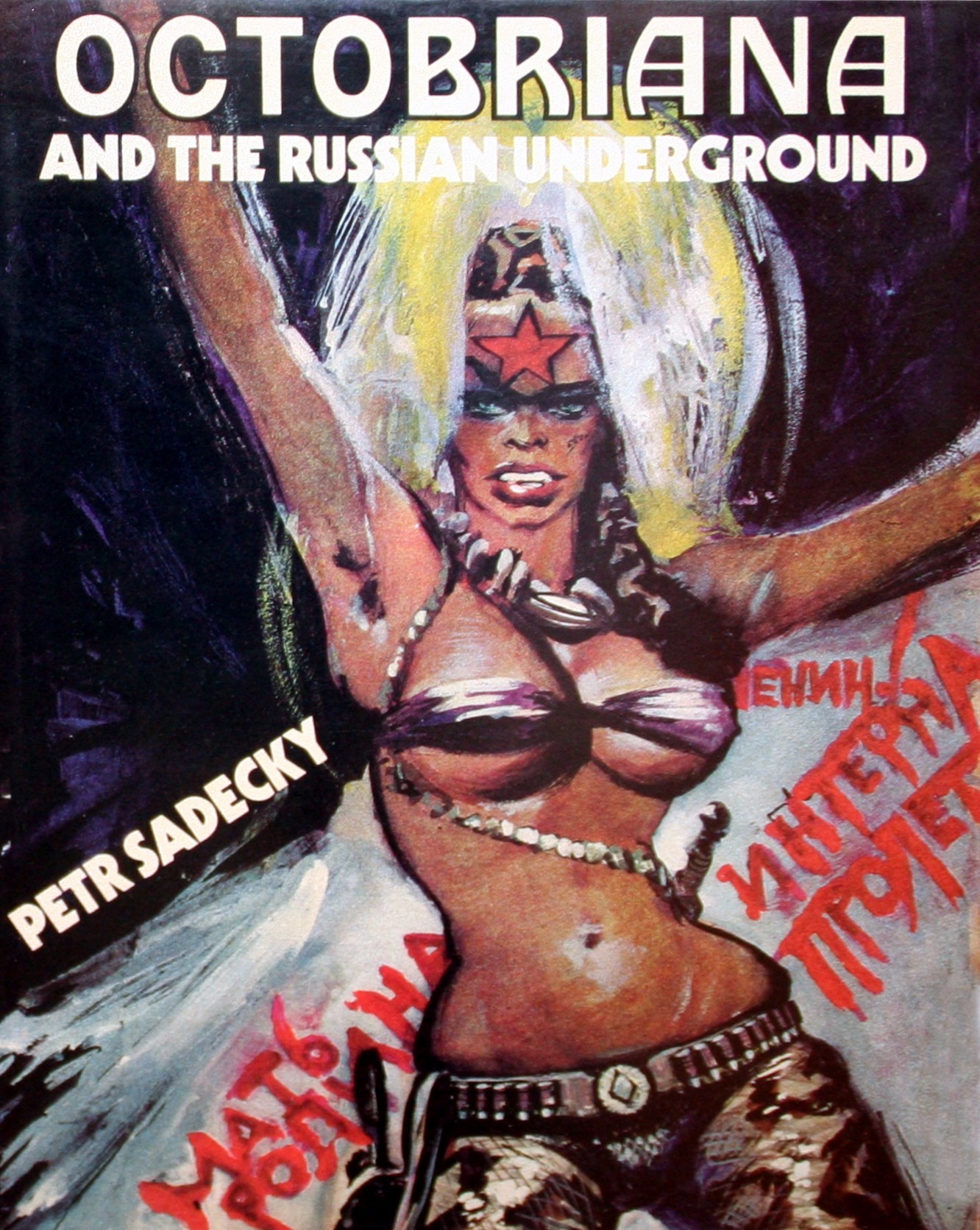
Octobriana is a comic superheroine originating from literary hoax by Czech artist Petr Sadecký. Sadecký wrote ‘Octobriana and the Russian Underground,’ a book that told the story of Octobriana, purported to be the creation of a group of Russian dissident artists calling themselves Progressive Political Pornography (PPP) in the 1960s. Octobriana was actually Sadecký’s own creation. While still in Prague, he enlisted the help of two Czech artists, Bohumil Konečný and Zdeněk Burian, in creating a comic centering around the character of ‘Amazona.’ Sadecký told the two that he had a buyer interested in the comic, and they worked together on writing and illustrating it.
However, Sadecký betrayed his friends by stealing the artwork and escaping to the West, where, in his efforts to market the Amazona comic, he changed the dialog, drew a red star on the character’s forehead, changed her name to Octobriana, and gave her a fake political backstory. Burian and Konečný sued Sadecký in a West German court, winning the case but never recovering all their stolen artwork. Since Octobriana is still widely thought to be the product of dissident cells within the U.S.S.R., she is not copyrighted, and has appeared in a variety of artistic incarnations.
Posted in Art, Money, World |
Leave a Comment »
June 29, 2011

Musopen is an online music library of copyright-free (public domain) music. Musopen’s mission is to record or obtain recordings that have no copyrights so that its visitors may listen, re-use, or in any way enjoy music, and ‘to set music free.’ In 2008, Musopen released newly-commissioned recordings of the 32 Beethoven piano sonatas into the public domain.
In 2010, the site organized a fundraiser via Kickstarter to commission recordings of a larger repertoire. Musopen is a nonprofit charity, operating out of Palo Alto, California, created by Aaron Dunn in 2005.
Posted in Art, Money, Politics |
Leave a Comment »
June 28, 2011

‘Paul is dead‘ is an urban legend suggesting that Paul McCartney of the English rock band The Beatles died in 1966 and was secretly replaced by a look-alike. In September 1969, American college students published articles claiming that clues to McCartney’s death could be found among the lyrics and artwork of The Beatles’ recordings.
Clue hunting proved infectious and within a few weeks had become an international phenomenon. Rumors declined after a contemporary interview with McCartney was published in Life magazine in November 1969. Popular culture continues to make occasional reference to the legend.
read more »
Posted in Art, Death, Humor |
Leave a Comment »
June 28, 2011

Voiced by Dave Willis, Carl Brutananadilewski is the only main character on ‘Aqua Teen Hunger Force’ who is a human. Carl wears blue sweatpants, a white tank top, flip flops, and a golden chain. Carl has a mustache and is overweight, balding, and has hair all over his body, even on the bottom of his feet.
Carl Brutananadilewski lives next door to Frylock, Meatwad, and Master Shake in a suburban neighborhood in New Jersey. Carl is quick tempered and sarcastic. He has a strong passion for sports, classic rock, and pornography which helps him with his favorite activity, masturbation. He generally dislikes Master Shake, Frylock, and Meatwad, and considers them freaks. Carl sometimes tolerates and welcomes them (rarely with a favorable outcome) possibly because of loneliness. He has a pool which they often use uninvited. His car and house are often destroyed, and he is often tortured and killed, usually as a result of something the Aqua Teens have done but occasionally by his own or others’ doing. Carl has a car he named ‘2Wycked,’ a Ford Probe which is based on Matt Maiellaro’s real life car, the creator of ATHF.
read more »
Posted in Art, Humor |
Leave a Comment »
June 28, 2011
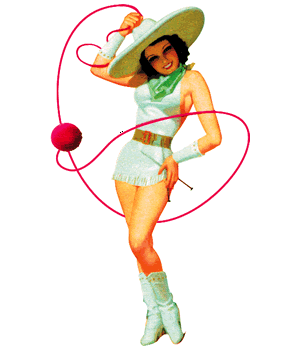
Stitch ‘n Bitch is a phrase that has been used to refer to social knitting groups. ‘Stitch ‘n Bitch’ is a name used by knitting groups that meet on a weekly or monthly basis at locations throughout the world. This use of the term originates as early as the Second World War.
Today’s Stitch ‘n Bitch clubs are generally casual groups of knitters who meet in public spaces such as bars or cafes for socializing and sharing knitting advice. These groups are free or small fee required memberships and open to the public, and are listed in a directory of worldwide knitting groups.
Posted in Art, Games, Humor |
Leave a Comment »
June 27, 2011

Zombie Nation is a German techno and electro project of the Munich based DJ and producer Florian Senfter (also known as John Starlight). The first Zombie Nation five track EP was released in the spring of 1999 on DJ Hell’s label, International DeeJay Gigolo Records.
A remix of the song ‘Kernkraft 400’ on this debut release landed in high chart-positions all over the world, including number 2 in the U.K. ‘Kernkraft 400’ was a 1:1 melody copy from the Commodore C64 computer game ‘Lazy Jones.’
read more »
Posted in Art, Money, Technology |
Leave a Comment »
June 24, 2011
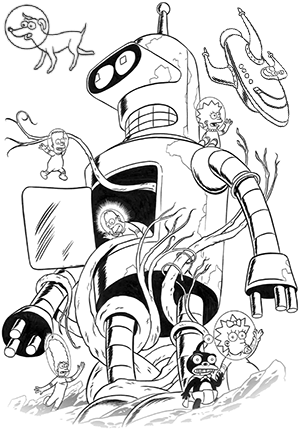
A fictional crossover is the placement of two or more otherwise discrete fictional characters, settings, or universes into the context of a single story. They can arise from legal agreements between the relevant copyright holders, or because of unauthorized efforts by fans, or even amid common corporate ownership.
Crossovers generally occur between properties owned by a single holder, but they can more rarely involve properties from different holders, provided that the inherent legal obstacles can be overcome. They may also involve using characters that have passed into the public domain with those that currently enjoy copyright protection.
read more »
Posted in Art, Language |
Leave a Comment »
June 24, 2011
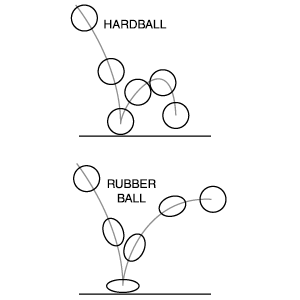
Squash and stretch is a common animation technique applied to characters or objects in motion. The technique makes their actions more fluid, and it is generally exaggerated for a cartoonish effect. When utilized with more subtlety, it works just as well for realistic movements. Squash and stretch was used to great effect in early 1920s American cartoons such as ‘Felix the Cat’ and ‘Betty Boop.’ It can also be used in comics or still cartoon art.
When done in accordance with the principles of animation, squash and stretch keeps the volume of the character constant. When squash and stretch is applied, it creates the illusion that a drawing has dimension and volume. Squash and stretch does not always have to be cartoonlike – when we crouch down in anticipation for a large leap, we squash. When we spring into the air, we stretch. A half-filled flour sack is an example of a more cartoonlike squash and stretch – when dropped the sack squashes a lot; when picked up it stretches a lot – but throughout the entire action, the volume never changes.
Posted in Art, Humor |
Leave a Comment »
June 24, 2011
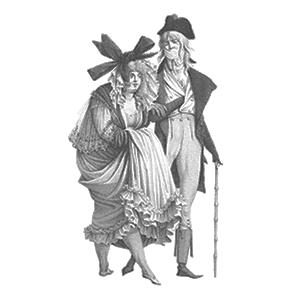
The Incroyables (Incredibles) and their female counterparts, the Merveilleuses (Marvelous), were a name for the fashionable subcultures living in France in the Directoire era (late 18th century). The exhibition of products of national industry, organized in 1798, testified to their infatuation with luxury.
The names are sometimes spelled and were pronounced ‘incoyables’ and ‘meveilleuses’ without the letter R, in reaction against the Revolution, which begins with an R, in which so many had suffered and lost relatives, the letter R was banished. Divorce became legal under the Directoire and morals tended to be looser than in the past. Many Incroyables were ‘nouveaux riches,’ gaining their wealth from selling arms and lending money (usury). When the Directoire period ended, society took a more sober and modest turn.
read more »
Posted in Art, Money, World |
Leave a Comment »