December 15, 2011
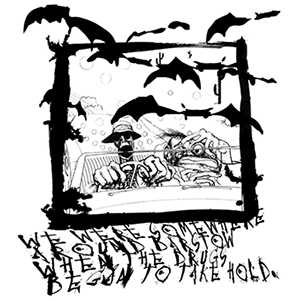
Bad trip (or psychedelic crisis) is a disturbing experience sometimes associated with use of a psychedelic drug such as LSD, Salvia, DXM, mescaline, psilocybin, DMT and sometimes even other drugs including cannabis, alcohol and MDMA. The manifestations can range from feelings of vague anxiety and alienation to profoundly disturbing states of unrelieved terror, ultimate entrapment, or cosmic annihilation.
Psychedelic specialists in the therapeutic community do not necessarily consider unpleasant experiences as threatening or negative, focusing instead on their potential to be highly beneficial to the user when properly resolved. They can be exacerbated by the inexperience or irresponsibility of the user or the lack of proper preparation and environment for the trip, and are reflective of unresolved psychological tensions triggered during the course of the experience.
read more »
Posted in Drugs, Health |
Leave a Comment »
December 15, 2011

Cheese is a heroin-based recreational drug that came to the attention of the media after a string of deaths among adolescents in Dallas beginning in 2005. It is made by combining heroin with crushed tablets of over-the-counter cold medication containing acetaminophen, the active ingredient in Tylenol, and the antihistamine diphenhydramine, the active ingredient in Benadryl.
Cheese samples obtained in north Dallas contained between 2% and 8% heroin, in contrast to the 30% commonly found in black tar heroin. Users commonly take the powder by insufflation (‘snorting’) rather than by intravenous injection. This mixture is also known as ‘Tylenol With Smack,’ by analogy to the Tylenol With Codeine series. When it appeared in several public middle schools police dubbed the mixture ‘starter heroin.’
Posted in Drugs, Politics |
1 Comment »
December 15, 2011
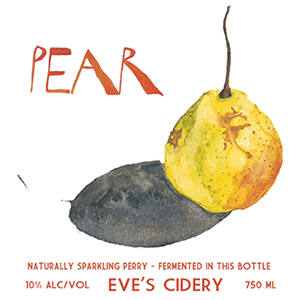
Perry is an alcoholic beverage made from fermented pears. Perry has been common for centuries in Britain, and in parts of south Wales; and France, especially Normandy and Anjou. In more recent years, commercial perry has also been referred to as ‘pear cider.’ Perry pears often have higher levels of sugar than cider apples, including unfermentable sugars such as sorbitol, which can give the finished drink a residual sweetness. They also have a very different tannin content to cider apples, with a predominance of astringent over bitter flavors. The presence of sorbitol can give perry a mild laxative effect, seen in the names of some perry pear varieties such as the ‘Lightning Pear’; reputed to go straight through ‘like lightning.’
As with apples specifically grown to make cider, special pear cultivars are used: in the UK the most commonly used variety of perry pear is the Blakeney Red. They produce fruit that is not of eating quality, but that produces superior perry. Like commercial pale lager and commercial cider, commercial perry is highly standardized, and today often contains large quantities of cereal adjuncts such as corn syrup or invert sugar. It is also generally of lower strength, and sweeter, than traditional perry, and is artificially carbonated to give a sparkling finish. However, unlike traditional perry it is a consistent product: the nature of perry pears means that it is very difficult to produce traditional perry in commercial quantities. Traditional perry was overwhelmingly a drink made on farms for home consumption, or to sell in small quantities either at the farm gate or to local inns.
Posted in Drugs, Food, Money |
Leave a Comment »
December 15, 2011
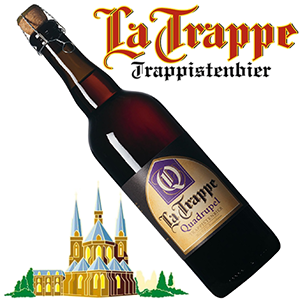
Quadrupel [kwo-droo-puhl] is the brand name of a strong seasonal beer La Trappe Quadrupel brewed by De Koningshoeven Brewery in the Netherlands, the only Trappist brewing abbey not in Belgium. In other countries, particularly the United States, ‘quadrupel’ or ‘quad’ may refer to an especially strong style of dark ale, with a characteristic spicy, ripe fruit flavor.
A quadrupel is intended to be stronger than a Tripel, so the ABV strength will be 10% or more. Beyond that, there is little agreement on the status of Quadrupel as a style. Beer writer Tim Webb notes that similar beers are also called ‘Grand Cru’ (French: ‘Great Growth’) in Belgium and Holland, a term borrowed from winemaking.
Posted in Drugs, Food, World |
Leave a Comment »
December 14, 2011
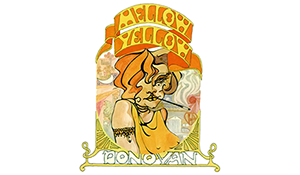
Bananadine is a fictional psychoactive substance which is supposedly extracted from banana peels. A hoax recipe for its ‘extraction’ from banana peel was originally published in 1967 in the ‘Berkeley Barb,’ an underground newspaper. It became more widely known when William Powell, believing it to be true, reproduced the method in ‘The Anarchist Cookbook’ in 1970 under the name ‘Musa sapientum Bananadine’ (referring to the banana’s old binomial nomenclature). The original hoax was designed to raise questions about the ethics of making psychoactive drugs illegal and prosecuting those who took them: ‘what if the common banana contained psychoactive properties, how would the government react?’
Researchers at New York University have found that banana peel contains no intoxicating chemicals, and that smoking it produces only a placebo effect. Over the years, there has been considerable speculation regarding the psychoactive properties of banana skins. Donovan’s hit single ‘Mellow Yellow’ was released a few months prior to the ‘Berkeley Barb’ article, and in the popular culture of the era, the song was assumed to be about smoking banana peels.
Posted in Drugs, Food, Humor |
Leave a Comment »
December 14, 2011
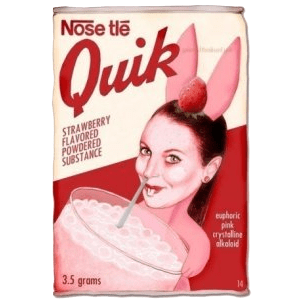
Strawberry Quik meth is a drug scare from 2007. Drug dealers were allegedly using coloring and flavoring to disguise methamphetamines as Strawberry Quik, thus making them more appealing to children. The story was widely reported in the media, but no cases of children using flavored meth have been verified.
Sometimes meth labs will try to brand their crystal meth product by coloring it in order to make it seem unique and to give it more market appeal. Police and drug enforcement officials have conjectured that the idea for ‘strawberry meth’ may have come from such a process.
Posted in Drugs |
Leave a Comment »
November 29, 2011
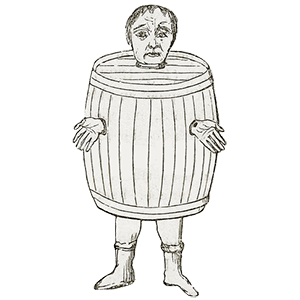
A Drunkard’s cloak was a type of pillory used in various jurisdictions to punish miscreants. An early description of the drunkard’s cloak appears in Ralph Gardiner’s ‘England’s Grievance Discovered,’ first published in 1655. A John Willis claimed to have travelled to Newcastle and seen ‘men drove up and down the streets, with a great tub, or barrel, opened in the sides, with a hole in one end, to put through their heads, and to cover their shoulders and bodies, down to the small of their legs, and then close the same, called the new fashioned cloak, and so make them march to the view of all beholders; and this is their punishment for drunkards, or the like.’
Drunkenness was first made a civil offence in England by the Ale Houses Act 1551; the drunkard’s cloak became a common method of punishing recidivists, especially during the Commonwealth of England. From 1655 Oliver Cromwell suppressed many of England’s alehouses, particularly in Royalist areas, and the authorities made regular use of the cloak.
Posted in Drugs, Humor, Politics |
Leave a Comment »
November 29, 2011

Pleasure center is the general term used for the brain regions involved in pleasure. Discoveries made in the 1950s initially suggested that rodents could not stop electrically stimulating parts of their brain, mainly the nucleus accumbens, which was theorized to produce great pleasure.
Further investigations revealed that the septum pellucidium and the hypothalamus can also be targets for self-stimulation. Yet, more recent research has shown that such ‘pleasure’ electrodes do not, in fact, lead to pleasure but only a form of ‘wanting’ or motivation to obtain the stimulation. Instead, the weight of the evidence suggests that the pleasure center of the human brain is not a single center but rather a distributed system of brain regions of which important nodes include subcortical regions (such as the nucleus accumbens and ventral pallidum) and cortical regions (orbitofrontal cortex and anterior cingulate cortex).
read more »
Posted in Drugs, Health |
Leave a Comment »
November 29, 2011
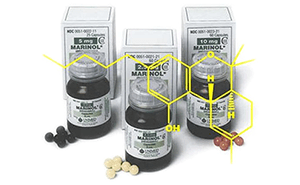
Tetrahydrocannabinol [te-truh-hahy-druh-kuh-nab-uh-nawl] (THC), also known as delta-9-tetrahydrocannabinol (Δ9-THC), is the main chemical psychoactive substance found in the cannabis plant. It was first isolated in 1964. In pure form, it is a glassy solid when cold, and becomes viscous and sticky if warmed. An organic chemical (specifically an aromatic terpenoid), with very low solubility in water, but good solubility in most organic solvents (e.g. alcohol, acetone, and butane).
Like most pharmacologically-active plants, THC in cannabis is assumed to be involved in self-defense, perhaps against herbivores. THC also possesses high UV-B absorption properties, which, it has been speculated, could protect the plant from harmful UV radiation exposure. Dronabinol is the generic name of a THC isomer (it has the same number and type of atoms as THC but in a different configuration); it is sold as Marinol (a registered trademark of Solvay Pharmaceuticals).
read more »
Posted in Drugs, Health, Politics |
Leave a Comment »
November 25, 2011
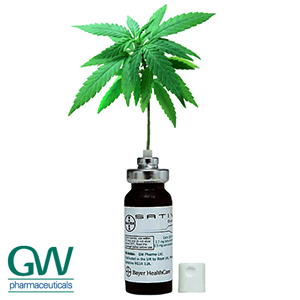
Nabiximols (trade name Sativex) is a cannabinoid mouth spray developed by the UK company GW Pharmaceuticals for multiple sclerosis (MS) patients, who can use it to alleviate neuropathic pain, spasticity, overactive bladder, and other symptoms. Nabiximols is also being developed in Phase III trials as a potential treatment to alleviate pain due to cancer. It has also been researched in various models of peripheral and central neuropathic pain.
Nabiximols is distinct from all other pharmaceutically produced cannabinoids currently available because it is derived from cannabis plants, rather than a solely synthetic process. The drug is a pharmaceutical product standardized in composition, formulation, and dose, although it is still effectively a tincture of the cannabis plant. Its principal active cannabinoid components are the cannabinoids: tetrahydrocannabinol (THC) and cannabidiol (CBD). The product is formulated as an oromucosal spray which is administered into the mouth. Each spray delivers a fixed dose of 2.7 mg THC and 2.5 mg CBD.
Posted in Drugs, Health, Politics |
Leave a Comment »
November 22, 2011
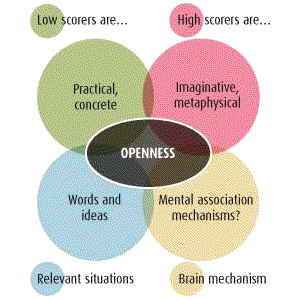
In contemporary psychology, the ‘Big Five’ are five broad domains or dimensions of personality which are used to describe human personality: openness, conscientiousness, extraversion, agreeableness, and neuroticism. Openness involves active imagination, aesthetic sensitivity, attentiveness to inner feelings, preference for variety, and intellectual curiosity.
A great deal of psychometric research has demonstrated that these qualities are statistically correlated. Thus, openness can be viewed as a global personality trait consisting of a set of specific traits, habits, and tendencies that cluster together.
read more »
Posted in Drugs, Health |
Leave a Comment »
November 20, 2011
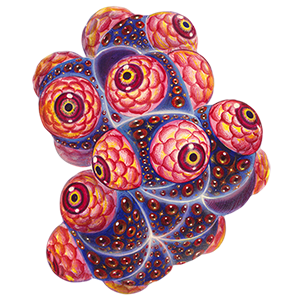
Rick Strassman (b. 1952) is psychiatrist and psychopharmacology researcher, and the first person in the US after twenty years of intermission to embark in human research with psychedelic, hallucinogenic, or entheogenic substances. During the intermission period, research was restricted by law to animals studies only.
Dr Strassman’s studies aimed to investigate the effects of DMT (dimethyltryptamine), a powerful psychedelic, that he hypothesizes is produced by the human brain in the pineal gland. DMT is found naturally in various natural sources, and is related to human neurotransmitters such as serotonin and melatonin.
read more »
Posted in Drugs, Health, Science |
Leave a Comment »


 The Daily Omnivore