March 14, 2013

LifeStraw is a water filter that filters a maximum of 1000 liters of water, enough for one person for one year that was designed by the Swiss-based Vestergaard Frandsen for people living in developing nations and for distribution in humanitarian crisis. LifeStraw Family filters a maximum of 18,000 liters of water, providing safe drinking water for a family of five for up to three years. The LifeStraw is a plastic tube 310 millimeters long and 30 millimeters in diameter, Water that is drawn up through the straw first passes through hollow fibers that filter water particles down to 0.2 microns across, using only physical filtration methods and no chemicals.
LifeStraw has been generally praised for its effective and instant method of bacteria and protozoa removal and consumer acceptability. Paul Hetherington, of the charity WaterAid, has criticized the LifeStraw for being too expensive for the target market. He also points to other important problems linked with accessing the water in developing countries, which wait to be solved, but are not addressed by the device itself.
Posted in Food, Health, Technology |
Leave a Comment »
March 10, 2013


AquAdvantage salmon is the trade name for a genetically modified Atlantic salmon developed by AquaBounty Technologies. It has been modified by the addition of a growth hormone regulating gene from a Pacific Chinook salmon and a gene from an ocean pout (the Atlantic salmon has 40,000 genes). These additions enable it to grow year-round instead of only during spring and summer.
The purpose of the modifications is to increase the speed at which the fish grows, without affecting its ultimate size or other qualities, though conventional salmon growers have publicly challenged the purported fast growth rates of AquaBounty’s salmon. The fish grows to market size in 16 to 18 months rather than three years. The latter figure refers to varieties whose growth rate has already been improved by 2:1 as a result of traditional selective breeding.
read more »
Posted in Food, Politics, Science |
Leave a Comment »
March 10, 2013
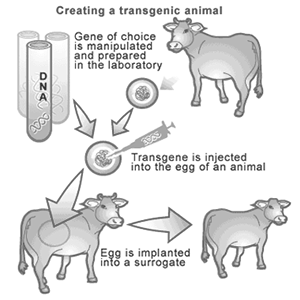
Enviropig is the trademark for a genetically modified line of Yorkshire pigs with the capability to digest plant phosphorus more efficiently than ordinary unmodified pigs that was developed at the University of Guelph.
The benefits of the Enviropig if commercialized include reduced feed cost and reduced phosphorus pollution as compared to the raising of ordinary pigs. Enviropigs produce the enzyme phytase in their salivary glands. When cereal grains are consumed, the phytase mixes with feed in the pig’s mouth, and once swallowed the phytase is active in the acidic environment of the stomach degrading indigestible phytic acid with the release of phosphate that is readily digested by the pig.
read more »
Posted in Food, Science |
Leave a Comment »
March 9, 2013

‘Shaken, not stirred‘ is a catchphrase of Ian Fleming’s fictional British Secret Service agent James Bond, and his preference for how he wished his martini prepared. The phrase first appears in the novel ‘Diamonds Are Forever’ (1956), though Bond does not actually say the line until ‘Dr. No’ (1958) but says it ‘shaken and not stirred’ instead of ‘shaken, not stirred.’ It was first uttered in the films by Sean Connery in Goldfinger in 1964 (though the villain Dr. Julius No offers this drink and utters those words in the first film, Dr. No, in 1962).
It was used in numerous Bond films thereafter with the notable exceptions of ‘You Only Live Twice,’ in which the drink is offered stirred, not shaken (Bond, ever the gentleman, ignores his host’s gaffe, telling him the drink is perfect), and ‘Casino Royale,’ in which Bond, after losing millions of dollars in a game of poker, is asked if he wants his martini shaken or stirred, and snaps, ‘Do I look like I give a damn?’
read more »
Posted in Food, Language |
Leave a Comment »
March 9, 2013

Childhood obesity is linked to Type 2 diabetes, heart disease, stroke, and high blood pressure, conditions uncommon in children and teenagers until recently. The term ‘overweight’ rather than obese is often used in children as it is less stigmatizing. The first problems to occur in obese children are usually emotional or psychological. Some of the other disorders would include liver disease, early puberty or menarche, eating disorders such as anorexia and bulimia, skin infections, and asthma and other respiratory problems.
Studies have shown that overweight children are more likely to grow up to be overweight adults. Obesity during adolescence has been found to increase mortality rates during adulthood. Obese children often suffer from teasing by their peers. Some are harassed or discriminated against by their own family. Stereotypes abound and may lead to low self-esteem and depression.
read more »
Posted in Food, Health |
Leave a Comment »
March 2, 2013

Eddie Huang (b. 1982) is an Asian American restaurateur, food personality and former lawyer. He is the owner of Baohaus. Huang was born in Washington, D.C., to immigrant parents from Taiwan. He was raised in Orlando, where his father managed a successful group of steak and seafood restaurants. Huang identified with African-American culture, especially hip-hop, at a young age. He received a B.A. from the University of Pittsburgh, Rollins College and a J.D. from Cardozo School of Law.
Not long after graduating from law school, Huang decided for a career change. After being laid off from a New York law firm, he worked as a stand-up comic and as a marijuana dealer. He was interested in food as he had grown up watching his mother cook at home and had learned many skills in the kitchen. He learned management from his father.
read more »
Posted in Food, Money |
1 Comment »
March 2, 2013

‘Fresh Off the Boat: A Memoir‘ is a 2013 autobiography by American food personality Eddie Huang. The book relates Huang’s early life and rise in the food celebrity scene in New York, and his relationship with his Asian background.
Huang, educated as a lawyer, became prominent in New York’s restaurant scene after the success of his BaoHaus, a purveyor of Chinese Cha siu bao, or pork buns. He developed a reputation as a food personality after hosting food-themed programs on the Food Network and Vice TV.
read more »
Posted in Food, Humor, Language |
1 Comment »
February 28, 2013

The paleolithic diet (also popularly referred to as the caveman diet, Stone Age diet, and hunter-gatherer diet) is a modern nutritional plan based on the presumed ancient diet of wild plants and animals that various hominid species habitually consumed during the Paleolithic era—a period of about 2.5 million years which ended around 10,000 years ago with the development of agriculture and grain-based diets.
In common usage, such terms as the ‘Paleolithic diet’ also refer to the actual ancestral human diet. Centered on commonly available modern foods, the ‘contemporary’ Paleolithic diet consists mainly of fish, grass-fed pasture raised meats, eggs, vegetables, fruit, fungi, roots, and nuts, and excludes grains, legumes, dairy products, potatoes, refined salt, refined sugar, and processed oils.
read more »
Posted in Food, Health |
Leave a Comment »
February 26, 2013
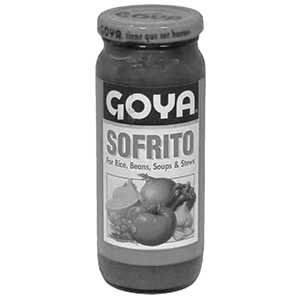
Sofrito [soh-free-toh] is a combination of aromatic ingredients which have been cut in very small pieces, and slowly sauteed or braised in cooking oil for 15–30 minutes. In Spanish cuisine, sofrito consists of garlic, onion, peppers, and tomatoes cooked in olive oil, and is used as the base for many dishes.
Similar preparations are used in the cuisines of countries bordering the Mediterranean Sea, and also some Latin American countries. It is called ‘refogado’ in Portuguese-speaking nations, ‘sofregit’ in Valencian cuisine, ‘epis’ in Haitian cuisine, and ‘ginisá’ in Filipino cuisine
read more »
Posted in Food, World |
1 Comment »
February 26, 2013

The Mediterranean diet is a modern nutritional recommendation inspired by the traditional dietary patterns of southern Italy, Greece, and Spain. The principal aspects of this diet include proportionally high consumption of olive oil, legumes, unrefined cereals, fruits and vegetables, moderate to high consumption of fish, moderate consumption of dairy products (mostly as cheese and yogurt), moderate wine consumption, and low consumption of meat and meat products.
Despite its name, this diet is not typical of all Mediterranean cuisine. In Northern Italy, for instance, lard and butter are commonly used in cooking, and olive oil is reserved for dressing salads and cooked vegetables. In North Africa, wine is traditionally avoided by Muslims. In both North Africa and the Middle East, sheep’s tail fat and rendered butter (samna) are the traditional staple fats, with some exceptions.
read more »
Posted in Food, Health, World |
Leave a Comment »
February 20, 2013

In economics, a bliss point is a quantity of consumption where any further increase would make the consumer less satisfied. It is a quantity of consumption which maximizes utility in the absence budget constraint.
In other words, it refers to the amount of consumption that would be chosen by a person so rich that money imposed no constraint on his or her decisions.
Posted in Food, Money, Science |
Leave a Comment »
February 20, 2013

Sensory-specific satiety [suh-tahy-i-tee] is a sensory hedonic phenomenon that refers to the declining satisfaction generated by the consumption of a certain type of food, and the consequent renewal in appetite resulting from the exposure to a new flavor or food. The phenomenon was first described in 1956 by French physiologist Jacques Le Magnen, and the term was coined in 1981 by food scientist Barbara J. Rolls and neuroscientist Edmund T. Rolls. Its concept illustrates the role of physical stimuli in generating appetite and, more specifically, explains the significance of taste in relation to hunger. Besides conditioned satiety and alimentary alliesthesia, it is one of the three major phenomena of satiation.
This process is most commonly illustrated by a standard buffet. People are more likely to eat a larger amount of food at a buffet because the variety of foods and flavors presented renews a sense of appetite in the individual. A study conducted by Rolls and van Duijvenvoorde in 1984 verified this process by simulating a buffet-style meal. They fed participants four meals that included sausages, bread and butter, chocolate desert, and bananas. They then fed the participants four courses of one of these foods. The results revealed a 44% increase in overall food consumption when exposed to the meals with a variety of foods.
read more »
Posted in Food, Health |
Leave a Comment »



 The Daily Omnivore