August 23, 2012

Heterocyclic amines [het-er-uh-sahy-klik uh-meen] (HCA) are chemical compounds containing at least one heterocyclic ring (a ring-shaped molecule that has atoms of at least two different elements) plus at least one amine (functional groups that contain a basic nitrogen atom with a lone pair). The biological function of heterocyclic amines can range from those of vitamins to carcinogens. Carcinogenic heterocyclic amines are created by high temperature cooking of meat, for example. HCAs form when amino acids and creatine (a chemical found in muscles) react at high cooking temperatures. Colorectal, pancreatic, and breast cancer are associated with high intakes of well-done, fried, or barbecued meats.
People who eat medium-well or well done beef were more than three times as likely to suffer stomach cancer as those who ate rare or medium-rare beef. Other sources of protein (milk, eggs, tofu, and organ meats such as liver) have very little or no HCA content naturally or when cooked. Research has shown that an olive oil, lemon juice, and garlic marinade cut HCA levels in chicken by as much as 90%. Six hours of marinating in beer or red wine cut levels of two types of HCA in beef steak by up to 90% compared with unmarinated steak.
Posted in Food, Health, Science |
Leave a Comment »
August 23, 2012

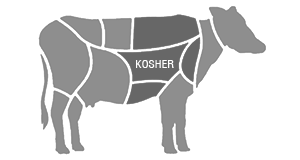
Hebrew National is a brand of kosher hot dogs and sausages made by ConAgra Foods, Inc. The Hebrew National Kosher Sausage Factory, Inc. was founded on East Broadway, on the Lower East Side of Manhattan in 1905. The company was founded by Theodore Krainin, who emigrated from Russia in the 1880s. In a 1921 article, Alfred W. McCann writing in ‘The Globe and Commercial Advertiser’ citied Hebrew National as having ‘higher standards than the law requires.’
McCann wrote the article during a crusade for commercial food decency standards, in which ‘The Globe’ was prominent. He wrote ‘More power to Krainin and the decency he represents! Such evidence of the kind of citizenship which America should covet is not to be passed by lightly.’ Hebrew National ‘served the Jewish neighborhoods of immigrants from Eastern Europe and Germany and soon developed a favorable reputation among the other Jewish residents of New York City.’
read more »
Posted in Food, Money, Philosophy |
Leave a Comment »
August 23, 2012

A hot dog is a sausage served in a sliced bun. It is very often garnished with mustard, ketchup, onions, mayonnaise, relish, cheese, chili, and/or sauerkraut. Claims about hot dog invention are difficult to assess, as stories assert the creation of the sausage, the placing of the sausage (or another kind of sausage) on bread or a bun as finger food, the popularization of the existing dish, or the application of the name ‘hot dog’ to a sausage and bun combination most commonly used with ketchup or mustard and sometimes relish.
The word frankfurter comes from Frankfurt, Germany, where pork sausages served in a bun similar to hot dogs originated. These sausages, Frankfurter Würstchen (‘little sausage’), were known since the 13th century and given to the people on the event of imperial coronations, starting with the coronation of Maximilian II, Holy Roman Emperor as King. Wiener refers to Vienna, Austria, whose German name is ‘Wien,’ home to a sausage made of a mixture of pork and beef (the word ‘hamburger’ also derives from a German-speaking city, Hamburg).
read more »
Posted in Food, Language, World |
Leave a Comment »
August 23, 2012
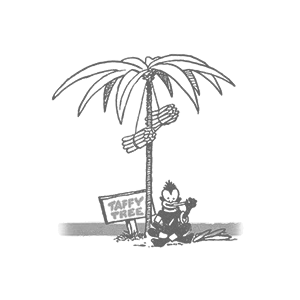
Abba-Zaba are taffy candy bars with peanut butter centers, made by Annabelle Candy Company in Hayward, California. The first Abba Zaba bars were manufactured beginning in 1922 by Colby and McDermott. Before Annabelle Candy Co. started manufacturing Abba-Zaba, the packaging featured imagery which some now consider to be racially biased.
A favorite snack of a young Don Van ‘Captain Beefheart’ Vliet, it lent its name to a song that appears on his 1967 ‘Safe as Milk’ album. In fact, the album itself was originally to be entitled ‘Abba Zaba,’ changed only when the company would not allow the usage of their trademark.
Posted in Food |
Leave a Comment »
August 13, 2012
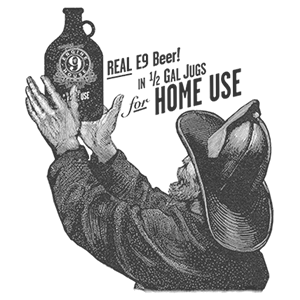
A growler [grou-ler] is a glass or ceramic jug with a capacity of 64 oz (1,900 ml) used to transport draught beer in Australia, the United States, and Canada. They are commonly sold at breweries and brewpubs as a means to sell take-out beer. The exploding growth of craft breweries and the growing popularity of home brewing has also led to an emerging market for the sale of collectible growlers.
Growlers are generally made of glass and have either a screw-on cap or a hinged porcelain gasket cap, which can provide freshness for a week or more. A properly sealed growler will hold carbonation indefinitely and will store beer like any other sanitized bottle. Some growler caps are equipped with valves to allow replacement of CO2 lost while racking. The modern glass growler was first introduced by Charlie and Ernie Otto of Otto Brother’s Brewing Company in 1989.
read more »
Posted in Drugs, Food, Money |
Leave a Comment »
August 9, 2012
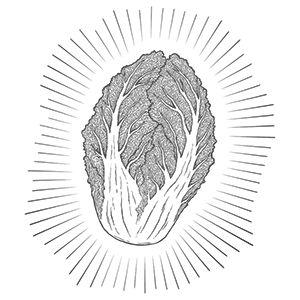
Banchan [ban-chuhn] refers to small dishes of food served along with cooked rice in Korean cuisine. This word is used both in the singular and plural. The basic table setting for a meal called ‘bansang’ (usually consists of bap (cooked rice), guk or tang (soup), gochujang or ganjang (fermented condiments), jjigae (tofu stew), and kimchi (fermented cabbage). Kimchi is the essential banchan of a standard Korean meal. Some Koreans do not consider a meal complete without kimchi.
According to the number of banchan that is added, the table setting is called as 3 cheop, 5 cheop, 7 cheop, 9 cheop, or 12 cheop bansang, with the 12 cheop used in Korean royal cuisine. Banchan are set in the middle of the table to be shared. At the center of the table is the secondary main course, such as galbi or bulgogi (grilled meats), and a shared pot of jjigae. Bowls of cooked rice and guk (soup) are set individually. Banchan are served in small portions, meant to be finished at each meal and are replenished during the meal if not enough. Usually, the more formal the meals are, the more banchan there will be. Jeolla province is particularly famous for serving many different varieties of banchan in a single meal.
Posted in Food, World |
1 Comment »
July 30, 2012
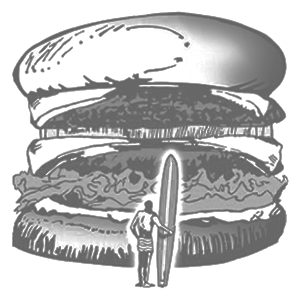
Big Kahuna Burger is a fictional chain of Hawaiian-themed fast food restaurants that appears in the movies of Quentin Tarantino including ‘Death Proof,’ ‘Four Rooms,’ ‘From Dusk Till Dawn,’ ‘Pulp Fiction,’ and ‘Reservoir Dogs.’
The packaging was created by Tarantino’s old friend Jerry Martinez. The Big Kahuna Burger is also seen in ‘The Adventures of Sharkboy and Lavagirl in 3-D,’ directed by Robert Rodriguez.
Posted in Art, Food |
Leave a Comment »
July 30, 2012
Monosodium [mon-uh-soh-dee-uhm] glutamate [gloo-tuh-meyt] (MSG) is a seasoning salt and one of the most abundant naturally occurring non-essential amino acids. The glutamate of MSG confers the same umami (savory) taste of glutamate from other foods (e.g. meats, poultry, fish, eggs, dairy products, and kombu seaweed), being chemically identical.
Industrial food manufacturers market and use MSG as a flavor enhancer because it balances, blends and rounds the total perception of other tastes. Professor Kikunae Ikeda from the Tokyo Imperial University isolated glutamic acid as a new taste substance in 1908 from kombu, and named its taste ‘umami.’
read more »
Posted in Food, Health, World |
Leave a Comment »
July 24, 2012
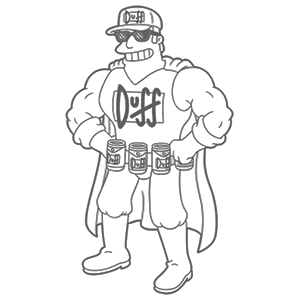
Duff Beer is a brand of beer that originally started as a fictional beverage on the animated series ‘The Simpsons,’ since then it has become a real brand of beer in a number of countries without permission or consent from it’s original creator, Matt Groening, and has resulted in legal battles with varying results. Groening has stated that he will not license the Duff trademark to brew an actual beer, over concern that it would encourage children to drink.
It is Homer Simpson’s beer of choice and a parody of stereotypical commercial beer: very cheaply priced, poor-quality, and advertised everywhere. The name was inspired by one-syllable beer names in the US (such as ‘Bud’). In an excerpt from his autobiography, former Guns N’ Roses bassist Duff McKagan claimed that the beer was named after him as the writers were fans of the band and he was known for his extreme alcohol consumption.
read more »
Posted in Drugs, Food, Humor |
Leave a Comment »
July 19, 2012

Theobromine poisoning or chocolate poisoning is an adverse reaction to the alkaloid theobromine, found in chocolate, tea, cola beverages, açaí berries, and some other foods. Cacao beans contain about 1.2% theobromine by weight, while processed chocolate, in general, has smaller amounts.
The amount found in highly refined chocolate candies (~2 g/kg) is much lower than that of dark chocolate (~10 g/kg) or unsweetened baker’s chocolate (> 14 g/kg ). In general, the amount of theobromine found in chocolate is small enough such that chocolate can be safely consumed by humans. However, occasional serious side effects may result from the consumption of large quantities, especially in the elderly. In extreme cases, emergency room treatment may be required.
read more »
Posted in Death, Food, Health |
1 Comment »
June 26, 2012

The Gatorade shower is a sports tradition that involves dumping a cooler full of liquid (most commonly Gatorade mixed with ice) over a coach’s (or occasionally star player or owner’s) head following a meaningful win, such as the Super Bowl. The tradition began with the New York Giants in the mid-1980s.
According to several sources, including Jim Burt of the Giants, in 1985, when the Giants beat the Washington Redskins 17-3, Burt dumped a cooler on Bill Parcells after being angry about the coach’s treatment of him that week. Burt insisted that Harry Carson dump the Gatorade on Parcells, because Carson was a favorite and wouldn’t get in trouble.
read more »
Posted in Food, Games, Humor |
Leave a Comment »
June 21, 2012
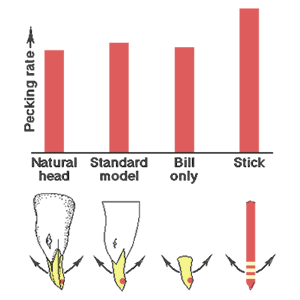
A supernormal stimulus is an exaggerated version of a stimulus to which there is an existing response tendency, or any stimulus that elicits a response more strongly than the stimulus for which it evolved. The idea is that the elicited behaviors evolved for the ‘normal’ stimuli of the ancestor’s natural environment, but the behaviors are now hijacked by the supernormal stimulus.
British art scholar Nigel Spivey demonstrates the effect in a 2005 BBC documentary series ‘How Art Made the World’ to illustrate neuroscientist Vilayanur S. Ramachandran’s speculation that this might be the reason for the grossly exaggerated body image demonstrated in works of art from the Venus of Willendorf right up to the present day.
read more »
Posted in Food, Science, Sex |
2 Comments »


 The Daily Omnivore