July 20, 2011

Spherification is the culinary process of shaping a liquid into spheres which visually and texturally resemble caviar. The technique was originally developed by the creative team at the Spanish restaurant, elBulli under the direction of executive chef Ferran Adrià. There are two main methods for creating such spheres, which differ based on the calcium content in the product to be spherified.
For substances containing no calcium, the liquid is mixed with sodium alginate, and dripped into a cold solution of calcium chloride or calcium carbonate. ‘Reverse’ spherification, for use with substances which contain calcium, requires dripping the substance into an alginate bath. Both methods give the same result: a sphere of liquid held by a thin gel membrane, texturally similar to caviar.
Posted in Food, Technology |
Leave a Comment »
July 14, 2011

The Big Green Egg is the brand name of a kamado-style ceramic charcoal cooker. Kamado barbecue originates in southern Japan. The kamado first came to the attention of Americans after World War II when US Air Force servicemen brought them back from Japan in empty transport planes. The Big Green Egg Company was founded in 1974 by Ed Fisher and is based in Georgia. The shape of the Egg is designed to contain the heat with only a small draft door at the bottom, and a daisy wheel damper unit on the top to give air flow control and therefore temperature regulation. Between the base and the lid is a felt gasket designed to maximize moisture retention during long cookouts.
Prices vary by model and start at approximately $700. Big Green Egg barbecues have quite an enthusiastic following of amateur chefs and the collective name given these enthusiasts is ‘Eggheads.’ Every October there is a global gathering called ‘Eggtoberfest’ held at the company’s headquarters in Tucker, GA. In addition, numerous other Big Green Egg Festivals occur throughout the US and the world, called ‘EggFests.’
Posted in Food, Money, Technology |
Leave a Comment »
July 11, 2011

Cats feed on small prey, primarily birds and rodents. Feral cats and house cats that are free-fed tend to consume many small meals in a single day, although the frequency and size of meals varies between individuals. Cats use two hunting strategies, either stalking prey actively, or waiting in ambush until an animal comes close enough to be captured.
They often ambush outside burrows, but tend to actively stalk birds. Most breeds of cat have a noted fondness for settling in high places, or perching. In the wild, a higher place may serve as a concealed site from which to hunt; domestic cats may strike prey by pouncing from such a perch as a tree branch, as does a leopard.
read more »
Posted in Food, Science |
Leave a Comment »
July 11, 2011
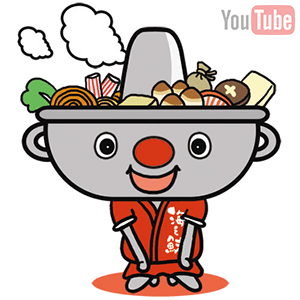
Hot pot, less commonly Chinese fondue or steamboat, refers to several East Asian varieties of stew, consisting of a simmering metal pot of stock at the center of the dining table. While the hot pot is kept simmering, ingredients are placed into the pot and are cooked at the table. Typical hot pot dishes include thinly sliced meat, leafy vegetables, mushrooms, wontons, egg dumplings, and seafood. The cooked food is usually eaten with a dipping sauce. In many areas, hot pot meals are often eaten in the winter.
The Chinese hot pot boasts a history of more than 1,000 years. While often called ‘Mongolian hot pot,’ it is unclear if the dish actually originates in Mongolia, though Mongolian warriors had been known to cook with their helmets, which they used to boil food. Hot pot cooking spread to northern China during the Tang Dynasty (618 – 906). Today in many modern homes, particularly in the big cities, the traditional coal-heated steamboat or hot pot has been replaced by electric, gas or induction cooker versions.
read more »
Posted in Food, World |
Leave a Comment »
July 7, 2011

Club 33 is a private club located in the heart of the New Orleans Square section of Disneyland. Officially maintained as a secret feature of the theme park, the entrance of the club is located next to the Blue Bayou Restaurant at ’33 Royal Street’ with the entrance recognizable by an ornate address plate with the number 33 engraved on it. Club 33 members and their guests have exclusive access to the club’s restaurant, and the premises are not open to the public at large. It is the only location within Disneyland to offer alcoholic beverages.
Members get free access to both Disney parks whenever they are open, plus early park admission several days each week. In addition, members are provided with valet parking to the overall Disney resort and access to Lilly Belle, the presidential caboose car on the Disneyland Railroad.
read more »
Posted in Food, Money |
Leave a Comment »
July 5, 2011
Korean tacos are a fusion dish popular in California, often as street food, consisting of a Korean-style filling, typically bulgogi (marinated barbecued beef), placed on top of small traditional Mexican corn tortillas. Korean burritos are a similarly themed dish, using larger flour tortillas as a wrap.
Although nearly any savory dish can and has been used as filling for a taco, burrito, or sandwich wrap, and other restaurants have occasionally served dishes they called Korean tacos, the present popularity of the dish is generally traced to the use of Twitter by the proprietors of the Kogi Korean BBQ, a food truck in Los Angeles, to announce their schedule and itinerary.
Posted in Food, World |
Leave a Comment »
July 4, 2011

The Noid was an advertising character for Domino’s Pizza in the 1980s. He was a villainous red-suited imp, with red rabbit ears who attempted to ruin Domino’s pizza but was constantly thwarted. Commercials that featured the character used the slogan ‘Avoid the Noid!’ As part of the advertising campaign, a computer game was released in 1989 called Avoid the Noid. The object of the game is to deliver a pizza within a half-hour time limit, in an apartment building swarming with Noids. In 1990, Capcom released a different video game, Yo! Noid, for the NES.
In early 1989, Kenneth Lamar Noid, a mentally ill customer who thought the ads were a personal attack on him, held two employees of an Atlanta Domino’s restaurant hostage for over five hours. After forcing them to make him a pizza and making demands for $100,000, getaway transportation, and a copy of ‘The Widow’s Son,’ a conspiracy theory novel by Robert Anton Wilson. Noid surrendered to the police. After the incident had ended, police Chief Reed Miller offered a memorable assessment to reporters: ‘He’s paranoid.’ Noid was charged with kidnapping, aggravated assault, extortion, and possession of a firearm during a crime. He was found not guilty by reason of insanity.
Posted in Food, Humor, Money |
Leave a Comment »
July 4, 2011

In endurance sports such as cycling and running, hitting the wall (or the bonk) describes a condition caused by the depletion of glycogen stores in the liver and muscles, which manifests itself by sudden fatigue and loss of energy. Milder instances can be remedied by brief rest and the ingestion of food or drinks containing carbohydrates. The condition can usually be avoided by ensuring that glycogen levels are high when the exercise begins, maintaining glycogen levels during exercise by eating or drinking carbohydrate-rich substances, or by reducing exercise intensity.
The term bonk for cycling fatigue is presumably derived from the original meaning ‘to hit,’ and dates back at least half a century. The term is used colloquially both as a noun (‘hitting the bonk’) and a verb (‘to bonk halfway through the race’). The British may refer to it as ‘hunger knock,’ while ‘hunger bonk’ or ‘bunger honk’ was used by South African cyclists in the 1960s.
Posted in Food, Games, Health |
Leave a Comment »
July 3, 2011

The Subservient Chicken is a 2004 advertising campaign created to promote international fast food restaurant chain Burger King’s TenderCrisp chicken sandwich and their ‘Have it Your Way’ campaign. On its website, a man in a chicken costume performs a wide range of actions based on a user’s input, showing pre-recorded footage and appearing like an interactive webcam. The site takes literally the advertising slogan ‘Get chicken just the way you like it.’
There are more than three hundred commands that the Subservient Chicken will respond to, including: Moonwalk, Riverdance, and pick your nose. When told to perform sex acts, take off his mask, or do anything the Subservient Chicken considers offensive, the chicken walks up to the camera and shakes a scolding chicken finger in disappointment.
Posted in Food, Humor, Money |
Leave a Comment »
July 3, 2011

Milk kinship, formed during nursing by a non-biological mother, was a form of fostering allegiance with fellow community members. In the early modern period, milk kinship was widely practiced in many Arab countries for both religious and strategic purposes. Like the Christian practice of godparenting, milk kinship established a second family that could take responsibility for a child whose biological parents came to harm. ‘Milk kinship in Islam thus appears to be a culturally distinctive, but by no means unique, institutional form of adoptive kinship.’ A child in one of these societies would be breastfed by a woman of a lower class, enabling the child’s biological mother to maintain her modesty.
The childhood of the prophet Muhammad illustrates the practice of traditional Arab milk kinship. In his early childhood, he was sent away to foster-parents amongst the Bedouin. By nursing him, Halimah bint Abdullah became his ‘milk-mother.’ The rest of her family was drawn into the relationship as well: her husband al-Harith became Muhammad’s ‘milk-father,’ and Muhammad was raised alongside their biological children as a ‘milk-brother.’ This case suggests that it was typical for a child’s wet nurse to be responsible for raising him.
read more »
Posted in Food, Philosophy, World |
Leave a Comment »
June 30, 2011
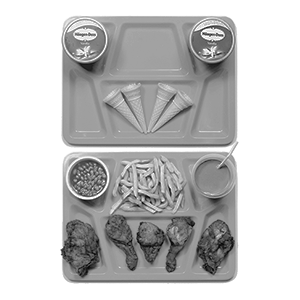
The last meal is a customary part of a condemned prisoner’s last day. The day before the appointed time of execution, the prisoner receives the meal, as well as religious rites, if they desire. As a general rule, inmates may not ask for an alcoholic drink. In many countries the prisoner may select what the last meal will be (within reason), and the authorities do their best to satisfy the request. Although the history of this tradition is difficult to trace, most modern governments that execute prisoners subscribe to it.
Serial killer, John Wayne Gacy, requested a dozen deep-fried shrimp, a bucket of original recipe chicken from KFC, French fries, and a pound of strawberries. Domestic terrorist, Timothy ate two pints of mint chocolate-chip ice cream as his last meal.
read more »
Posted in Death, Food, Politics |
Leave a Comment »
June 28, 2011

Kombu [kohm-boo], called dashima in Korean and haidai in Chinese, is the Japanse word for edible kelp widely eaten in East Asia. Most kombu is extensively cultivated on ropes in the seas of Japan and Korea.
Over 90 percent of Japanese kombu is cultivated, mostly in Hokkaidō, but also as far south as the Seto Inland Sea.
read more »
Posted in Food, Health, World |
Leave a Comment »



 The Daily Omnivore