June 24, 2011

The candy desk is a tradition of the United States Senate established in 1968. The desk, located on the Republican side of the Senate chamber, was first stocked with candy and treats by Senator George Murphy. Those entrusted with the candy desk have included John McCain, Slade Gorton, Bob Bennett, and Rick Santorum. Most senators take advantage of the desk, even though eating is not allowed on the Senate floor. The desk is currently occupied by Senator Mark Kirk of Illinois.
The tenant of the candy desk is charged with stocking it with candy from his or her home state, but funding has been an issue. Originally senators would ask for a specific candy and leave a few dollars to keep the desk stocked with their favorites, but as time continued, and the candy desk became a more solid tradition of the Senate, lobby groups and organizations, specifically the National Confectioners Association, and the Chocolate Manufacturers Association, organized donations.
read more »
Posted in Food, Humor, Politics |
Leave a Comment »
June 23, 2011


A sugar substitute is a food additive that duplicates the effect of sugar in taste, usually with less food energy. Some sugar substitutes are natural and some are synthetic. Those that are not natural are, in general, called artificial sweeteners.
Animal studies have indicated that a sweet taste induces an insulin response in rats. The release of insulin causes blood sugar to be stored in tissues (including fat). In the case of a response to artificial sweeteners, because blood sugar does not increase there can be increased hypoglycemia (low blood sugar) and increased food intake the next time there is a meal. Rats given sweeteners have steadily increased calorie intake, increased body weight, and increased adiposity (fatness).
read more »
Posted in Food, Health, Technology |
Leave a Comment »
June 22, 2011

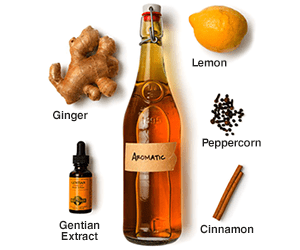
A bitters is an alcoholic beverage that is flavored with herbal essences and has a bitter or bittersweet flavor. There are numerous brands of bitters that were formerly marketed as patent medicines (tonics and elixirs) but are now considered to be digestifs (an after dinner drink intended to aid in digestion), rather than medicines. Bitters are 45% alcohol by volume.
Common ingredients in bitters include cascarilla, cassia, gentian, orange peel, and quinine from Cinchona bark (grown in Peru and Indonesia). The flavor of Angostura bitters, Suze and Peychaud’s Bitters derives primarily from gentian, a bitter herb. Bitters are prepared by infusion or distillation, using aromatic herbs, bark, roots, and/or fruit for their flavor and medicinal properties.
read more »
Posted in Drugs, Food, Health |
Leave a Comment »
June 17, 2011

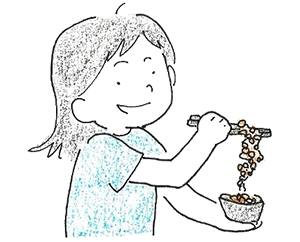
An acquired taste often refers to an appreciation for a food or beverage that is unlikely to be enjoyed by a person who has not had substantial exposure to it, usually because of some unfamiliar aspect of the food or beverage, including a strong or strange odor. For example: stinky tofu or cheese, durian fruit, kimchi, haggis, hákarl (fermented shark), sulfur infused black salt, asafoetida (a spice also called devil’s ding). Unfamiliar tastes (such as bitter teas or natto, fermented soybeans) and appearance can also be off-putting to many. Acquired taste may also refer to aesthetic tastes, such as taste in music or other forms of art.
Intentionally changing one’s preferences can be hard to accomplish. It usually requires a deliberate effort, such as acting as if one likes something in order to have the responses and feelings that will produce the desired taste. The risk in this acting is that it can lead to all sorts of excesses such as self-deception and pretentiousness. The challenge becomes one of distinguishing authentic or legitimate acquired tastes resulting from deeply considered preference changes from inauthentic ones motivated by, for example, status or conformity.
Posted in Art, Food, Language |
Leave a Comment »
June 16, 2011

Tapatío is a hot sauce, produced in Vernon, California, that can be found at many grocery stores in the United States.
It rates 3,000 on the scale of Scoville units (Tabasco sauce is 2100 Scovilles) ‘Tapatío’ is the name given to people from Guadalajara, Jalisco. The company’s founders come from Guadalajara.
Posted in Food, Money |
Leave a Comment »
June 14, 2011

Bompas & Parr is a company specializing in food art using gelatin desserts. Named after the defunct food company of the same name, the company uses food molds to make edible decorations shaped like buildings and other architectural structures. The work of Bompas & Parr have been noted for their detail and have competed in culinary artwork competitions, an example being the Architectural Jelly Design Competition organized for the London Festival of Architecture.
The company claims their projects explore how the taste of food is altered through synaesthesia (a condition where the brain mixes up the senses), performance and setting. Currently the focus of their projects is gelatin based because they feel it is a perfect medium for an examination of food and architecture due to its plastic form and the historic role it has played in exploring notions of taste.
Posted in Art, Food, Humor |
Leave a Comment »
June 7, 2011

A seasoned pan has a stick-resistant coating of polymerized fat and oil on the surface (a polymer is a molecule, made from joining together many small molecules called monomers). Seasoning is desirable on cast-iron cookware and carbon steel cookware, because otherwise they are very sticky to foods and rust-prone. For other pans (e.g., stainless, aluminum, enamelled), the same chemical phenomenon can occur, but seasoning may not be desired for cosmetic reasons (it makes a pan look splotchy), or the pan may already be stick-resistant (e.g., at medium heat, a clean stainless pan with oil is very stick resistant to many foods).
The process of heating a pan to cause the oil to oxidize is analogous to the hardening of drying oil used in oil paints, or to varnish a painting. When oils or fats are heated in a pan, multiple degradation reactions occur, including: autoxidation, thermal oxidation, polymerization, cyclization and fission.
read more »
Posted in Food, Technology |
Leave a Comment »
June 6, 2011
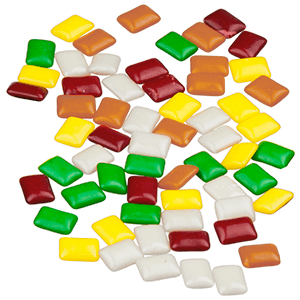
Chiclets is a brand of candy coated chewing gum made by Cadbury Adams. The colors of chiclets are: yellow, green, orange, red, white, and pink. The product’s name is derived from Nahuatl word tziktli, in English chicle, the substance from which chewing gum was traditionally made. The original flavor was peppermint but many flavors have been added and discontinued over the decades since the introduction in 1906.
In some countries the term ‘Chiclet’, ‘Chic’ or ‘Chicla’ is often used to refer to any brand and/or type of chewing gum. In Spain, Peru, and many other Spanish or Portuguese speaking countries, as a result of the brand’s popularity the term ‘Chicle’ is used in every-day language to refer to chewing gum, this ias particular in Mexico as the Nahuatl term derives from there. Furthermore, in Iran any type of chewing gum is referred to as ‘Adams’. The gum is the biggest gum brand in the Middle East, especially in Egypt where it has a huge market share. In South America, and Thailand, Chiclets is also produced, but the brand has been extended to include various formats like bubble gum and stick gum.
Posted in Food, Money, World |
Leave a Comment »
June 3, 2011
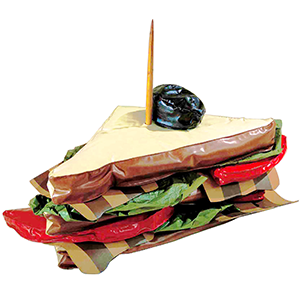
The BLT (Bacon, Lettuce, and Tomato) is a type of sandwich. The standard BLT is made up of five ingredients: bacon, lettuce, tomato, mayonnaise, and bread. The five ingredients can be altered according to preference; for example, the bread can be toasted and the mayonnaise home-made or replaced with ranch dressing. The BLT evolved from the tea sandwiches served before 1900 at a similar time to the club sandwich, although it is unclear when the name BLT became the norm.
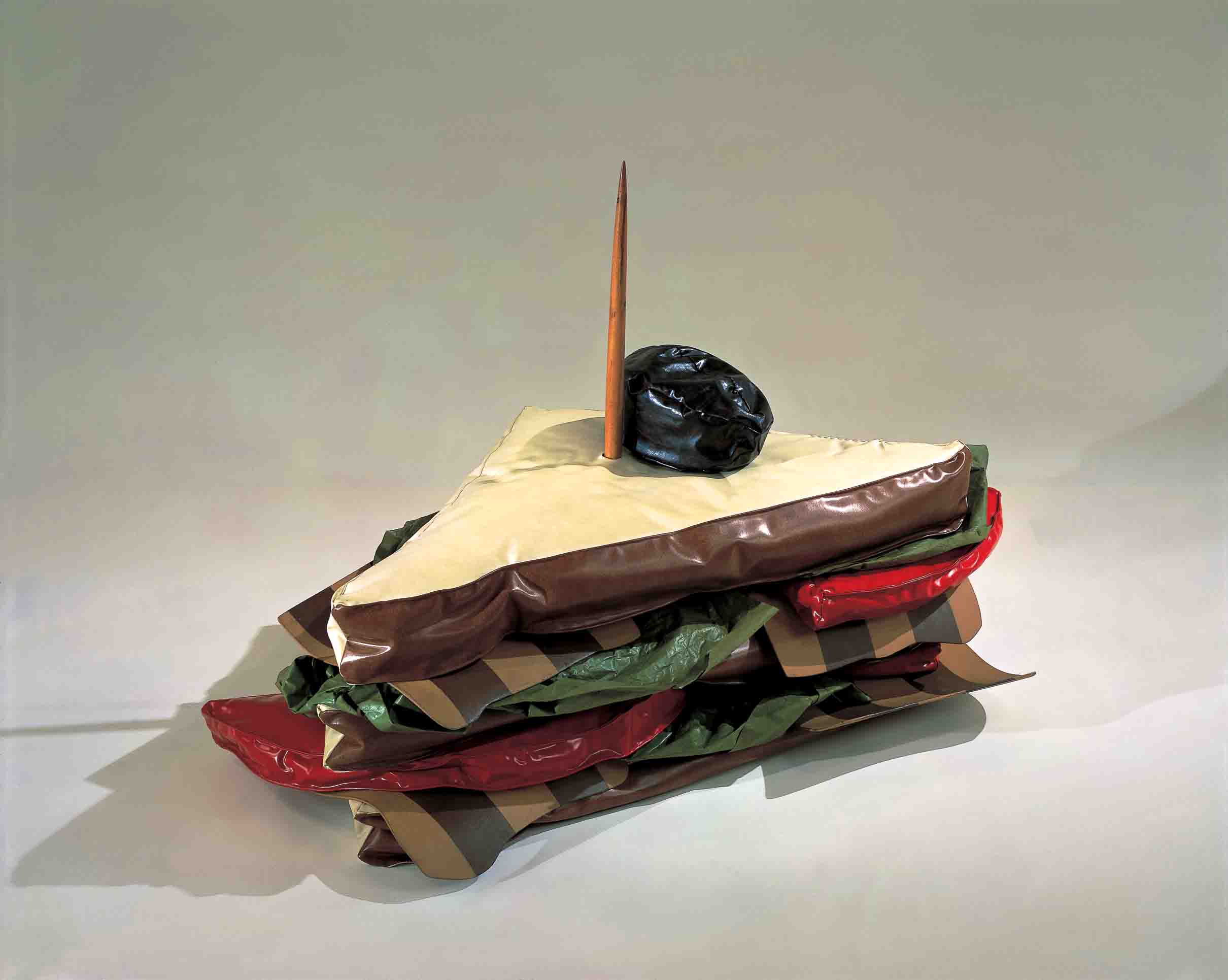
The sandwich’s popularity has led to a number of oversized reproductions (the current record for the ‘world’s largest BLT’ is over 209 ft/64 m) and a pop art sculpture by Claes Oldenburg.
read more »
Posted in Food |
Leave a Comment »
June 1, 2011

New Belgium Brewing Company is a regional brewery located in Fort Collins, Colorado. The brewery was founded by husband-and-wife team Jeff Lebesch and Kim Jordan in 1991 and emphasizes eco-friendly practices and employee ownership in its marketing materials. Fat Tire, an amber ale, is the company’s flagship beer. Its recipe originates from a co-founder’s bicycle trip through Belgium from brewery to brewery. The company promotes its Fat Tire ale locally by the public placement of colorful vintage bicycles outside its brewery, which is located adjacent to the public bike path along the Cache La Poudre River. New Belgium beer labels are designed by Anne Fitch, a watercolorist. Kim Jordan, the President of New Belgium Brewery, credits the success of New Belgium Brewery in part on Anne’s artwork, ‘Our beers were good, our labels were interesting to people, and we pretty quickly had a fairly robust following.’ In 2006, her artwork appeared on each of the over 125 million bottles sold by New Belgium.
Tour de Fat is a bicycle parade and festival sponsored by New Belgium. The events, which take place annually in various large- and medium-sized cities around the West, include music, New Belgium beer, circus- and -vaudeville type acts, bicycle dance troupes, and the main activist spectacle, a giant group bike ride/parade wherein the participants, many of whom are in fanciful costume, ride through town. The actual activist climax of the tour, however, is the bike trade, in which a local participant transfers the keys and title of their motor vehicle to New Belgium in exchange for a new commuter bike and trailer in order to promote bike riding and sustainability. The ‘Fat Tire’ bike is so strongly associated with New Belgium Breweries that employees of the brewery are given a ‘cruiser bike’ ‘like the one pictured on its Fat Tire Amber Ale label’ on their one -year anniversary with the company.
Posted in Art, Food, Money |
Leave a Comment »
May 23, 2011

Nyotaimori often referred to as ‘body sushi,’ is the practice of serving sashimi or sushi from the body of a woman, typically naked. Nantaimori refers to the same practice using a male model. This subdivision of food play is originally an obscure Japanese practice that has attracted considerable international media attention. Promoters, eating participants, and proponents of the practice often say that nyotaimori is a form of art. This argument is rejected by some feminists, who argue that it objectifies the woman or the man doing the serving.
Before becoming a living sushi platter, the person is trained to lie down for hours without moving. She or he must also be able to withstand the prolonged exposure to the cold food. Before service, the individual is supposed to have taken a bath using a special fragrance-free soap and then finished off with a splash of cold water to cool the body down somewhat for the sushi. In some parts of the world, in order to comply with sanitation laws, there must be a layer of plastic or other material between the sushi and the body of the woman or man.
Posted in Food, Sex, World |
Leave a Comment »
May 20, 2011
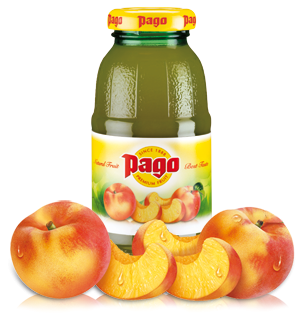
Nectars are a type of non-carbonated soft drink made with fruit juice. In some countries, the beverage industry distinguishes nectars from drinks labeled as juice. In the United States and the United Kingdom, the term ‘fruit juice’ is restricted to beverages that are 100% pure juice.
Nectar is generally accepted in the U.S. and in international trade for a diluted juice to denote a beverage that contains fruit juice and fruit puree. A juice or nectar including concentrate must state that it does. A blend of fruit juice(s) with other ingredients, such as high-fructose corn syrup, is called a juice cocktail or juice drink.
Posted in Food, Language, World |
Leave a Comment »



 The Daily Omnivore