June 14, 2013
Attribute substitution is a psychological process thought to underlie a number of cognitive biases and perceptual illusions. It occurs when an individual has to make a judgment (of a target attribute) that is computationally complex, and instead substitutes a more easily calculated heuristic (‘rule of thumb’) attribute. This substitution is thought of as taking place in the automatic intuitive judgment system, rather than the more self-aware reflective system.
Hence, when someone tries to answer a difficult question, they may actually answer a related but different question, without realizing that a substitution has taken place. This explains why individuals can be unaware of their own biases, and why biases persist even when the subject is made aware of them. It also explains why human judgments often fail to show regression toward the mean.
read more »
Posted in Health, Money, Science |
Leave a Comment »
June 14, 2013

A heuristic [hyoo-ris-tik] (Greek: ‘find’ or ‘discover’) is a practical way to solve a problem. It is better than chance, but does not always work. A person develops a heuristic by using intelligence, experience, and common sense. Trial and error is the simplest heuristic, but one of the weakest. ‘Rule of thumb’ and ‘educated guesses’ are other names for simple heuristics. Since a heuristic is not certain to get a result, there are always exceptions.
Sometimes heuristics are rather vague: ‘look before you leap’ is a guide to behavior, but ‘think about the consequences’ is a bit clearer. Sometimes a heuristic is a whole set of stages. When doctors examines a patient, they go through a series of tests and observations. They may not find out what is wrong, but they give themselves the best chance of succeeding. This is called a diagnosis. In computer science, a ‘heuristic’ is a kind of algorithm (a step-by-step list of directions that need to be followed to solve a problem).
read more »
Posted in Education, Health, Science |
Leave a Comment »
June 13, 2013
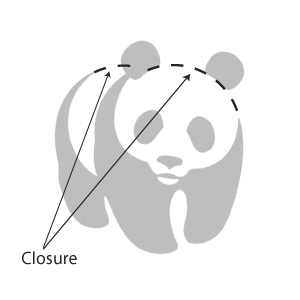
Closure or need for closure are psychological terms that describe the desire or need individuals have for information that will allow them to conclude an issue that had previously been clouded in ambiguity and uncertainty. Upon reaching this conclusion, they are now able to attain a state of ‘epistemic closure’.
The term ‘cognitive closure’ has been defined as ‘a desire for definite knowledge on some issue and the eschewal of confusion and ambiguity.’ Need for closure is a phrase used by psychologists to describe an individual’s desire for a firm solution as opposed to enduring ambiguity.
read more »
Posted in Education, Health, Science |
Leave a Comment »
June 10, 2013

In psychoanalytic theory, the term Oedipus [ed-uh-puhs] complex denotes the emotions and ideas that the mind keeps in the unconscious, via dynamic repression, that concentrates upon a child’s desire to sexually possess the parent of the opposite sex. Sigmund Freud, who coined the term believed that the Oedipus complex is a desire for the parent in both males and females; Freud deprecated the term ‘Electra complex,’ which was introduced by Carl Gustav Jung in regards to the Oedipus complex manifested in young girls.
The Oedipus complex occurs in the third — phallic stage (ages 3–6) — of five psychosexual development stages: (i) the oral, (ii) the anal, (iii) the phallic, (iv) the latent, and (v) the genital — in which the source of libidinal pleasure is in a different erogenous zone of the infant’s body.
read more »
Posted in Health, Sex |
1 Comment »
June 10, 2013

Celebrity Centres are Church of Scientology facilities that are open to the public but serve mostly artists and celebrities and other ‘professionals, leaders and promising new-comers in the fields of the arts, sports, management and government,’ as ‘those are the people who are sculpting the present into the future.’ The Celebrity Centre International was established in Hollywood, California, in 1969 by Yvonne Gillham, a Sea Org member who worked with L. Ron Hubbard. Since then, other centres have been established in New York, London, Paris and a number of other cities across the world.
The Church often quotes L. Ron Hubbard saying that, ‘A culture is only as great as its dreams and its dreams are dreamed by artists,’ citing this as the reason that Celebrity Centres were established — to create a good environment for ‘artists.’ Critics of Scientology point to Hubbard’s launch of ‘Project Celebrity’ in 1955 to recruit celebrities into the church, and that the centres were established as an extension of this initial purpose. The church denies the existence of policy to actively recruit high-ranking celebrities.
Posted in Health, Money, Philosophy |
Leave a Comment »
June 6, 2013

HeadOn is the brand name of a homeopathic product claimed to relieve headaches. It achieved widespread notoriety in 2006 as a result of a repetitive commercial, consisting only of the tagline ‘HeadOn. Apply directly to the forehead,’ stated three times in succession, accompanied by a video of a model using the product without ever directly stating the product’s purpose.
Focus groups recalled the ads much more than with any other method, although many people considered the ads annoying. Manufacturer Miralus Healthcare decided not to include any factual claims about the product in the spots after the National Advertising Division of the Better Business Bureau objected to the claim that HeadOn provided ‘fast, safe, effective’ headache relief made in an earlier spot.
Posted in Health, Money |
1 Comment »
May 30, 2013
A facial is a term for the sexual activity in which a man ejaculates semen onto the face of one or more sexual partners. A facial is a form of non-penetrative sex, though it is generally performed after some other means of sexual stimulation. Facial cum shots are currently regularly portrayed in pornographic films and videos, often as a way to close a scene.
Many sex experts consider the act demeaning and do not promote it. In response to an inquiry from a reader, sex columnist Dan Savage wrote: ‘Facials are degrading—and that’s why they’re so hot.’
read more »
Posted in Health, Politics, Sex |
1 Comment »
May 29, 2013
Cosmetic surgery of female genitalia, known as elective genitoplasty, has become pejoratively known as ‘designer vagina.’ Labiaplasty [ley-bee-uh-plas-tee] is a plastic surgery procedure for altering the labia minora (inner labia) and the labia majora (outer labia), the folds of skin surrounding the human vulva (external female genitals).
There are two main categories of women seeking cosmetic genital surgery: those with congenital conditions such as intersex, and those with no underlying condition. The size, color, and shape of labia vary significantly, and may change as a result of childbirth, aging, and other events. In a male-to-female sexual reassignment vaginoplasty is used for the creation of a neovagina, and labiaplasty creates labia where once there were none.
read more »
Posted in Health, Money, Sex |
Leave a Comment »
May 29, 2013
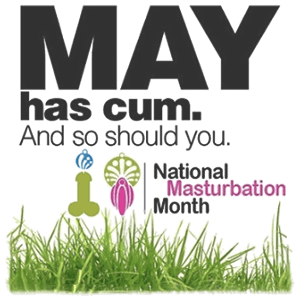
National Masturbation Day (NMD) is an annual event celebrated in May to protect the right to masturbate. The first National Masturbation Day was observed in 1995. The NMD is organized to protest against social stigma against masturbation. Sexologist Carol Queen, an organizer of the NMD, argued, although 90% of men and 65% of women in North America masturbate regularly, masturbation is viewed negatively in contemporary culture and deliberately excluded from the formal education system. According to Queen, ‘We gave our heads a shake and said it’s about time we fought back. That’s when we founded National Masturbation Day.’
The NMD in the United States was started by the San Francisco-based sex toy retail chain ‘Good Vibrations’ and its supporters. According to Cory Silverberg, one of the founders of ‘Come As You Are’ (a Toronto sex shop): ‘The message we want to spread is that masturbation promotes health and happiness- that’s what National Masturbation Day and the masturbate-athon are all about.’ The organizers of National Masturbation Day stressed the health benefits of masturbation citing examples such as stress management, healthier pelvic muscles, secretion of endorphins, decrease in chances of prostatitis among men, decrease in candidiasis among women, cardiovascular exercise, and safe sex.
Posted in Health, Sex |
Leave a Comment »
May 24, 2013

‘The Ethical Slut: A Guide to Infinite Sexual Possibilities’ is a 1997 non-fiction book written by family therapist Dossie Easton and sex educator Janet Hardy (given as pseudonym Catherine A. Liszt for the book’s first edition).
The book discusses consensual non-monogamy as a lifestyle, and provides practical guidance on how such long-term relationships work and are put into practice.
read more »
Posted in Health, Language, Sex |
1 Comment »
May 24, 2013

There are many toilet-related injuries and some toilet-related deaths throughout history and in urban legends. In young boys, one of the most common causes of genital injury is when the toilet seat falls down while they are using the toilet. Smaller children run the risk of drowning if they fall headfirst into the toilet. Injuries to adults include bruised buttocks, tail bones, and dislocated hips from unsuspectingly sitting on the toilet bowl rim because the seat is up or loose.
Injuries can also be caused by pinching due to splits in plastic seats or by splinters from wooden seats, or if the toilet itself collapses under the weight of the user. Older high flush cast iron cisterns have been known to detach from the wall when the chain is pulled to flush, causing injuries to the user.
read more »
Posted in Death, Health |
Leave a Comment »
May 23, 2013


Morphological freedom refers to a proposed civil right of a person to either maintain or modify his or her own body, on his or her own terms, through informed, consensual recourse to, or refusal of, available therapeutic or enabling medical technology.
The term may have been coined by strategic philosopher Max More in his 1993 article, ‘Technological Self-Transformation: Expanding Personal Extropy,’ where he defined it as ‘the ability to alter bodily form at will through technologies such as surgery, genetic engineering, nanotechnology, uploading.’ The term was later used by science debater Anders Sandberg as ‘an extension of one’s right to one’s body, not just self-ownership but also the right to modify oneself according to one’s desires.’
read more »
Posted in Health, Politics, Technology |
Leave a Comment »


 The Daily Omnivore