March 12, 2013

A comfort object, transitional object, or security blanket is an item used to provide psychological comfort, especially in unusual or unique situations, or at bedtime for small children. Among toddlers, comfort objects may take the form of a blanket, a stuffed animal, or a favorite toy, and may be referred to by English-speaking toddlers as ‘blankey’ or ‘lovey.’ Stuffed toys are sometimes equipped in emergency vehicles and police patrol cars, to be given to victims involved in an accident or traumatic shock, to provide them comfort.
Paramedics are trained to treat physical shock with a wide array of blankets designed to preserve heat, blood, and wounds for life threatening traumas. Often charities will provide comfort objects such as blankets and quilts to survivors of disasters. Psychologists are experimenting with the use of heavy thick fleece blankets to replace restraints such as straitjackets. They have noted through experiments with autistic children that weighted blankets have a desirable soothing effect to help calm agitated patients.
read more »
Posted in Health, Language |
Leave a Comment »
March 10, 2013

Pharming is a portmanteau of farming and ‘pharmaceutical’ and refers to the use of genetic engineering to insert genes that code for useful pharmaceuticals into host animals or plants that would otherwise not express those genes, thus creating a genetically modified organism (GMO).
The products of pharming are typically recombinant proteins (or their metabolic products), which are proteins that result from the expression of recombinant DNA (molecular cloning in a laboratory brings together genetic material from multiple sources, creating sequences that would not otherwise be found in biological organisms). Recombinant proteins are most commonly produced using bacteria or yeast in a bioreactor.
read more »
Posted in Drugs, Health, Science |
Leave a Comment »
March 9, 2013
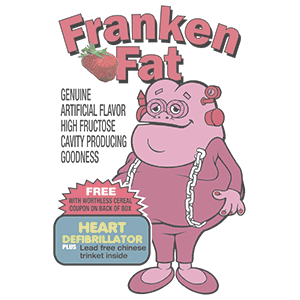
Childhood obesity is linked to Type 2 diabetes, heart disease, stroke, and high blood pressure, conditions uncommon in children and teenagers until recently. The term ‘overweight’ rather than obese is often used in children as it is less stigmatizing. The first problems to occur in obese children are usually emotional or psychological. Some of the other disorders would include liver disease, early puberty or menarche, eating disorders such as anorexia and bulimia, skin infections, and asthma and other respiratory problems.
Studies have shown that overweight children are more likely to grow up to be overweight adults. Obesity during adolescence has been found to increase mortality rates during adulthood. Obese children often suffer from teasing by their peers. Some are harassed or discriminated against by their own family. Stereotypes abound and may lead to low self-esteem and depression.
read more »
Posted in Food, Health |
Leave a Comment »
March 7, 2013

A neologism [nee-ol-uh-jiz-uhm] is a newly coined term, word, or phrase, that may be in the process of entering common use, but has not yet been accepted into mainstream language. Neologisms are often directly attributable to a specific person, publication, period, or event. The term is first attested in English in 1772, borrowed from French ‘néologisme.’ In psychiatry, the term is used to describe the use of words that have meaning only to the person who uses them, independent of their common meaning.
This tendency is considered normal in children, but in adults can be a symptom of psychopathy or a thought disorder (e.g. schizophrenia). People with autism also may create neologisms. Additionally, use of neologisms may be related to aphasia (sudden loss of language comprehension) acquired after brain damage resulting from a stroke or head injury. In theology, a ‘neologism’ is a relatively new doctrine (e.g. Transcendentalism). In this sense, a neologist is one who proposes either a new doctrine or a new interpretation of source material such as religious texts.
read more »
Posted in Health, Language |
Leave a Comment »
March 7, 2013
Mortality salience [sey-lee-uhns] is a term which describes awareness of one’s eventual death. Mortality salience has the potential to cause worldview defense, a psychological mechanism which strengthens people’s connection with their in-group as a defense mechanism. This can lead to feelings of nationalism and racial bigotry being intensified.
Studies also show that mortality salience can also lead people to feel more inclined to punish minor moral transgressions. One such study divided a group of judges into two groups — one which was asked to reflect upon their own mortality, and one group which was not. The judges were then asked to set a bond for an alleged prostitute. The group who had reflected on mortality set an average bond of $455, while the control group’s average bond was $50.
read more »
Posted in Death, Health, Philosophy |
Leave a Comment »
March 5, 2013

Sigmund Freud noticed that humor, like dreams, can be related to unconscious content. In the 1905 book ‘The Joke and Its Relation to The Unconscious,’ as well as in the 1928 journal article ‘Humor,’ Freud distinguished contentious jokes from non-contentious or silly humor. In fact, he sorted humor into three categories that could be translated as: joke, comic, and mimetic (imitation).
In Freud’s view, jokes (the verbal and interpersonal form of humor) happened when the conscious allowed the expression of thoughts that society usually suppressed or forbade. The superego (conscience) allowed the ego (self) to generate humor. A benevolent superego allowed a light and comforting type of humor, while a harsh superego created a biting and sarcastic type of humor. A very harsh superego suppressed humor altogether.
read more »
Posted in Health, Humor, Language |
Leave a Comment »
March 5, 2013

Social proof, also known as informational social influence, is a psychological phenomenon where people assume the actions of others in an attempt to reflect correct behavior for a given situation. This effect is prominent in ambiguous social situations where people are unable to determine the appropriate mode of behavior, and is driven by the assumption that surrounding people possess more knowledge about the situation.
The effects of social influence can be seen in the tendency of large groups to conform to choices which may be either correct or mistaken, a phenomenon sometimes referred to as herd behavior. Although social proof reflects a rational motive to take into account the information possessed by others, formal analysis shows that it can cause people to converge too quickly upon a single choice, so that decisions of even large groups of individuals may be grounded in very little information (i.e. information cascades).
read more »
Posted in Health, Science |
Leave a Comment »
March 4, 2013

Robert Cialdini is Regents’ Professor Emeritus of Psychology and Marketing at Arizona State University. He is best known for his book on persuasion and marketing, ‘Influence: The Psychology of Persuasion.’ The book has been translated into 26 languages has also been published as a textbook under the title ‘Influence: Science and Practice.’
In writing the book, he spent three years going ‘undercover’ applying for jobs and training at used car dealerships, fund-raising organizations, and telemarketing firms to observe real-life situations of persuasion. The book also reviews many of the most important theories and experiments in social psychology. Cialdini distills his theory down to six key principles: Reciprocity, Commitment and Consistency, Social Proof, Authority, Liking, and Scarcity.
read more »
Posted in Health, Money |
1 Comment »
February 28, 2013

The paleolithic diet (also popularly referred to as the caveman diet, Stone Age diet, and hunter-gatherer diet) is a modern nutritional plan based on the presumed ancient diet of wild plants and animals that various hominid species habitually consumed during the Paleolithic era—a period of about 2.5 million years which ended around 10,000 years ago with the development of agriculture and grain-based diets.
In common usage, such terms as the ‘Paleolithic diet’ also refer to the actual ancestral human diet. Centered on commonly available modern foods, the ‘contemporary’ Paleolithic diet consists mainly of fish, grass-fed pasture raised meats, eggs, vegetables, fruit, fungi, roots, and nuts, and excludes grains, legumes, dairy products, potatoes, refined salt, refined sugar, and processed oils.
read more »
Posted in Food, Health |
Leave a Comment »
February 26, 2013

The Mediterranean diet is a modern nutritional recommendation inspired by the traditional dietary patterns of southern Italy, Greece, and Spain. The principal aspects of this diet include proportionally high consumption of olive oil, legumes, unrefined cereals, fruits and vegetables, moderate to high consumption of fish, moderate consumption of dairy products (mostly as cheese and yogurt), moderate wine consumption, and low consumption of meat and meat products.
Despite its name, this diet is not typical of all Mediterranean cuisine. In Northern Italy, for instance, lard and butter are commonly used in cooking, and olive oil is reserved for dressing salads and cooked vegetables. In North Africa, wine is traditionally avoided by Muslims. In both North Africa and the Middle East, sheep’s tail fat and rendered butter (samna) are the traditional staple fats, with some exceptions.
read more »
Posted in Food, Health, World |
Leave a Comment »
February 20, 2013

Sensory-specific satiety [suh-tahy-i-tee] is a sensory hedonic phenomenon that refers to the declining satisfaction generated by the consumption of a certain type of food, and the consequent renewal in appetite resulting from the exposure to a new flavor or food. The phenomenon was first described in 1956 by French physiologist Jacques Le Magnen, and the term was coined in 1981 by food scientist Barbara J. Rolls and neuroscientist Edmund T. Rolls. Its concept illustrates the role of physical stimuli in generating appetite and, more specifically, explains the significance of taste in relation to hunger. Besides conditioned satiety and alimentary alliesthesia, it is one of the three major phenomena of satiation.
This process is most commonly illustrated by a standard buffet. People are more likely to eat a larger amount of food at a buffet because the variety of foods and flavors presented renews a sense of appetite in the individual. A study conducted by Rolls and van Duijvenvoorde in 1984 verified this process by simulating a buffet-style meal. They fed participants four meals that included sausages, bread and butter, chocolate desert, and bananas. They then fed the participants four courses of one of these foods. The results revealed a 44% increase in overall food consumption when exposed to the meals with a variety of foods.
read more »
Posted in Food, Health |
Leave a Comment »
February 18, 2013

‘Private Guns, Public Health‘ is a 2004 non-fiction book by David Hemenway, an economist who has served as Professor of Health Policy at the Harvard School of Public Health as well as the Director of Harvard’s Injury Control Research Center. He argues that the widespread ownership of firearms in private hands in the U.S. promotes the spread of the ‘disease’ of gun violence, and he takes a collective interpretation of the Second Amendment while stating that increased regulations are absolutely necessary in the purposes of public safety. Hemenway makes the central case that ‘more guns in a community lead to more homicide.’
Hemenway interprets the issues of gun violence and gun politics in the U.S. through a public health lens, which he believes ’emphasizes prevention rather than fault-finding, blame, or revenge.’ He writes that he is not ‘anti-gun’ or ‘anti-gun owner’ any more than people who advocate for consumer safety measures in cars are ‘anti-cars.’ He sums the goal of the book up as ‘injury prevention.’
read more »
Posted in Health, Language, Politics |
Leave a Comment »



 The Daily Omnivore