January 31, 2013
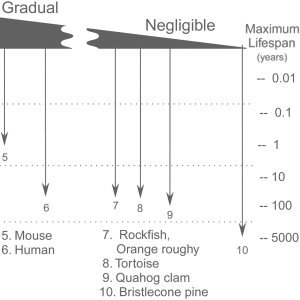
Negligible [neg-li-juh-buhl] senescence [si-nes-sens] refers to the lack of symptoms of aging in a few select animals. More specifically, negligibly senescent animals do not have measurable reductions in their reproductive capability with age, or measurable functional decline with age.
Death rates in negligibly senescent animals do not increase with age as they do in senescent organisms. Some fish, such as some varieties of sturgeon and rockfish, and some tortoises and turtles are thought to be negligibly senescent.
read more »
Posted in Death, Health, Science |
Leave a Comment »
January 31, 2013
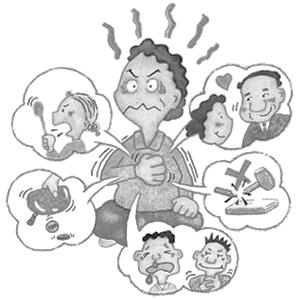
Han is a concept in Korean culture attributed as a national cultural trait. Han denotes a collective feeling of oppression and isolation in the face of overwhelming odds. It connotes aspects of lament and unavenged injustice.
The minjung theologian Suh Nam-dong describes han as a ‘feeling of unresolved resentment against injustices suffered, a sense of helplessness because of the overwhelming odds against one, a feeling of acute pain in one’s guts and bowels, making the whole body writhe and squirm, and an obstinate urge to take revenge and to right the wrong—all these combined.’ In some occasions, anthropologists have recognized han as a culture-specific medical condition whose symptoms include shortness of breath, heart palpitation, and dizziness. Someone who dies of han is said to have died of ‘hwabyeong’ (‘anger illness’ or ‘fire illness’).
read more »
Posted in Health, World |
Leave a Comment »
January 31, 2013
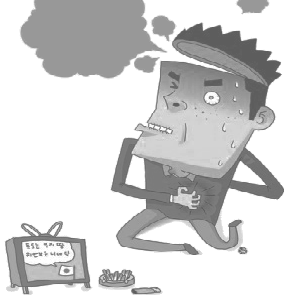
Hwabyeong, literally ‘anger illness’ or ‘fire illness,’ is a Korean culture-bound somatization disorder (e.g. panic disorder), a mental illness. It manifests as one or more of a wide range of physical symptoms, in response to emotional disturbance, such as stress from troublesome interpersonal relationships or life crises. It most often occurs in middle-aged, menopausal women with relatively low socio-economic status. The individuals typically live in traditional families, which stress the value of males while devaluing women, and in which a woman’s virtue is to quietly bear misfortune and unhappiness while maintaining harmony.
Hwabyung is believed to be caused by a build-up of unresolved anger, which disturbs the balance of the five bodily elements. The triggering cause is external events, particularly intra-familiar stressors such as spousal infidelity and conflict with in-laws. Because of the cultural emphasis on familial harmony and peace, expressing anger is not acceptable, so the anger is suppressed, and builds on itself over time. The suppressed anger, hate and despair is known as ‘han,’ or ‘everlasting woe.’
read more »
Posted in Health, World |
Leave a Comment »
January 22, 2013
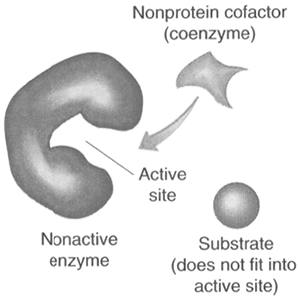
Coenzyme Q10 is an oil-soluble, vitamin-like substance present in most eukaryotic cells, primarily in the mitochondria. Enzymes are protein molecules which work as catalysts (accelerating chemical reactions); coenzymes are are non-protein compounds bound to an enzyme.
They are sometimes referred to as ‘helper molecules.’ CoQ10 aids in cellular respiration (the conversion of sugar into usable energy). It is a component of the electron transport chain and participates in aerobic respiration, generating energy in the form of ATP. Ninety-five percent of the human body’s energy is generated this way. Therefore, those organs with the highest energy requirements—such as the heart, liver and kidney—have the highest CoQ10 concentrations.
read more »
Posted in Drugs, Food, Health |
Leave a Comment »
January 22, 2013

An antioxidant [an-tee-ok-si-duhnt] is a molecule that can slow or stop the oxidation, or loss of electrons, of other molecules. Oxidation reactions are necessary for many bodily functions but can produce free radicals (molecules with an unpaired electron). In turn, these radicals can start chain reactions. When the chain reaction occurs in a cell, it can cause damage or death to the cell. Antioxidants terminate these chain reactions by removing free radical intermediates. They do this by being oxidized themselves (donating an electron to the free radical).
Vitamins and enzymes can have antioxidant properties that neutralize the damaging effects of free radicals. Although oxidation reactions are crucial for life, they can also be damaging; plants and animals maintain complex systems of multiple types of antioxidants. Insufficient levels of antioxidants, or inhibition of the antioxidant enzymes, cause oxidative stress and may damage or kill cells. As oxidative stress appears to be an important part of many human diseases, the use of antioxidants in pharmacology is intensively studied, particularly as treatments for stroke and neurodegenerative diseases. Moreover, oxidative stress is both the cause and the consequence of disease.
read more »
Posted in Food, Health, Science |
Leave a Comment »
January 22, 2013
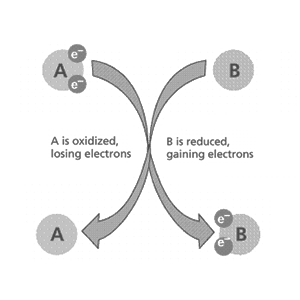
Oxidation [ok-si-dey-shuhn] is any chemical reaction that involves a loss of electrons. For example, when iron reacts with oxygen it forms a chemical called rust: the iron is oxidized (loses electrons) and the oxygen is reduced (gains electrons).
A reduction reaction always comes together with its opposite, the oxidation reaction, and together are called ‘redox’ (reduction and oxidation). Although oxidation reactions are commonly associated with the formation of oxides from oxygen molecules, these are only specific examples of a more general concept of reactions involving electron transfer.
read more »
Posted in Health, Science |
Leave a Comment »
January 22, 2013

A microexpression is a brief, involuntary facial expression made in reaction to an emotion. They usually occur in high-stakes situations, where people have something to lose or gain. Microexpressions occur when a person is consciously trying to conceal all signs of how he or she is feeling, or when a person does not consciously know how he or she is feeling. Unlike regular facial expressions, it is difficult to hide microexpression reactions. Microexpressions express the seven universal emotions: disgust, anger, fear, sadness, happiness, surprise, and contempt.
Nevertheless, in the 1990s, pyschologist Paul Ekman expanded his list of basic emotions, including a range of positive and negative emotions not all of which are encoded in facial muscles. These emotions are amusement, contempt, embarrassment, excitement, guilt, pride, relief, satisfaction, pleasure, and shame. They are very brief in duration, lasting only 1/25 to 1/15 of a second.
read more »
Posted in Health, Politics, Science |
1 Comment »
January 17, 2013
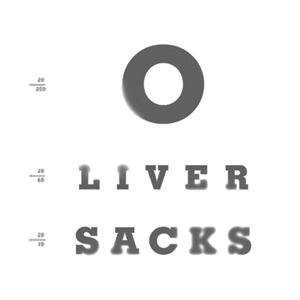
The phrase ‘mind’s eye‘ refers to the human ability for visualization, i.e., for the experiencing of visual mental imagery; in other words, one’s ability to ‘see’ things with the mind. The biological foundation of the mind’s eye is not fully understood. fMRI studies have shown that the lateral geniculate nucleus (in the thalamus) and the V1 area of the visual cortex are activated during mental imagery tasks.
Harvard Medical School psychiatrist John Ratey writes: ‘The visual pathway is not a one-way street. Higher areas of the brain can also send visual input back to neurons in lower areas of the visual cortex… As humans, we have the ability to see with the mind’s eye – to have a perceptual experience in the absence of visual input. For example, PET scans have shown that when subjects, seated in a room, imagine they are at their front door starting to walk either to the left or right, activation begins in the visual association cortex, the parietal cortex, and the prefrontal cortex – all higher cognitive processing centers of the brain.’
read more »
Posted in Health, Language, Philosophy |
Leave a Comment »
January 15, 2013
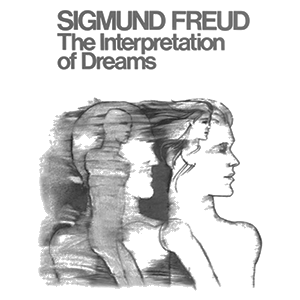
Dreamwork differs from classical dream interpretation in that the aim is to explore the various images and emotions that a dream presents and evokes, while not attempting to come up with a single unique dream meaning. In this way the dream remains ‘alive’ whereas if it has been assigned a specific meaning, it is ‘finished’ (i.e., over and done with). Dreamworkers take the position that a dream may have a variety of meanings depending on the levels (e.g. subjective, objective) that are being explored.
A tenet of dreamwork is that each person has his or her own dream ‘language.’ Any given place, person, object or symbol can differ in its meaning from dreamer to dreamer and also from time to time in the dreamer’s ongoing life situation. Thus someone helping a dreamer get closer to her or his dream through dreamwork adopts an attitude of ‘not knowing’ as far as possible.
read more »
Posted in Health, Philosophy |
1 Comment »
January 15, 2013

Dream interpretation is the process of assigning meaning to dreams. In many ancient societies, such as those of Egypt and Greece, dreaming was considered a supernatural communication or a means of divine intervention, whose message could be unravelled by people with certain powers. In modern times, various schools of psychology have offered theories about the meaning of dreams.
One of the earliest written examples of dream interpretation comes from the Babylonian ‘Epic of Gilgamesh.’ Gilgamesh dreamt that an axe fell from the sky. The people gathered around it in admiration and worship. Gilgamesh threw the axe in front of his mother and then he embraced it like a wife. His mother, Ninsun, interpreted the dream. She said that someone powerful would soon appear. Gilgamesh would struggle with him and try to overpower him, but he would not succeed. Eventually they would become close friends and accomplish great things. She added, ‘That you embraced him like a wife means he will never forsake you. Thus your dream is solved.’
read more »
Posted in Health, Philosophy |
1 Comment »
January 15, 2013
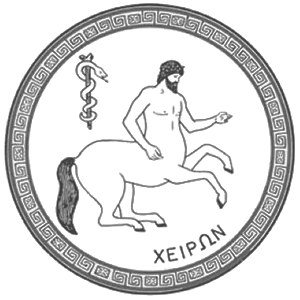
Wounded healer is an archetypal dynamic that psychologist Carl Jung used to describe a phenomenon that may take place, both positively and negatively, in the relationship between analyst and analysand. For Jung, ‘a good half of every treatment that probes at all deeply consists in the doctor’s examining himself…it is his own hurt that gives a measure of his power to heal. This, and nothing else, is the meaning of the Greek myth of the wounded physician.’ Latterly, the term has expanded from Jung’s original concept to cover the study of any professional healer who has been wounded, including counselors, psychotherapists, doctors and nurses.
In Greek mythology, the centaur Chiron was known as the ‘Wounded Healer,’ having been poisoned by one of Hercules’s arrows; but because he wasn’t able to heal himself he suffered thereafter from an incurable wound. It is also possible that Jung derives the term from the ancient Greek legend of Asclepius, a physician who in identification of his own wounds creates a sanctuary at Epidaurus in order to treat others. By contrast, Apollo Medicus subverted the folklore of the wounded healer, in so far as it was not his own suffering which empowered him to heal.
read more »
Posted in Health, Philosophy |
Leave a Comment »
January 14, 2013

The role of the unconscious mind on decision making is a topic greatly debated by neuro-scientists and psychologists around the world. Though the actual level of involvement of the unconscious brain during a cognitive process might still be a matter of differential opinion, the fact that the unconscious brain does play a role in cognitive activity is undeniable.
Several experiments and well recorded phenomenon attest to this fact and there have also been several experiments that have been performed that prove that the unconscious brain might actually be better at decision making that the conscious brain when there are multiple variable to be taken into consideration. The attitude of the scientific community towards the unconscious mind has undergone a drastic change from being viewed as a lazy reservoir of memories and non-task oriented behavior to being regarded as an active and essential component in the processes of decision making.
read more »
Posted in Health, Philosophy, Science |
Leave a Comment »


 The Daily Omnivore