January 13, 2013

The concept of psychological archetypes [ahr-ki-tahyps] was advanced by the Swiss psychiatrist Carl Jung [yoong], c. 1919. Jung described archetypes as highly developed elements of the collective unconscious (structures of the unconscious mind which are shared among beings of the same species) that can be seen repeated in story, art, myths, religions, and dreams. They are common motifs in human cultures such as ‘the mother,’ ‘the child,’ ‘the trickster,’ and ‘the flood,’ among others.
Carl Jung understood archetypes as universal, archaic patterns and images that derive from the collective unconscious and are the psychic counterpart of instinct. They are inherited potentials which are actualized when they enter consciousness as images or manifest in behavior on interaction with the outside world. They are autonomous and hidden forms which are transformed once they enter consciousness and are given particular expression by individuals and their cultures.
read more »
Posted in Health, Philosophy |
2 Comments »
January 11, 2013
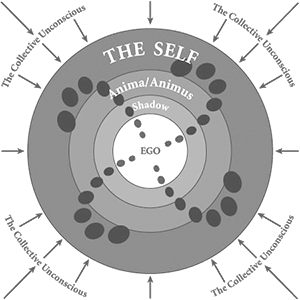
Collective unconscious is a term of analytical psychology, coined by Carl Jung. It is proposed to be a part of the unconscious mind, expressed in humanity and all life forms with nervous systems, and describes how the structure of the psyche autonomously organizes experience.
Jung distinguished the collective unconscious from the personal unconscious, in that the personal unconscious is a personal reservoir of experience unique to each individual, while the collective unconscious collects and organizes those personal experiences in a similar way with each member of a particular species.
read more »
Posted in Health, Philosophy, Science |
1 Comment »
January 10, 2013

Extropianism [eks-tro-pee-ahn-iz-uhm], also referred to as the philosophy of Extropy, is an evolving framework of values and standards for continuously improving the human condition. Extropians believe that advances in science and technology will some day let people live indefinitely.
An extropian may wish to contribute to this goal, e.g. by doing research and development or volunteering to test new technology. Extropianism describes a pragmatic consilience of transhumanist thought guided by a proactionary approach to human evolution and progress.
read more »
Posted in Health, Politics, Technology |
Leave a Comment »
January 10, 2013

Bicameralism [bahy-kam-er-uhl-iz-uhm] (the philosophy of ‘two-chamberedness’) is a hypothesis in psychology that argues that the human brain once assumed a state in which cognitive functions were divided between one part of the brain which appears to be ‘speaking,’ and a second part which listens and obeys—a bicameral mind.
The term was coined by psychologist Julian Jaynes, who presented the idea in his 1976 book ‘The Origin of Consciousness’ in the Breakdown of the Bicameral Mind,’ wherein he made the case that a bicameral mentality was the normal and ubiquitous state of the human mind only as recently as 3000 years ago. Jaynes saw bicamerality as primarily a metaphor. He used governmental bicameralism to describe a mental state in which the experiences and memories of the right hemisphere of the brain are transmitted to the left hemisphere via auditory hallucinations.
read more »
Posted in Health, Language, Philosophy |
Leave a Comment »
January 10, 2013

The method of loci [loh-sahy] (plural of Latin ‘locus’ for ‘place’ or ‘location’), also called the ‘memory palace,’ is a mnemonic device introduced in ancient Roman and Greek rhetorical treatises. The items to be remembered in this mnemonic system are mentally associated with specific physical locations. It relies on memorized spatial relationships to establish, order and recollect memorial content.
The method of loci is also commonly referred to as the journey method. In basic terms, it is a method of memory enhancement which uses visualization to organize and recall information. Many memory contest champions claim to use this technique in order to recall faces, digits, and lists of words. These champions’ successes have little to do with brain structure or intelligence, but more to do with their technique of using regions of their brain that have to do with spatial learning. Those parts of the brain that contribute most significantly to this technique include the medial parietal cortex, retrosplenial cortex, and the right posterior hippocampus.
read more »
Posted in Education, Health |
1 Comment »
January 10, 2013

The Google effect is the tendency to forget information that can be easily found using internet search engines such as Google, instead of remembering it.
The phenomenon was described and named by researchers Betsy Sparrow, Jenny Liu, and Daniel M. Wegner in 2011. Having easy access to the Internet, their study showed, makes people less likely to remember certain details they believe will be accessible online. People can still remember things they cannot find online, and how to find what they need on the Internet. Sparrow said this made the Internet a type of transactive memory. One result of this phenomenon is dependence on the Internet; if an online connection is lost, the researchers said, it is similar to losing a friend.
read more »
Posted in Health, Science, Technology |
Leave a Comment »
January 9, 2013

Moulage [moo-lahzh] (French: ‘casting/moulding’) is the art of applying mock injuries for the purpose of training Emergency Response Teams and other medical and military personnel. Moulage may be as simple as applying pre-made rubber or latex ‘wounds’ to a healthy ‘patient’s’ limbs, chest, head, etc., or as complex as using complicated makeup and theater techniques to provide elements of realism (such as blood, vomitus, open fractures, etc.) to the training simulation. The practice dates to at least the Renaissance, when wax figures were used for this purpose.
The history of wax models is ancient. Wax anatomical models were first made by Gaetano Giulio Zummo (1656–1701) who first worked in Naples, then Florence, and finally Paris, where he was granted monopoly right by Louis XIV. Later, Jules Baretta (1834–1923) made more than 2000 splendid wax models in Hospital Saint-Louis, Paris. While wax models were being made, he made pleasant conversations with the patients, sang songs or at times played the piano.
Posted in Education, Health |
Leave a Comment »
January 8, 2013

Philosophy of futility is a phrase coined by Columbia University marketing professor Paul Nystrom to describe the disposition caused by the monotony of the new industrial age.
Nystrom observed the natural effect of this malaise was seeking gratification found in frivolous things, such as fashionable apparel and goods. This tendency, he theorized, could be used to increase consumption of fashionable goods and services, resulting in a vicious circle of dissatisfaction and the desire for new consumer goods.
read more »
Posted in Health, Money, Philosophy |
1 Comment »
January 7, 2013

Paralanguage refers to non-verbal elements of spoken communication used to modify meaning and convey emotion, such as change in pitch, volume, or intonation. Paralanguage may be expressed consciously or unconsciously. The term ‘paralanguage’ should not be confused with ‘kinesics,’ or the study of body language. While kinesics is non-linguistic (it is not necessarily related to vocal or written language), paralanguage is. Paralinguistic information, because it is phenomenal, belongs to the external speech signal but not to the arbitrary conventional code of language.
The paralinguistic properties of speech play an important role in human speech communication. There are no utterances or speech signals that lack paralinguistic properties, since speech requires the presence of a voice that can be modulated. This voice must have some properties, and all the properties of a voice as such are paralinguistic. However, the distinction linguistic vs. paralinguistic applies not only to speech but to writing and sign language as well, and it is not bound to any sensory modality. Even vocal language has some paralinguistic as well as linguistic properties that can be seen (lip reading, McGurk effect), and even felt, e.g. by the Tadoma method (a touch based language for the deafblind).
read more »
Posted in Health, Language, Science |
Leave a Comment »
January 7, 2013

Nunchi refers to a concept in Korean culture that describes the subtle art and ability to listen and gauge others’ moods. In Western culture, nunchi could be described as the concept of emotional intelligence. In Korea, it is the person’s ‘kibun’ being read, which is his or her pride, mood, or state of mind. It is of central importance to the dynamics of interpersonal relationships in Korean culture.
Nunchi is literally translated as ‘eye-measure.’ It is closely related to the broader concept of paralanguage (non-verbal elements of communication used to modify meaning and convey emotion), however nunchi also relies on an understanding of one’s status relative to the person with whom they’re interacting. It can be seen as the embodiment of skills necessary to communicate effectively in Korea’s high context culture. The concept of nunchi, and one’s abundance or lack thereof, forms the basis of many common expressions and idioms. For example, a socially clumsy person can be described as ‘nunchi eoptta,’ meaning ‘absence of nunchi.’
Posted in Health, Language, World |
Leave a Comment »
January 6, 2013

Viral phenomena are objects or patterns able to replicate themselves or convert other objects into copies of themselves when these objects are exposed to them.
The concept of something, other than a biological virus, being viral came into vogue just after the Internet became widely popular in the mid-to-late 1990s. An object, even an immaterial object, is considered to be viral when it has the ability to spread copies of itself or change other similar objects to become more like itself when those objects are simply exposed to the viral object.
read more »
Posted in Health, Language, Technology |
Leave a Comment »
January 2, 2013
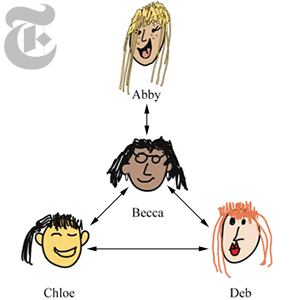
The friendship paradox is the phenomenon first observed by the sociologist Scott L. Feld in 1991 that most people have fewer friends than their friends have, on average. It can be explained as a form of sampling bias (e.g. non-random sample) in which people with greater numbers of friends have an increased likelihood of being observed among one’s own friends. In contradiction to this, most people believe that they have more friends than their friends have.
The same observation can be applied more generally to social networks defined by other relations than friendship: for instance, most people’s sexual partners have (on the average) a greater number of sexual partners than they have. In spite of its apparently paradoxical nature, the phenomenon is real, and can be explained as a consequence of the general mathematical properties of social networks.
read more »
Posted in Health, Science, Technology |
Leave a Comment »


 The Daily Omnivore