November 14, 2012

Homeopathy [hoh-mee-op-uh-thee] is a system of alternative medicine originated in 1796 by German physicist Samuel Hahnemann, based on the doctrine of ‘similia similibus curentur’ (‘like cures like’), according to which a substance that causes the symptoms of a disease in healthy people will cure that disease in sick people.
Scientific research has found homeopathic remedies ineffective and their postulated mechanisms of action implausible.
read more »
Posted in Health, Science |
Leave a Comment »
November 12, 2012
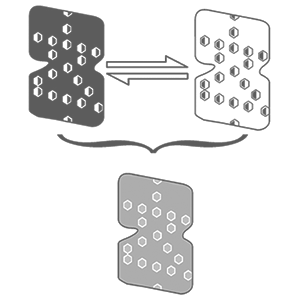
The quantum mind hypothesis proposes that classical mechanics cannot explain consciousness, while quantum mechanical phenomena, such as quantum entanglement (two particles acting in unison) and superposition (physical systems exist partly in all their particular, theoretically possible states, but, when measured, give a result corresponding to only one of the possible configurations [decoherence]), may play an important part in the brain’s function, and could form the basis of an explanation of consciousness.
However, physicist Victor Stenger characterized quantum consciousness as a ‘myth’ having ‘no scientific basis’ that ‘should take its place along with gods, unicorns and dragons.’ The main argument against the quantum mind proposition is that quantum states in the brain would decohere before they reached a spatial or temporal scale at which they could be useful for neural processing. This argument was elaborated by the physicist, Max Tegmark. Based on his calculations, Tegmark concluded that quantum systems in the brain decohere quickly and cannot control brain function.
read more »
Posted in Health, Philosophy, Science |
Leave a Comment »
November 9, 2012


Founded in 2001 by a team of MIT students, Design that Matters (DtM), is a nonprofit design company that partners with social entrepreneurs to design products that address basic needs in developing countries. DtM’s core competencies include ethnography, design, and engineering. DtM manages a collaborative design process through which hundreds of students and professional volunteers contribute to the design of new product and services for the poor in developing countries. DtM has completed projects in in healthcare, education, microfinance, and renewable energy.
DtM partners include the East Meets West Foundation, Solar Ear, World Education, the Center for Integration of Medicine and Innovative Technology’s Global Health Initiative (CIMIT GHI), the Centre for Mass Education in Science (CMES) in Bangladesh and the Mann Deshi Mahila Sahakari Bank in India.
read more »
Posted in Health, Technology, World |
Leave a Comment »
November 8, 2012
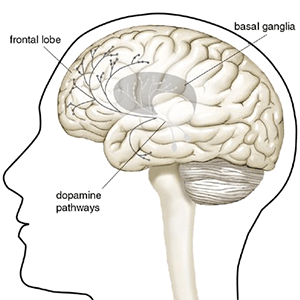
The mesolimbic pathway, sometimes referred to as the reward pathway, is a dopaminergic pathway in the brain. The pathway connects the ventral tegmental area, which is located in the midbrain, to the nucleus accumbens and olfactory tubercle, which are located in the ventral striatum.
The release of dopamine from the mesolimbic pathway into the nucleus accumbens regulates incentive salience (i.e., motivation and desire) for rewarding stimuli and facilitates reinforcement and reward-related motor function learning; it may also play a role in the subjective perception of pleasure. The dysregulation of the mesolimbic pathway and its output neurons in the nucleus accumbens plays a significant role in the development and maintenance of an addiction.
read more »
Posted in Drugs, Health, Science |
1 Comment »
November 8, 2012

Sensitization [sen-si-tuh-zey-shuhn] is an example of non-associative learning (learning involving exposure to a single event) in which the progressive amplification of a response follows repeated administrations of a stimulus. An everyday example of this mechanism is a warm sensation followed by pain caused by constantly rubbing an arm. The pain is the result of the progressively amplified response of the nerve endings.
Sensitization is thought to underlie both adaptive as well as maladaptive learning processes in the organism. Sensitization refers to the process by which a cellular receptor becomes more likely to respond to a stimulus (more efficient). There are a several of different types of sensitization: long-term potentiation, kindling, central sensitization, and drug sensitization.
read more »
Posted in Drugs, Health, Science |
1 Comment »
November 8, 2012

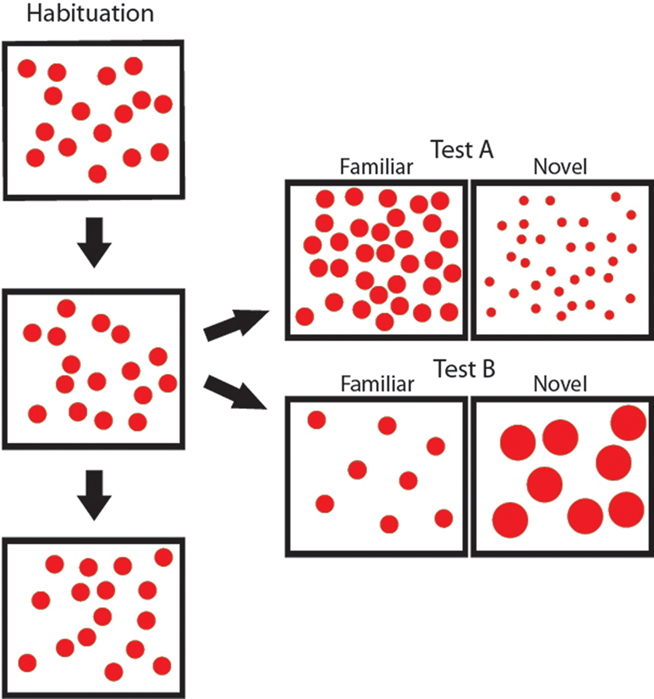
Habituation [huh-bich-oo-ey-shuhn] occurs when an animal responds less to repeated stimuli. It is a primitive kind of learning and a basic process of biological systems. Animals do not need conscious motivation or awareness for habituation to occur; it enables them to distinguish meaningful information from background stimuli. Habituation occurs in all animals, as well as in some large protozoans. The decrease in responding is specific to the habituated stimulus.
For example, if one was habituated to the taste of lemon, their responding would increase significantly when presented with the taste of lime (stimulus discrimination). Two factors that can influence habituation include the time between each stimulus, and the length of time the stimulus is presented. Shorter intervals and longer durations increase habituation, and vice versa.
read more »
Posted in Drugs, Health, Science |
Leave a Comment »
November 5, 2012

Chemophobia literally means ‘fear of chemicals.’ It is most often used to describe the assumption that ‘chemicals’ (i.e., man-made products or artificially concentrated but naturally occurring chemicals) are bad and harmful, while ‘natural’ things (i.e., chemical compounds that occur naturally or that are obtained using traditional techniques) are good and healthy.
General chemophobia derives from incomplete knowledge of science, or a misunderstanding of science, and is a form of technophobia and fear of the unknown. In terms of chemical safety, ‘industrial,’ ‘synthetic’ ‘artificial,’ and ‘man-made’ do not necessarily mean damaging, and ‘natural’ does not necessarily mean better.
read more »
Posted in Health, Science |
Leave a Comment »
October 29, 2012

Obesity in pets is common in many countries. Rates of overweight and obesity in dogs in the United States ranges from 23% to 41% with about 5.1% obese. Rates of obesity in cats was slightly higher at 6.4%. The risk of obesity in dogs but not cats is related to whether or not their owners are obese. Obese dogs and cats have a higher incidence of arthritis and heart disease.
In fact, fatness to the point of health impairment is enough of a concern that Pfizer developed and got Food and Drug Administration-approval for a drug (Slentrol) to treat canine and feline obesity. Pet owners have been prosecuted for cruelty to animals due to their dangerously obese dogs. Two British brothers were cited in 2006 for cruelty and neglect of their chocolate labrador retriever, ‘who was allegedly made so obese by his owners that he ‘looked like a seal’ and could barely waddle a few steps.’
read more »
Posted in Food, Health |
1 Comment »
October 29, 2012
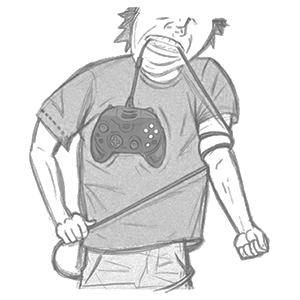
Video games addiction is use of computer and video games to make life bearable. Instances have been reported in which users play compulsively, isolating themselves from family and friends or from other forms of social contact, and focus almost entirely on in-game achievements rather than other life events, and exhibit lack of imagination and mood swings. There is no formal diagnosis of video game addiction in current medical or psychological literature.
Inclusion of it as a psychological disorder has been proposed and rejected for the next version of the Diagnostic and Statistical Manual of Mental Disorders (DSM). However, some scholars suggest the effects (or symptoms) of video game overuse may be similar to those of other proposed psychological addictions. Video game overuse may be like compulsive gambling, an impulse control disorder.
read more »
Posted in Games, Health |
2 Comments »
October 29, 2012
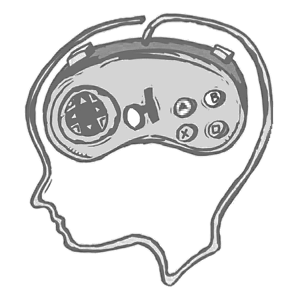
Game brain is a term coined by Japanese physiologist Akio Mori referring to the long term effects of video games on the human brain. Mori originally coined the term and presented the concept in his 2002 book ‘The Terror of Game Brain.’ Mori performed an experiment at Tokyo’s Nihon University designed to measure the effect of video games on human brain activity by examining beta waves (brainwaves associated with normal waking consciousness).
Mori claims his study revealed that people who spend long periods playing video games have reduced activity in the brain’s pre-frontal region, which governs emotion and creativity. Mori asserts that side effects can include loss of concentration, an inability to control temper, and problems socializing or associating with others. His theory has gained some recognition in popular culture, especially among parents who believe that video gaming can have detrimental effects on child development.
read more »
Posted in Games, Health, World |
Leave a Comment »
October 29, 2012
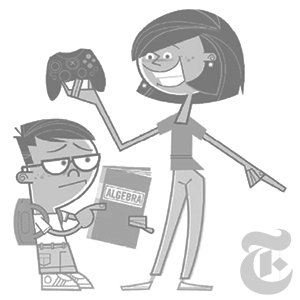
Numerous researchers have proposed potential positive effects of video games on aspects of social and cognitive development and psychological well-being. It has been shown that action video game players have better hand-eye coordination and visuo-motor skills, such as their resistance to distraction, their sensitivity to information in the peripheral vision and their ability to count briefly presented objects, than non-players.
With the development of the PlayStation Move, Kinect and Wii, video games can also help develop motor skills through full body movement. Video games also develop the individual’s intelligence, and in social games develop the social capabilities of the individual. Another way in which the usage of video games might provide a benefit is in the relief of stress.
read more »
Posted in Education, Games, Health |
1 Comment »
October 29, 2012
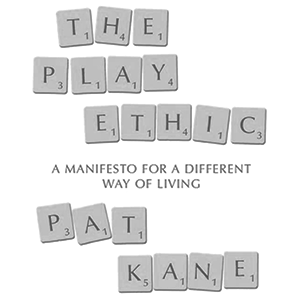
‘Everything Bad Is Good for You: How Today’s Popular Culture Is Actually Making Us Smarter’ is a non-fiction book written by American popular science author Steven Berlin Johnson.
Published in 2005, it is based upon Johnson’s theory that popular culture – in particular television shows and video games – has grown more complex and demanding over time and is improving the society within terms of intelligence and idea. The book’s claims, especially related to the proposed benefits of television, drew media attention.
read more »
Posted in Games, Health, Technology |
2 Comments »


 The Daily Omnivore