October 23, 2012

Hallucinogens [huh-loo-suh-nuh-juhns] are drugs which can cause hallucinations (seeing, hearing, or otherwise perceiving things that are not real). They are a general group of pharmacological agents that can be divided into three broad categories: psychedelics (drugs with perception-altering effects), dissociatives (drugs that produce feelings of detachment – dissociation – from the environment and self), and deliriants (drugs that induce a state of delirium in the user).
These classes of psychoactive drugs have in common that they can cause subjective changes in perception, thought, emotion and consciousness. Unlike other psychoactive drugs, such as stimulants and opioids, these drugs do not merely amplify familiar states of mind, but rather induce experiences that are qualitatively different from those of ordinary consciousness. These experiences are often compared to non-ordinary forms of consciousness such as trance, meditation, dreams, or insanity.
read more »
Posted in Drugs, Health, Philosophy |
Leave a Comment »
October 23, 2012


Psychedelic therapy refers to therapeutic practices involving the use of psychedelic drugs, particularly serotonergic psychedelics such as LSD, psilocybin, DMT, and 2C-B. As an alternative to synonyms such as ‘hallucinogen,’ ‘entheogen,’ ‘psychotomimetic’ and other functionally constructed names, the use of the term ‘psychedelic’ (‘mind-manifesting’) emphasizes that those who use these drugs as part of a therapeutic practice believe these drugs can facilitate beneficial exploration of the psyche.
Proponents of psychedelic therapy also believe psychedelics enhance or unlock key psychoanalytic abilities, and so make it easier for conventional psychotherapy to take place. Psychedelic therapy, in the broadest possible sense of the term, undoubtedly dates from prehistoric knowledge of hallucinogenic plants. Though usually viewed as predominantly spiritual in nature, elements of psychotherapeutic practice can be recognized in the entheogenic or shamanic rituals of many cultures. Shamans have historically been well known throughout the world to mix two or more substances to produce synergistic effects.
read more »
Posted in Drugs, Health, Politics |
Leave a Comment »
October 22, 2012
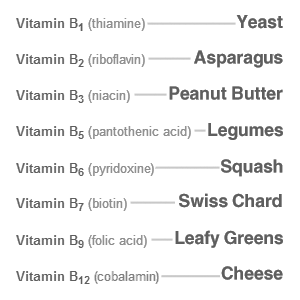
The B vitamin complex are a group of 8 water-soluble vitamins that play important roles in cell metabolism. Originally, it was thought they were just different forms of one vitamin (like with Vitamin D, for example).
Later it turned out that they are separate vitamins that often can be found together: Vitamin B1 (Thiamine), Vitamin B2 (Riboflavin), Vitamin B3 (Niacin) Vitamin B5 (pantothenic acid), Vitamin B6 (Pyridoxine), Vitamin B7 (Biotin), Vitamin B9 (Folic acid), and Vitamin B12 (Cyanocobalamin).
read more »
Posted in Food, Health |
Leave a Comment »
October 21, 2012

A hiccup is a contraction of the diaphragm that may repeat several times per minute. In medicine it is known as ‘synchronous diaphragmatic flutter’ (SDF), or ‘singultus,’ from the Latin ‘singult,’ ‘the act of catching one’s breath while sobbing.’ The hiccup is an involuntary action involving a reflex arc.
Once triggered, the reflex causes a strong contraction of the diaphragm followed about 0.25 seconds later by closure of the vocal cords, which results in the classic hic sound. At the same time, the normal peristalis of the esophagus is suppressed. A bout of hiccups, in general, resolves itself without intervention, although many home remedies are often used to attempt to shorten the duration. Medical treatment is occasionally necessary in cases of chronic hiccups.
read more »
Posted in Health, Science |
1 Comment »
October 21, 2012

Compared to other diseases or other cancers, breast cancer receives a disproportionate share of resources and attention. In 2001 MP Ian Gibson, chairman of the House of Commons of the United Kingdom all party group on cancer stated ‘The treatment has been skewed by the lobbying, there is no doubt about that. Breast cancer sufferers get better treatment in terms of bed spaces, facilities and doctors and nurses.’
Breast cancer also receives significantly more media coverage than other, equally prevalent cancers, with a study by Prostate Coalition showing 2.6 breast cancer stories for each one covering cancer of the prostate. Ultimately there is a concern that favoring sufferers of breast cancer with disproportionate funding and research on their behalf may well be costing lives elsewhere. Partly because of its relatively high prevalence and long-term survival rates, research is biased towards breast cancer. Some subjects, such as cancer-related fatigue, have been studied in little except women with breast cancer.
read more »
Posted in Health, Money, Politics |
Leave a Comment »
October 20, 2012
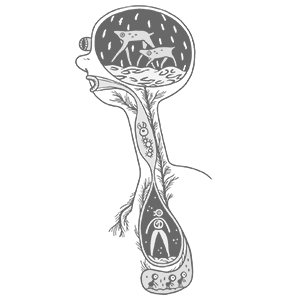
Food microbiology is the study of the microorganisms that inhabit, create, or contaminate food. Including the study of microorganisms causing food spoilage. ‘Good’ bacteria, however, such as probiotics, are becoming increasingly important in food science. In addition, microorganisms are essential for the production of foods such as cheese, yogurt, other fermented foods, bread, beer and wine. Food safety is a major focus of food microbiology. Pathogenic bacteria, viruses, and toxins produced by microorganisms are all possible contaminants of food.
However, microorganisms and their products can also be used to combat these pathogenic microbes. Probiotic bacteria, including those that produce bacteriocins (toxins created by bacteria to kill rival bacteria), can inhibit pathogens. Alternatively, purified bacteriocins such as nisin can be added directly to food products. Finally, bacteriophages, viruses that only infect bacteria, can be used to kill bacterial pathogens. Thorough preparation of food, including proper cooking, eliminates most bacteria and viruses. However, toxins produced by contaminants may not be heat-labile, and some are not eliminated by cooking
read more »
Posted in Food, Health, Science |
3 Comments »
October 19, 2012

Fermentation [fur-men-tey-shuhn] is when a living cell uses sugar for energy without requiring oxygen. Yeast is an organism that ferments. When yeast ferments sugar, the yeast eats sugar and makes alcohol. Other organisms (such as bacteria) make vinegar (acetic acid) or lactic acid when they ferment sugar. Fermentation is used to make beer, some types of fuel, and to make bread rise. When yeast ferments, it breaks down the glucose into ethanol and carbon dioxide.
Ethanol fermentation always produces ethanol and carbon dioxide. It is important in bread-making, brewing, and winemaking. Lactic acid fermentation produces lactic acid. It happens in muscles of animals when they need lots of energy fast, and is also used to preserve foods in pickling. The word ‘fermentation’ is derived from the Latin verb ‘fervere,’ which means ‘to boil’ (same root as ‘effervescence’). It is thought to have been first used in the late fourteenth century in alchemy, but only in a broad sense. It was not used in the modern scientific sense until around 1600.
read more »
Posted in Food, Health, Science |
Leave a Comment »
October 18, 2012
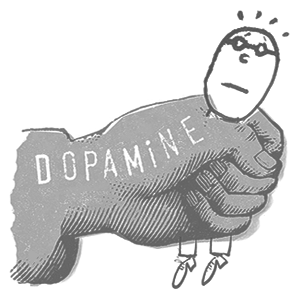
A reward is a appetitive stimulus given to a human or some other animal to alter its behavior. Rewards typically serve as a reinforcers, something that, when presented after a behavior, causes the probability of that behavior’s occurrence to increase.
Note that just because something is labelled a reward does not necessitate it as a reinforcer. A reward can only be said to be a reinforcer if its delivery has increased the probability of a behavior. Certain neural structures, called the reward system, are critically involved mediating the effects of reinforcement.
read more »
Posted in Drugs, Health, Money |
1 Comment »
October 16, 2012
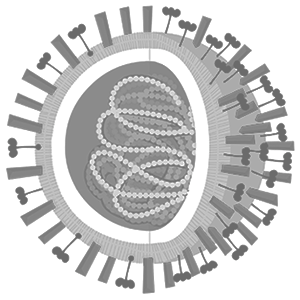
Opinions differ on whether viruses are a form of life, or organic structures that interact with living organisms. They have been described as ‘organisms at the edge of life,’ since they resemble organisms in that they possess genes and evolve by natural selection, and reproduce by creating multiple copies of themselves through self-assembly. Although they have genes, they do not have a cellular structure, which is often seen as the basic unit of life.
Viruses do not have their own metabolism, and require a host cell to make new products. They therefore cannot naturally reproduce outside a host cell (although bacterial species such as chlamydia are considered living organisms despite the same limitation). Accepted forms of life use cell division to reproduce, whereas viruses spontaneously assemble within cells. They differ from autonomous growth of crystals as they inherit genetic mutations while being subject to natural selection. Virus self-assembly within host cells has implications for the study of the origin of life, as it lends further credence to the hypothesis that life could have started as self-assembling organic molecules.
Posted in Health, Philosophy, Science |
Leave a Comment »
October 9, 2012

A powered exoskeleton, also known as powered armor, or exoframe, is a powered mobile machine consisting primarily of an exoskeleton-like framework worn by a person and a power supply that supplies at least part of the activation-energy for limb movement. Powered exoskeletons are designed to assist and protect the wearer. They may be designed, for example, to assist and protect soldiers and construction workers, or to aid the survival of people in other dangerous environments. A wide medical market exists in the future of prosthetics to provide mobility assistance for aged and infirm people.
Other possibilities include rescue work, such as in collapsed buildings, in which the device might allow a rescue worker to lift heavy debris, while simultaneously protecting the worker from falling rubble. A fictional ‘mech’ is different from a powered exoskeleton in that the mecha is typically much larger than a normal human body, and does not directly enhance the motion or strength of the physical limbs. Instead the human operator occupies a cabin or pilot’s control seat inside a small portion of the larger system. Within this cabin the human may wear a small lightweight exoskeleton that serves as a haptic control interface for the much larger exterior appendages.
read more »
Posted in Health, Technology, War |
Leave a Comment »
October 9, 2012

‘Conversion therapy‘ (also known as ‘Reparative therapy’) is a pseudo-scientific therapy that aims to change sexual orientation. Mainstream American medical and scientific organizations have expressed concern over conversion therapy and consider it potentially harmful. The advancement of conversion therapy may cause social harm by disseminating inaccurate views about sexual orientation. As a result, conversion therapy on minors is illegal in California.
The American Psychiatric Association has condemned psychiatric ‘treatment’ which is ‘based upon the assumption that homosexuality per se is a mental disorder or based upon the a priori assumption that a patient should change his/her sexual homosexual orientation.’ It states that, ‘Ethical practitioners refrain from attempts to change individuals’ sexual orientation.’ And that political and moral debates over the integration of gays and lesbians into the mainstream of American society have obscured scientific data about changing sexual orientation ‘by calling into question the motives and even the character of individuals on both sides of the issue.’
read more »
Posted in Health, Philosophy, Sex |
1 Comment »
October 3, 2012
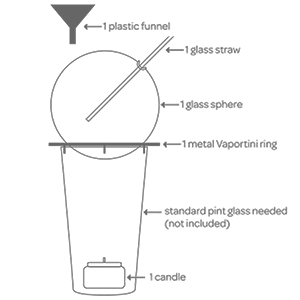
Alcohol Without Liquid is a process introduced first in Asia and Europe that allows people to take in liquor (distilled spirits) without actually consuming liquid. The machine vaporizes alcohol and mixes it with oxygen, allowing the consumer to breathe in the mixture.
The machine has been dubbed AWOL, a play on the military term AWOL (Absent Without Leave). The AWOL machine produces a very fine alcoholic mist. The continual intake of this mist over a twenty-minute period is the equivalent of taking one shot of distilled spirits. The machine was introduced to the United States in 2004.
read more »
Posted in Drugs, Health, Technology |
1 Comment »


 The Daily Omnivore