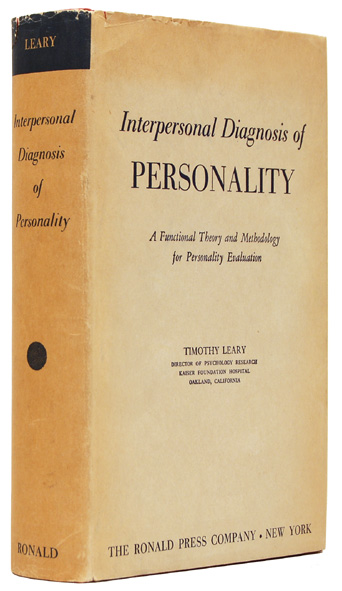
Interpersonal reflex is a term created by Timothy Leary and explained in the book, ‘Interpersonal Diagnosis of Personality: A functional theory and methodology for personality evaluation’ (1957). While examining recorded protocols of communications in adults, Leary discovered that typical patterns of interaction existed. Individual units of these behaviors were called interpersonal mechanisms or interpersonal reflexes: ‘They are defined as the observable, expressive units of face-to-face social behavior.’ These reflexes are automatic and involuntary responses to interpersonal situations. They are independent of the content of the communication. They are the individual’s spontaneous methods of reacting to others.
Leary states, ‘The reflex manner in which human beings react to others and train others to respond to them in selective ways is, I believe, the most important single aspect of personality. The systematic estimates of a patient’s repertoire of interpersonal reflexes is a key factor in functional diagnosis.’ Examining interpersonal reflexes helps to explain communication and behavioral patterns in healthy and unhealthy relationships. For example, tender, supportive operations tend to train others to agree, conciliate, and depend. Rigid autocratic individuals seek out docile admiring followers. Competitive, self-enhancing behavior pulls envy, distrust, inferiority feelings, and at times respectful admiration from others.
Interpersonal Reflex
Interpersonal Circumplex

The interpersonal circumplex is a model for conceptualizing, organizing, and assessing interpersonal behavior, traits, and motives. It is defined by two orthogonal axes: a vertical axis (of status, dominance, power, or control) and a horizontal axis (of solidarity, friendliness, warmth, or love).
In recent years, it has become conventional to identify the vertical and horizontal axes with the broad constructs of agency and communion. Thus, each point in the interpersonal circumplex space can be specified as a weighted combination of agency and communion.
read more »
Eight-circuit Model of Consciousness

The eight-circuit model of consciousness is a transhuman (an intermediary form between the human and a hypothetical posthuman) theory proposed by Timothy Leary and expanded on by Robert Anton Wilson and Antero Alli. The model describes eight circuits of information (eight ‘brains’) that operate within the human nervous system.
Each circuit is concerned with a different sphere of activity. The lower four, the ‘larval circuits,’ deal with normal psychology, while the upper four, the ‘stellar circuits,’ deal with psychic, mystical, enlightened and psychedelic states of mind.
read more »
Hallucinogen

Hallucinogens [huh-loo-suh-nuh-juhns] are drugs which can cause hallucinations (seeing, hearing, or otherwise perceiving things that are not real). They are a general group of pharmacological agents that can be divided into three broad categories: psychedelics (drugs with perception-altering effects), dissociatives (drugs that produce feelings of detachment – dissociation – from the environment and self), and deliriants (drugs that induce a state of delirium in the user).
These classes of psychoactive drugs have in common that they can cause subjective changes in perception, thought, emotion and consciousness. Unlike other psychoactive drugs, such as stimulants and opioids, these drugs do not merely amplify familiar states of mind, but rather induce experiences that are qualitatively different from those of ordinary consciousness. These experiences are often compared to non-ordinary forms of consciousness such as trance, meditation, dreams, or insanity.
read more »
Psychedelic Therapy


Psychedelic therapy refers to therapeutic practices involving the use of psychedelic drugs, particularly serotonergic psychedelics such as LSD, psilocybin, DMT, and 2C-B. As an alternative to synonyms such as ‘hallucinogen,’ ‘entheogen,’ ‘psychotomimetic’ and other functionally constructed names, the use of the term ‘psychedelic’ (‘mind-manifesting’) emphasizes that those who use these drugs as part of a therapeutic practice believe these drugs can facilitate beneficial exploration of the psyche.
Proponents of psychedelic therapy also believe psychedelics enhance or unlock key psychoanalytic abilities, and so make it easier for conventional psychotherapy to take place. Psychedelic therapy, in the broadest possible sense of the term, undoubtedly dates from prehistoric knowledge of hallucinogenic plants. Though usually viewed as predominantly spiritual in nature, elements of psychotherapeutic practice can be recognized in the entheogenic or shamanic rituals of many cultures. Shamans have historically been well known throughout the world to mix two or more substances to produce synergistic effects.
read more »
B Vitamins
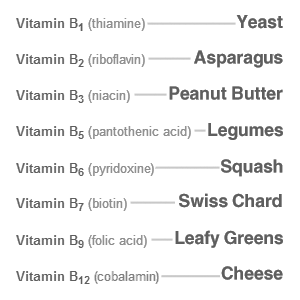
The B vitamin complex are a group of 8 water-soluble vitamins that play important roles in cell metabolism. Originally, it was thought they were just different forms of one vitamin (like with Vitamin D, for example).
Later it turned out that they are separate vitamins that often can be found together: Vitamin B1 (Thiamine), Vitamin B2 (Riboflavin), Vitamin B3 (Niacin) Vitamin B5 (pantothenic acid), Vitamin B6 (Pyridoxine), Vitamin B7 (Biotin), Vitamin B9 (Folic acid), and Vitamin B12 (Cyanocobalamin).
read more »
Hiccup
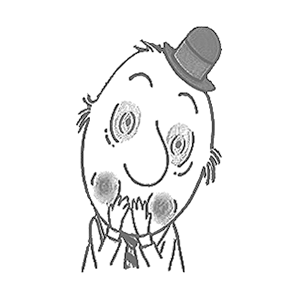
A hiccup is a contraction of the diaphragm that may repeat several times per minute. In medicine it is known as ‘synchronous diaphragmatic flutter’ (SDF), or ‘singultus,’ from the Latin ‘singult,’ ‘the act of catching one’s breath while sobbing.’ The hiccup is an involuntary action involving a reflex arc.
Once triggered, the reflex causes a strong contraction of the diaphragm followed about 0.25 seconds later by closure of the vocal cords, which results in the classic hic sound. At the same time, the normal peristalis of the esophagus is suppressed. A bout of hiccups, in general, resolves itself without intervention, although many home remedies are often used to attempt to shorten the duration. Medical treatment is occasionally necessary in cases of chronic hiccups.
read more »
Beast Cancer Overemphasis

Compared to other diseases or other cancers, breast cancer receives a disproportionate share of resources and attention. In 2001 MP Ian Gibson, chairman of the House of Commons of the United Kingdom all party group on cancer stated ‘The treatment has been skewed by the lobbying, there is no doubt about that. Breast cancer sufferers get better treatment in terms of bed spaces, facilities and doctors and nurses.’
Breast cancer also receives significantly more media coverage than other, equally prevalent cancers, with a study by Prostate Coalition showing 2.6 breast cancer stories for each one covering cancer of the prostate. Ultimately there is a concern that favoring sufferers of breast cancer with disproportionate funding and research on their behalf may well be costing lives elsewhere. Partly because of its relatively high prevalence and long-term survival rates, research is biased towards breast cancer. Some subjects, such as cancer-related fatigue, have been studied in little except women with breast cancer.
read more »
Food Microbiology
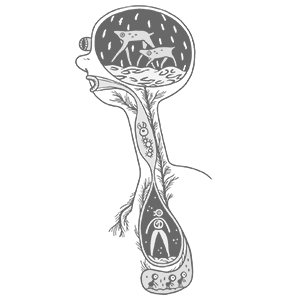
Food microbiology is the study of the microorganisms that inhabit, create, or contaminate food. Including the study of microorganisms causing food spoilage. ‘Good’ bacteria, however, such as probiotics, are becoming increasingly important in food science. In addition, microorganisms are essential for the production of foods such as cheese, yogurt, other fermented foods, bread, beer and wine. Food safety is a major focus of food microbiology. Pathogenic bacteria, viruses, and toxins produced by microorganisms are all possible contaminants of food.
However, microorganisms and their products can also be used to combat these pathogenic microbes. Probiotic bacteria, including those that produce bacteriocins (toxins created by bacteria to kill rival bacteria), can inhibit pathogens. Alternatively, purified bacteriocins such as nisin can be added directly to food products. Finally, bacteriophages, viruses that only infect bacteria, can be used to kill bacterial pathogens. Thorough preparation of food, including proper cooking, eliminates most bacteria and viruses. However, toxins produced by contaminants may not be heat-labile, and some are not eliminated by cooking
read more »
Fermentation

Fermentation [fur-men-tey-shuhn] is when a living cell uses sugar for energy without requiring oxygen. Yeast is an organism that ferments. When yeast ferments sugar, the yeast eats sugar and makes alcohol. Other organisms (such as bacteria) make vinegar (acetic acid) or lactic acid when they ferment sugar. Fermentation is used to make beer, some types of fuel, and to make bread rise. When yeast ferments, it breaks down the glucose into ethanol and carbon dioxide.
Ethanol fermentation always produces ethanol and carbon dioxide. It is important in bread-making, brewing, and winemaking. Lactic acid fermentation produces lactic acid. It happens in muscles of animals when they need lots of energy fast, and is also used to preserve foods in pickling. The word ‘fermentation’ is derived from the Latin verb ‘fervere,’ which means ‘to boil’ (same root as ‘effervescence’). It is thought to have been first used in the late fourteenth century in alchemy, but only in a broad sense. It was not used in the modern scientific sense until around 1600.
read more »
Reward System
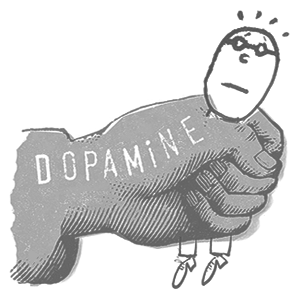
A reward is a appetitive stimulus given to a human or some other animal to alter its behavior. Rewards typically serve as a reinforcers, something that, when presented after a behavior, causes the probability of that behavior’s occurrence to increase.
Note that just because something is labelled a reward does not necessitate it as a reinforcer. A reward can only be said to be a reinforcer if its delivery has increased the probability of a behavior. Certain neural structures, called the reward system, are critically involved mediating the effects of reinforcement.
read more »
Virus as Life
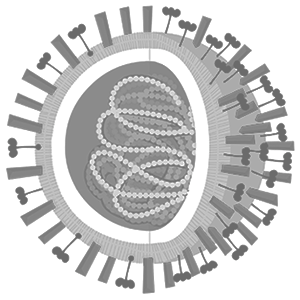
Opinions differ on whether viruses are a form of life, or organic structures that interact with living organisms. They have been described as ‘organisms at the edge of life,’ since they resemble organisms in that they possess genes and evolve by natural selection, and reproduce by creating multiple copies of themselves through self-assembly. Although they have genes, they do not have a cellular structure, which is often seen as the basic unit of life.
Viruses do not have their own metabolism, and require a host cell to make new products. They therefore cannot naturally reproduce outside a host cell (although bacterial species such as chlamydia are considered living organisms despite the same limitation). Accepted forms of life use cell division to reproduce, whereas viruses spontaneously assemble within cells. They differ from autonomous growth of crystals as they inherit genetic mutations while being subject to natural selection. Virus self-assembly within host cells has implications for the study of the origin of life, as it lends further credence to the hypothesis that life could have started as self-assembling organic molecules.