August 25, 2012

The Livestrong wristband (stylized as LIVESTRONG) is a yellow silicone gel bracelet launched in 2004 as a fund-raising item for the Lance Armstrong Foundation, founded by cyclist and cancer survivor Lance Armstrong. The bracelet itself was developed by Nike and their ad agency Wieden+Kennedy. The bracelet is part of the ‘Wear Yellow Live Strong’ educational program. The program is intended to raise money for cancer research, raise cancer awareness, and encourage people to live life to the fullest.
The bracelet sells individually, as well as in packs of 10, 100, and 1,200 as part of an effort to raise $25.1 million for the Lance Armstrong Foundation in cooperation with Nike who manufactures the bracelets in manufacturing plants both domestic and foreign and sells the bracelets through their Nike outlets worldwide. This target was achieved within 6 months, and there have now been 80 million Livestrong bracelets sold to date. Yellow was chosen for its importance in professional cycling, as it is the color of the yellow jersey worn by the leader of the Tour de France, which Armstrong won seven consecutive times.
Posted in Games, Health, Money |
1 Comment »
August 24, 2012
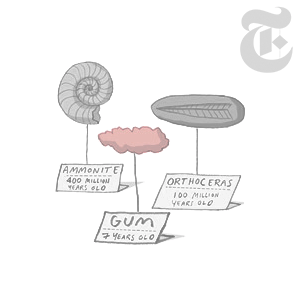
One old wives’ tale says that swallowed gum will remain in a human’s stomach for up to 7 years. According to several medical opinions, there seems to be little truth behind the tale. In most cases, swallowed gum will pass through the system as fast as any other food.
There have been a few cases where swallowing gum has required medical attention, but these cases are more or less related to chronic gum swallowers. One young boy swallowed several pieces each day and had to be hospitalized, and a young girl required medical attention when she swallowed her gum and four coins, which got stuck together in her esophagus. A bezoar (a mass trapped in the gastrointestinal system) is formed in the stomach when food or other foreign objects stick to gum and build up, causing intestinal blockage.
Posted in Food, Health |
Leave a Comment »
August 23, 2012

A blooming onion is a dish consisting of one large onion which is cut to resemble a flower, battered and deep-fried. It is served as an appetizer at some restaurants. The dish was created by chef Jeff Glowski in New Orleans and first appeared on the menu of Russell’s Marina Grill in that city as ‘Onion Mumm.’ The owners of Scotty’s Steak House in Springfield, New Jersey also claim to have invented this dish in the 1970s.
It was popularized nationally when it appeared as ‘Bloomin’ Onion,’ a charter feature of the Outback Steakhouse when that national chain opened in 1988. The dish remains prominent on its menu. Its popularity has led to its adoption as an appetizer at various other restaurant chains, most notably Lone Star Steakhouse & Saloon, where it is known as the ‘Texas Rose.’ A single blooming onion with dressing contains approximately 3,000 calories and 134 grams of fat, including 44 grams of saturated. When it existed, the similar style ‘Awesome Blossom’ at Chili’s was ranked ‘Worst Appetizer in America’ by ‘Men’s Health’ magazine in 2008.
Posted in Food, Health |
1 Comment »
August 23, 2012

Heterocyclic amines [het-er-uh-sahy-klik uh-meen] (HCA) are chemical compounds containing at least one heterocyclic ring (a ring-shaped molecule that has atoms of at least two different elements) plus at least one amine (functional groups that contain a basic nitrogen atom with a lone pair). The biological function of heterocyclic amines can range from those of vitamins to carcinogens. Carcinogenic heterocyclic amines are created by high temperature cooking of meat, for example. HCAs form when amino acids and creatine (a chemical found in muscles) react at high cooking temperatures. Colorectal, pancreatic, and breast cancer are associated with high intakes of well-done, fried, or barbecued meats.
People who eat medium-well or well done beef were more than three times as likely to suffer stomach cancer as those who ate rare or medium-rare beef. Other sources of protein (milk, eggs, tofu, and organ meats such as liver) have very little or no HCA content naturally or when cooked. Research has shown that an olive oil, lemon juice, and garlic marinade cut HCA levels in chicken by as much as 90%. Six hours of marinating in beer or red wine cut levels of two types of HCA in beef steak by up to 90% compared with unmarinated steak.
Posted in Food, Health, Science |
Leave a Comment »
August 22, 2012

Self-handicapping is the process by which people avoid effort in the hopes of keeping potential failure from hurting self-esteem. It was first theorized by Edward E. Jones and Steven Berglas, according to whom self-handicaps are obstacles created, or claimed, by the individual in anticipation of failing performance. Self-handicapping can be seen as a method of preserving self-esteem but it can also be used for self-enhancement and to manage the impressions of others.
This conservation or augmentation of self-esteem is due to changes in causal attributions or the attributions for success and failure that self-handicapping affords. There are two methods that people use to self-handicap: behavioral and claimed self-handicaps. People withdraw effort or create obstacles to successes so they can maintain public and private self-images of competence.
read more »
Posted in Education, Health, Money |
Leave a Comment »
August 21, 2012

Positive illusions are unrealistically favorable attitudes that people have towards themselves. Positive illusions are a form of self-deception or self-enhancement that feel good, maintain self-esteem or stave off discomfort at least in the short term.
There are three broad kinds: inflated assessment of one’s own abilities (illusory superiority), unrealistic optimism about the future (optimism bias), and an illusion of control. The term ‘positive illusions’ originates in a 1988 paper. There are controversies about the extent to which people reliably demonstrate positive illusions, and also about whether these illusions are beneficial to the people who have them.
read more »
Posted in Health, Science |
Leave a Comment »
August 17, 2012

Self-deception is a process of denying or rationalizing away the relevance, significance, or importance of opposing evidence and logical argument. Self-deception involves convincing oneself of a truth (or lack of truth) so that one does not reveal any self-knowledge of the deception. Simple instances of self-deception include common occurrences such as: the alcoholic who is self-deceived in believing that his drinking is under control, the husband who is self-deceived in believing that his wife is not having an affair, the jealous colleague who is self deceived in believing that her colleague’s greater professional success is due to ruthless ambition.
A consensus on the identification of self-deception remains elusive to contemporary philosophers, the result of the term’s paradoxical elements and ambiguous paradigmatic cases. Self-deception also incorporates numerous dimensions, such as epistemology, psychological and intellectual processes, social contexts, and morality. As a result, the term is highly debated and occasionally argued to be an impossible phenomenon.
read more »
Posted in Health, Philosophy, Science |
Leave a Comment »
August 17, 2012

The term ‘motivated tacticians‘ is used in social psychology to describe a human shifting from quick and dirty cognitively economical tactics to more thoughtful, thorough strategies when processing information depending on their type and degree of motivation. This idea has been used to explain why people use stereotyping, biases, and categorization in some situations and more analytical thinking in others. Because of the empirical evidence and robust nature, the concept is now a preferred theory of human social perception.
After much research on categorization, and other cognitive shortcuts, psychologists began to describe human beings as cognitive misers (i.e. they use a lot of mental shortcuts); which explains that a need to conserve mental resources causes people to use shortcuts to thinking about stimuli, instead of motivations and urges influencing the way humans think about their world.
read more »
Posted in Health, Science |
Leave a Comment »
August 17, 2012

Cognitive miser is a term which refers to the idea that only a small amount of information is actively perceived by individuals when making decisions, and many cognitive shortcuts (such as drawing on prior information and knowledge) are used instead to attend to relevant information and arrive at a decision. The term was coined in 1984 by Susan T. Fiske and Shelley E. Taylor in an early book on social cognition (thinking related to interpersonal relationships). In the area of psychology, perception is one of the base fields. It is defined as how one views the world, but is not necessarily an accurate interpretation of it.
A cognitive miser, therefore, refers to how people cannot possibly assimilate all the information they are bombarded with by the world. The mind will either take in relevant information into the conscious mind, or information that may be relevant to the subconscious mind. The information taken into the subconscious will later undergo an internal screening. Anything useful will be reinforced with ties to other areas where it is of use, anything not of use will typically be forgotten.
read more »
Posted in Health, Science |
Leave a Comment »
August 17, 2012

Motivation is the psychological feature that arouses an organism to action toward a desired goal and elicits, controls, and sustains certain goal directed behaviors. For instance: an individual has not eaten, he or she feels hungry, and as a response he or she eats and diminishes feelings of hunger. There are many approaches to motivation: physiological, behavioral, cognitive, and social. It is the crucial element in setting and attaining goals—and research shows that subjects can influence their own levels of motivation and self-control.
A 2007 paper, ‘Where the Motivation Resides and Self-Deception Hides: How Motivated Cognition Accomplishes Self-Deception,’ examined how people remain blind to the motives underlying their flattering self-construals, attitudes, and social judgments. Motivated cognition accomplishes the goal of self-deception. Self-serving conclusions are produced and the influence of such distortions remains hidden from conscious awareness because of the ubiquitous presence and specialized nature of motivated cognition.
read more »
Posted in Education, Health, Money |
Leave a Comment »
August 16, 2012

Eugenics [yoo-jen-iks] is the study of hereditary improvement of the human race by controlled selective breeding. Eugenics rests on some basic ideas. The first is that what is true of animals is true of man. The characteristics of animals are passed on from one generation to the next in heredity, including mental characteristics. For example, the behavior and mental characteristics of different breeds of dog differ, and all modern breeds are greatly changed from wolves. The breeding and genetics of farm animals show that if the parents of the next generation are chosen, then that affects what offspring are born.
Negative eugenics aims to cut out traits that lead to suffering, by limiting people with the traits from reproducing. Positive eugenics aims to produce more healthy and intelligent humans, by persuading people with those traits to have more children. In the past, many ways were proposed for doing this, and even today eugenics means different things to different people. The idea of eugenics is controversial, because in the past it was sometimes used to justify discrimination and injustice against people who were thought to be genetically unhealthy or inferior.
read more »
Posted in Health, Politics, Sex |
Leave a Comment »
August 15, 2012

Kurdaitcha [ka-dai-tcha] (or kurdaitcha man) is a ritual ‘executioner’ in Australian Aboriginal culture. The ‘execution’ in this case is a complex ritual similar to voodoo hexes or pagan curses. The kurdaitcha ritual is a nocebo, a negative response to physically harmless stimuli.
Voodoo death, also known as psychosomatic death, is a term coined by Harvard physiologist Walter Cannon in 1942 to describe the phenomenon of sudden death as brought about by a strong emotional shock, such as fear. The word ‘kurdaitcha’ is also used by Europeans to refer to the shoes worn by the Kurdaitcha, woven of feathers and human hair and treated with blood.
read more »
Posted in Death, Health, Philosophy |
Leave a Comment »


 The Daily Omnivore