May 14, 2012

Prison tattoos often signal gang membership, form a code, or have hidden meanings. However, due to the lack of proper equipment and sterile environments in prison, the practice poses health risks.
Tattooing in prison is illegal in the U.S., but inmates find ways to create their own tattooing devices out of their belongings. Improvised equipment is assembled from mechanical pencils, magnets, radio transistors, staples, paper clips, guitar strings, and other common items.
read more »
Posted in Art, Health, Politics |
6 Comments »
May 14, 2012
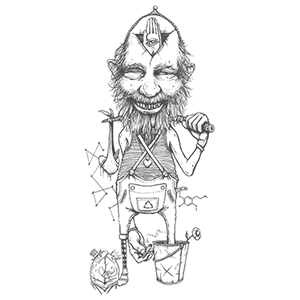
Dimethoxybromoamphetamine (DOB), also known as Brolamfetamine and Bromo-DMA, is a psychedelic drug and substituted amphetamine of the phenethylamine (a neurotransmitter abundant in chocolate) class of compounds (e.g. MDMA). DOB was first synthesized by American pharmacologist Alexander Shulgin in 1967. In his book ‘PiHKAL: A Chemical Love Story,’ Shulgin lists the dosage range as 1 to 3 mg, which is generally taken orally. According to Shulgin, the effects of DOB last 18 to 30 hours. Onset of the drug is also long, sometimes taking up to three hours. The toxicity of DOB is not fully known, although high doses may cause serious vasoconstriction of the extremities.
DOB has been sold on blotter paper (and presumably represented as LSD). Misrepresentation as LSD could be potentially dangerous, as DOB does not have the known safety profile of LSD: unlike LSD, DOB can have physically harmful (if not fatal) effects in overdose. Upon tasting the chemical, if one notices a highly bitter or ‘chemically’ taste, this should serve as a warning sign that the drug is not LSD, but likely a psychedelic amphetamine (DOB, DOC, DOI, or Bromo-DragonFLY). However, blotter paper may have a taste regardless of the chemical on it, due to ink or solvent used.
Posted in Drugs, Health |
1 Comment »
May 14, 2012

The Integratron is a dome-shaped structure built by American ufologist George Van Tassel in Landers, California. Van Tassel was a former aircraft mechanic and flight inspector who moved to the Mojave Desert to operate an airport and inn. During his time there, he supposedly began meditating under Giant Rock, which the Native Americans of the area held to be sacred. In 1953, he claimed that he had been contacted both telepathically and later in person by Venusians, who gave him a technique to rejuvenate human cell tissues. Acting on these instructions, he began constructing the Integratron in 1954. Construction costs were paid for by an annual UFO convention, the ‘Giant Rock Spacecraft Conventions,’ which continued for nearly 25 years (Howard Hughes was a contributor). Van Tassel was clearly inspired by earlier 1950s contactee George Adamski.
Following Van Tassel’s death in 1978, the building was owned by a series of individuals (and was left in various states of disrepair) before being purchased by sisters Joanne, Nancy, and Patty Karl in the early 2000s. The sisters now promote The Integratron as an ‘acoustically perfect structure’ and say that it is currently being ‘explored in the areas of Science, Architecture, Neuroacoustics, Music, Energy healing, Alternative health and Spirituality.’ The building is currently open to the public at select times, with the sisters regularly performing ‘sound baths’ (meditation-like sessions accompanied by tones from quartz bowls) at certain points during the week.
Posted in Health, Philosophy |
Leave a Comment »
May 11, 2012

The grapefruit is a subtropical citrus tree known for its sour fruit, an 18th-century hybrid of a pomelo and an orange first bred in Barbados. When found, it was named the ‘forbidden fruit.’ The flesh is segmented and acidic, varying in color depending on the cultivars, which include white, pink, and red pulps of varying sweetness. The grapefruit was known as the shaddock until the 19th century. Its current name alludes to clusters of the fruit on the tree, which often appear similar to grapes. Botanically, it was not distinguished from the pomelo until the 1830s, when it was given the name Citrus paradisi. Its true origins were not determined until the 1940s.
Grapefruit mercaptan, a sulfur-containing terpene, is one of the substances which has a strong influence on the taste and odor of grapefruit, compared with other citrus fruits. Grapefruit can have a number of interactions with drugs, often increasing the effective potency of compounds. In particular grapefruit and bitter oranges are known to interact with statins (a type of choloesterol drug). Because of this unique property, grapefruit has a very bitter taste when mixed with milk or similar dairy products. Grapefruit is an excellent source of many nutrients and phytochemicals that contribute to a healthy diet.
Posted in Drugs, Food, Health |
Leave a Comment »
May 8, 2012

Psychosomatic medicine is an interdisciplinary medical field studying the relationships of social, psychological, and behavioral factors on bodily processes and quality of life in humans and animals. The influence that the mind has over physical processes — including the manifestations of disabilities that are based on intellectual infirmities, rather than actual injuries or physical limitations — is manifested in treatment by phrases such as the power of suggestion, the use of ‘positive thinking,’ and concepts like ‘mind over matter.’
The academic forebear of the modern field of behavioral medicine and a part of the practice of consultation-liaison psychiatry, psychosomatic medicine integrates interdisciplinary evaluation and management involving diverse specialties including psychiatry, psychology, neurology, surgery, allergy, dermatology, and psychoneuroimmunology. Clinical situations where mental processes act as a major factor affecting medical outcomes are areas where psychosomatic medicine has competence.
read more »
Posted in Health, Philosophy, Science |
Leave a Comment »
May 8, 2012

A stress ball is a malleable toy, usually not more than 7 cm in diameter. It is squeezed in the hand and manipulated by the fingers, ostensibly to either help relieve stress and muscle tension or to exercise the muscles of the hand. There are many types of stress balls. Many are a closed-cell polyurethane foam rubber. This type of stress ball is made by injecting the liquid components of the foam into a mold. The resulting chemical reaction creates carbon dioxide bubbles as a byproduct, which in turn creates the foam.
Stress balls, especially those used in physical therapy, can also contain gel of different densities inside a rubber or cloth skin. Another type uses a thin rubber membrane surrounding a fine powder. The latter type can be made at home by filling a balloon with baking soda. Some balls similar to a footbag are marketed and used as stress balls.
Posted in Games, Health |
1 Comment »
May 7, 2012

Introversion [in-truh-vur-zhuhn] and Extroversion [ek-struh-vur-zhuhn] are terms popularized by Carl Jung in the 1920s to describes how a person gets energy from the world: introverts get energy from inside themselves (ideas and concepts in their own minds), and extroverts get energy from outside of themselves (interacting with other people).
The former can appear quiet and shy, and the latter loud and sociable; however, everyone has some parts of both traits in them, though one will usually dominate over the other. At one time, extroverts were thought to make up almost three-fourths of American society. Now, researchers typically assume that the number of extroverts is pretty much equal to the number of introverts in the country. Virtually all comprehensive models of personality include these concepts in various forms.
read more »
Posted in Health, Science |
1 Comment »
May 4, 2012

In visual perception, change blindness is the inability to detect changes in objects or scenes being viewed. It is a normal phenomenon of the brain which show in light that the brain does not have a precise representation of the world but a lacunar one, made of partial details. Despite the name, this phenomenon does not affect the eyes but the brain, and as such is bound to happen to all the human senses.
This phenomenon is still in research, but results suggests that the brain estimates the importance and usefulness of information prior to deciding to store them or not. Another issue is that the brain cannot see a change happening to an element that it has not yet stored. An example of change blindness can be seen in British illusionist Derren Brown’s ‘Person Swap’ sketch.
read more »
Posted in Health, Science |
1 Comment »
May 4, 2012

Inattentional blindness, also known as perceptual blindness, is when a person fails to notice some stimulus that is in plain sight. This stimulus is usually unexpected but fully visible. This typically happens when humans are overloaded with inputs. It is impossible to pay attention to every single input that is presented. A person’s attention cannot be focused on everything, and therefore, everyone experiences inattentional blindness. People can falsely believe that they do not experience inattentional blindness.
This is due to the fact that they are unaware that they are missing things. Inattentional blindness also has an effect on people’s perception. There have been multiple experiments performed that demonstrate this phenomenon. The term ‘inattentional blindness’ was coined by Arien Mack and Irvin Rock in 1992. It was used as the title of their book on the topic published by MIT Press in 1998.
read more »
Posted in Health, Humor, Science |
Leave a Comment »
May 1, 2012

Intellectualization is a defense mechanism where reasoning is used to block confrontation with an unconscious conflict and its associated emotional stress, by ‘using excessive and abstract ideation to avoid difficult feelings.’ It involves removing one’s self, emotionally, from a stressful event.
Intellectualization may accompany, but ‘differs from rationalization, which is justification of irrational behavior through clichés, stories, and pat explanation.’ It is one of Freud’s original defense mechanisms. Freud believed that memories have both conscious and unconscious aspects, and that intellectualization allows for the conscious analysis of an event in a way that does not provoke anxiety.
read more »
Posted in Health |
Leave a Comment »
May 1, 2012
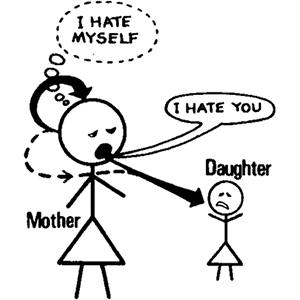
A defense mechanism is the coping technique individuals unconsciously use to protect themselves from getting hurt in unpleasant situations (e.g. conflicts, unhappiness). Without defense mechanism, people may suffer from psychological and mental illness. In Freudian psychoanalytic theory, defense mechanisms are unconscious, psychological strategies brought into play by various entities to cope with reality and to maintain self-image.
Healthy persons normally use different defenses throughout life. An ego defense mechanism becomes pathological only when its persistent use leads to maladaptive behavior such that the physical and/or mental health of the individual is adversely affected. The purpose of ego defense mechanisms is to protect the mind/self/ego from anxiety and/or social sanctions and/or to provide a refuge from a situation with which one cannot currently cope.
read more »
Posted in Health |
2 Comments »
April 30, 2012

Jung identified the anima [an-uh-muh] as being the unconscious feminine component of men, and the animus [an-uh-muhs] as the unconscious masculine component in women. However, this is rarely taken as a literal definition: many modern day Jungian practitioners believe that every person has both an anima and an animus. Jung stated that the anima and animus act as guides to the unconscious unified Self, and that forming an awareness and a connection with the anima or animus is one of the most difficult and rewarding steps in psychological growth. Jung reported that he identified his anima as she spoke to him, as an inner voice, unexpectedly one day.
Often, when people ignore the anima or animus the complexes, the anima or animus vies for attention by projecting itself on others. This explains, according to Jung, why we are sometimes immediately attracted to certain strangers: we see our anima or animus in them. Love at first sight is an example of anima and animus projection. Moreover, people who strongly identify with their gender role (e.g. a man who acts aggressively and never cries) have not actively recognized or engaged their anima or animus.
read more »
Posted in Health, Philosophy, Sex |
Leave a Comment »


 The Daily Omnivore