April 30, 2012

Projection is a psychological defense mechanism where a person subconsciously denies his or her own attributes, thoughts, and emotions, which are then ascribed to the outside world, usually to other people. Thus, projection involves imagining or projecting the belief that others originate those feelings. Projection reduces anxiety by allowing the expression of the unwanted unconscious impulses or desires without letting the conscious mind recognize them.
An example of this behavior might be blaming another for self failure. The mind may avoid the discomfort of consciously admitting personal faults by keeping those feelings unconscious, and by redirecting libidinal satisfaction by attaching, or ‘projecting,’ those same faults onto another person or object. The theory was developed by Sigmund Freud.
read more »
Posted in Health, Philosophy, Politics |
2 Comments »
April 30, 2012

In psychoanalytic theory, reaction formation is a defensive process (defense mechanism) in which anxiety-producing or unacceptable emotions and impulses are mastered by exaggeration (hypertrophy) of the directly opposing tendency. Reaction formation depends on the hypothesis that: ‘[t]he instincts and their derivatives may be arranged as pairs of opposites: life versus death, construction versus destruction, action versus passivity, dominance versus submission, and so forth.
When one of the instincts produces anxiety by exerting pressure on the ego either directly or by way of the superego, the ego may try to sidetrack the offending impulse by concentrating upon its opposite. For example, if feelings of hate towards another person make one anxious, the ego can facilitate the flow of love to conceal the hostility.’ Where reaction-formation takes place, it is usually assumed that the original, rejected impulse does not vanish, but persists, unconscious, in its original infantile form. Thus, where love is experienced as a reaction formation against hate, we cannot say that love is substituted for hate, because the original aggressive feelings still exist underneath the affectionate exterior that merely masks the hate to hide it from awareness.
read more »
Posted in Health, Sex |
Leave a Comment »
April 29, 2012

Methaqualone is a sedative-hypnotic drug that is similar in effect to barbiturates, a general central nervous system depressant. The sedative-hypnotic activity was first noted by Indian researchers in the 1950s and in 1962 methaqualone itself was patented in the US by Wallace and Tiernan. Its use peaked in the early 1970s as a hypnotic, for the treatment of insomnia, and as a sedative and muscle relaxant.
It has also been used illegally as a recreational drug, commonly known as Quaaludes [kwey-lood], Sopors, Ludes, or Mandrax (particularly in the 1970s in North America) depending on the manufacturer. At that time ‘luding out’ was a popular college pastime. This is the similar effect of an alcoholic blackout with no recollection of events. Since at least 2001, it has been widely used in South Africa, where it is commonly referred to as ‘smarties’ or ‘geluk-tablette’ (meaning ‘happy tablets’). Clandestinely produced methaqualone is still seized by government agencies and police forces around the world.
Posted in Drugs, Health, Politics |
Leave a Comment »
April 26, 2012

Foreign Accent Syndrome is a rare medically recognised condition which is a speech impediment that usually occurs as a resulting side effect of brain injury, such as a stroke or head trauma. As a result of the speech impediment those suffering from the Foreign Accent Syndrome pronounce their native language with an accent that to the ear of the listeners may be mistaken as foreign or dialectical.
It has many other impacts and effects, including poor memory and concentration span, as well as a feeling of loss of identity, potentially causing those affected to go through a bereavement process. Two cases have been reported of individuals with the condition as a development problem and one associated with severe migraine. Between 1941 and 2009 there have been sixty recorded cases.
read more »
Posted in Health, Language, World |
Leave a Comment »
April 26, 2012
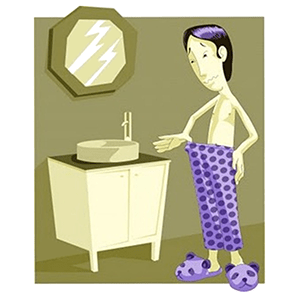
Koro is a culture-specific syndrome from Southeast Asia in which the person has an overpowering belief that his penis (or other genitalia) is shrinking and will shortly disappear. Also known as shrinking penis, the syndrome is listed in the Diagnostic and Statistical Manual of Mental Disorders. In China, it is known as ‘shuk yang.’
For females, the belief focuses on the nipples retracting or shrinking. Though the syndrome is rooted in China and found mostly in Southeast Asia, rare and isolated cases of koro are found in people of non-Chinese ethnicity worldwide. Episodes of epidemics occurred in the endemic nations. In a different cultural setting, mass hysteria of genital-shrinkage have been reported in African nations.
read more »
Posted in Health, Sex, World |
Leave a Comment »
April 24, 2012

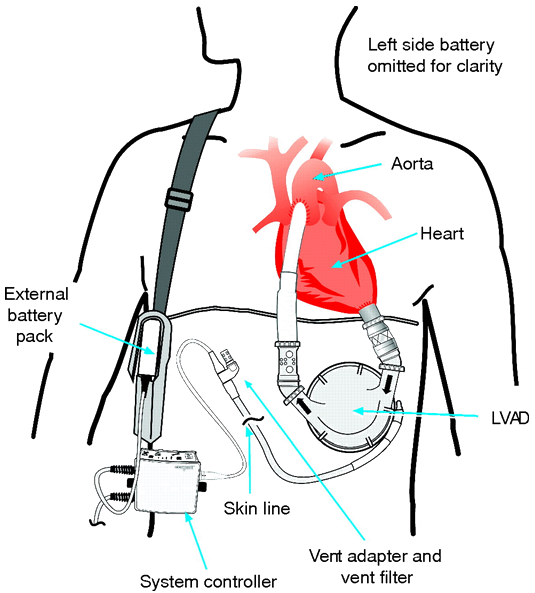
A Ventricular assist device [ven-trik-yuh-ler] (VAD) is a mechanical circulatory device that is used to partially or completely replace the function of a failing heart. Some VADs are intended for short term use, typically for patients recovering from heart attacks or heart surgery, while others are intended for long term use (months to years and in some cases for life), typically for patients suffering from congestive heart failure. VADs are designed to assist either the right (RVAD) or left (LVAD) ventricle, or both at once (BiVAD).
Which of these types is used depends primarily on the underlying heart disease and the pulmonary arterial resistance that determines the load on the right ventricle. LVADs are most commonly used, but when pulmonary arterial resistance is high, right ventricular assistance becomes necessary. Long term VADs are normally used to keep patients alive with a good quality of life while they wait for a heart transplantation (known as a ‘bridge to transplantation’). However, LVADs are sometimes used as ‘destination therapy’ (therapy when a heart transplant is not an option) and sometimes as a ‘bridge to recovery.’
read more »
Posted in Health, Technology |
Leave a Comment »
April 23, 2012

In traditional Chinese culture, qì [chee] is an active principle forming part of any living thing. Qi is frequently translated as life energy, lifeforce, or energy flow. Qi is the central underlying principle in traditional Chinese medicine and martial arts. The literal translation is ‘breath,’ ‘air,’ or ‘gas.’ Concepts similar to qi can be found in many cultures, for example, Prana in Vedantic philosophy, mana in Hawaiian culture, Lüng in Tibetan Buddhism, and Vital energy in Western philosophy.
Some elements of qi can be understood in the term ‘energy’ when used by writers and practitioners of various esoteric forms of spirituality and alternative medicine. Elements of the qi concept can also be found in popular culture, for example ‘The Force’ in ‘Star Wars’ Notions in the west of energeia, élan vital, or vitalism are purported to be similar.
read more »
Posted in Health, Philosophy, World |
Leave a Comment »
April 19, 2012


Superfood is an unscientific marketing term used in various contexts. For example, it is sometimes used to describe food with high nutrient or phytochemical content that may confer health benefits, with few properties considered to be negative, such as being high in saturated fats or artificial ingredients, food additives, or contaminants. An often-cited example of a superfruit is blueberries which contain moderate-rich concentrations of anthocyanins, vitamin C, manganese, dietary fiber, pterostilbene (an undefined phytochemical under preliminary research), and low calorie content.
Other examples of superfoods include broccoli, spinach, pumpkin, and tomatoes which are rich in various nutrients. All these fruits and vegetables contain a variety of nutrients and phytochemicals in varying amounts as do common plant foods like bananas, pineapples and potatoes which have only rarely been called superfoods. Fish may be considered a superfood due to their omega-3 fatty acids which may promote cognitive development.
read more »
Posted in Food, Health, Money |
Leave a Comment »
April 19, 2012


Cannabidiol [kah-nuh-bi-dye-awl] (CBD) is a cannabinoid found in Cannabis. It is a major constituent of the plant, representing up to 40% in its extracts. It has displayed sedative effects in animal tests. Some research, however, indicates that CBD can increase alertness. It may decrease the rate of THC clearance from the body, perhaps by interfering with the metabolism of THC in the liver. Medically, it has been shown to relieve convulsion, inflammation, anxiety, and nausea, as well as inhibit cancer cell growth. Recent studies have shown cannabidiol to be as effective as atypical antipsychotics in treating schizophrenia.
A Cannabis Indica plant may have a CBD/THC ratio 4:-5 times that of Cannabis sativa. Marijuana with relatively high ratios of CBD:THC is less likely to induce anxiety than vice versa. This might partial be due to CBD’s antagonist effects at the cannabidanoid receptor, compared to THC’s partial agonist effect. The relatively large amount of CBD contained in Cannabis indica, means, compared to a sativa, the effects are modulated significantly. The effects of Sativa are well known for its cerebral high, hence used daytime as medical cannabis, while Indica are well known for its sedative effects and preferred night time as medical cannabis.
Posted in Drugs, Health |
1 Comment »
April 18, 2012

Fighting in ice hockey is an established tradition of the sport in North America, with a long history involving many levels of amateur and professional play and including some notable individual fights. Although a source of criticism, it is a considerable draw for the sport. Fighting is usually performed by one or more enforcers, or ‘goons’—players whose role it is to fight and intimidate—on a given team and is governed by a complex system of unwritten rules that players, coaches, officials, and the media refer to as ‘the code.’
Some fights are spontaneous, while others are premeditated by the participants. While officials tolerate fighting during hockey games, they impose a variety of penalties on players who engage in fights. The NHL and most minor professional leagues in North America do not eject players outright for fighting, but major European and collegiate hockey leagues do, and multi-game suspensions may be added on top of the ejection.
read more »
Posted in Games, Health, Politics |
Leave a Comment »
April 18, 2012

Dave Duerson (1960 – 2011) played in the NFL from 1983–1993. Duerson played football, basketball, and baseball in high school. He was given an opportunity to play for the Los Angeles Dodgers as a pitcher and outfielder in 1979, but declined, choosing to play football at Notre Dame from 1979 to 1982. He graduated with honors, with a BA in Economics. Duerson was selected to four consecutive Pro Bowls from 1986 to 1989 in his career, and won two championship rings, playing safety for the Bears (Super Bowl XX), and the Giants (Super Bowl XXV). He purchased the majority interest in Fair Oaks Farms (formerly Brooks Sausage Company) in 1995. Duerson grew the company from $24M revenue to over $63.5M in six years.
Duerson was found dead at his Florida home in the winter of 2011. The Miami-Dade County medical examiner reported that Duerson died of a self-inflicted gunshot wound to the chest. He sent a text message to his family saying he wanted his brain to be used for research at the Boston University School of Medicine, which is conducting research into chronic traumatic encephalopathy (CTE) caused by playing pro football. Researcher neurologists at Boston University confirmed that he suffered from a neurodegenerative disease linked to concussions.
Posted in Death, Games, Health |
Leave a Comment »
April 18, 2012

A food desert is any area in the industrialized world where healthy, affordable food is difficult to obtain. Food deserts are prevalent in rural as well as urban areas and are most prevalent in low-socioeconomic minority communities. They are associated with a variety of diet-related health problems. Food deserts are also linked with supermarket shortage.
The food desert concept was first introduced in the United Kingdom in the early 1990s to examine disparities in food pricing and to describe geographical areas with limited access to retail grocery stores. A food desert is a food environment unsupportive of health; it is defined by barriers which restrict access to healthful foods. Barriers may include lack of access to food retailers, availability of nutritious foods, or affordability of foods. Research has defined food deserts quantitatively or by neighborhood characteristics such as economic and social barriers.
read more »
Posted in Food, Health, Money |
1 Comment »


 The Daily Omnivore