June 7, 2016

The Diderot [dee-duh-roh] effect is a social phenomenon related to consumer goods that comprises two ideas. The first posits that goods purchased by consumers will be cohesive to their sense of identity, and as a result, will be complementary to one another. The second states that the introduction of a new possession that is deviant from the consumer’s current complementary goods can result in a process of spiraling consumption. The term was coined by anthropologist and scholar of consumption patterns Grant McCracken in 1988, and is named after the French philosopher Denis Diderot (1713–1784), who first described the effect in an essay.
The term has become common in discussions of sustainable consumption and green consumerism, in regard to the process whereby a purchase or gift creates dissatisfaction with existing possessions and environment, provoking a potentially spiraling pattern of consumption with negative environmental, psychological and social impacts.
read more »
Posted in Health, Money |
Leave a Comment »
May 28, 2016

The Pygmalion effect, or ‘Rosenthal effect,’ is the phenomenon whereby higher expectations lead to an increase in performance. The effect is named after the Greek myth of Pygmalion, a sculptor who fell in love with a statue he had carved. By the Pygmalion effect, people internalize their positive labels, and those with positive labels succeed accordingly. A corollary of the Pygmalion effect is the ‘golem effect,’ in which low expectations lead to a decrease in performance.
Psychologists Robert Rosenthal and Lenore Jacobson’s first showed that, if teachers were led to expect enhanced performance from children, then the children’s performance was enhanced. This study supported the hypothesis that reality can be positively or negatively influenced by the expectations of others, the ‘observer-expectancy effect.’ Rosenthal theorized that biased expectancies could affect reality and create self-fulfilling prophecies (predictions that directly or indirectly cause themselves to become true)
read more »
Posted in Education, Health, Science |
Leave a Comment »
May 18, 2016

A late bloomer is a person whose talents or capabilities are not visible to others or do not manifest until later than usual. The term is used metaphorically to describe a child or adolescent who develops slower than others in their age group, but eventually catches up and in some cases overtakes their peers, or an adult whose talent or genius in a particular field only appears later in life than is normal – in some cases only in old age.
A notable example of a child who overcame early developmental problems is Albert Einstein, who suffered from speech difficulties as a young child. Other late-talking children who became highly successful engineers, mathematicians, and scientists include physicists Richard Feynman and Edward Teller. Neuroscientist Steven Pinker postulates that a certain form of language delay may in fact be associated with exceptional and innate analytical prowess in some individuals.
read more »
Posted in Education, Health |
1 Comment »
March 17, 2016


Witzelsucht [vit-sel-zuhkt] (from the German ‘witzeln,’ meaning ‘to joke or wisecrack,’ and ‘sucht,’ meaning ‘addiction or yearning’) is a set of rare neurological symptoms characterized by a tendency to make puns, or tell inappropriate jokes or pointless stories in socially inappropriate situations. A less common symptom is hypersexuality, the tendency to make sexual comments at inappropriate times or situations. Patients do not understand that their behavior is abnormal, therefore are nonresponsive to others’ reactions. This disorder is most commonly seen in patients with frontal lobe damage, particularly right frontal lobe tumors or trauma.
Those with the condition often show no emotional reaction to humor, whether produced by themselves or others. This lack of responsiveness is due to dissociation between their cognitive and affective responses to humorous stimuli. That is, even when a patient understands that a joke is funny (based on quantitative brain activity), they do not respond with laughter, or even a smile. While they have grasped the cognitive basis of humor, they do not affectively respond. This also considered a cognitive component of empathy, affecting ability to take the perspective of others; hence why patients often do not respond to humor produced by other people.
read more »
Posted in Health, Humor, Sex |
1 Comment »
March 14, 2016

An impulse purchase is an unplanned decision to buy a product or service, made just before a completing an unrelated transaction. Research findings suggest that emotions and feelings play a decisive role in purchasing, triggered by seeing the product or upon exposure to a well crafted promotional message.
Impulse buying disrupts the normal decision making models in consumers’ brains. The logical sequence of the consumers’ actions is replaced with an irrational moment of self gratification. Impulse items appeal to the emotional side of consumers. Items bought on impulse are not usually considered functional or necessary in their lives. Preventing impulse buying involves techniques such as setting budgets before shopping and taking time out before the purchase is made.
read more »
Posted in Health, Money |
Leave a Comment »
March 5, 2016


Kindness priming is an affect-dependent cognitive effect in which subjects will display a positive affect following exposure to kindness. Individuals who are exposed to an act of kindness – the priming – subsequently notice more of the positive features of the world than they would otherwise. A person receiving a free voucher from a stranger, for example, may become more inclined to perceive the intentions of others around them as good.
It is hypothesized that kindness priming involves the same cognitive circuitry that enables memory priming. By activating neural representations of positive affect, an act of kindness stimulates increased activity in related associative networks. It is therefore more likely that subsequent stimuli will activate these related, positive networks, and so the positive affect continues to be carried forward in a feed forward manner. Additionally, kindness priming has also been shown to inoculate against negative stimuli in the short term, thus temporarily improving an individual’s resilience.
read more »
Posted in Health, Money |
Leave a Comment »
March 4, 2016


Affective forecasting (also known as the ‘hedonic forecasting mechanism’) is the prediction of one’s affect (emotional state) in the future. As a process that influences preferences, decisions, and behavior, affective forecasting is studied by both psychologists and economists, with broad applications.
Psychologist Daniel Kahneman and business school professor Jackie Snell began research on hedonic forecasts in the early 1990s, examining its impact on decision making. The term ‘affective forecasting’ was later coined by psychologists Timothy Wilson and Daniel Gilbert. Early research focused solely on measuring emotional forecasts, while subsequent studies examined accuracy, revealing that people are surprisingly poor judges of their future emotional states. For example, in predicting how events like winning the lottery might affect their happiness, people are likely to overestimate future positive feelings, ignoring the numerous other factors that might contribute to their emotional state outside of the single lottery event.
read more »
Posted in Health, Money |
Leave a Comment »
March 3, 2016

Drapetomania [drah-pay-too-mey-nee-uh] was a supposed mental illness described by American physician Samuel A. Cartwright in 1851 that caused black slaves to flee captivity. Today, drapetomania is considered an example of pseudoscience and part of the edifice of scientific racism. The term derives from the Greek ‘drapetes’ (‘runaway [slave]’) and ‘mania’ (‘madness, frenzy’). In ‘Diseases and Peculiarities of the Negro Race,’ Cartwright points out that the Bible calls for a slave to be submissive to his master, and by doing so, the slave will have no desire to run away.
Cartwright described the disorder – which, he said, was ‘unknown to our medical authorities, although its diagnostic symptom, the absconding from service, is well known to our planters and overseers’– in a paper delivered before the Medical Association of Louisiana that was widely reprinted. He stated that the malady was a consequence of masters who ‘made themselves too familiar with [slaves], treating them as equals.’
read more »
Posted in Health, Politics |
1 Comment »
March 1, 2016


The bandwagon effect is a phenomenon whereby the rate of uptake of beliefs, ideas, fads and trends increases the more that they have already been adopted by others. As more people come to believe in something, others also ‘hop on the bandwagon’ regardless of the underlying evidence.
The tendency to follow the actions or beliefs of others can occur because individuals directly prefer to conform to social pressure, or because individuals derive information from others. The former has been used to explain Asch’s conformity experiments, a series of studies directed by Polish American social psychologist Solomon Asch studying if and how individuals yield to or defy a majority group and the effect of such influences on beliefs and opinions.
read more »
Posted in Health, Money, Philosophy |
1 Comment »
February 24, 2016
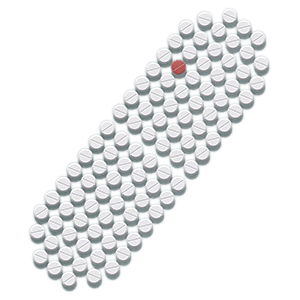
Microdosing is a technique for studying the behavior of drugs in humans through the administration of doses so low (‘sub-therapeutic’) they are unlikely to produce whole-body effects, but high enough to allow the cellular response to be studied. This allows the observation of a drug’s pharmacokinetics with a low risk of side effects. This is called a ‘Phase 0 study’ and is usually conducted before clinical Phase I to predict whether a drug is viable for the next phase of testing. Human microdosing aims to reduce the resources spent on non-viable drugs and the amount of testing done on animals.
Psychedelic drugs are also sometimes used at sub-therapeutic doses for non-hallucinogenic effects. For example, LSD at one tenth the normal dose has been reported to have antidepressant properties and is said to aid in problem solving.
Posted in Drugs, Health |
1 Comment »
February 10, 2016

Aquafaba [ah-kwuh-fah-buh], or chickpea brine, is the liquid from canned chickpeas, used as an egg substitute because of its function as an emulsifier, leavening agent, and foaming agent. Vegan baker Goose Wohlt coined the term aquafaba (‘bean liquid’) to describe the substance, which French chef Joël Roessel discovered could be used as substitute for egg whites in recipes. Aquafaba has been used to create meringues, macarons, nougat, and other products that normally require the use of eggs, making them suitable for people with egg allergies, vegans, and lacto-vegetarians.
There is currently no scientific consensus on the chemical properties of aquafaba and why it mimics egg whites so effectively. Seed proteins, including albumins and globulins, as well as soluble fibers, sugars, and glycosides have been proposed as contributing to the similarity. Roessel purports that the most likely agent that causes the liquid to foam are saponins, plant molecules containing a combination of hydrophobic (fat-soluble) and a hydrophilic (water-soluble) components.
Posted in Food, Health |
1 Comment »
February 5, 2016


In cognitive psychology the adaptive unconscious is thought to be a set of mental processes that influence judgment and decision making in a way that is inaccessible to introspective awareness, and thus linked to the unconscious mind. It is different from conscious processing: it is faster, effortless, more focused on the present, but less flexible. In other theories of the mind, the unconscious is limited to ‘low-level’ activity, such as carrying out goals which have been decided consciously. In contrast, the adaptive unconscious is thought to be involved in ‘high-level’ cognition such as goal-setting as well.
The term ‘adaptive unconscious’ suggests it has survival value and hence is an adaptation which was strongly selected in the past. Indeed, for much of vertebrate evolution, all mental activity was unconscious. No-one supposes that fish have consciousness. Thus our consciousness is added to an already-existing set of mechanisms which operate but whose operation is normally not felt by us.
read more »
Posted in Education, Health |
1 Comment »


 The Daily Omnivore